 AI image
The EU Entry/Exit System (EES) went live on 12 October 2025 and, after a phased rollout of about six months, has been fully operational since April 2026. It registers third-country nationals biometrically at the external borders of the Schengen area. For road transport this means longer first crossings for non-EU and British drivers, and schedules that need time buffers.
What does changed at the external Schengen border?
For decades the proof of a legal stay was a stamp in the passport. EES replaces it with an electronic record: on the first crossing of an external border, a third-country national provides fingerprints and a facial image, and the system logs the date and place of entry. Later crossings come down to verifying data already on file. The rollout was spread over roughly half a year: launch on 12 October 2025, full operation by April 2026. No external Schengen border point works the old way any more.
The biggest practical change: the rule of 90 days in any 180-day period is now counted automatically. The system knows how many days a third-country national has spent in the Schengen area and flags an overstay by itself. Arguments over an illegible stamp are gone, and so is the margin for error.
Who is affected in road transport
EU citizens are not subject to EES. Registration covers third-country nationals, which in road transport means two large groups.
| Group | Subject to EES | Where it is felt |
|---|---|---|
| Driver holding a Polish or other EU passport | No | No change |
| Non-EU driver working for an EU fleet (for example from Ukraine, Belarus or Moldova) | Yes | External Schengen borders |
| British drivers and hauliers entering the EU | Yes | Including the juxtaposed French controls for Calais, Dunkirk and Eurotunnel |
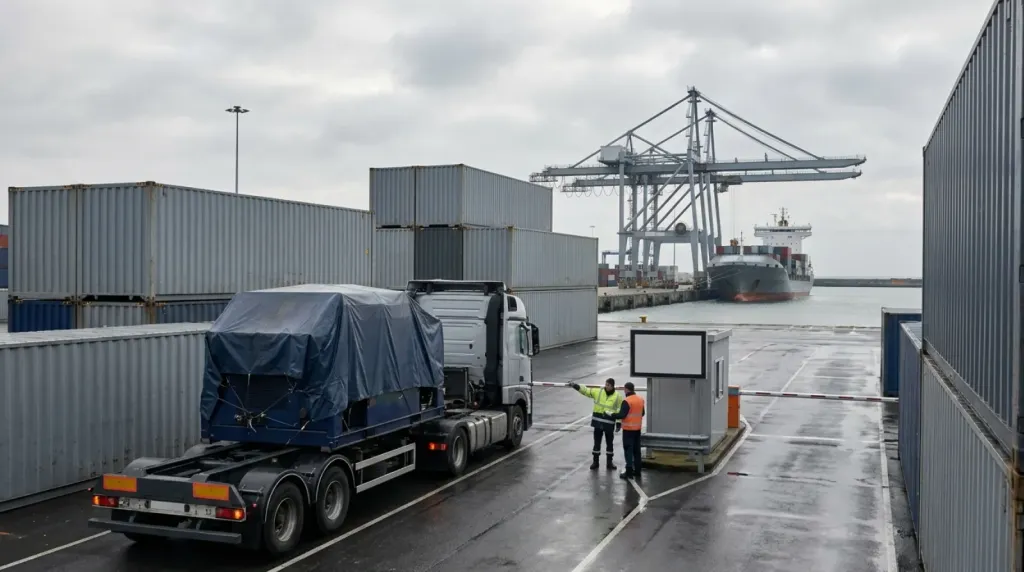
For fleets employing drivers from Ukraine, Belarus or Moldova the first group is the one that matters: every crossing of an external Schengen border by such a driver now goes through EES registration. Inside the Schengen area nothing changes, because as a rule there are no border checks there.
Calais, Dunkirk, Eurotunnel: EES on the UK side
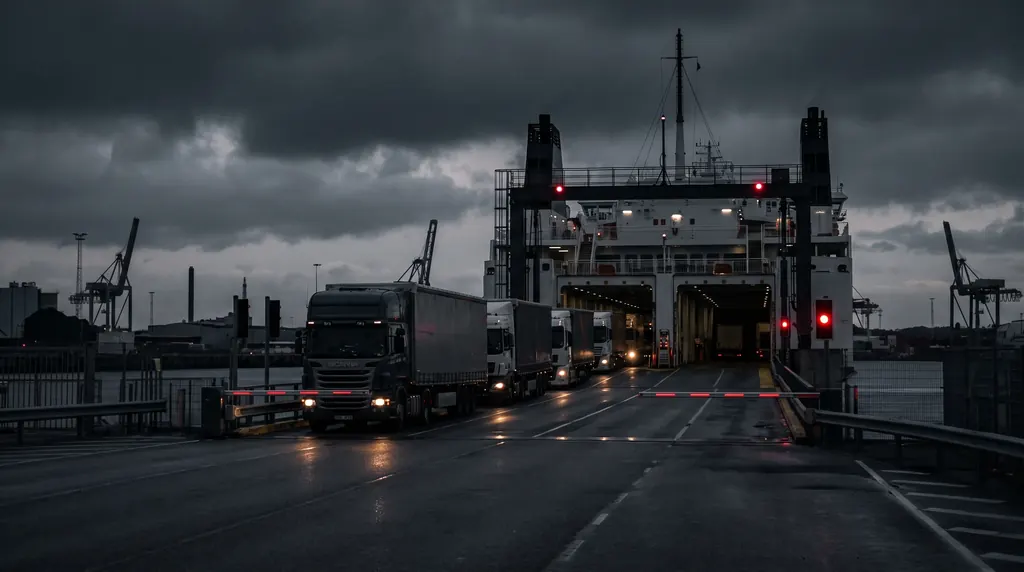
UK routes have a particular feature: French border checks for the Calais, Dunkirk and Eurotunnel crossings are carried out under the juxtaposed controls arrangement, on the British side of the Channel. A non-EU driver returning to the EU with a load is registered in EES by French officers before boarding the ferry or the shuttle. The same applies to British drivers and hauliers heading for the continent. In practice, the EES queue can build up before the Channel, not after it.
The first crossing takes longer, and that is the point
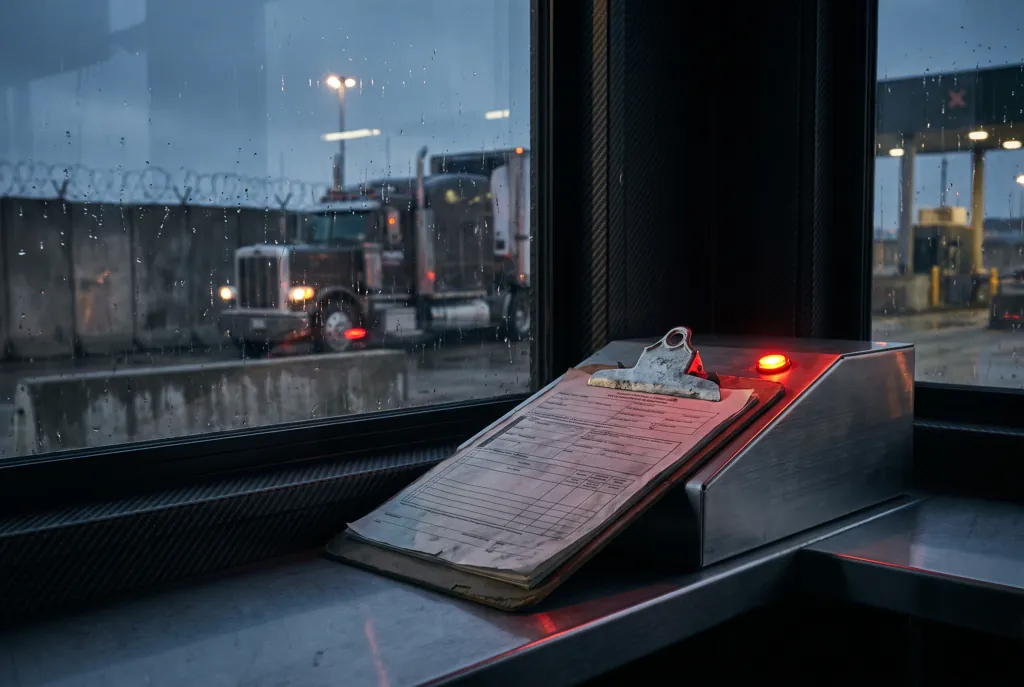
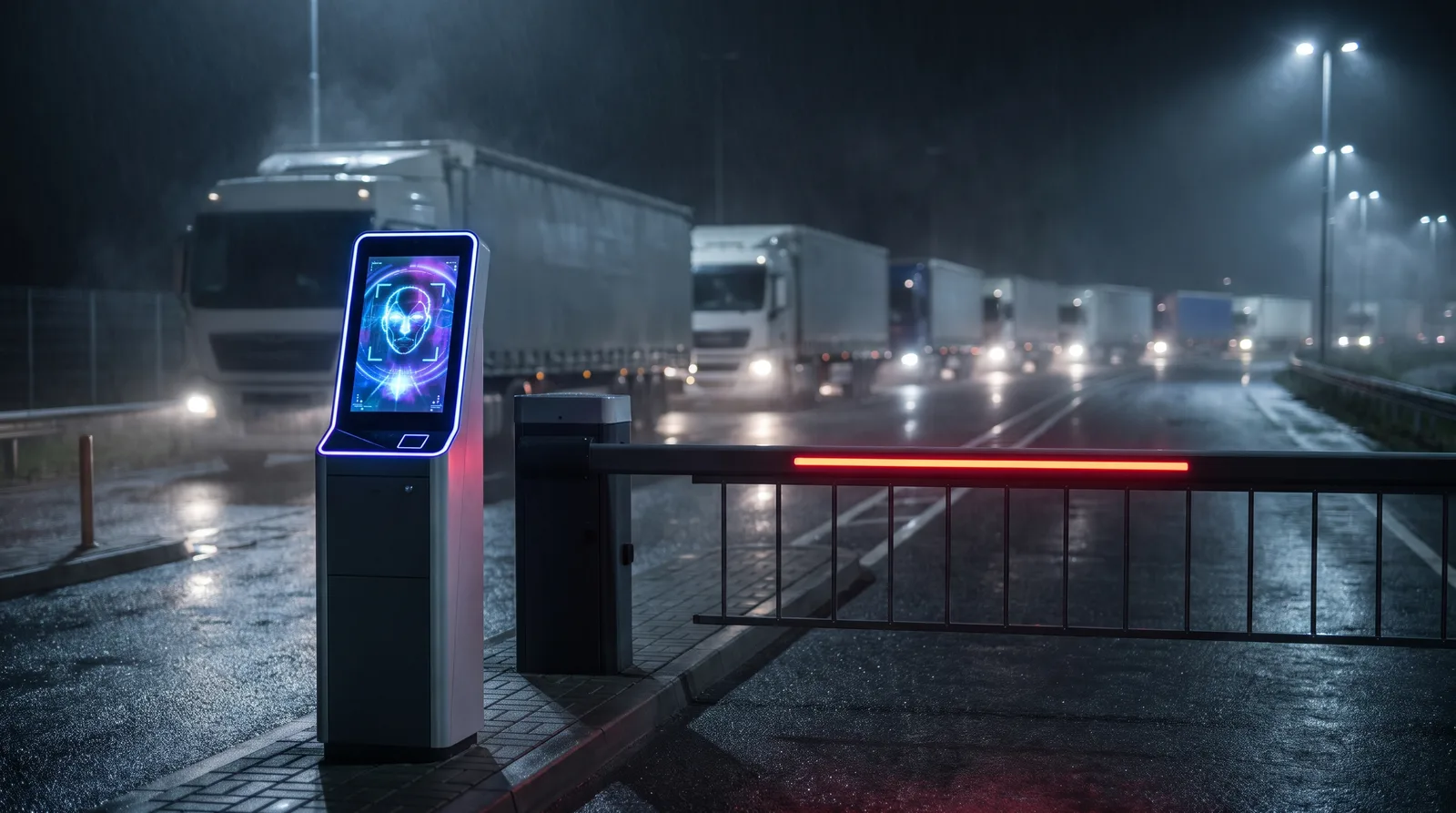
Verifying a driver who is already in the system is quick. The bottleneck is the first registration: capturing fingerprints and a photo takes longer than a routine document check, and in peak season a few first-time registrations in a row are enough to grow a queue at the booth. In busy periods, plan time buffers at border crossings, especially where many non-EU drivers are processed.
The second practical effect concerns the rotations of posted drivers. With entry and exit dates logged automatically, rosters for non-EU drivers have to be planned against the recorded crossings, because the system will flag every overstay on its own. Planning rotations by feel is no longer safe.
ETIAS: what is known and what is not
The second piece of the puzzle is ETIAS, a travel authorisation system for third-country nationals who are exempt from visas. Before travelling to the Schengen area they will need an electronic authorisation. ETIAS is due to start after EES is fully rolled out, but the start date has already been postponed, so we do not build procedures around a specific day. Follow the official European Commission calendar and expect the obligation to be announced in advance.
How to prepare: a checklist
- Check driver citizenships on routes crossing external borders. EES applies only to third-country nationals; a driver with an EU passport goes through without registration.
- Allow extra time for the first registration. A driver who is not yet in the system needs a longer stop, so do not schedule the crossing back to back.
- Fit buffers into driving-time limits. A border buffer has to fit within the limits we cover in the article on driver hours and the tachograph, and must not collide with weekend driving bans.
- On UK routes, tie EES into the freight process. The driver clears passport control while the load clears customs; we explain the GMR in GVMS (Goods Vehicle Movement Service) step by step.
- Watch the ETIAS announcements. The obligation will come; only the date is open.
How does OTSL handle it?
We plan transports to Great Britain and across external Schengen borders around the reality of border processing: we choose crossings, keep customs paperwork complete and build in buffers where checks tend to stretch. Write to us if your routes run through borders where EES adds real time, or browse our knowledge base.
Definitions
- EES (Entry/Exit System): An automated EU IT system that registers biometric data and entry or exit dates of third-country nationals crossing external Schengen borders.
- ETIAS (European Travel Information and Authorisation System): An electronic travel authorisation system for visa-exempt third-country nationals travelling to the Schengen Area.
- Schengen Area: An area comprising European countries that have abolished internal border controls in favour of unified external border checks.
- Biometric data: Unique physical characteristics, specifically fingerprints and facial images, used for digital identity verification.
- Third-country national: A person who does not hold citizenship of any EU or Schengen Area country, including British drivers.
When does this rule not apply?
This requirement does not apply to citizens of the European Union, EEA countries, or Switzerland, nor does it apply when crossing internal borders within the Schengen Area.
The OTSL role
When planning international routes across external Schengen borders, OTSL coordinates schedules to accommodate mandatory border registrations. Check our road transport (FTL) services or read about express vans and time-critical transport to see how careful planning maintains schedule stability.
Sources
European Commission, EES and ETIAS for travellers (travel-europe.europa.eu)
European Commission, DG Migration and Home Affairs, Entry/Exit System (home-affairs.ec.europa.eu)