 AI image
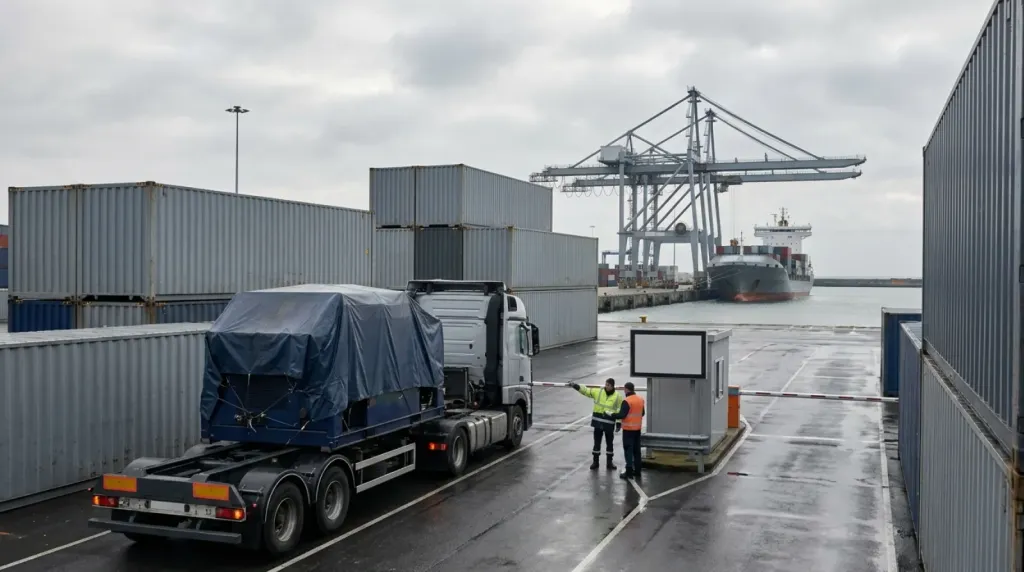
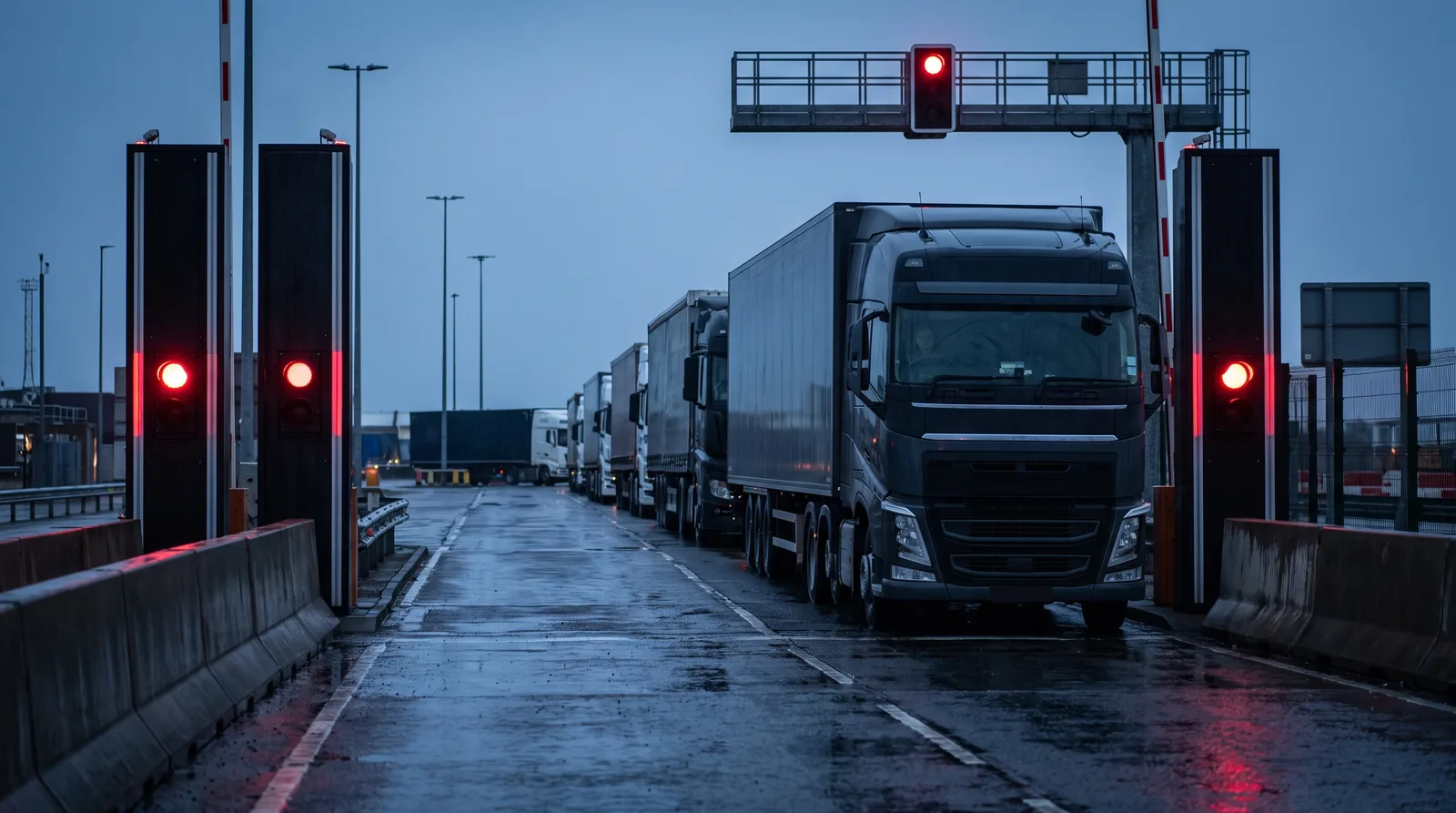
GVMS is the UK system that ties together the customs declarations for a single truck movement across the border. The result is one GMR (Goods Movement Reference). The driver must have the GMR ready BEFORE boarding a ferry or the Eurotunnel. No GMR means the vehicle is refused for the crossing.
GVMS (Goods Vehicle Movement Service) is a UK government service that links the customs declarations assigned to one vehicle movement across the border.
GMR (Goods Movement Reference) is the number generated in GVMS. You fill it with the individual customs declarations, and it is the reference shown at the terminal.
Why does GVMS exist?
At many crossings to and from Great Britain, clearance does not happen physically at the border. Declarations are lodged in advance, and the GVMS system acts as the connector: instead of carrying a stack of paper, the driver holds one number that the carrier presents on boarding. That is why the whole job happens before the truck reaches the terminal, not in the queue at the gate.
Building a GMR step by step
- Collect the customs declarations for this movement. Depending on direction and procedure this may be an export, import or transit declaration, for example a T1. Each has its own reference number.
- Create the GMR in GVMS. A number is opened for one specific movement of one vehicle, in one direction.
- Enter the declaration numbers into the GMR. Every declaration covering the load on the trailer is linked to that single GMR.
- Add the vehicle details. The GMR must match what the driver is physically taking, including the registration of the unit that boards the crossing.
- Hand the GMR to the driver. The driver shows the number to the ferry or rail operator on entering the terminal.
Where a safety-and-security entry declaration applies (ENS/ICS2), treat it as a separate obligation to close before the movement, not as something that resolves itself along with the GMR.
Why trucks get turned back
The most common cause is no GMR ready at the moment the vehicle reaches the terminal. But holding a number is not enough on its own. Problems also appear when the data in the GMR does not match reality: a different registration, a declaration not linked to the number, a load that differs from the paperwork. The terminal reads what is in the system, not what should have been there.
- A GMR created but with no declarations entered.
- A vehicle registration in the GMR that differs from the unit actually arriving.
- A last-minute change of driver or tractor without updating the number.
- A customs declaration in a status that does not permit movement.
The forwarder's role
The forwarder's job is to take the terminal decision off the driver's shoulders. In practice that means assembling the declarations, submitting the GMR and checking the data matches before the truck approaches the crossing. This is what many companies stay quiet about: the UK border punishes not a lack of knowledge, but a lack of preparation before boarding. OTSL runs customs clearance and the full border procedures so the driver receives a finished number, not a list of things to sort out in the queue. The terms in this article are explained in our glossary.
Planning transport to or from Great Britain? Contact us before the truck sets off.
For the view from the cab: ferry check-in, the automatic checks at Eurotunnel and inspection messages on the GB side, read what the driver actually does with the GMR at Calais, Dunkirk and Folkestone.
Step by step
- Lodge customs declarations. Submit the required import or export declarations in the relevant customs systems.
- Create a record in GVMS. Log into the government service account and start a new record for the vehicle crossing.
- Enter declaration references. Add all customs declaration reference numbers for the goods carried in the vehicle.
- Generate the GMR number. Obtain the reference code and send it to the driver before reaching the terminal.
- Present the code at the border. Show the GMR number to the ferry operator or Eurotunnel staff prior to boarding.
Definitions
- GVMS (Goods Vehicle Movement Service): a UK government service linking customs declarations assigned to a single vehicle movement across the border.
- GMR (Goods Movement Reference): a unique reference number generated in GVMS containing the submitted customs declarations.
- HMRC (His Majesty's Revenue and Customs): the UK customs authority responsible for managing border procedures.
- EORI (Economic Operators Registration and Identification): a unique identification number for economic operators used in customs procedures.
When does this rule not apply?
The requirement to generate a GMR number does not apply to ports and locations that operate under an inventory-linked customs system rather than using the GVMS framework.
The OTSL role
OTSL assists in organising international freight transport and navigating customs requirements. When arranging shipments to the UK, you can combine our Ferry booking options with information from Odprawa celna do UK po Brexicie, krok po kroku to streamline your border operations.