 AI image
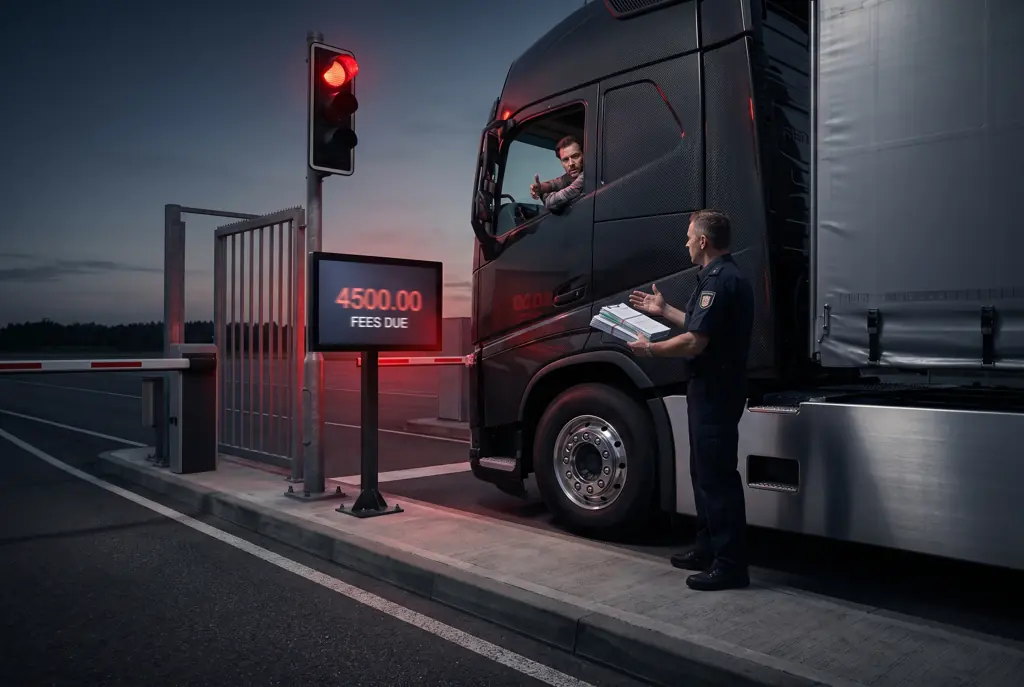
If origin is declared wrongly on a shipment to Switzerland, the EUR.1 contains an error, arrives too late or is missing entirely, the Swiss importer loses the preferential rate under the EU-Switzerland agreement. (source: bazg.admin.ch) Instead of zero or reduced duty, the Swiss customs administration charges the full rate. The importer pays more than they had to.
Why does this hurt specifically with Switzerland?
Switzerland is not part of the EU or its customs union. Every shipment crosses a real customs border and is cleared. Zero or reduced duty is not automatic: it has to be proven with a valid preferential origin document. Without correct proof, the goods enter like any other third-country import at the full rate. This is not a penalty. It is simply the loss of a benefit that was within reach.
What usually goes wrong
- The declared origin does not meet the agreement rules. Goods assembled in the EU from non-EU components often fail the origin rules. Stating EU origin on the document when the rule is not met is an error that surfaces during verification.
- Missing or late EUR.1. The shipment moves but the certificate was not issued before clearance on the Swiss side, or it got stuck and arrived after the declaration was closed.
- The exporter is not authorised to make the invoice declaration. An origin declaration on the invoice above the value threshold requires approved exporter status. Without that status the declaration grants no preference.
- Formal errors on the document. Wrong commodity heading, description not matching the invoice, missing signature or stamp, consignor and consignee data inconsistent with the declaration. The Swiss administration can reject such proof.
- The goods genuinely do not meet the origin rule, yet a proof was still issued. On retrospective verification the preference is withdrawn.
The real cost of the error
The importer in Switzerland pays the duty, because they are responsible for the import declaration. The consequences are concrete:
- Full duty on the importer invoice instead of the preference the contract assumed as a given.
- Inflated landed cost that wrecks the calculation and margin on the Swiss side.
- A dispute over who covers the difference. The importer expects the exporter to supply a correct proof or make good the loss. That is friction in the trading relationship.
- Retrospective verification. If the error surfaces after the fact, the preference is withdrawn for the whole series of deliveries, not just one.
- Lost trust. A Swiss partner who once paid duty because of the paperwork looks more carefully at the next orders.
How does OTSL run origin documents to Switzerland?
We treat origin as part of clearance, not as paper stapled on at the end. In practice that means concrete steps:
- We settle the proof before loading. Before the truck leaves, it is clear whether the shipment moves on an EUR.1 or on an invoice declaration, and whether the exporter holds the approved exporter status needed for that declaration.
- We check the declaration against the EU-Switzerland agreement rules instead of copying origin from the order blindly.
- We keep the documents consistent. Commodity heading, description, value and party data must agree between the invoice, the origin proof and the Swiss-side declaration.
- We synchronise the document with the transport so the proof is ready in time for clearance rather than chasing the goods.
- We flag the risk when goods assembled from non-EU components may fail the origin rule. Better said before dispatch than explained after the duty is charged.
The outcome is simple: the Swiss importer gets the preference they are entitled to, and the exporter avoids the costly conversation about who covers the difference. Control over the origin document is not a formality. It is real money on the receiver's invoice.
Step by step
- Verify origin rules. Confirm that the goods meet the specific processing requirements under the EU-Switzerland agreement.
- Collect supplier statements. Gather supplier declarations proving that the raw materials and components originate within the EU.
- Issue origin proof. Add a valid origin statement to the invoice or obtain an authenticated EUR.1 certificate from customs.
- Submit paperwork to forwarder. Send all documents to the transport company prior to dispatching the shipment to Switzerland.
- Audit data consistency. Cross-check document numbers, descriptions and values before presenting the clearance declaration at the border.
Definitions
- EUR.1 Movement Certificate: An official customs document certifying the preferential origin of goods traded under specific bilateral agreements.
- Origin declaration: A statement made by the exporter on an invoice or commercial document asserting the origin of the goods.
- Preferential origin: The status of goods meeting specific origin criteria that qualifies them for reduced or zero customs duty.
- EU-Switzerland Agreement: A trade agreement establishing origin rules and preferential tariff conditions between the EU and Switzerland.
- BAZG (Federal Office for Customs and Border Security): The Swiss customs authority responsible for border control, duty collection and origin verification.
When does this rule not apply?
This rule does not apply to non-commercial private shipments or small consignments that fall below specific thresholds defined in international agreements.
The OTSL role
OTSL assists exporters with transport organisation and documentation checks for Swiss trade flows. Learn more about our road transport services and read our guide on choosing a Polish freight forwarder. See also: Shipping Wine and Alcohol to Switzerland: Duty, Tax, Documents and High-Value Goods Transport to Switzerland.