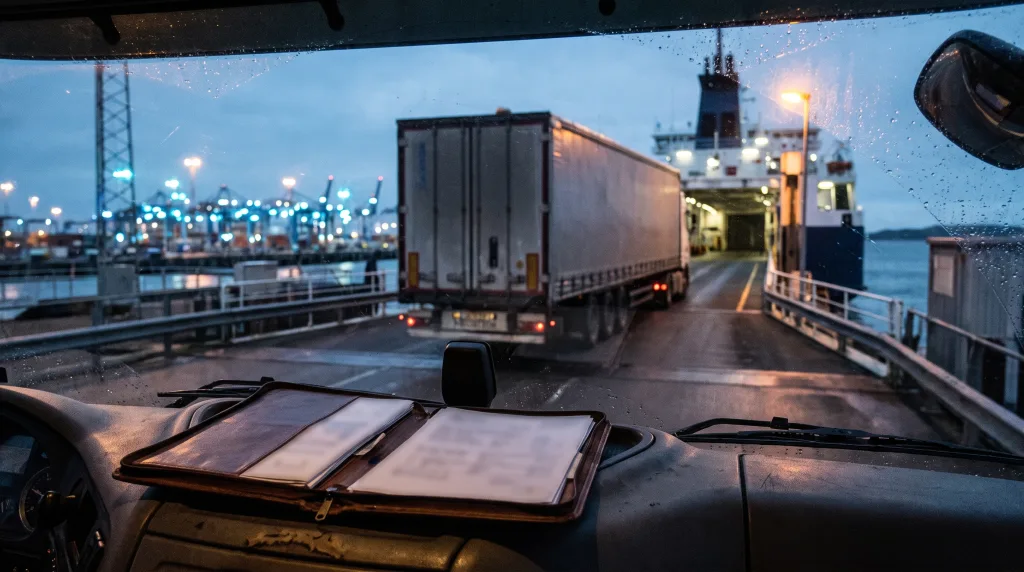
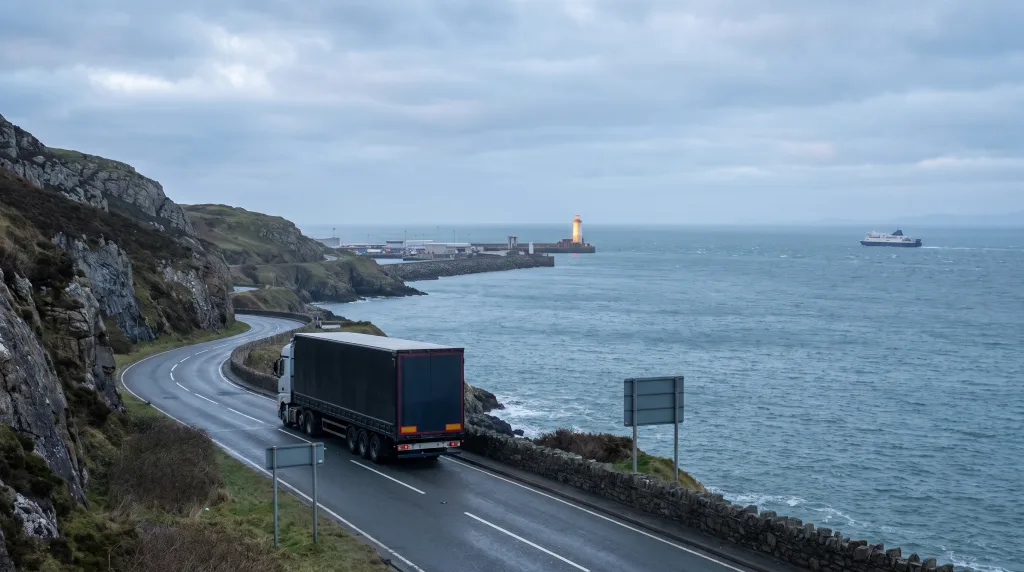
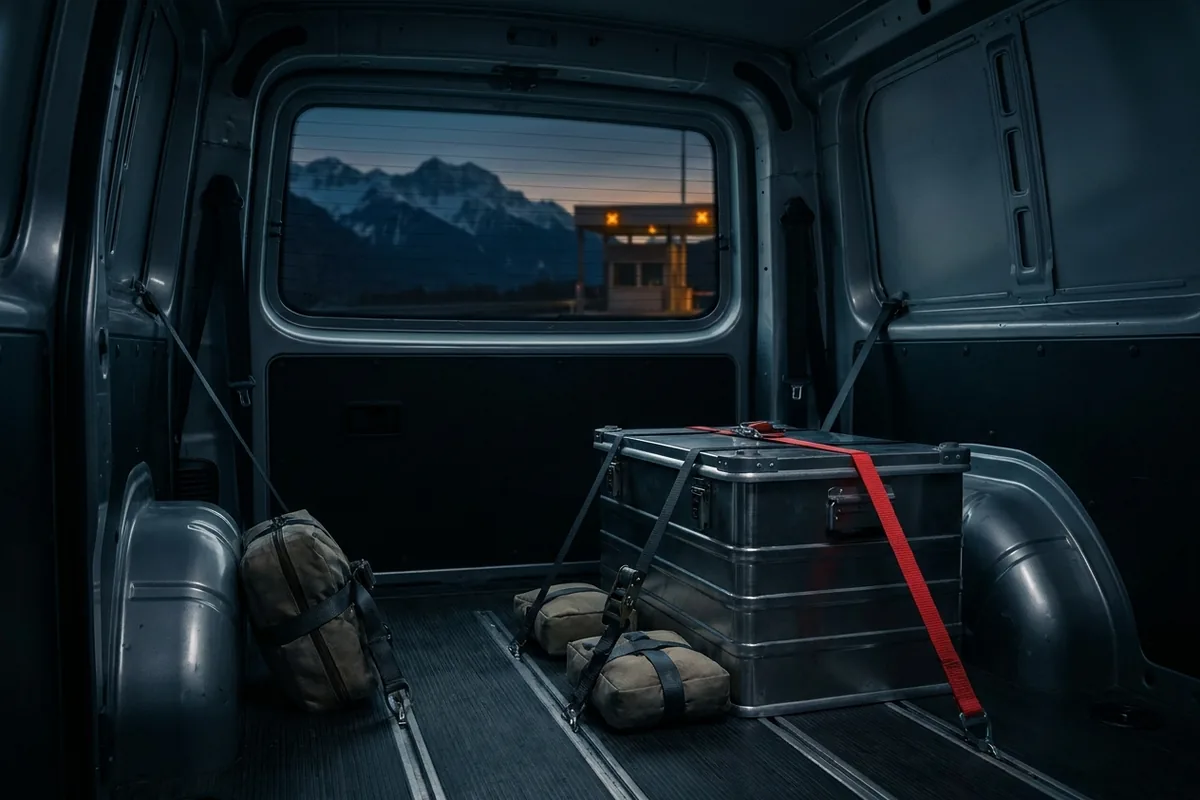
 AI image
Three things decide a high-value shipment to Switzerland (watches, jewellery, electronics): a declared value on the CMR consignment note, a separate cargo policy (because carrier liability alone caps out at 8.33 SDR per kilogram), and a controlled route with secure stops and correct Swiss customs clearance. Skip these and a theft or damage claim returns a fraction of the real value.
Why does carrier liability alone will not cover a pallet of watch?
Carrier liability in international road transport is governed by the CMR Convention. Article 23 caps compensation at 8.33 SDR per kilogram of gross weight of the missing goods (SDR being the IMF unit of account, worth about 1.2 units of a major currency). For heavy machinery that can be enough. For a carton of watches, where a kilogram is worth tens of thousands of francs, that limit is a disaster.
Run the numbers. A parcel of watches worth CHF 200,000, gross weight 5 kg. CMR limit: 5 kg times 8.33 SDR, the equivalent of a few dozen francs. A carrier on liability cover alone pays exactly that, and you absorb the rest of the loss. That is why, for valuable goods, carrier liability is not enough and a separate cargo policy is required. We break down the difference in our piece on cargo insurance versus carrier liability, and the full picture of all three transport policies in three insurances in transport.
Declared value and special interest in delivery
The CMR Convention offers two tools to lift the ceiling. Article 24 lets you declare a value exceeding the Article 23 limit on the consignment note, for a surcharge. Article 26 lets you declare a special interest in delivery, an extra amount against delay or loss. Both entries must be on the CMR before carriage starts; neither can be added after a loss.
In practice we combine the two: the declared value raises carrier liability, the cargo policy closes what the declaration does not reach. In a theft the carrier is generally liable (CMR Article 17(1)), and release from fault is a hard exception to prove, because courts usually treat theft as avoidable (the duty to use guarded parking). So the real value of cargo cover lies above all where the 8.33 SDR/kg limit sits far below the value of the goods, not in any supposed absence of carrier liability.
| Protection layer | What it covers | Where it fails |
|---|---|---|
| Carrier liability | Loss through carrier fault, up to 8.33 SDR/kg | Light valuable goods, no fault, force majeure |
| Declared value (Art. 24) | A raised carrier liability ceiling | When the carrier is at no fault at all |
| Cargo insurance | Value of the goods regardless of fault | Policy exclusions, undeclared risks |
Route, stops and the real theft risk
High-value freight is target number one for organised crews. The greatest risk arises not in motion but at rest: an unguarded overnight park, a trailer door, a slashed curtain. So for valuable cargo we plan the route around secure stops (guarded, monitored, fenced parking), not around the shortest time. We describe how these losses happen in our piece on cargo theft from truck parks and overnight stops.
For exceptionally valuable consignments, extra measures come into play: running without a planned stop (a two-driver crew), discretion on the order (no trailer markings hinting at the contents), a controlled-number seal, unit geolocation, and in extreme cases an escort. The mix depends on value and risk profile; there is no single rule for everything.
- A trailer with no markings that betray valuable goods.
- Stops only at guarded parking, planned in advance.
- A seal and loading photos as proof of condition at departure.
- Continuous position monitoring and one point of contact for the order.
- A declared value on the CMR and an active cargo policy before start.
Customs clearance into Switzerland
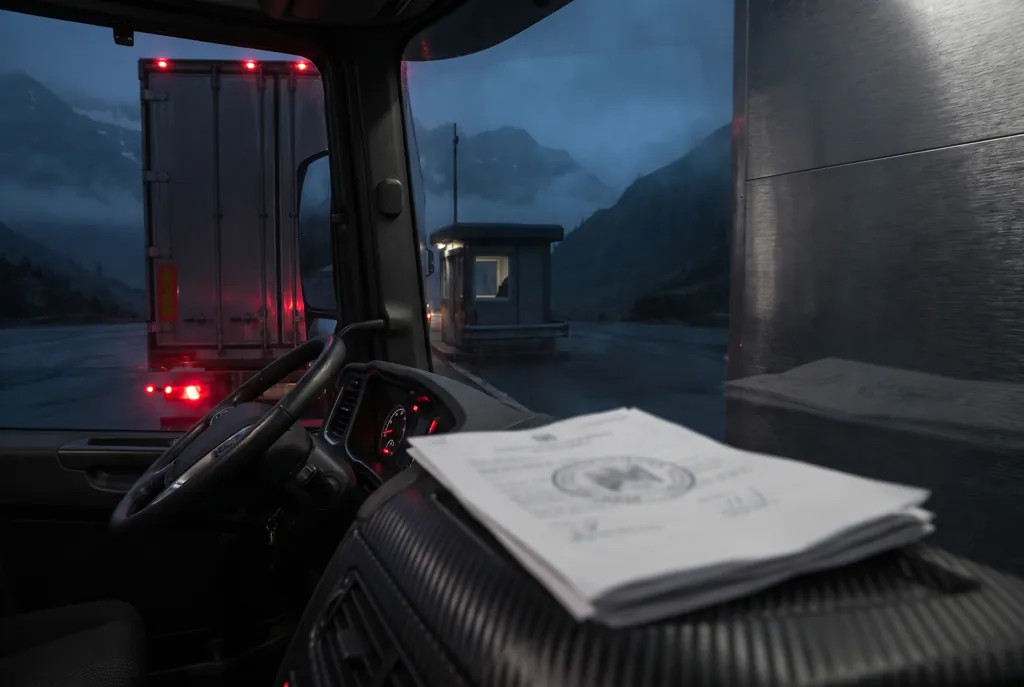
Switzerland is in the Schengen area but outside the customs union. Every commercial shipment crosses the border with clearance: export on the EU side and import on the Swiss side. Switzerland has historically assessed duty on gross weight, typically per 100 kg, rather than on value, which sets it apart from most tariff systems. Since 1 January 2024, however, it has unilaterally abolished duty on industrial products (HS chapters 25 to 97, with few exceptions), so watches, jewellery and electronics now enter Switzerland duty-free, while the weight-based rates remain mainly on agricultural and food goods. Duty aside, import VAT (standard 8.1%, reduced 2.6% on selected items) applies on the customs value, so for expensive cargo it is VAT, not duty, that is the main cost line. Confirm the rules and exceptions with the official source: bazg.admin.ch. Electronics and watches have their own tariff headings and may carry extra requirements (for example precious metals and hallmarking).
Clearance on the Swiss side now runs in the Passar system, which replaced the earlier e-dec. A declaration needs a correct invoice with value, a tariff code, country of origin and the transport document. With high-value goods, an error in customs value or tariff can hold the load at the border, which for valuable freight means added standstill risk. We cover the process on our customs clearance page, and market-specific notes on the Switzerland landing.
The documentation that saves a claim
A cargo payout lives and dies on evidence. The insurer checks whether the value was declared, whether the condition of the goods was documented at loading, and whether the security matched the risk. So for valuable transport we assemble: an invoice with the real value, a specification (exactly what, how many units, serial numbers for electronics), a CMR with the declaration entered, loading and seal photos, and policy terms checked against exclusions.
The most common mistake is understating the value on the invoice to save on duty. In a loss the insurer pays up to the declared value, meaning up to that understated figure. A saving at clearance turns into a many-times-larger loss on the claim.
How does OTSL run valuable freight to Switzerland?
We handle international transport from Kielce, with our own customs agencies in Poland and the UK and experience across the EU, UK, Switzerland and Norway. For high-value goods we set the risk profile with the client, plan the route around secure stops, keep the declared value on the CMR and verify the cargo policy scope before the trailer moves. One person runs the order from loading through Passar clearance, available 24/7. We do not trade on freight exchanges; valuable cargo travels under control, not into random hands.
Planning a shipment of watches, jewellery or electronics to Switzerland and want the value genuinely protected. Message us through the contact form, describe the goods and their value, and we will propose the full set: declaration, policy and a secure route.
Step by step
- Assess cargo valuation. Determine the full replacement value of the goods prior to booking the transport.
- Enter declared value. Specify the agreed monetary value directly on the CMR consignment note.
- Arrange cargo insurance. Secure a cargo policy covering the full risk amount during transit.
- Map out a secure route. Plan a controlled transit route that utilizes monitored parking facilities.
- Complete customs clearance. Prepare necessary export and import documentation for Swiss border processing.
Definitions
- CMR (Consignment Note): A standardized transport document confirming the contract for the international carriage of goods by road.
- Declared value: An entry in the consignment note raising the carrier's limit of liability to the stated amount.
- SDR (Special Drawing Rights): An artificial monetary unit used to compute the carrier's statutory liability threshold.
- Cargo insurance: A freight policy covering the actual value of the goods regardless of carrier liability.
- Swiss customs clearance: Official customs formalities required when entering Swiss territory from the European Union.
The OTSL role
When you move high-value freight to Switzerland, OTSL manages route control, monitors border formalities, and assists with value declarations. Explore our road transport (FTL) solutions and read about express vans and time-critical transport in Europe to maintain tight oversight over your valuable shipments.