 AI image
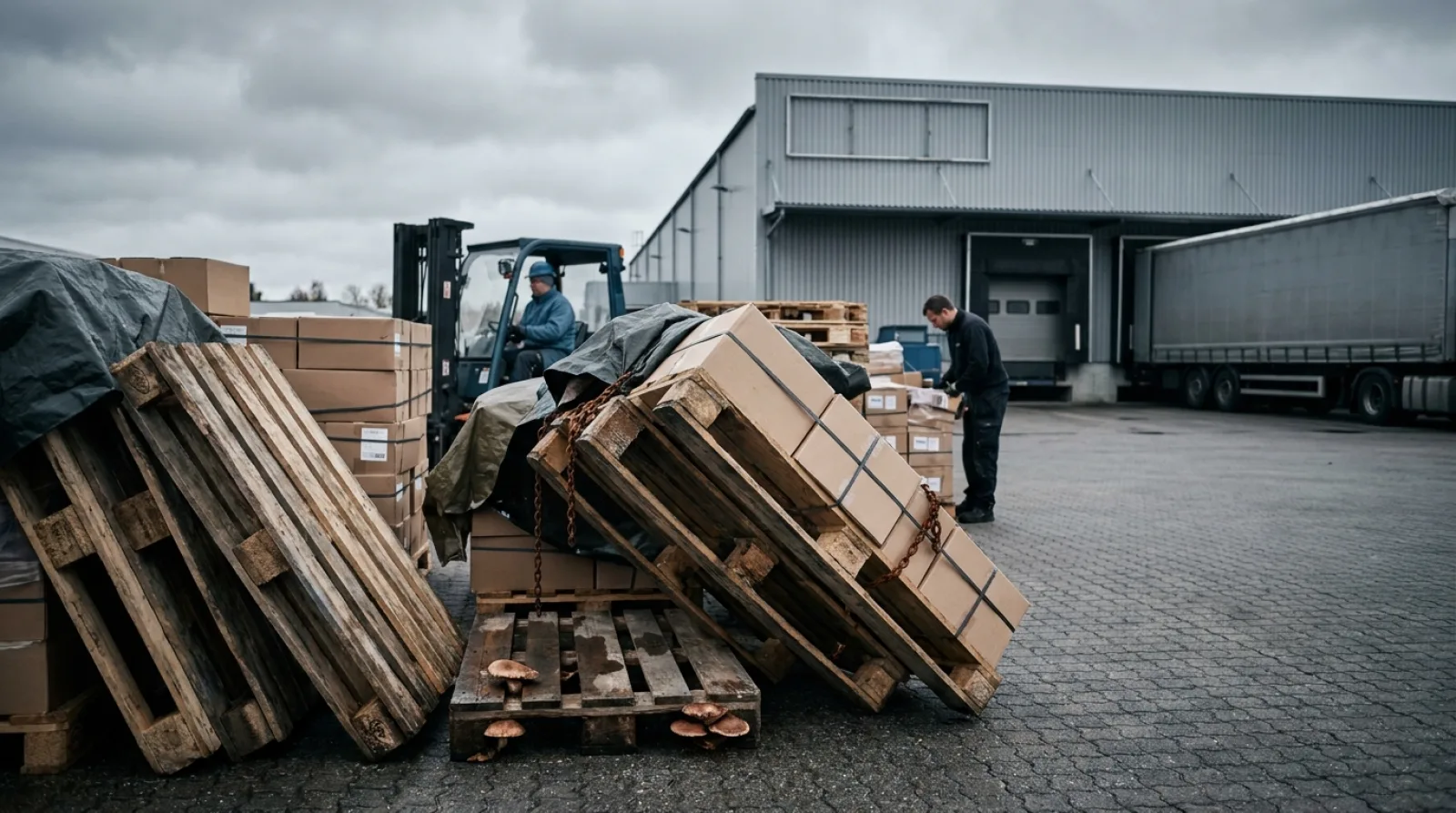
Amazon fulfilment centres reject mushroom pallets and tilted stacks at the gate for safety reasons during unloading. A stack wider at the top than the base creates overhang and tipping hazards. Unstable loads, broken boards, protruding nails, or failure to interlock layers result in immediate rejection regardless of the shipment contents.
Why does Amazon reject mushroom-shaped pallets?
When cartons are stacked on a pallet in a manner where upper layers extend beyond the perimeter of the wooden base, a mushroom shape is formed. This arrangement creates an unacceptable overhang. During road transport and subsequent forklift movement inside the fulfilment centre, overhang leaves cargo vulnerable to deformation and severe damage. Protruding edges rub against neighbouring pallets inside the trailer, causing crushing when lifted by forks. Amazon sets strict dimensional limits in Seller Central, and any overhanging layer is flagged as a safety hazard for operational staff.
The root cause of mushroom pallets is often an attempt to maximise carton volume without matching the dimensions of the wooden carrier base. If outer packaging exceeds the base dimensions after packing, layers expand outwards as they rise. Fulfilment centre operators will not unload units that present a collapse risk during handling manoeuvres. Consequently, non-compliance with guidelines leads to an immediate refusal at the intake bay.
What causes pallet stacks to tilt during transit to Amazon?
Vertical instability in a pallet stack usually stems from incorrect carton arrangement and insufficient stretch wrapping. Column stacking, where cartons are placed directly on top of one another without interlocking patterns, significantly reduces structural rigidity. Under centrifugal forces and heavy braking during transport, these columns separate, causing a pronounced tilt. If layers are not interlocked in a brick pattern, even tight wrapping at the top cannot prevent the lower sections from shifting.
Another frequent error is failing to secure the pallet foot when applying stretch film. Stretch wrap must bind the cargo directly to the wooden base, starting from the bottom blocks and boards all the way to the top of the stack. For crush-sensitive goods, cardboard corner protectors must be installed. Cartons that collapse under film pressure cause the wrapping to loosen, leading to a loss of vertical alignment before the vehicle reaches its destination.
Preparing a stable Amazon pallet step by step
- Check guidelines in Seller Central. Verify current maximum height and total weight limits for the specific destination country and fulfilment centre type in Seller Central, as requirements vary across locations.
- Inspect the pallet base. Select an undamaged EPAL or UK standard pallet in sound condition, ensuring there are no cracked boards, missing blocks, or protruding nails.
- Interlock carton layers. Arrange outer cartons in an interlocked brick pattern across alternating layers to prevent the formation of loose vertical columns.
- Install corner protection. Fit vertical cardboard edge protectors to all four corners if transporting goods packed in cartons susceptible to crushing under pressure.
- Wrap from the foot upwards. Apply stretch film continuously starting around the bottom pallet blocks, working upwards until the top of the load is completely secured.
- Audit overhang and alignment. Confirm before loading that no part of the cargo extends past the wooden edges and that the stack maintains a true vertical alignment.
Definitions
- Seller Central: The official web platform for Amazon sellers used to manage seller accounts, shipments, and review current logistics requirements.
- Overhang: A condition where cargo or outer packaging extends beyond the outer boundary of the wooden pallet base.
- Stack: Cargo arranged in structured horizontal layers on a pallet, prepared for transport and warehouse handling.
- EPAL: European Pallet Association, the governing body setting standardized specifications for wooden pallet manufacturing and repair.
Checklist for pre-shipment pallet inspection
- Are total height and weight compliant with Seller Central limits for the target facility?
- Is the EPAL or UK standard wooden base free from cracks, missing components, and exposed nails?
- Are carton layers stacked in an interlocked pattern rather than individual columns?
- Is the cargo completely free from perimeter overhang on all sides?
- Does the stretch film bind the wooden pallet foot to the top of the cargo?
- Are cardboard corner guards fitted around crush-sensitive carton edges?
When do these pallet stacking rules not apply?
The described pallet preparation procedure does not apply to non-standard cargo shipments that require separate handling agreements within the distribution network, nor does it apply when a fulfilment centre issues specific instructions for oversized items. Weight and height limits are not uniform across all facilities and depend on the destination country and facility type. Acceptance criteria depends on the specific Amazon location rules, so suppliers must always consult the current guidelines published in the seller portal.
The OTSL role
OTSL Sp. z o.o., based in Kielce, manages freight transport and logistics operations between Poland, the UK, Switzerland, Norway, and wider Europe. At our Milton Keynes facility in England and our location in Kielce, we handle transloading and cargo adjustments to meet retailer standards. Goods leaving manufacturing plants are often stacked for curtain-side trailers rather than strict fulfilment centre rules. We provide pallet restacking and alignment before booking delivery slots. To learn more about intake standards, read our guide on Amazon UK pallet requirements. You can also explore our Amazon UK delivery service, view recovery options at rejected Amazon FBA delivery plan B, or learn about our secure transloading service.