 AI image
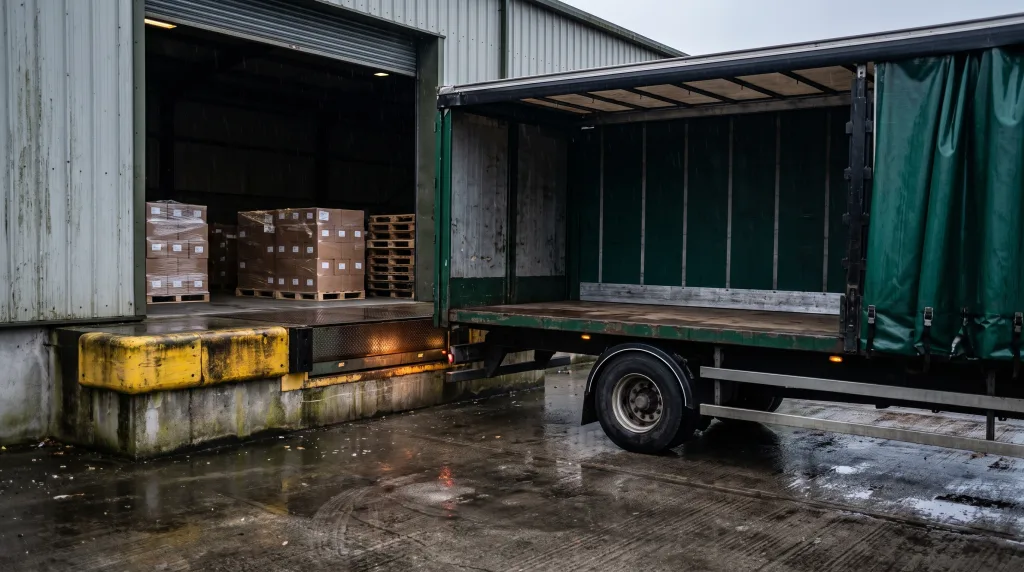
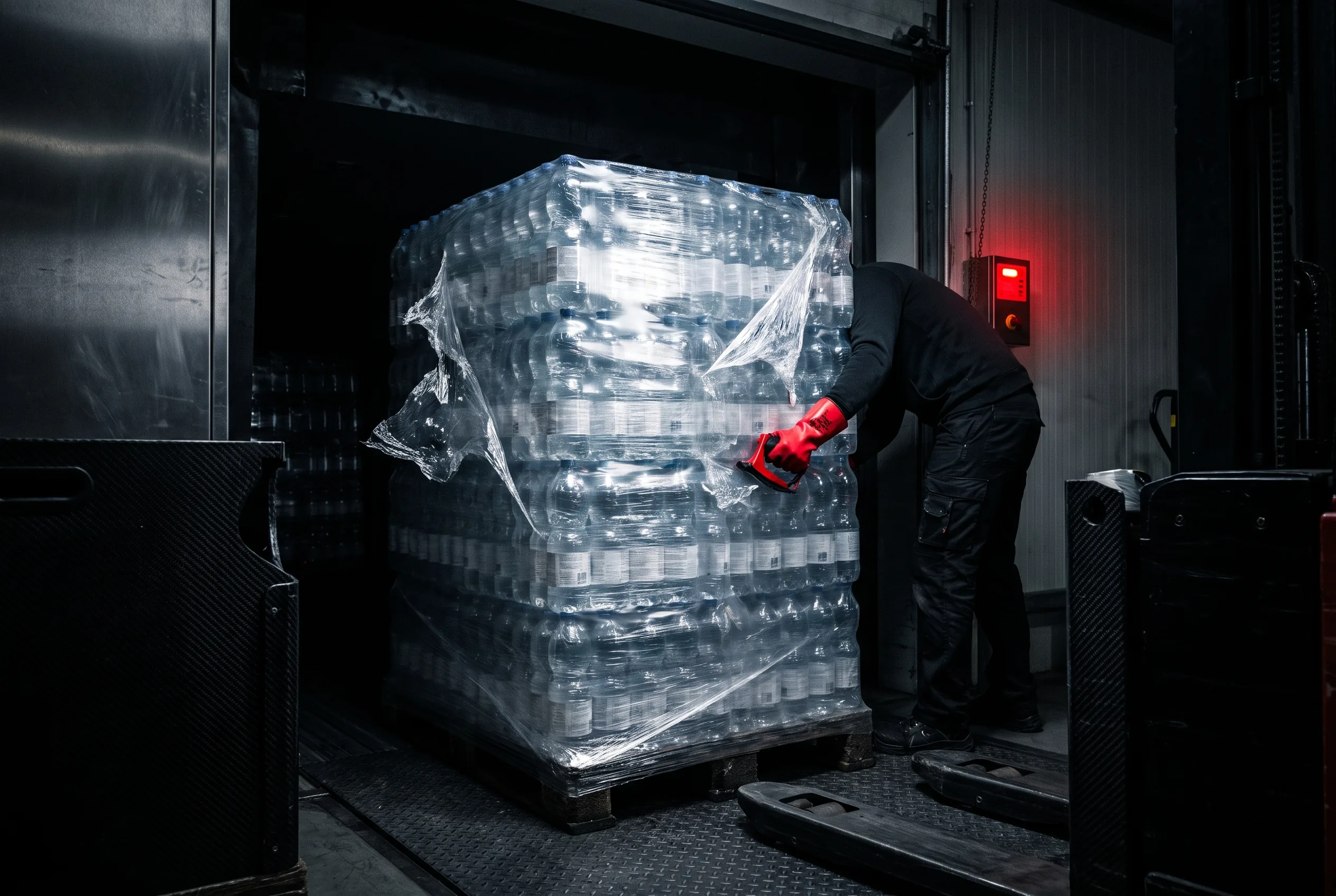
A curtain-sider with 26 pallets of bottled mineral water arrived at a distribution centre with pallets leaning and stretch wrap torn in several places after hard motorway braking. Water is one of the heaviest standard grocery loads, and once its wrap fails there is nothing else holding the stack. We rebuilt 17 pallets fully and 6 partially, recovering 23 pallets into the delivery.
Situation
Bottled water travels as shrink-wrapped packs stacked on pallets, dense and heavy. That mass works against the load twice. In transit, braking forces on a heavy stack are enormous, so it shifts more readily than lighter freight. And once shifted, a leaning wall of water is genuinely dangerous to approach, which is why the receiving warehouse halted the unload on sight. The products themselves were intact, the structure was not, and a supermarket chain does not accept structurally unsafe pallets at the gate.
What did we do?
Inspection sorted the trailer into pallets that needed a full rebuild, a partial one, or nothing. Loose packs and displaced cartons came out first. The unstable pallets were then taken down layer by layer, heavy work that has to be done deliberately, and rebuilt into correct patterns with balanced weight, on new bases where the old ones had failed. Fresh industrial film locked each pallet.
Reloading finished the job: even weight across the trailer floor, stable spacing, forklift access restored. Photographs and pallet records documented every step for the insurer.
Outcome
23 of 26 pallets were recovered and delivered, the losses limited to packs genuinely crushed in the shift. A trailer that could not be touched in the morning was safe to unload by the end of the operation.
What does this mean for shippers?
Heavy homogeneous loads like water punish weak securing more than almost anything else on the road, and reworking them is not casual labour. It needs equipment, patterns and discipline. The full service is described in pallet re-stow and load rearrangement. If a heavy load has shifted on you, use the contact form, we take trailers in 24/7.
How do you properly secure heavy water pallets to prevent displacement during transport?
When loading a pallet weighing 960 kg, stretch film alone cannot withstand the kinetic forces generated during sudden braking. The fundamental physical mechanism relies on the coefficient of friction between the trailer floor and the wooden pallet base. On a standard wooden floor, this coefficient is approximately 0.2, causing the load to slide under a deceleration force of 0.8 g. Placing rubber friction mats increases this value to 0.6, which reduces the required number of lashing straps from 26 to 13 units under top-over lashing protocols.
The second dependency involves stack height and tension dynamics. For PET bottle bundles, the maximum stable stacking height is 1.6 m. Exceeding this limit by even 10 cm raises the centre of gravity significantly, creating a leverage effect that tears the film at the bottom layer. To maintain structural integrity, the film tension must be maintained at a minimum of 15% stretch force, and a resting period of at least 2 hours is required after wrapping to allow material shrinkage to stabilize before fork-lift loading onto the curtain-sider.
Key operational conditions to observe:
- Application boundary: These specific wrapping and belt-lashing rules do not apply when transporting water in rigid plastic crates inside rigid-walled box trailers fitted with internal load-lock beams. In box vans, the reinforced sidewalls absorb up to 50% of the lateral forces directly, eliminating the need for friction-enhancing mats.
Step by step
- Halting unloading. The receiving facility stops operations immediately to secure the unsafe area.
- Assessing damage. Staff inspect the cargo condition and identify which stacks lost structural integrity.
- Securing the trailer. Operators prevent further movement of the goods before restoration begins.
- Rebuilding pallets. Workers re-stack the bottled packs manually and apply fresh protective wrap.
- Final safety check. The team verifies structural stability before delivering the pallets to the intake bay.
Definitions
- Curtain-sider: A trailer with flexible side curtains designed to simplify side loading and unloading.
- Distribution centre: A warehouse facility focused on receiving, storing, and dispatching goods to retail locations.
- Stretch wrap: A highly stretchable plastic film wrapped around goods to keep them tightly bound on a pallet.
- Heavy grocery load: High-density freight such as bottled liquids that exerts large forces during transport.
When does this rule not apply?
Strict rejection of shifted pallets does not apply if the freight is secured inside rigid box containers, unless the primary product packaging itself has sustained damage.
The OTSL role
When heavy cargo shifts during transit, we arrange immediate assistance to restore safety standards. Read about our road transport options or learn about pallet standards in European pallet specifications.