 AI image
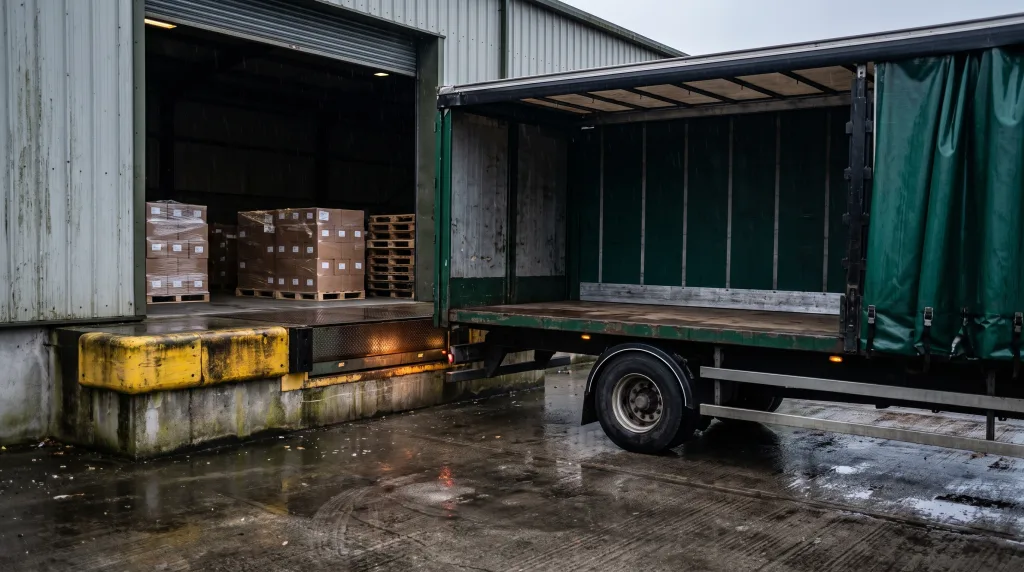
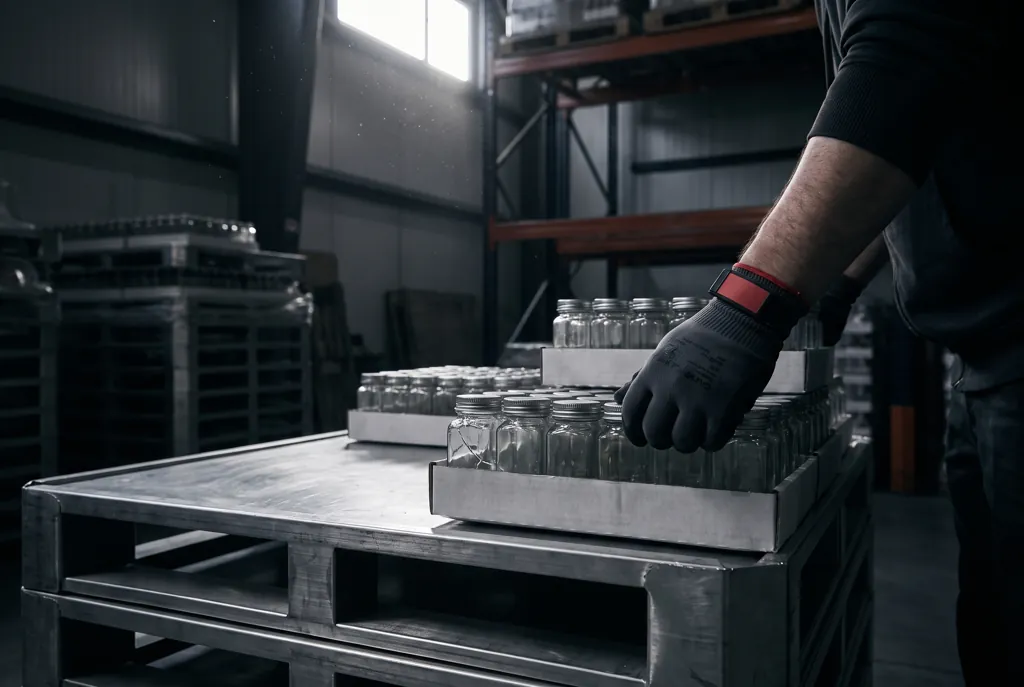
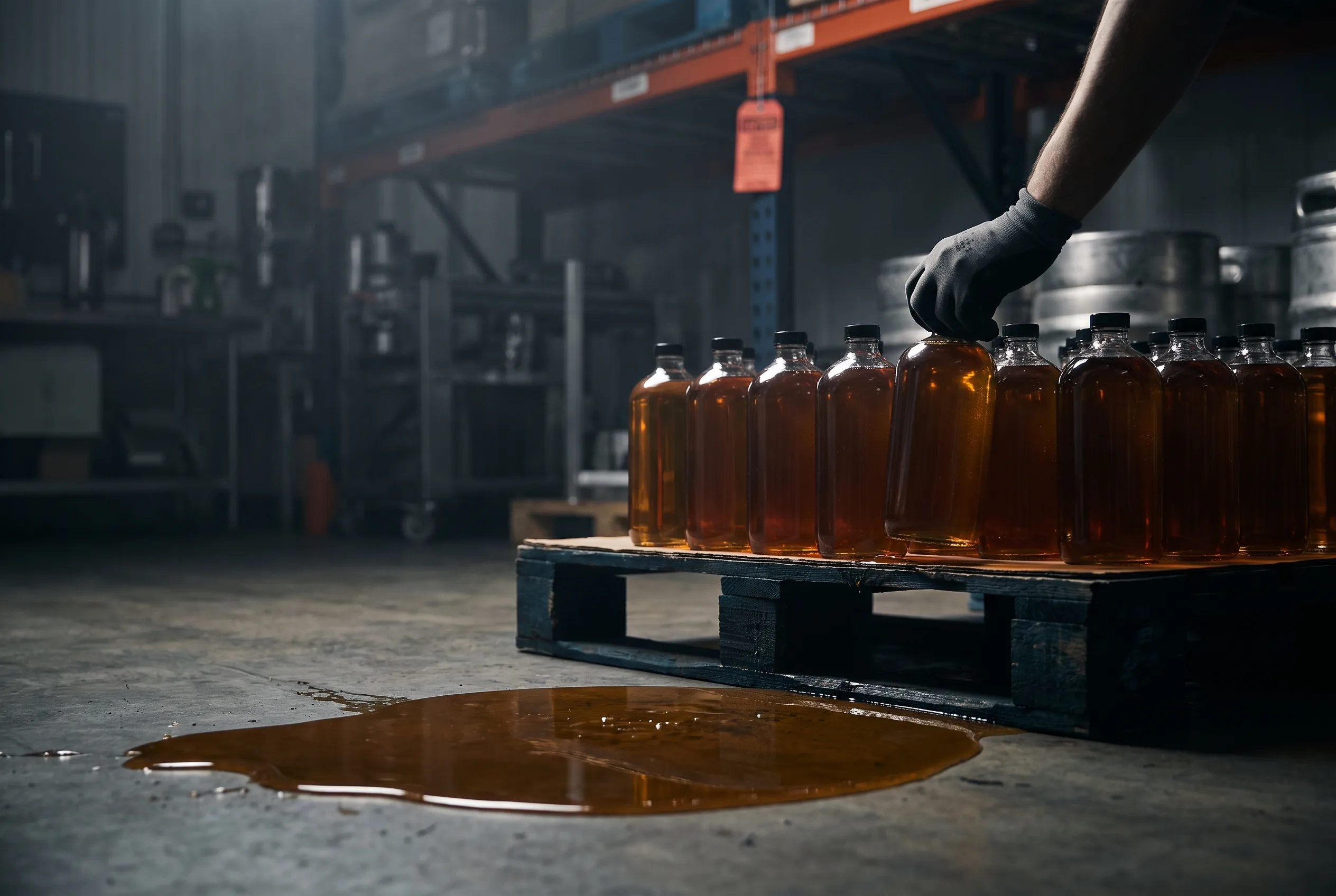
A curtain-sider with 26 pallets of sugar syrup in glass bottles reached a food distribution centre with six pallets leaning and stretch wrap partly torn after sudden braking. Syrup in glass is an awkward combination: the bottles are heavy and brittle, and when one breaks the leak spreads slowly, gluing cartons together and hiding cracks. We rebuilt 17 pallets fully and 6 partially, and 23 pallets returned to the delivery.
Situation
Glass bottles filled with dense syrup make heavy cartons on tall stacks, and the load answers hard braking the way heavy glass always does: pallets slid forward, stacks tipped into their neighbours, wrap tore. The receiving warehouse stopped the unload because of the breakage risk. With syrup there is a second concern that dry loads do not have. A cracked bottle does not announce itself, it seeps. By the time a leak is visible on the outside of a carton, the product has usually been travelling through the stack for a while.
What did we do?
The inspection covered stack stability, carton positions, wrap condition and any trace of leakage: staining, stickiness, the smell of exposed syrup. Then the rebuild, deliberately slow where cartons resisted separation, because a carton that sticks to its neighbour is evidence in itself. Cartons were re-laid into correct patterns, new bases went under rebuilt stacks and fresh wrap secured them.
Suspect cartons were opened and checked rather than passed on looks, and anything with cracked or leaking bottles was pulled. The trailer was reloaded with restored spacing and documented throughout with photographs and pallet reports.
Outcome
23 of 26 pallets were recovered and the shipment continued through the supply chain. Losses stayed limited to cartons with genuine breakage, each one recorded for the claim file.
What does this mean for shippers?
Liquid in glass punishes shortcuts. A rework that only fixes geometry sends hidden leaks onward, and they surface at the worst point, on a retail shelf. The rebuild-and-screen approach is described in pallet re-stow and load rearrangement. Glass-and-liquid load gone sideways? Use the contact form, the site works 24/7.
How to properly secure heavy glass syrup pallets to prevent movement in the trailer?
When you transport liquid syrup in glass containers, managing friction and preventing sway at height is critical. A single pallet weighing 850 kg with a height of 160 cm requires anti-slip mats with a friction coefficient of at least 0.6 µ. A standard wooden trailer floor offers only around 0.3 µ, which results in immediate cargo displacement during emergency braking. You must tension the lashing straps to at least 500 daN using long-lever tensioners. If your haulage route includes a North Sea or English Channel ferry crossing, increase the number of lashings by 25 % compared to standard road calculations to absorb multi-directional maritime forces.
- Use edge protectors with a minimum length of 1.2 metres to spread strap pressure along the top carton edges and protect fragile glass beneath.
- Maintain a maximum gap of 5 cm between pallet rows along the longitudinal axis inside the curtain-sider.
- The operational time frame to clean leaks and restack affected units at temperatures above 18°C must not exceed 12 hours before the sugar hardens.
This lashing strategy does not apply when cargo is carried inside rigid-walled box trailers or reefer units without floor lashing points, where payload stability relies entirely on positive locking against side walls and shoring poles. Bear in mind that additional securing gear expenses depend on contract terms and transit route specifications, so verify these operational details before loading at the bay.
Step by step
- Halting the unload. The receiver pauses operations at the trailer to prevent further damage to glass containers.
- Inspecting leaks. The team checks which cartons are glued together by escaping syrup and locates hidden cracks.
- Separating damaged stock. Workers remove broken bottles and ruined packaging from the intact goods.
- Rebuilding pallets. Intact stock is stacked onto sound pallets and wrapped with fresh film.
- Returning to delivery. Verified and stabilized pallets are sent back into the distribution chain.
Definitions
- Curtain-sider: A trailer with sliding side curtains that facilitates loading and unloading of palletised goods.
- Stretch wrap: A highly stretchable plastic film used to secure and stabilise items on a pallet.
- Sugar syrup: A dense solution of sugar in water characterised by high viscosity and heavy weight.
- Distribution centre: A logistical facility designed to receive, store, and redistribute goods to final destinations.
The OTSL role
When heavy glass loads shift or suffer damage during transit, we help restore order and keep supply chains moving. We offer reliable road transport as well as groupage (LTL) services across the UK, Poland, and Europe, ensuring goods arrive safely.