 AI image
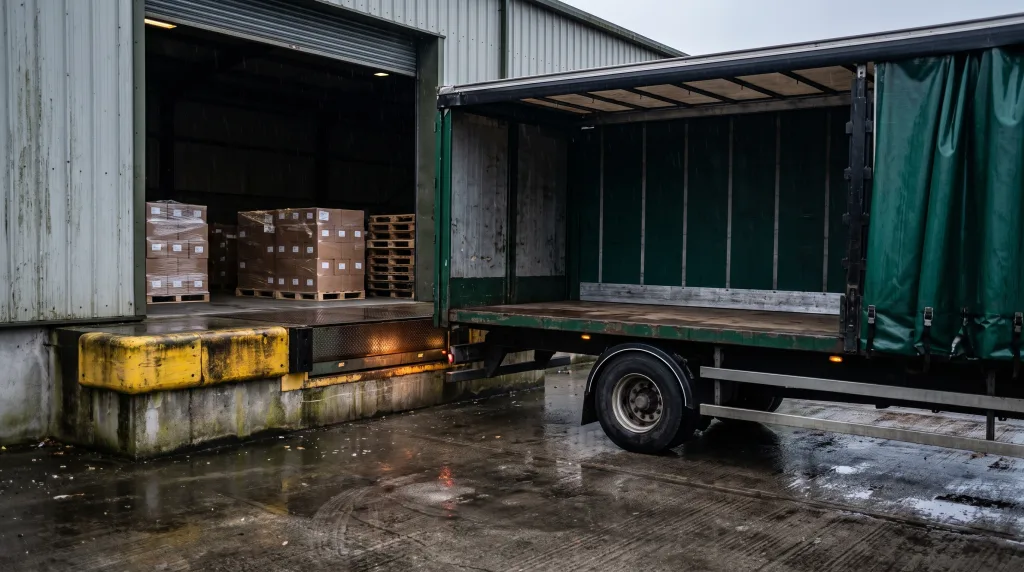
A curtain-sider arrived at a UK facility with a stillage of 16 granite slabs leaning after a shift in transit, and inspection found several slabs cracked. This is the case in this series where the product could not be saved. Stone does not restack like cartons, and a cracked slab destined for worktops is scrap. What we delivered instead was safety: stabilisation, controlled unloading and certified disposal with a certificate for the client.
Situation
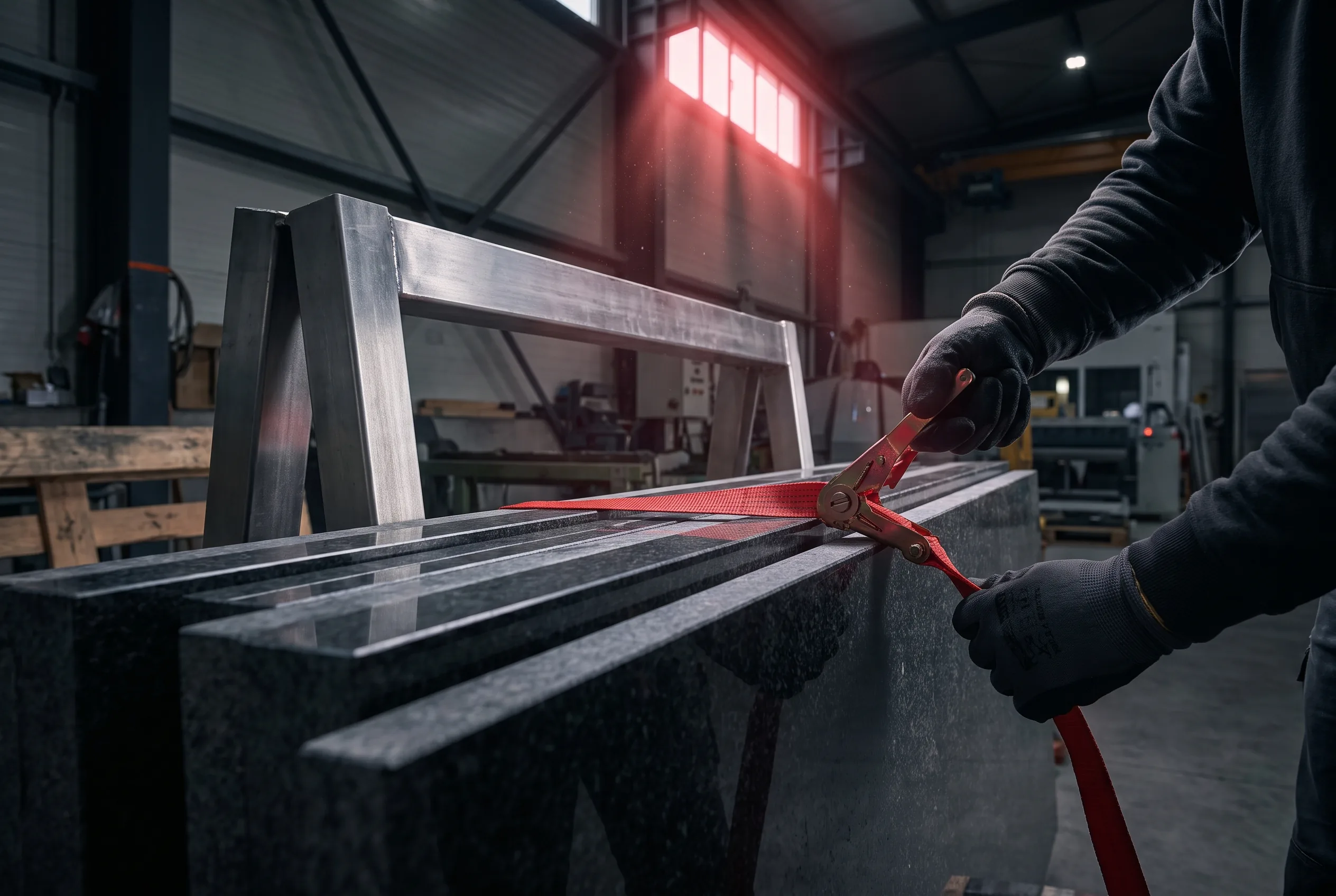
Granite travels vertically on A-frame stillages, and its two defining properties work against each other in an incident: enormous weight and surprising brittleness. Braking had shifted the stillage, straps were displaced and slabs were leaning inside the frame. Unloading was halted at once, correctly, because a slab that tips from a frame is not a product loss, it is a potential fatality. And unlike shifted cartons, cracked stone cannot be rebuilt into a deliverable load: a hairline crack in a worktop slab condemns it.
What did we do?
The inspection assessed slab positions, frame alignment, strap tension and the extent of cracking, and confirmed several slabs were unfit for delivery or installation. The first physical step was making the load safe: securing the stillage and realigning the frame so the stone could be approached at all.
Then came controlled unloading with lifting equipment suited to heavy stone, focused on safe removal rather than rescue. Because the damaged slabs could not return to the supply chain, we arranged their certified disposal through approved waste handling, and a disposal certificate was issued to the client confirming the stone was removed and disposed of properly.
Outcome
The unstable stillage was unloaded without injury or further damage, the unusable stone left through a documented disposal route, and the client received the paperwork that closes an insurance claim cleanly. No one pretended the slabs were saveable, and that honesty is part of the service.
What does this mean for shippers?
Not every distressed load ends in recovery, and a partner who tells you that early saves you money and risk. When goods are genuinely beyond saving, documented disposal is the correct product, as described in our article on certified disposal of rejected and damaged goods. For loads that can be saved, see pallet re-stow and load rearrangement. Shifted heavy or awkward load? Use the contact form.
How do you calculate A-frame securing forces to prevent movement during emergency braking?
When transporting granite slabs exceeding 3000 kg on a single A-frame inside a curtain-sider trailer, floor friction alone will not keep the load stable. The friction coefficient between timber decking and a steel frame is roughly 0.3. Placing rubber anti-slip mats beneath the 2-metre base increases this coefficient to 0.6, reducing the required lashing force by half. However, you must carefully monitor point loading: standard trailer decks tolerate a maximum of 5000 kg per metre of floor length, meaning a narrow base frame risks permanently deforming the chassis side members.
Securing this load requires a minimum of 4 heavy-duty lashing straps rated at 5000 daN, applied at angles between 30 and 60 degrees relative to the deck. You need to re-check strap tension after the first 50 kilometres of transit and subsequently every 24 hours. DVSA roadside checks in the UK strictly enforce load security compliance, and a 10% drop in strap tension on heavy stone loads is classified as an immediate safety hazard.
This securing methodology does not apply when individual slab thickness is less than 20 mm or when transporting resin-backed, highly polished stone. Direct strap tension against thin or brittle edges causes structural stress fractures; such material must be transported inside fully enclosed timber crates with internal bracing rather than on open A-frames.
Step by step
- Halt unloading. Immediately stop all site operations upon discovering an unstable, leaning frame.
- Secure the area. Cordon off the zone around the trailer to protect site personnel from falling debris.
- Stabilise the frame. Secure the leaning A-frame and stone temporarily before attempting any cargo movements.
- Controlled dismantling. Carefully unstrap and lower cracked granite slabs using specialized lifting machinery.
- Disposal and reporting. Transfer damaged stone to a disposal site and issue a formal destruction certificate for insurance claims.
Definitions
- A-frame stillage: A specialised steel frame designed for vertical transportation of heavy stone slabs and glass.
- Cargo recovery: The process of managing an emergency situation in transit, including securing, controlled unloading, and disposal of damaged goods.
- Curtain-sider: A standard commercial trailer fitted with sliding side curtains to allow convenient side access during loading.
- Certified disposal: The legal and documented destruction or recycling of damaged goods in compliance with environmental standards.
The OTSL role
When your stone shipment encounters transit instability, we coordinate emergency containment and safe handling through our road transport (FTL) operations. Leveraging our specialized UK facility, we perform controlled recovery as outlined in Milton Keynes warehouse: our recovery and inspection base in the UK.