 AI image
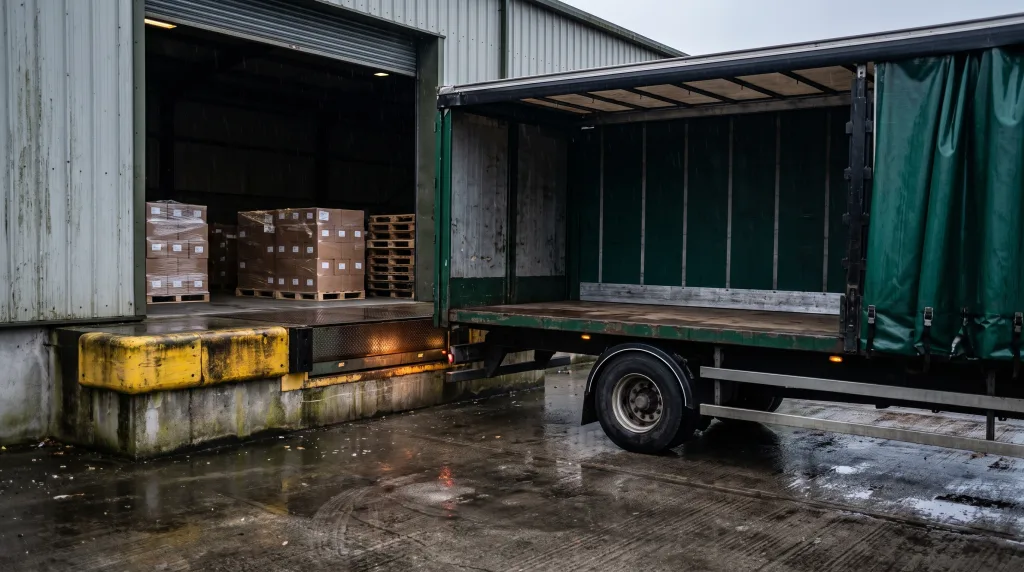
A curtain-sider carrying 33 pallets of spices packed in glass jars reached a UK distribution centre with five pallets leaning and stretch wrap torn after motorway braking. Glass jars fail quietly: one cracked jar inside a sealed carton spreads glass fragments and spice through everything around it. We rebuilt 27 pallets fully and 3 partially, screened the load for breakage, and all 33 pallets went on to the retail chain.
Situation
Spices in jars combine three risks in one load: glass fragility, food-contact product, and fine loose contents. When stacks lean, the danger is not just a falling pallet. A single jar cracking under pressure lets spice sift into the carton, and glass with it, so damage travels invisibly through cartons that still look sealed. The receiving centre halted the unload as soon as staff saw leaning stacks and torn wrap, because with this product an optimistic guess is how contaminated goods reach shelves.
What did we do?
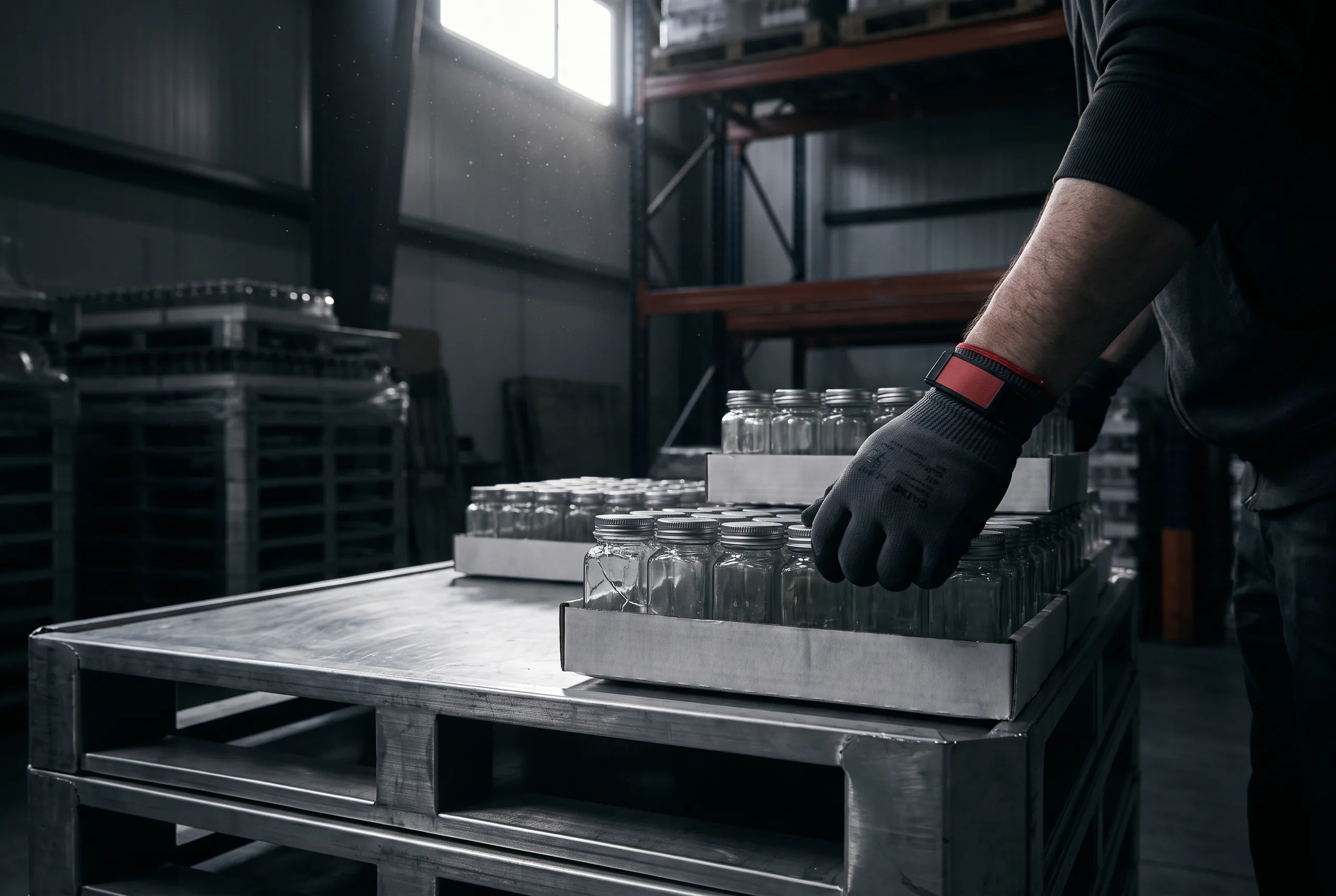
Inspection mapped the trailer: stack stability, carton alignment, wrap condition and any sign of broken glass or spilled product. Then the rebuild: damaged wrap off, cartons re-laid layer by layer in the correct pattern, fresh wrap on. 3 pallets were untouched.
The critical step was the post-rebuild product check. Cartons from affected pallets were examined for cracked jars, spilled spice and glass contamination, and anything compromised was separated so it could not sit next to clean stock, let alone travel with it. The clean load was re-spaced in the trailer for a safe unload.
Outcome
All 33 pallets returned to distribution, with the small quantity of compromised product removed and documented. The delivery reached the retailers and wholesalers it was meant for, without glass riding along.
What does this mean for shippers?
With glass-packed food, a load shift is a contamination event until proven otherwise. The rework is worth exactly as much as the screening that follows it. Both are part of the service described in pallet re-stow and load rearrangement. Glass-packed load in trouble? Use the contact form, we run 24/7 from Milton Keynes.
How do you secure restacked spice pallets against secondary shifting?
When you restack a pallet of glass-packaged spices, layer cohesion is critical. Use only stretch film with a minimum thickness of 23 microns, applying at least 6 wraps around the pallet base and 4 wraps across the load crown. The rebuilt pallet should not exceed a mass of 800 kg, and you must keep its centre of gravity below a height of 1.2 metres. A vertical displacement of carton edges by more than 15 millimetres reduces cardboard compression strength by 30%, which leads to bottom-tier jar breakage during subsequent braking.
You also need to manage humidity and quarantine time. Isolate cartons showing spice dust residue for at least 24 hours in the inspection area. If moisture meter readings on the outer corrugated board exceed 12%, the packaging loses structural integrity and requires replacement. Place anti-slip tier sheets with a minimum weight of 150 g/m² between rebuilt layers.
Boundary condition: this sorting and restacking process does not apply if liquid spills occur inside the curtain-sider or if total pallet mass loss exceeds 10%. In those circumstances, UK food safety protocols require full disposal of the affected pallet without opening individual cartons.
Step by step
- Halt unloading. Secure the area and stop further operations to prevent damaged items from falling.
- Inspect packaging. Examine the stretch wrap and check for spilled spices or glass fragments around the leaning pallets.
- Isolate contaminated boxes. Remove cartons layer by layer, removing any units where glass jars have cracked.
- Rebuild pallets. Restack undamaged outer cartons onto clean pallets and wrap them securely.
- Final inspection. Verify that the entire shipment complies with receiver requirements before dispatching to the network.
Definitions
- Restacking: the process of safely unloading, inspecting for damage, and rebuilding palletised goods.
- Curtain-sider: a trailer with flexible sliding side curtains that allows side loading and unloading.
- Stretch wrap: a plastic film wrapped around goods on a pallet to keep them secure during transport.
- Distribution centre: a logistics facility designed to receive, process, and forward goods to retail networks.
The OTSL role
When delicate food loads shift in transit, we handle emergency warehouse operations at our facility to safeguard the inventory. Our team inspects the cargo and rebuilds pallets to meet strict retail receiving standards. Discover our Road transport (FTL) and read about handling fragile loads in our guide Pallet restacking after a load shift: beer in glass bottles.