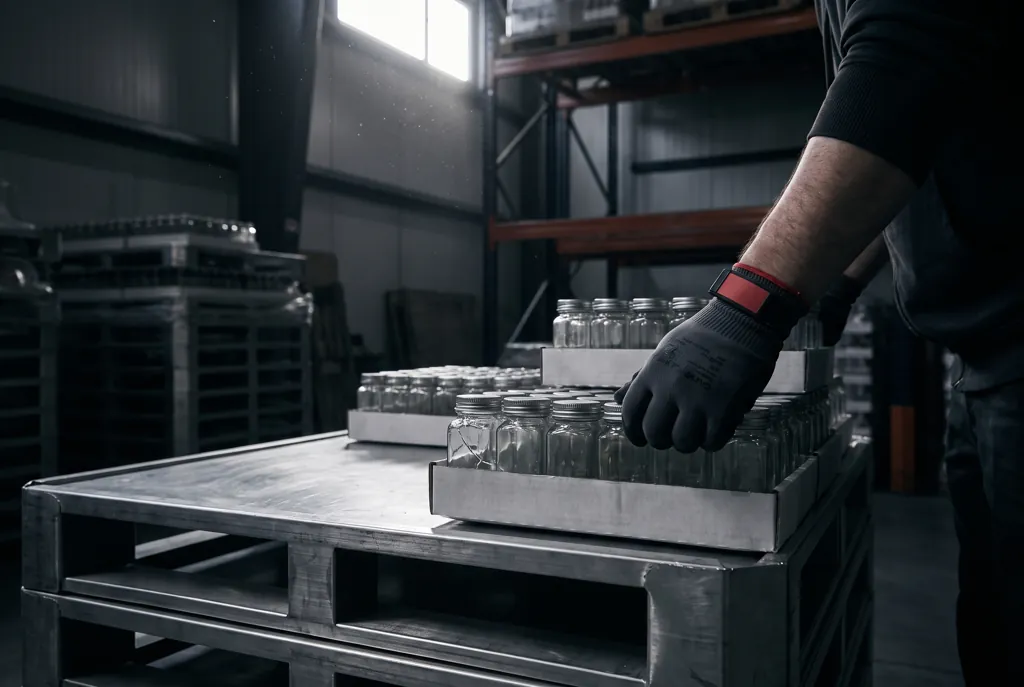
 AI image
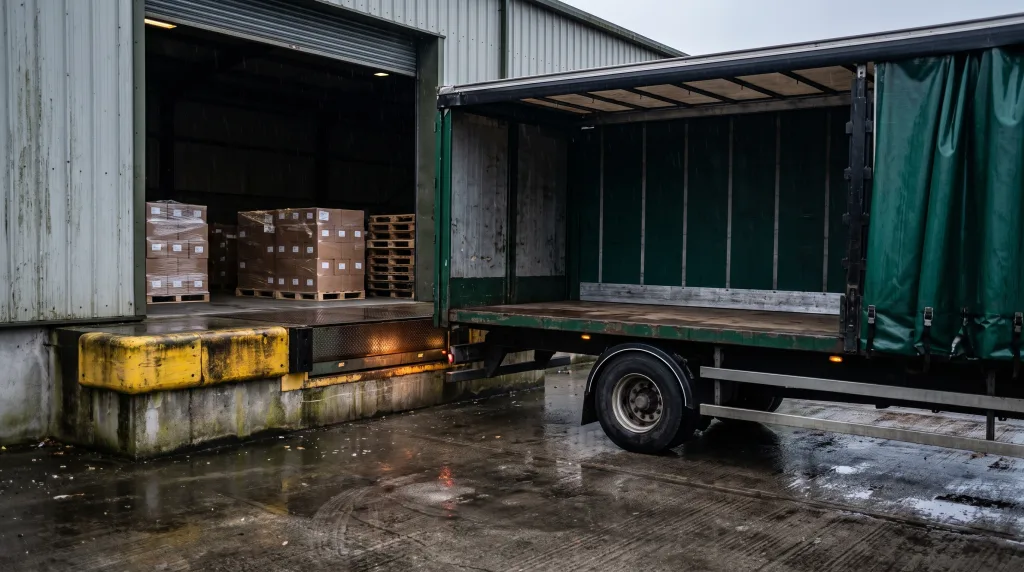
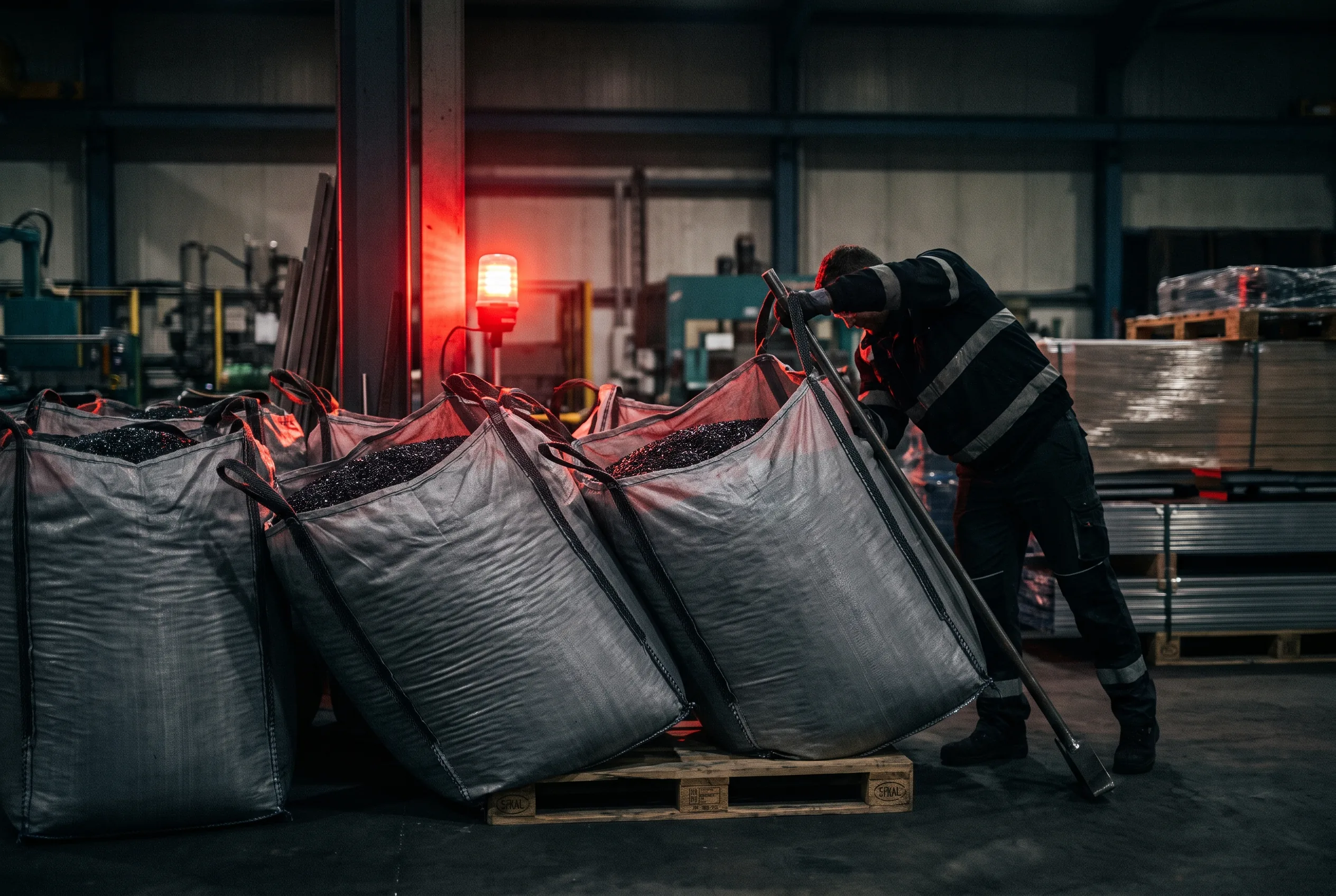
A curtain-sider carrying 26 pallet positions of plastic granules in 1-tonne bulk bags arrived at an industrial facility with bags leaning against neighbouring pallets after braking in transit. At roughly 1,000 kg per bag, even a small lean is a serious hazard, and a ruptured bag means lost product and a contaminated trailer floor. We realigned and re-seated the load position by position and recovered 24 of the 26 positions.
Situation
Bulk bags behave differently from carton freight. The product inside is loose granulate, so the bag itself deforms, and once it starts leaning its whole tonne of weight follows. Several positions had shifted out of alignment, some bags rested against their neighbours, and forklift access was unsafe. Unlike food loads there was no hygiene clock, but the physics were less forgiving: no one can steady a leaning tonne by hand, and a bag torn on a fork or an edge would have poured granules across the trailer.
What did we do?
Inspection assessed each position: pallet condition, bag integrity, weight distribution across the floor. Bags at immediate risk of falling were stabilised first. Then the recovery ran with forklifts and lifting equipment rated for the weight: 15 positions needed full restacking onto sound pallets, 7 needed minor realignment, 4 were untouched. Every move was planned so that no fork or edge came near the fabric of a bag.
With the load square again, spacing was restored for safe unloading and the operation was documented with photographs and a recovery report.
Outcome
24 of 26 positions were recovered, no bag ruptured, and the delivery to the processing facility went ahead. The trailer left clean, which with granulate is an outcome in itself.
What does this mean for shippers?
Industrial bulk loads fail differently from retail freight and need a recovery partner with the right lifting equipment, not just labour. The general approach to shifted loads is described in pallet re-stow and load rearrangement. Heavy bulk load leaning in a trailer? Describe it in the contact form, we assess it on arrival, 24/7.
How should you correctly strap realigned big bags to prevent them shifting on the first bend?
Once you have corrected the physical displacement of the material, you must lock both the base and the top of the bag. Simply applying a lashing strap over the top will crush the flexible structure, while the 1000 kg mass of granules will still shift under centrifugal force. To prevent this, you need to place anti-slip mats with a friction factor of at least 0.6 µ beneath each of the 26 pallets. Tension the lashing straps to a Standard Tension Force (STF) of at least 500 daN, using rigid plastic edge protectors or spreading boards over a minimum length of 0.5 metres. Without protectors, the webbing bites into the soft bulk material deeper than 10 cm, causing strap tension to drop by 70% within the first 20 kilometres of driving.
Handling bulk plastic granules requires continuous monitoring of load geometry. If the top offset of the bag exceeds 15 cm from the vertical axis of the pallet, base friction alone cannot stop the load from tipping over. In this scenario, you must use load securing nets or direct loop-lashing attached to the lifting loops of the big bag. Securing a full 24-tonne load on a curtain-sided trailer typically takes between 2 to 3 hours, depending on equipment availability in the yard.
Note the boundary limit for this procedure: these securing rules do not apply if the granular cargo has absorbed moisture or clumped together. When damp material forms a solid mass exceeding 800 kg inside the bag, the centre of gravity shifts unpredictably. Straightening and strapping such a load risks tearing the fabric seams, meaning the cargo must be completely transferred into fresh bulk containers at a suitable facility before continuing transport across the UK and continental road networks.
Step by step
- Stability assessment. Inspect the leaning bags and verify whether forklift access can be carried out safely.
- Area securing. Open the trailer curtain and secure adjacent positions to prevent secondary movement.
- Position support. Lift the leaning bag carefully using suitable forklift attachments without damaging the fabric.
- Realignment. Straighten and re-seat the load on the pallet to restore its centre of gravity.
- Final securing. Check vertical alignment along the trailer and strap the corrected positions securely.
Definitions
- Bulk bag (FIBC): A flexible intermediate bulk container designed for transporting loose materials weighing up to one tonne.
- Curtain-sider: A type of trailer with sliding side curtains to facilitate side loading and unloading.
- Pallet position: A designated space within the cargo area corresponding to the dimensions of a standard pallet.
- Plastic granulate: Loose industrial raw material transported in bulk bags.
When does this rule not apply?
This procedure does not apply if a bag has ruptured and spilled its contents onto the trailer floor or if the underlying pallet structure is destroyed.
The OTSL role
At OTSL, we arrange reliable road transport and handle cargo realignments across transit routes. Learn more about straightening pallets after load shifting in logistics operations.