 AI image
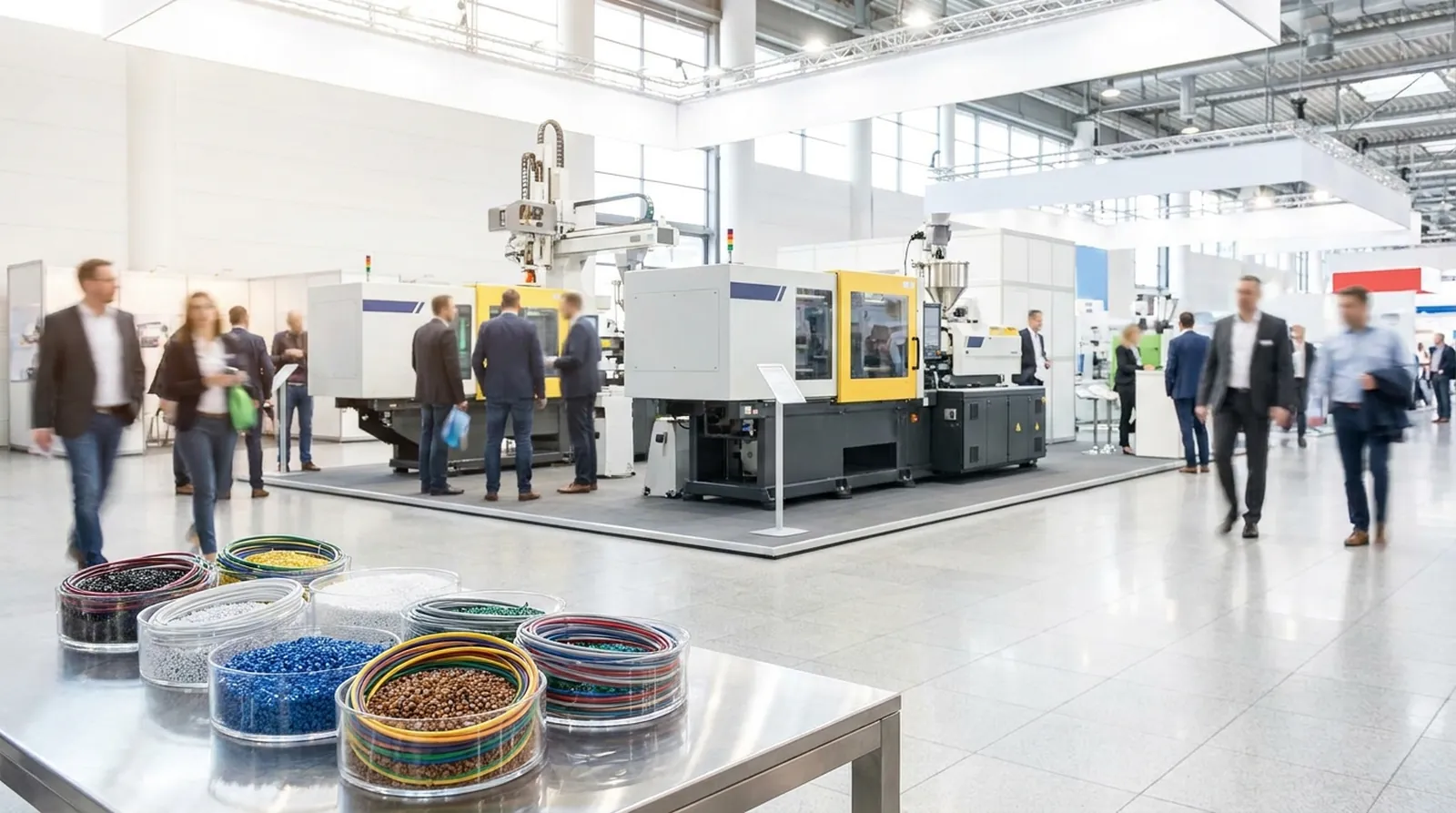
Plastpol, the International Fair of Plastics and Rubber Processing at Targi Kielce, is an event where exhibitors bring machines rather than leaflets: injection moulders, lines, peripherals. Such transport is planned from mass and support points, not pallet counts. Our Kielce warehouse next to the venue lets us split the machine delivery and the marketing materials into separate, convenient windows, so heavy equipment never queues behind light freight.
Why Plastpol machines are a different league from a normal delivery
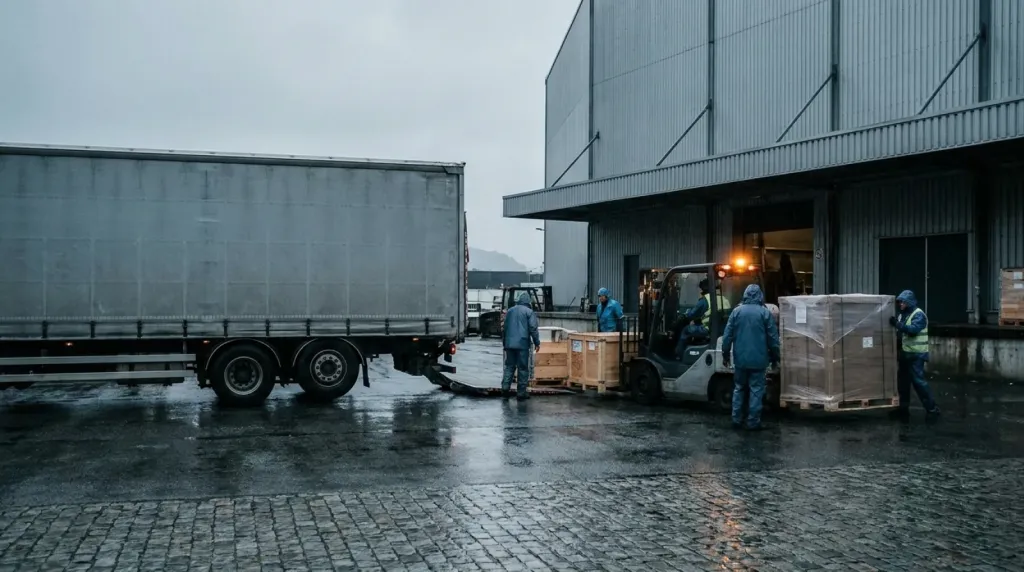
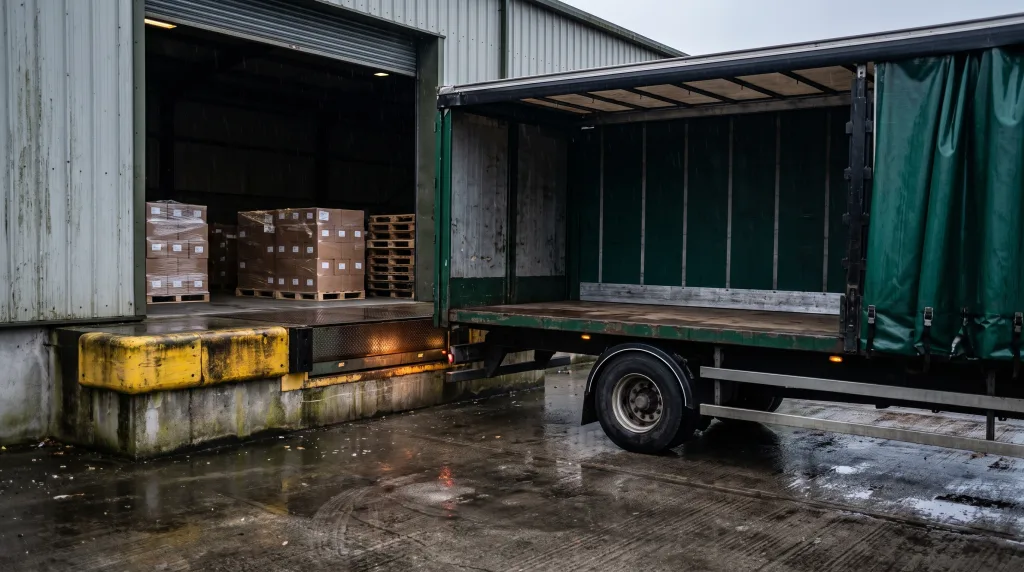
An injection moulder or a section of a production line weighs as much as several europallets stacked on a single point. The stand floor, the ramp and the access route each have load limits, and unloading needs equipment rated for the weight. If you do not do that maths in advance, the machine reaches the hall and gets stuck. The stake is simple: one day lost in the build-up window means a stand that is not ready for the opening, and visitors who never see the machine running.
What is hard about machines at a fair
- Mass and size: some units need a flatbed and crane or heavy-forklift unloading, which must be announced in advance and confirmed with the organiser.
- Order: the machine enters the stand before the walls go up, or it does not enter at all. Stand assembly has to be synchronised with the equipment delivery, not the other way round.
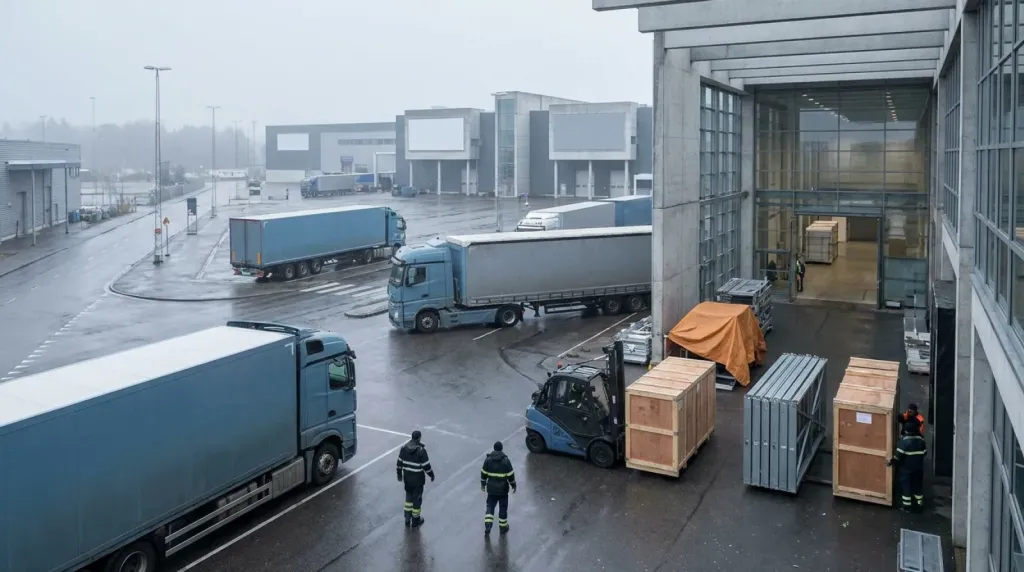
- Booking and slots: entry to the Targi Kielce grounds happens in assigned time windows that the exhibitor or their forwarder reserves ahead. Exact hours, gates and on-site traffic rules we check in the rules of the given edition and confirm at booking, because they differ from event to event.
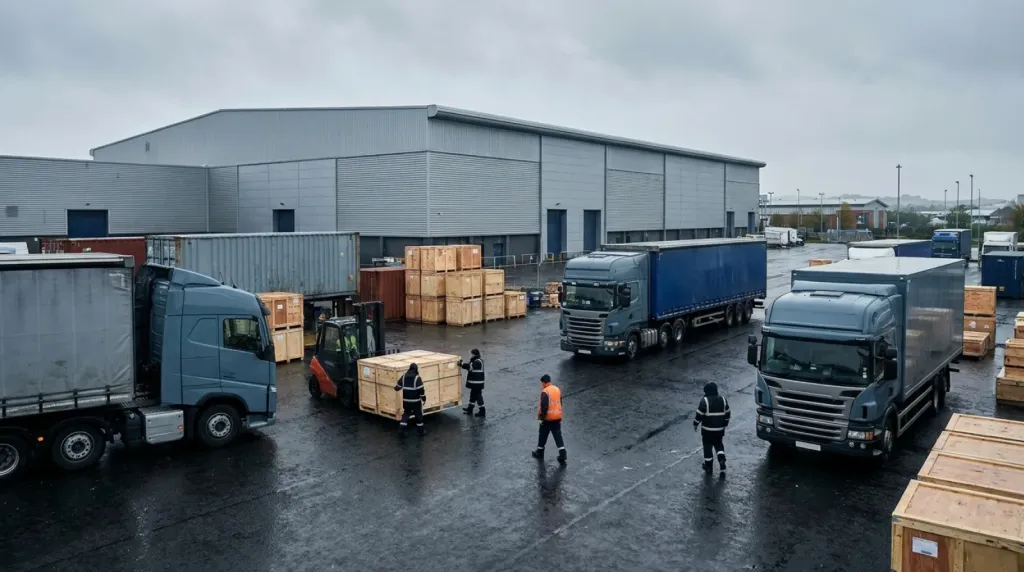
- The way back: after the event machines leave in a short dismantling window, in parallel with hundreds of other stands. Whoever has a loading plan and a warehouse slot leaves first.
How do we arrange it?
- Machine and stand transport with a time buffer in our warehouse next to the Kielce fairground. Equipment can wait beside the venue and roll in exactly on its window, instead of spending the night on wheels outside the hall.
- Bookings and heavy-unload notifications per the rules of the given edition.
- Assembly order agreed with the stand: machine first, then the build, details last. The full scope of stand organisation is covered in trade-fair stand logistics from A to Z.
- Fair smalls (shipments smaller than a full trailer), materials and samples via groupage, separately from the machines, so light freight never blocks a heavy unload.
- Backup when things go sideways: warehouse backup when the slot changes, if the entry window shifts at the last minute.
ATA carnet? Not for Plastpol in Kielce
Plastpol takes place in Poland, so within the European Union. Machines and exhibits brought in from another EU country need no ATA (Admission Temporaire, the temporary admission document) carnet and no customs clearance, because it is intra-Union movement. The ATA carnet comes back into play only for fairs outside the EU, for example in the United Kingdom or Switzerland, and we handle that separately. At Plastpol what counts is logistics, booking and order, not customs paperwork.
Support on site, not at the other end of the country
The biggest advantage at an event of this scale is a warehouse in Kielce, literally next to the fairground. You can hold a machine before its window, store transport packaging for the duration of the fair, and load the equipment for the return without the pressure of one shared dismantling window. The same base handles OTSL transshipments and consolidation on routes across Europe and to the United Kingdom.
More events and the general rules: trade fair transport in Europe. Send the exact date, mass and dimensions of the machines through the form and we will prepare an entry plan for the given Plastpol edition.
Step by step
- Check weight and dimensions. Calculate total machine weight and point loads before selecting a vehicle.
- Book an arrival slot. Schedule your entry time with Targi Kielce to prevent waiting outside the venue.
- Separate marketing freight. Send promotional items to the Kielce hub beforehand to unload machinery independently.
- Arrange suitable lifting gear. Ensure equipment with sufficient capacity is ready upon arrival.
- Position on the stand. Move the machine to the allocated stand area within the floor loading limits.
Definitions
- Plastpol: The International Fair of Plastics and Rubber Processing held at Targi Kielce.
- Injection moulder: A heavy industrial machine used to form plastic products under pressure.
- Peripheral equipment: Auxiliary machinery used in processing, such as dryers, chillers or dosers.
- Support points: Specific contact points on the machine base that bear its total weight against the floor.
- Assembly window: A scheduled time slot during which an exhibitor can enter the exhibition hall to unload.
When does this rule not apply?
The requirement to split machinery and promotional deliveries depends on total cargo weight and size; lighter displays fitting on a single standard vehicle do not require separate delivery windows.
The OTSL role
We coordinate heavy equipment haulage to trade fairs, ensuring precise arrival windows and safe unloading. Learn more in our article Delivery to Targi Kielce, slots, booking and unloading, or explore our Out-of-gauge loads service.