 AI image
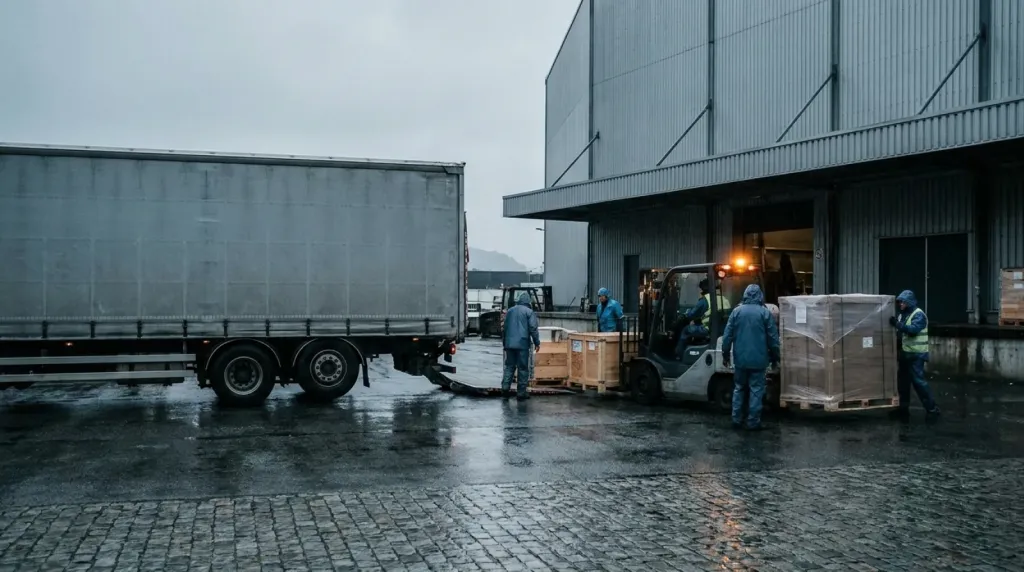
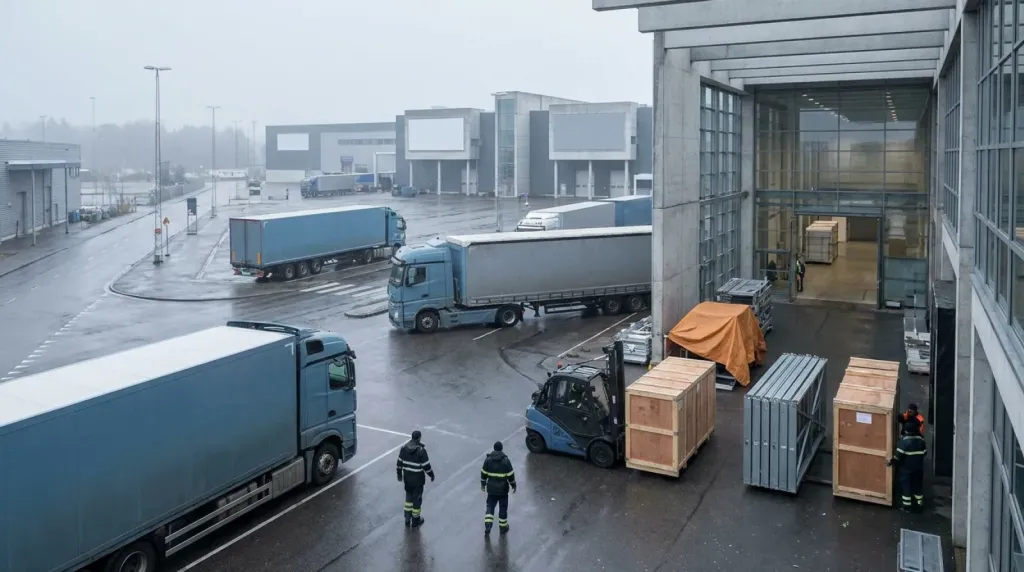
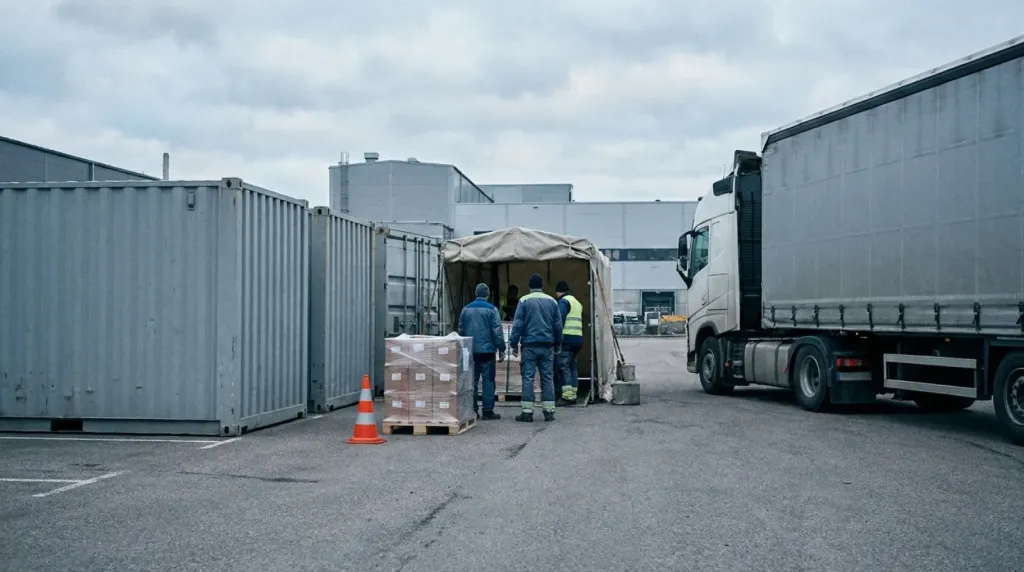
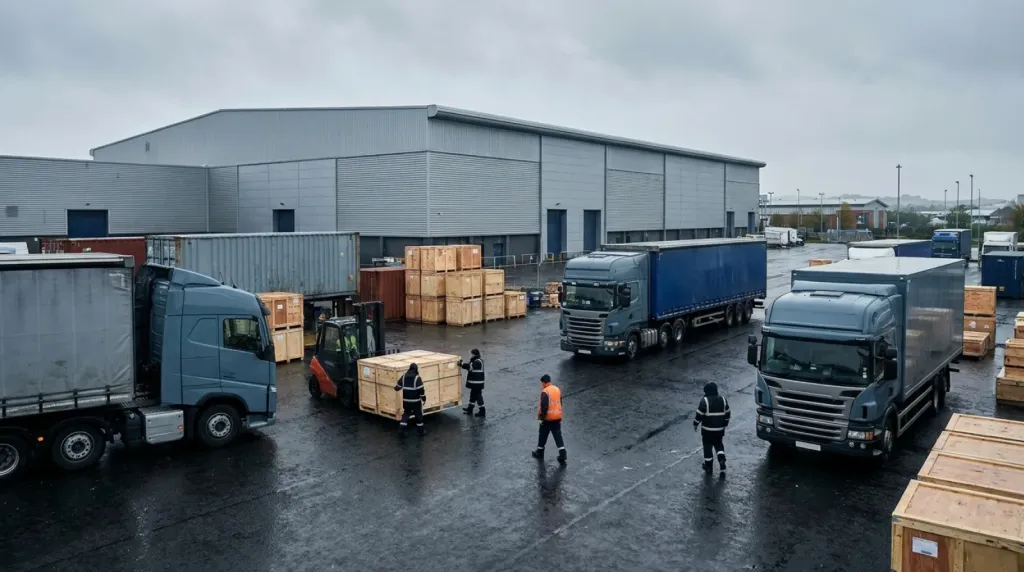
The return leg is harder than the delivery, because the whole hall dismantles at the same time. A vehicle sent "after closing" joins a queue of dozens, and a stand packed in a hurry comes back damaged. Collection is planned together with the delivery, with a defined collection window, empty packaging ordered out of storage in advance, and one person responsible for listing what goes back.
Why does the return go worse?
- Everyone at once. Build-up spreads over days, dismantling over hours.
- No packaging. Empty crates and pallets come back from storage late, and without them there is nothing to load into.
- Crew in a hurry. Parts packed without protection travel loose and rub against each other.
- Nobody counts. After a show few people check that everything came back. Shortages surface at the next event.
A collection plan that works
- Collection window booked with the delivery, not after the show closes.
- Empty packaging ordered out of storage an hour before closing.
- A list of returning items, ideally the same document as on despatch.
- Protective materials brought in with the stand, not bought on site.
- One person on the exhibitor side responsible for handing over to the driver.
ATA carnet and the return
If the stand travelled on an ATA carnet, the return must be cleared and entered in the carnet, and the goods must come back complete and within the document validity. A missing item means it was not re-exported, which triggers duty and tax in the show country. This is the most common cause of unpleasant settlements after events outside the EU.
The list that saves money
Using the same document on despatch and on return is the simplest control tool there is, and a minority of exhibitors use it. An item list with numbers and quantities lets you check in minutes whether everything came back, and catch a shortage while it can still be found in the hall. Without a list, a shortage surfaces at the next event, when nobody can establish where the item stayed.
Damage on the return leg
Stands come back in worse condition than they went out, and that is the norm rather than the exception. Parts have been unpacked once, the packaging is tired, and packing happens in a hurry, often by different people than on despatch. Photographing the condition at reloading takes five minutes and is the only sensible reference point in a later dispute.
Items that should not come back
Some of the build is not reusable: printed graphics carrying the event date, ruined carpet, single-use structures. Bringing them back means paying freight on something destined for the bin. Decide before dismantling what returns and what is disposed of on site — venues usually offer that service and it is often cheaper than transport.
Return date versus storage
If the next event is a few weeks away, hauling the stand back to Poland and out again can cost more than storing it closer to the next venue. That calculation is worth doing whenever two events fall close together, especially in the same part of Europe.
What does OTSL do?
We plan the post-show collection together with the delivery, in one job with one coordinator. We serve events across Europe, and tail-lift rigids let us take the stand out even when hall forklifts are already tied up with other exhibitors.
We deliver stand builds into halls without a ramp using a rigid truck with a tail lift. Full exhibition offer: exhibition logistics.
Definitions
- Post-show logistics: The process covering stand dismantling, packing, loading, and return transport of goods after an exhibition ends.
- ATA Carnet (Admission Temporaire/Temporary Admission): An international customs document enabling temporary admission of exhibition goods without paying customs duties or taxes.
- Collection window: A specific allocated time slot during which a transport vehicle can arrive at the exhibition hall for loading.
- Empty packaging storage: A venue service involving the storage of empty crates and pallets during the event, required for safe re-packing.
The OTSL role
OTSL organizes return transport from exhibition centres across Europe, coordinating vehicle arrival times, storage release, and customs formalities. With logistics bases in Kielce and Milton Keynes, you can rely on our Groupage (LTL) services to transport your stand back safely, while our guide on post-show logistics and goods return outlines essential planning steps.