 AI image
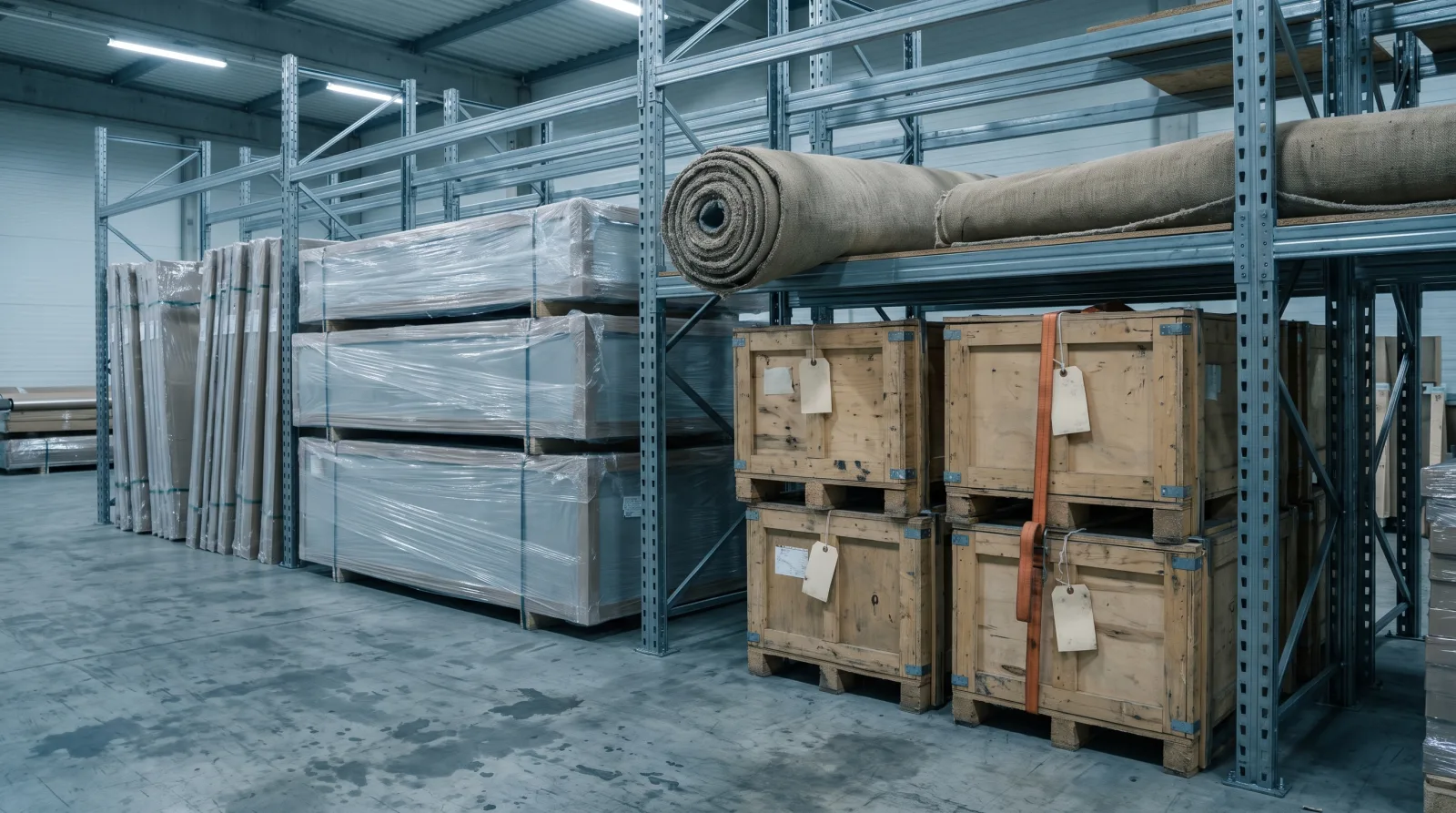
An exhibitor attending two shows in Kielce in one season — for example MSPO 8–11.09.2026 and METAL 22–24.09.2026, two weeks apart (dates from targikielce.pl as of 4.09.2026 — check the organiser's calendar) — does not have to haul the stand home and back. The OTSL depot in Kielce runs 24/7 and offers short-term storage with labelling and a count and condition check on entry and exit. After dismantling the stand goes into the warehouse and the full set returns for the next build-up. Exhibits on an ATA carnet can wait in Poland between shows without breaching the carnet.
When does storage in Kielce make sense, and when is it better to go home?
The sum is simple once you count the journeys. Going home between two shows means four truck runs: to Kielce, home, back to Kielce and home again. Storing on site leaves two. Add the crew's time for unloading and reloading twice at the company and the risk of damage at every handling.
Going home makes sense when the stand elements are needed elsewhere in the meantime, when exhibits need servicing that cannot be done in a warehouse, or when the gap between shows is so long that storage costs more than the journeys. The storage period and cost are quoted individually against the number of pallets, cubic metres and time.
What happens to the stand in the warehouse between shows?
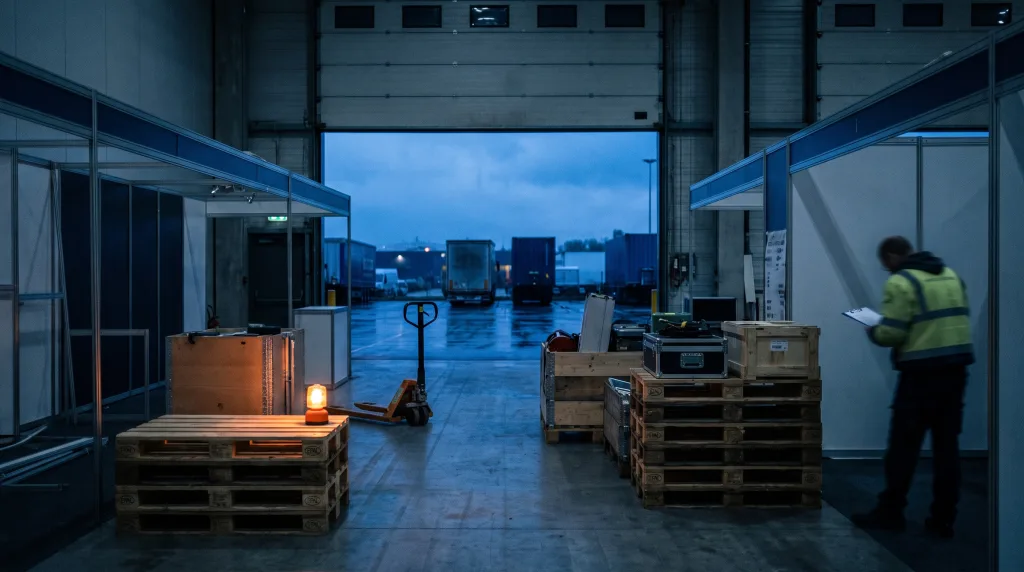
After dismantling the elements go to the OTSL depot in Kielce, where they are counted and looked over on receipt. This is when cracked panels, bent profiles or scratched fascias come to light — damage from dismantling, not from transport. Such elements can be separated, repacked or sent for repair before the next show, instead of the fault being discovered in the hall an hour before opening.
The rest waits on labelled pallets, and before the next build-up the exit check confirms that the full set is leaving. The truck to the hall departs from the depot at the hour given in the organiser's materials, so it does not depend on traffic on the road from the company.
Storing the stand between shows step by step
- Confirm both dates. Check the dates of both editions in the organiser's calendar and download the exhibitor materials with build-up and dismantling hours.
- Give the dimensions. Number of pallets, cubic metres, weight and height of the elements — OTSL quotes the storage and plans the space on that basis.
- Collection after dismantling. The OTSL vehicle takes the stand and exhibits from the hall in the dismantling window and receives them at the Kielce warehouse, at night too.
- Check and sort. On receipt the elements are counted and inspected; damaged ones are set aside for repair and packaging is topped up.
- Storage and ATA documents. Exhibits on an ATA carnet wait in the warehouse without breaching the carnet — provided re-export takes place within its validity.
- Release for the next build-up. Count on exit, loading and delivery to the hall in the build-up window of the second show.
Definitions
- Short-term storage: keeping goods for days or weeks, charged by pallets, cubic metres and time; in Kielce OTSL provides it at its 24/7 depot.
- Count and condition check on entry and exit: counting and assessing the elements on receipt at the warehouse and on release; it separates dismantling damage from transport damage.
- Stand construction: walls, platforms, fascias, lighting, carpet and furniture making up the stand; repeatable between shows, so suited to storage.
- ATA carnet (Admission Temporaire / Temporary Admission): a customs document for temporary import of non-EU exhibits; valid for up to a year from issue and allowing exhibits to move between shows in the EU during that period.
- Build-up and dismantling windows: venue entry hours set by the organiser in the exhibitor materials for each edition.
- Labelling: marking every pallet and crate with the exhibitor's name, the show and the stand number, so that on release the full set reaches the right hall.
Checklist before storing a stand in Kielce
- Dates of both shows confirmed in the organiser's calendar, with the date checked.
- List of stand elements and exhibits with pallet count, dimensions and weight handed to the forwarder.
- Agreed who inspects the elements on receipt and who decides on repairing damaged ones.
- For non-EU exhibits: the ATA carnet's validity covers the re-export date after the second show.
- Dismantling window of the first show and build-up window of the second fixed — both from the organiser's materials.
- Spare packing materials (film, corner protectors, tape) for repacking elements after inspection.
Does storage in Poland between shows breach the ATA carnet?
No, provided re-export takes place on time. An ATA carnet is valid for up to a year from issue, and during that time the exhibits may move between shows within the EU, including waiting in a warehouse in Kielce. The rule does not apply to goods whose purpose has changed: an exhibit sold or left in Poland must be declared for permanent import, not kept on the carnet. An EU exhibitor has none of this — the carnet does not apply to them, and storage is purely a question of logistics and cost.
The OTSL role
OTSL serves exhibitors at Targi Kielce and runs a 24/7 warehouse depot next to the venue with a ramp, a lorry-mounted crane and forklifts up to 5 t. Between shows it offers short-term storage, labelling and a count and condition check on entry and exit, while the OTSL customs agency in Kielce watches ATA carnet deadlines for non-EU exhibits. Handling work on the venue grounds is done by the contractor appointed by the organiser; OTSL is not the official forwarder of Targi Kielce. The depot itself is described in the warehouse next to the Kielce fairground, several shows on one carnet in one route, multiple trade fairs, and collection after dismantling in post-show logistics. Services: secure transloading and storage and ATA carnets; the venue: Targi Kielce at OTSL.