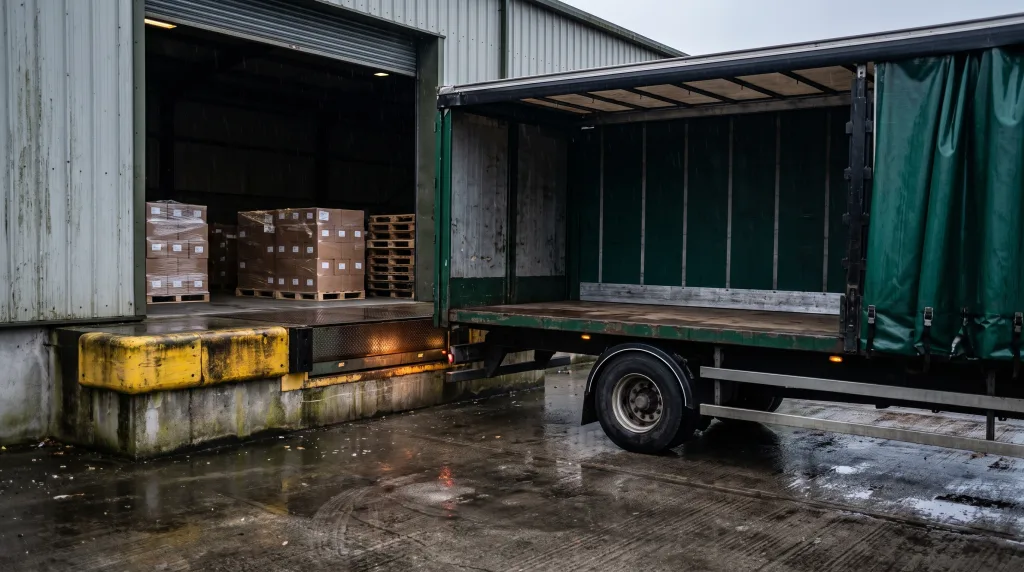
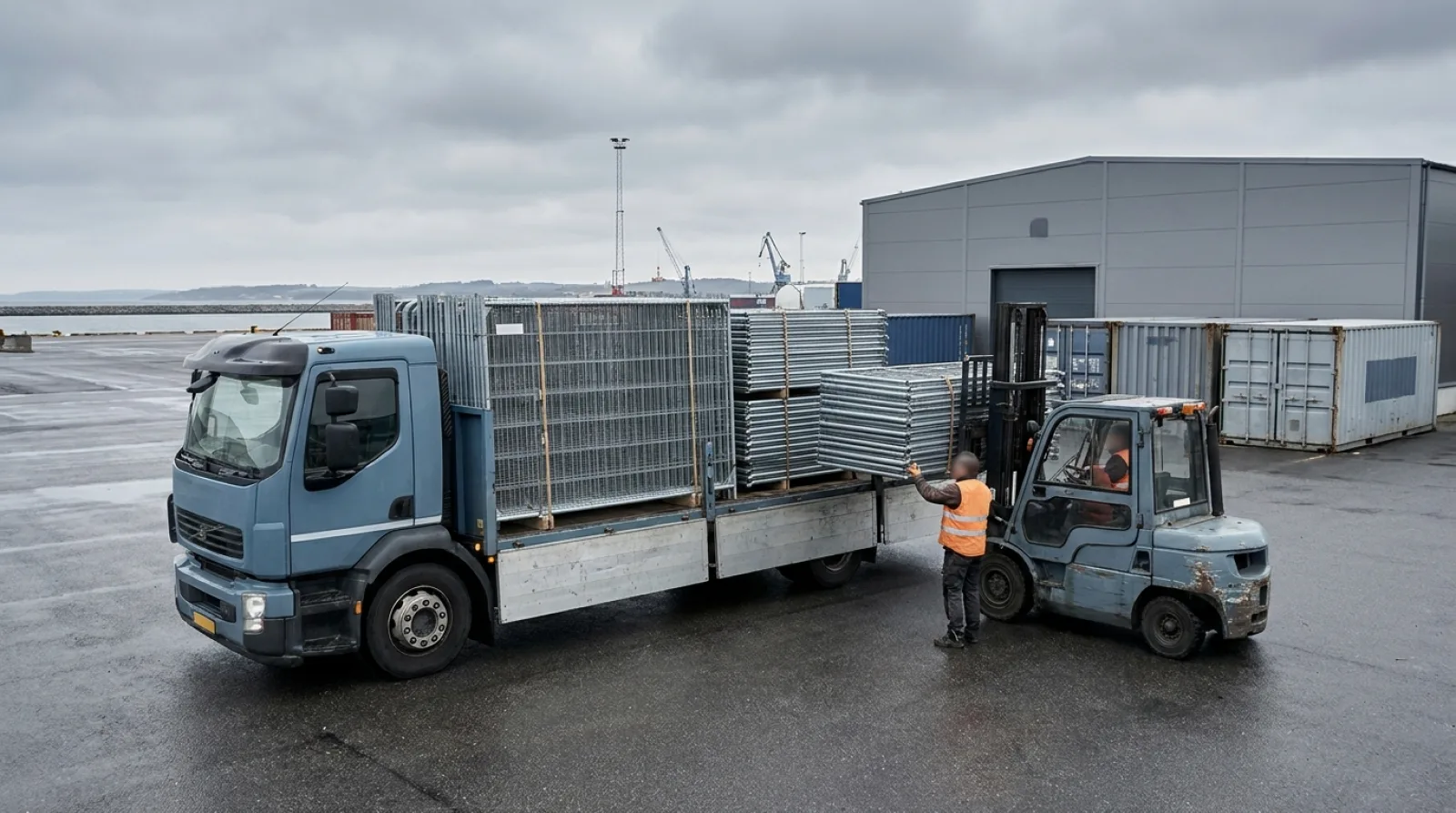
 AI image
Importing and moving temporary fencing and barriers (Polish: ogrodzenie budowlane i bariery, German: Bauzaun und Absperrungen) from Great Britain to the EU requires customs clearance under CN tariff heading 7308. Equipment bought at liquidation auctions is hauled as batches weighing 1–20 t. It does not require disassembly, and logistics depend on overall mass and stacked packing methods rather than unit counts.
What are the transport requirements for auction-bought temporary fencing in the UK?
When purchasing temporary fencing and barriers at auctions across Great Britain, understanding the nature of industrial surplus is essential. Most of these items originate from fleet liquidations of rental businesses and are sold in bulk lots. When arranging road freight, individual piece counts of panels or bases are less critical than total weight and cargo volume. A standard batch ranges between 1–20 t, which dictates whether the transport is assigned to a rigid truck or a full curtain-side trailer.
From a handling perspective, temporary fencing and barriers do not require disassembly prior to loading. The structures are constructed for immediate site deployment, so they are packed flat into stacks or stillages. Securing these stacks with metal or composite strapping prevents panel damage and facilitates rapid loading by forklifts at the auction yard. Note that pickup schedules depend on the specific terms outlined in the auction's seller guide.
Why is CN tariff heading 7308 critical for import classification?
All goods entering the European Union from a third country such as the UK following Brexit must undergo formal customs clearance. In the customs tariff, steel temporary fencing and barriers are classified under CN heading 7308, which covers structures and parts of structures of iron or steel. Correct assignment of this code is necessary for calculating applicable duties and avoiding delays at border crossings.
Customs authorities require clear evidence of the shipment's commercial value and certified weight. Because liquidation auctions sell equipment in bulk lots, the commercial invoice or auction receipt must indicate the overall weight of the batch. In the absence of precise weight data, trucks may need to be weighed on a certified weighbridge before leaving Great Britain or at the port of entry.
How to organise temporary fencing transport from the UK step by step
- Verify auction win and documentation. Ensure the invoice or auction statement contains an accurate description, total batch weight, and the CN 7308 classification.
- Review auction yard pickup rules. Read the exhibitor guide carefully, as collection windows and loading procedures depend on the auction organiser's instructions.
- Inspect cargo stacking and bundling. Confirm that panels and barriers are bundled into stable stacks, noting that the equipment does not require disassembly.
- Prepare export and import customs declarations. Submit invoice copies, transport documents, and weight specifications to the customs broker.
- Load and secure cargo on the trailer. Position the 1–20 t load evenly across the trailer floor and secure the stacks using lashing straps before transit.
- Deliver to destination and inspect. Transport the consignment to the EU warehouse or construction site and verify stack integrity upon arrival.
Definitions
- CN (Combined Nomenclature): The European Union's eight-digit coding system used for classifying goods for customs and international trade statistics.
- Temporary fencing and barriers: Portable steel structures used to secure construction sites, control crowds, and manage pedestrian traffic.
- Cargo batch: A designated lot of equipment weighing between 1–20 t, shipped and cleared as a single logistics unit.
- Exhibitor guide: A rulebook issued by event or auction organisers specifying operational rules, pickup times, and site safety requirements.
Checklist for preparing UK temporary fencing shipments
- Commercial invoice available with total batch weight clearly specified.
- CN tariff heading 7308 assigned in customs pre-declarations.
- Panels and barriers stacked flat and securely strapped for forklift handling.
- Auction collection times and rules checked in the exhibitor guide.
- Approved lashing straps ready for securing loads up to 20 t.
- CMR (the Convention on the contract for international carriage of goods by road) transport consignment notes prepared for border clearance.
When do these import rules not apply?
The described import and customs procedure does not apply to shipments moved entirely within the European Union, where goods circulate freely without customs declarations under CN code 7308. These rules also do not apply to equipment moved under transit or temporary admission procedures, and the specific haulage timeline depends on the auction organizer's collection schedule and site access conditions.
The OTSL role
OTSL Sp. z o.o., based in Kielce, manages cross-border transport and customs clearance between Great Britain, Switzerland, Norway, and the EU. Operating a logistics facility and warehouse in Milton Keynes, England, OTSL coordinates efficient collections from UK auction sites. For site deliveries, explore our construction site deliveries, or consult our team regarding tariffs and border declarations via customs advisory. For more information on batch transport options, read our guide on Regime 42 EU import deferred VAT.