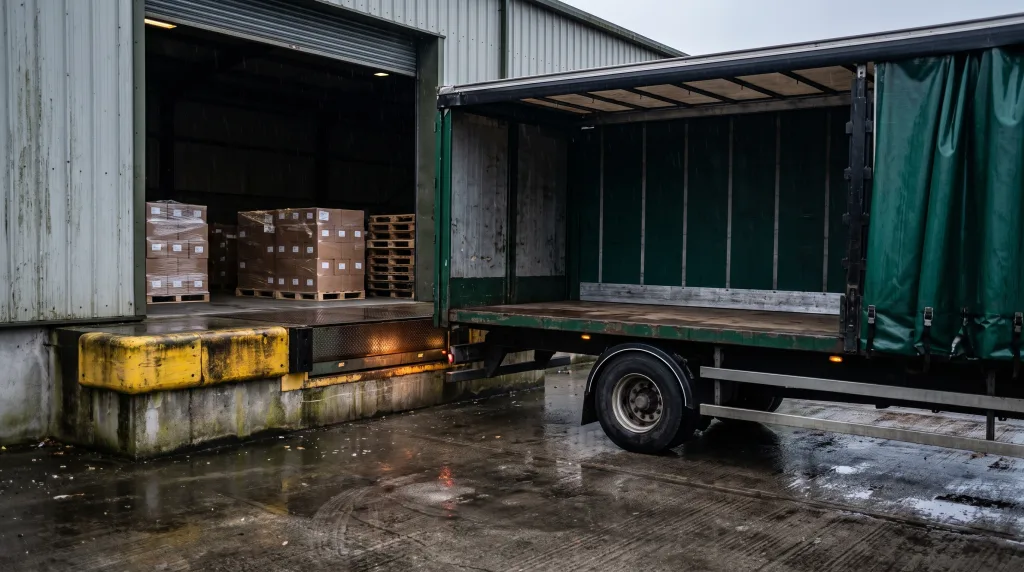
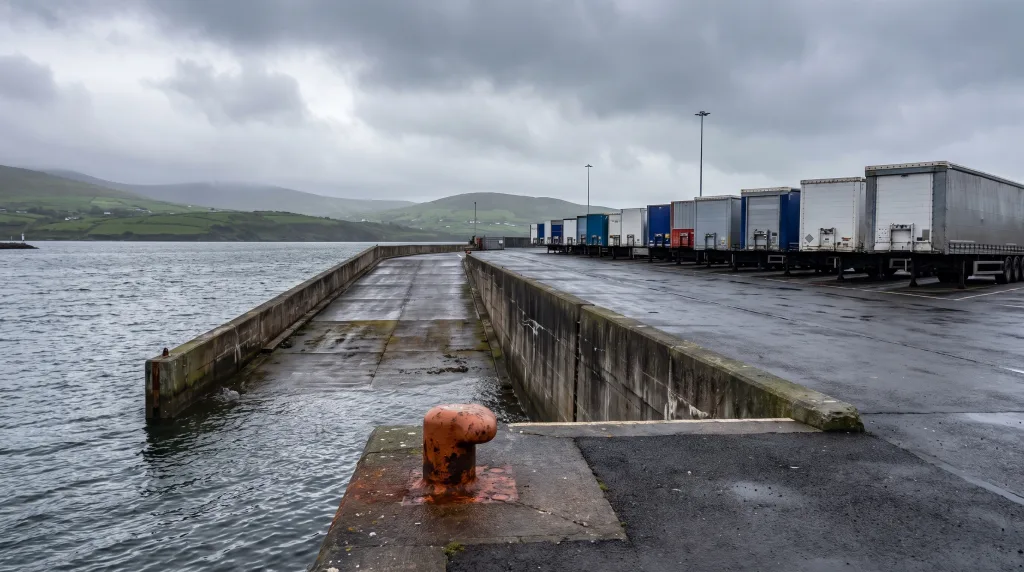
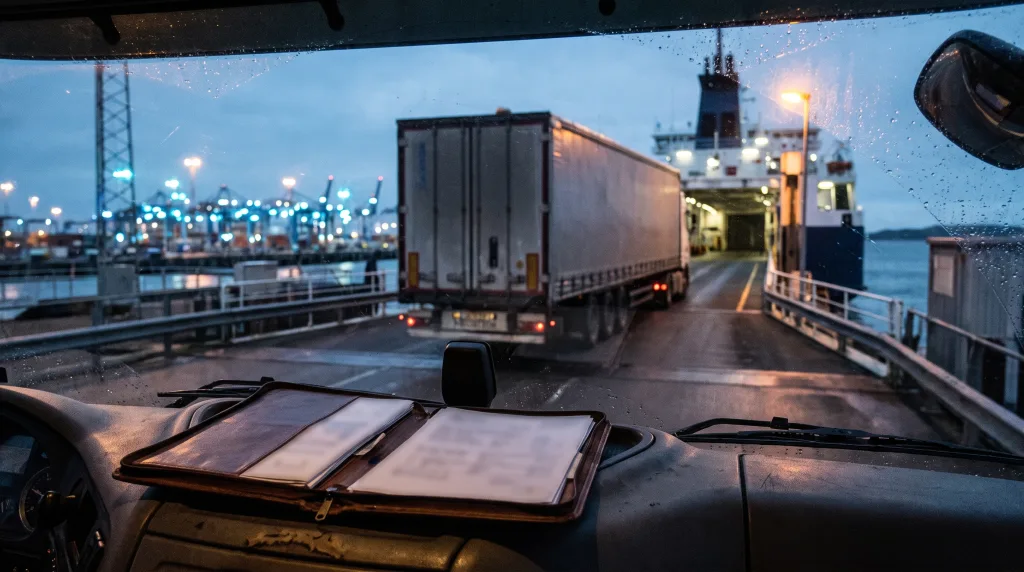
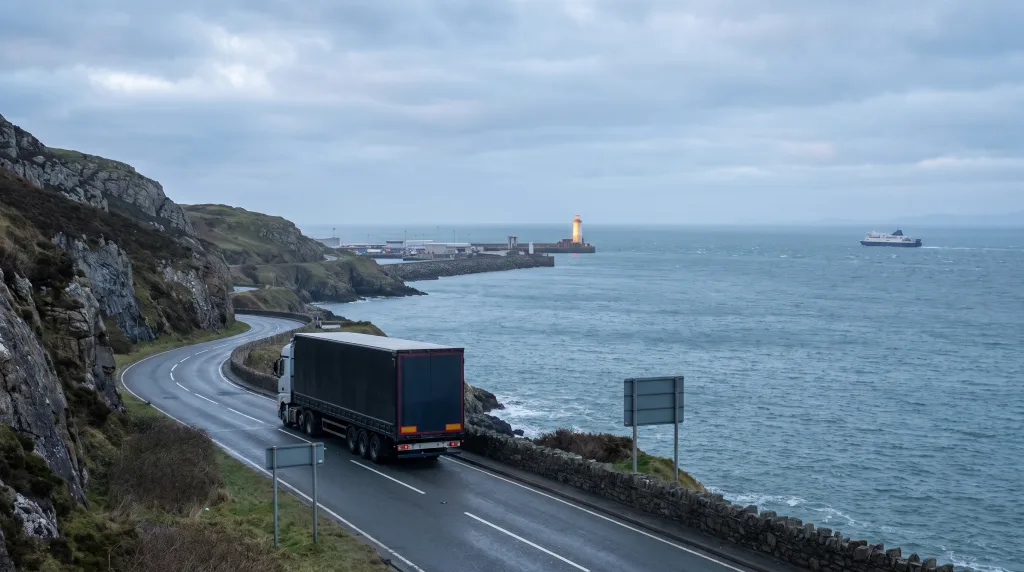
 AI image
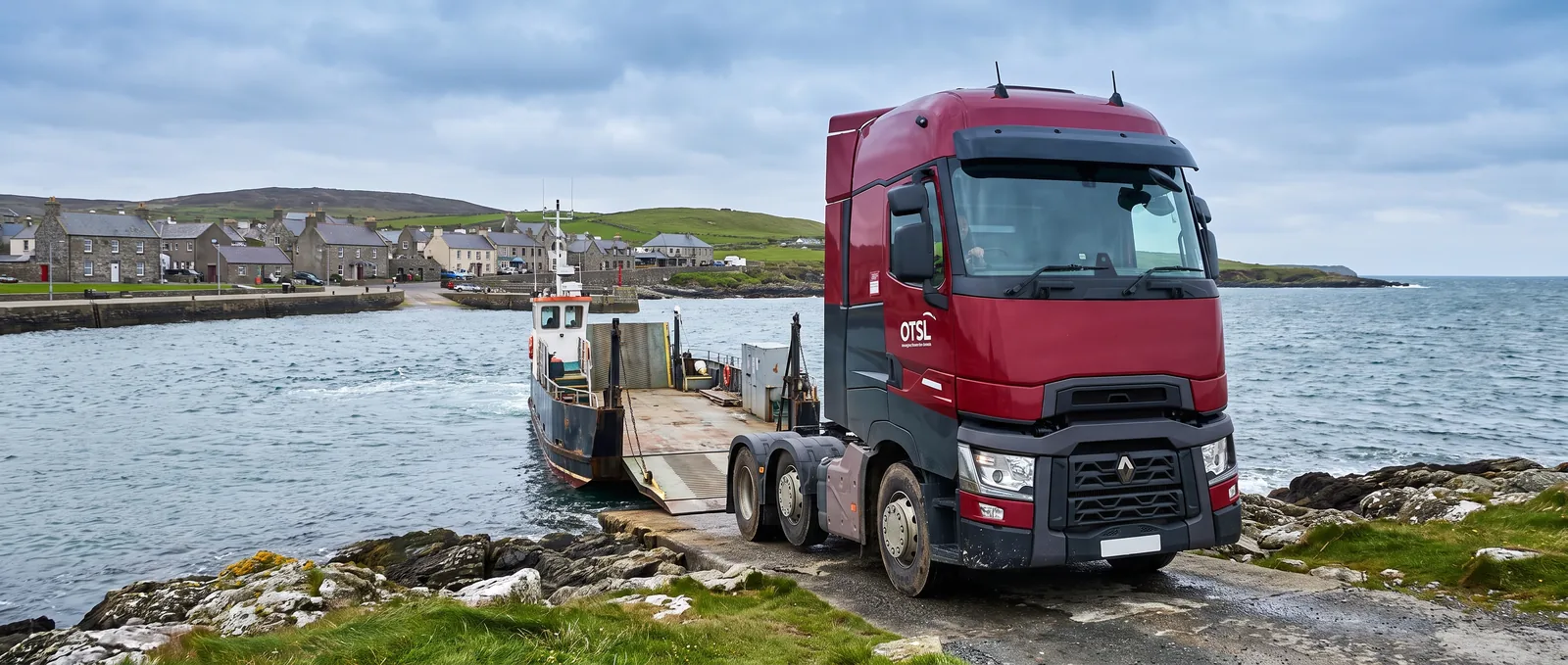
The Isle of Man is a Crown Dependency that remains in a customs and tax (VAT) union with the United Kingdom but outside the European Union. In practice this means that goods from Poland clear customs just as for export to Great Britain, while the leg between Great Britain and the island is treated as internal UK carriage. The transport ends with a ferry crossing to Douglas. OTSL arranges the whole chain: road, customs and the ferry booking.
How the route from Poland looks
The goods travel by road across the continent to one of the British ports, clear customs on entry to Great Britain and then head for the ferry port. Sailings to the Isle of Man run from ports including Heysham and Liverpool to the island capital, Douglas. Because the formalities arise at the British border, the same documents apply as for ordinary export to the islands, described in the text on export documents to the UK.
What to keep in mind
- The crossing booking: the number of sailings to the island is limited, so we plan the ferry date well ahead, as with other crossings to the UK.
- One set of clearance: clearance concerns entry to Great Britain; from there the goods travel on with no further customs border.
- Delivery time: the standard run to the islands is joined by the wait for a sailing, which is worth allowing for when planning, as in the guide on how long transport to the UK takes.
Sending goods to the Isle of Man? Describe the consignment in the contact form and we will set the route, the crossing and the scope of clearance. The full picture of the island destinations is in the guide to the islands of Britain and Ireland.
How do you match trailer specifications and port arrival times to Isle of Man ferry rules?
Freight sailings from Heysham to Douglas are subject to strict vehicle dimensions and weather operational limits. A vehicle combination with a gross vehicle weight exceeding 40 tonnes or a height over 4.0 metres requires prior notification and special agreement from the ferry operator. Your driver must arrive at the port gate at least 120 minutes before scheduled departure to match the Goods Movement Reference (GMR) in the GVMS (Goods Vehicle Movement Service) system and undergo axle weight checks.
Sailing schedules depend heavily on Irish Sea weather patterns. When wind speeds exceed 35 knots, freight vessels are routinely held in port, which extends overall transit time by at least 24 hours. If you transport dangerous goods under ADR rules, you must submit the dangerous goods declaration at least 24 hours prior to departure.
- Standard booking procedures apply to vehicle combinations up to 4.0 metres in height and 40 tonnes gross weight.
- Single pallet weights exceeding 1000 kg require heavy-lift port equipment approval prior to check-in.
Note that these Ro-Ro ferry weight limits and port lead times do not apply to express parcel shipments under 50 kg routed via air freight to Ronaldsway Airport, where separate express customs clearance rules apply.
Step by step
- Document preparation. You gather the necessary commercial invoices and transport paperwork for EU export.
- Continental road transport. The vehicle moves goods by road from Poland across Europe to the crossing port.
- UK import clearance. The consignment completes customs clearance upon entering Great Britain according to UK regulations.
- Transit across Great Britain. The vehicle travels across Great Britain to the designated ferry port for the island leg.
- Ferry crossing to Douglas. The ferry carries the vehicle and goods directly to the destination port on the Isle of Man.
Definitions
- Crown Dependency: A self-governing territory of the British Crown that is not part of the United Kingdom or the European Union.
- Customs union: An agreement between territories to abolish customs duties on goods traded between them.
- Douglas: The main seaport and capital of the Isle of Man where ferry services arrive.
- Export customs clearance: The official procedure required when goods leave the European Union for a third country.
When does this rule not apply?
This customs clearing procedure does not apply to goods that are already in free circulation within Great Britain, unless the shipment involves controlled excise items.
The OTSL role
OTSL manages the full transport route from Poland and organises the necessary border formalities. You can combine this service with our Ferry booking options for smooth sea transit, or choose Express vans and time-critical transport in Europe | OTSL when urgent delivery to the island is required.