 AI image
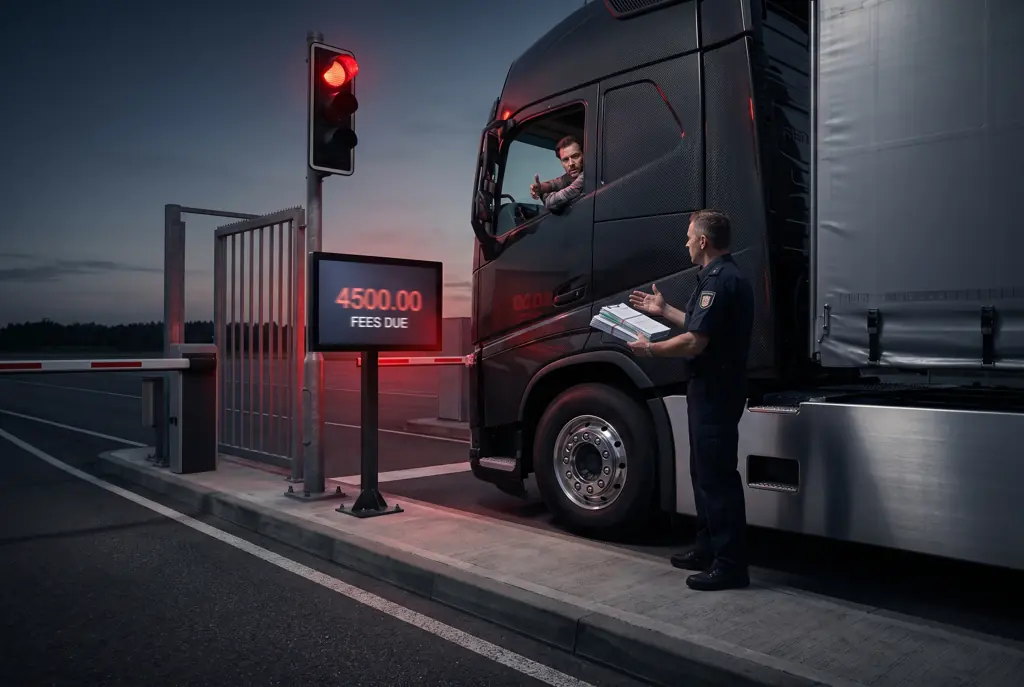
When VOEC is mishandled, Norwegian customs treats the shipment as if VAT was never collected at the sale and charges it a second time at the border. The end customer receives a demand to pay for something they already paid for in the shop. The result is double VAT, held goods, a refused delivery and a parcel returned to sender.
What VOEC is and why it is easy to get wrong
VOEC (VAT On E-Commerce) is Norway's simplified scheme for collecting import VAT on low-value B2C goods sold to consumers in Norway. (source: skatteetaten.no) The seller registers, charges Norwegian VAT already at checkout and passes a VOEC number in the shipment data. The parcel then crosses the border without a second charge. The whole mechanism works only when the VOEC number is correct, complete and matched to the type and value of the goods.
Where does the process break?
The failure is rarely one big mistake. It is usually a small data error the border catches without mercy:
- The seller is not VOEC-registered yet the shipment is declared as VOEC. The number is not in the system, so VAT is queued for standard assessment.
- The VOEC number is missing, or entered wrongly, in the wrong field, or not linked to the shipment. To customs it may as well not exist.
- Goods above the VOEC threshold sent as VOEC. The scheme covers low-value goods only. A higher-value shipment needs standard clearance with VAT and any duty, and forcing it into VOEC ends in a border correction.
- The reverse: goods that qualify for VOEC sent under standard rules, so the customer pays VAT twice even though it was already collected at the shop.
- Excluded categories treated as covered by the scheme, for example goods that follow a different tax route in Norway.
The real cost: not one parcel, but the customer
On paper it is a VAT correction. In practice it is a chain of losses that hits the seller's brand:
- Double taxation: the customer pays VAT at the shop and again at the border before receiving the goods.
- Delay and hold: the parcel sits waiting for clarification and payment, and the delivery date is gone.
- Refusal and return: the customer will not pay again, the parcel goes back to sender, and the round-trip freight lands on the seller.
- Lost customer: an angry recipient does not buy again and leaves a bad review. This is the most expensive line, because it does not end with one shipment.
How does OTSL run Norway clearance without this failure?
Norway is outside the Customs Union, so every shipment clears customs. VOEC is one route, not the default. OTSL first decides whether the shipment even qualifies for VOEC or needs standard clearance, and only then prepares the data. Before the goods move, we check three things: that the seller holds a valid VOEC registration, that the number is correctly embedded in the shipment data, and that the value and type of goods match the chosen route.
When a shipment does not fit VOEC, we run it through standard import clearance so that VAT and any duty are settled once and in the right place. We also advise the seller when a VOEC registration is worthwhile and when classic import accounting is the better path. Checking the data before the border costs a few minutes. Double VAT, a return and a lost customer cost far more.
We handle transport and clearance on the Poland to Norway lane as part of our road freight forwarding. If you sell into Norway and want certainty that VOEC is set correctly, describe the lane and the type of goods in the form and we will point you to the right clearance route.
Step by step
- System registration. Register your business with the Norwegian tax administration to obtain a valid number.
- Tax collection at checkout. Charge the correct tax to your customer during the online purchase process.
- Data transmission. Provide your registration code in the transport documentation sent to the carrier.
- Declaration check. Verify that line-item descriptions and values match the actual cargo specification.
- Border clearance. Allow the parcel to clear customs automatically without duplicate taxation charges.
Definitions
- VOEC (VAT On E-Commerce): Norway's simplified scheme for collecting import value added tax on low-value consumer shipments.
- VAT (Value Added Tax): A consumption tax levied on goods and services at checkout or import.
- B2C (Business to Consumer): Commercial transactions carried out directly between a business and an individual customer.
- Tolletaten: The Norwegian Customs Authority responsible for border control and import clearances.
When does this rule not apply?
This simplified clearance method does not apply to shipments exceeding defined threshold values or containing goods subject to special excise duties.
The OTSL role
When shipping to Norway, OTSL helps organise reliable groupage (LTL) transport while ensuring transport manifests carry correct data. Read more about transport to Norway and VOEC clearance to prevent border holds. See also: Exporting food to Norway: Mattilsynet and border controls.