 AI image
ADR transport is the carriage of dangerous goods under the ADR agreement, the international rules for road transport of hazardous materials. It needs correct classification of the goods, a licensed driver, vehicle marking and complete transport documentation. At OTSL we also run ADR as groupage, from a single pallet.
ADR classes 1-9
ADR divides dangerous goods into nine classes by the dominant hazard:
- class 1: explosive substances and articles,
- class 2: gases,
- class 3: flammable liquids,
- classes 4.1-4.3: flammable solids, substances liable to spontaneous combustion and substances which emit flammable gases in contact with water,
- classes 5.1 and 5.2: oxidising substances and organic peroxides,
- classes 6.1 and 6.2: toxic and infectious substances,
- class 7: radioactive material,
- class 8: corrosive substances,
- class 9: miscellaneous dangerous substances and articles, for example lithium batteries.
The class, UN number and packing group are usually read from section 14 of the safety data sheet. They drive the hazard labels, the packaging and the segregation rules.
Documents: the transport document and instructions in writing
The basis is a transport document with the data required by ADR: the UN number with the prefix UN, the proper shipping name, the label model numbers, the packing group, the number and type of packages and the total quantity of dangerous goods. The cab must also carry the ADR instructions in writing, the emergency card for the crew, in a language the driver understands. The set is completed by the ADR certificate of the driver and the required vehicle equipment.
Vehicle marking
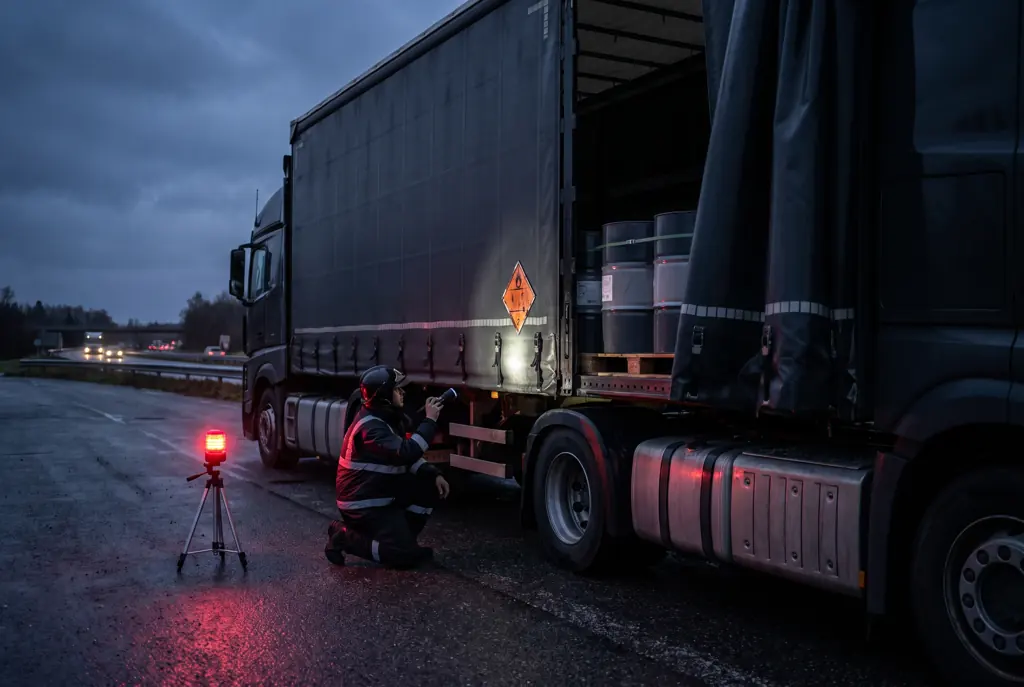
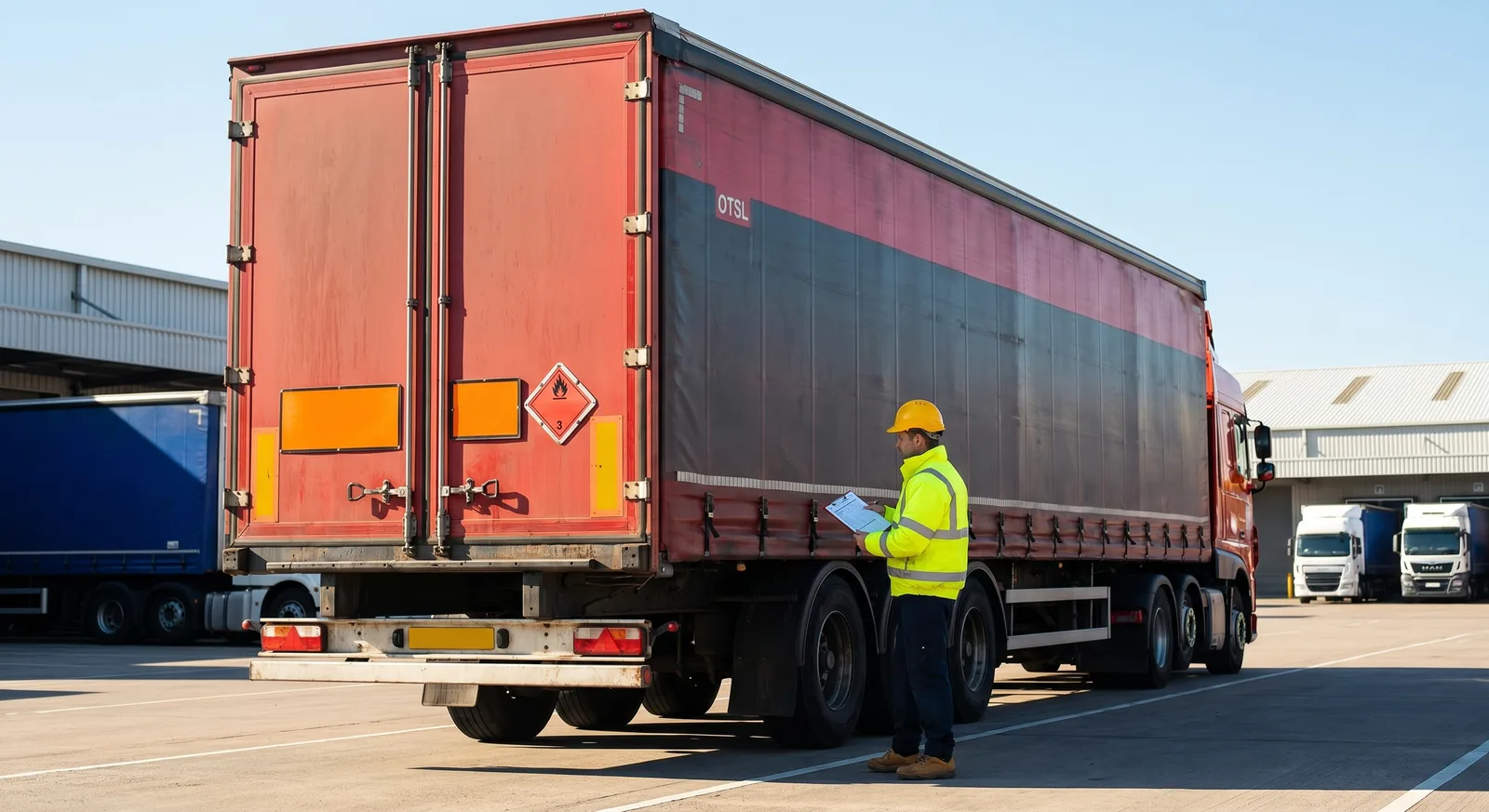
A transport unit carrying dangerous goods bears rectangular reflective orange plates at the front and rear. For carriage in tanks or in bulk the plates show the hazard identification number and the UN number, and the vehicle additionally carries large placards matching the class of the goods.
Exemptions: LQ and the 1,000-point rule
Not every movement of hazardous materials falls under full ADR. Goods packed in limited quantities (LQ, chapter 3.4 of ADR), in small inner packagings and marked with the LQ mark, enjoy broad relief. The second gate is the exemption of subsection 1.1.3.6, commonly the 1,000-point rule: each item is assigned a transport category, and if the sum of points per transport unit does not exceed 1,000, among other things the ADR certificate of the driver and the orange plates do not apply. The transport document with the calculation and the basic equipment are still required, which is why we calculate the points before the transport, not during it.
The DGSA adviser
Companies involved in the carriage of dangerous goods, including consignors, loaders and carriers, as a rule appoint a dangerous goods safety adviser (DGSA). The adviser helps classify borderline cases, audits procedures and prepares the annual report. In Poland the examinations are run by the Transport Technical Supervision (TDT).
ADR in transport to the United Kingdom
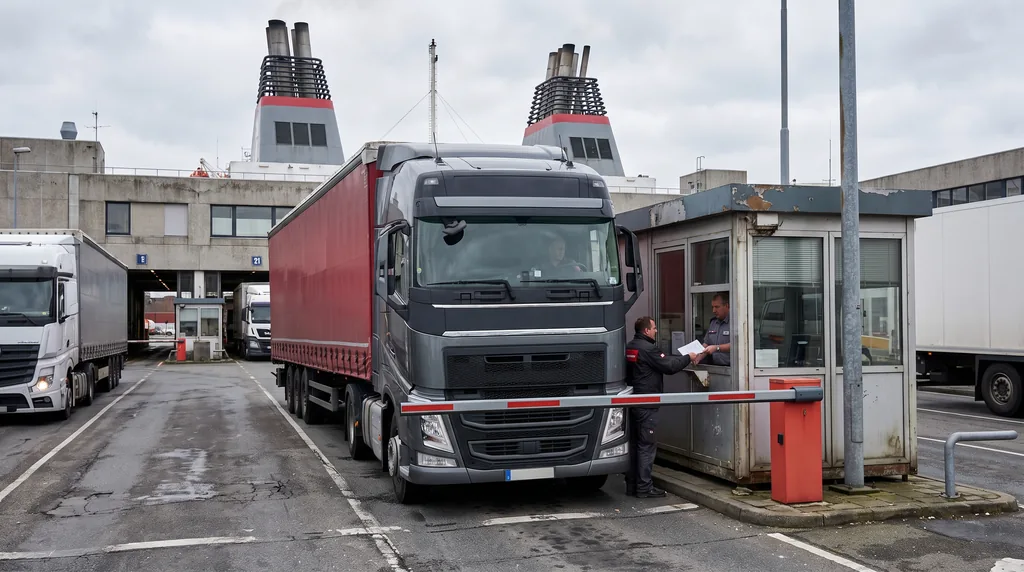
On the UK lane the road rules meet the maritime ones. The ferry leg falls under the IMDG code, so dangerous goods must be declared to the ferry operator at booking: the operator decides whether and on which sailing it takes a given class. Eurotunnel has its own, stricter rules for admitting dangerous goods, which we mention in the article on how long transport from Poland to the UK takes. Standard customs clearance comes on top, so we plan ADR, the crossing booking and the clearance as one process.
How do we approach ADR at OTSL?
We plan dangerous goods separately, because an error in classification or documents is not only a fine risk, it is a real hazard. We ask for the safety data sheet up front, match the right equipment and driver, check the LQ relief and the 1,000-point limit, and confirm the exact requirements for your load before departure.
See ADR transport and the full list of services.
Step by step
- Classify the goods. Identify the properties of the material and assign the correct ADR class.
- Prepare packaging. Secure the cargo in certified packaging and affix the required danger labels.
- Draft documentation. Issue the dangerous goods declaration and complete the transport paperwork.
- Check the carrier. Confirm that the driver holds a valid ADR license and the vehicle carries proper placards.
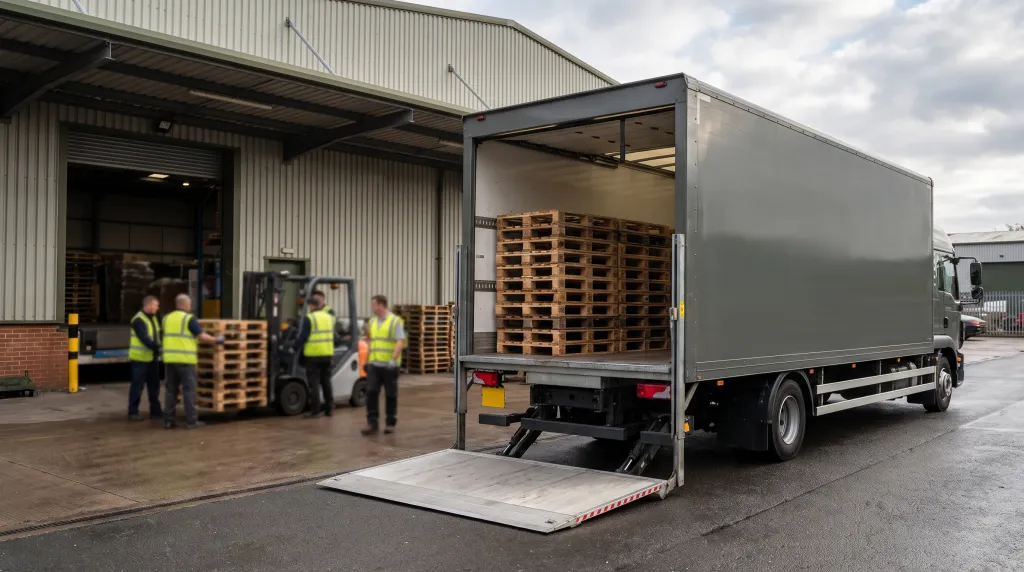
- Load and secure. Position the pallets inside the cargo hold and apply required cargo restraint systems.
Definitions
- ADR (Agreement concerning the International Carriage of Dangerous Goods by Road): The international treaty defining safety standards and technical rules for transporting hazardous materials by road.
- ADR class: A hazard category assigned to dangerous goods based on their primary chemical and physical characteristics.
- Annexes A and B: Regulations within the ADR agreement covering packaging, marking, vehicle requirements and crew standards.
- Groupage transport (LTL): The carriage of dangerous cargo taking up only a portion of the vehicle, starting from a single pallet.
When does this rule not apply?
Standard ADR requirements do not apply if the total volume of transported hazardous goods falls below the statutory exemption limits.
The OTSL role
OTSL manages international cargo operations involving strict handling standards, providing tailored ADR transport for both full truckloads and smaller shipments. To select the right freight method for your needs, review our guide on express vans and time-critical transport.