 AI image
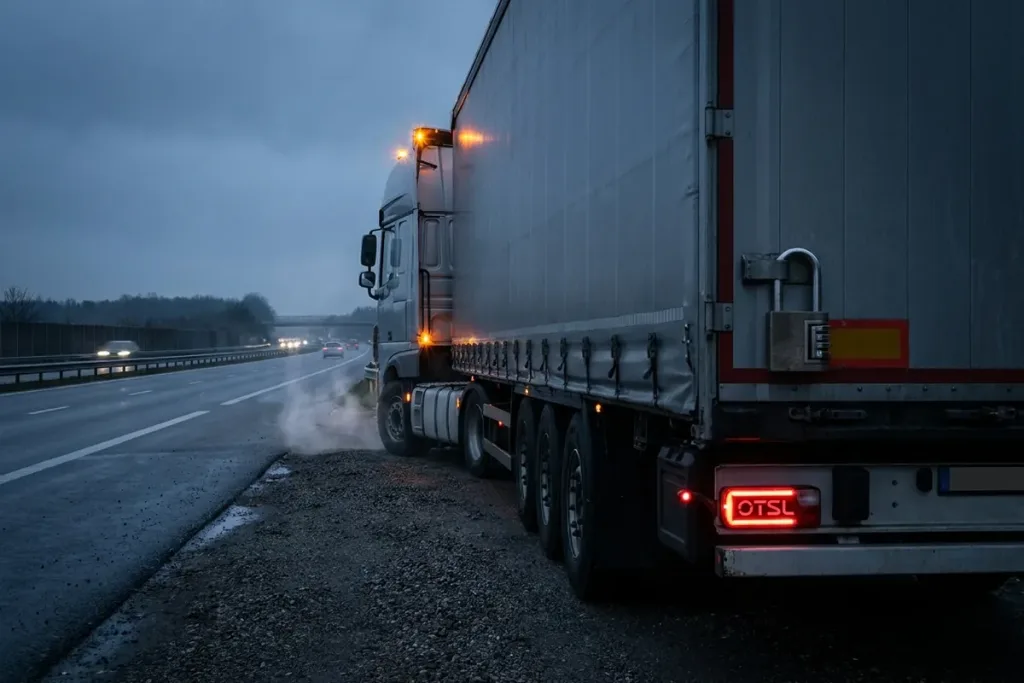
Improper cargo securing during a roadside inspection can lead to a fine, penalty points and immobilisation of the vehicle until the load is properly restrained. (source: eur-lex.europa.eu) The truck waits, the delivery slips, and if the load shifts and causes damage, the dispute over who pays can drag on for months. The technical basis is standard EN 12195.
What the inspector actually checks
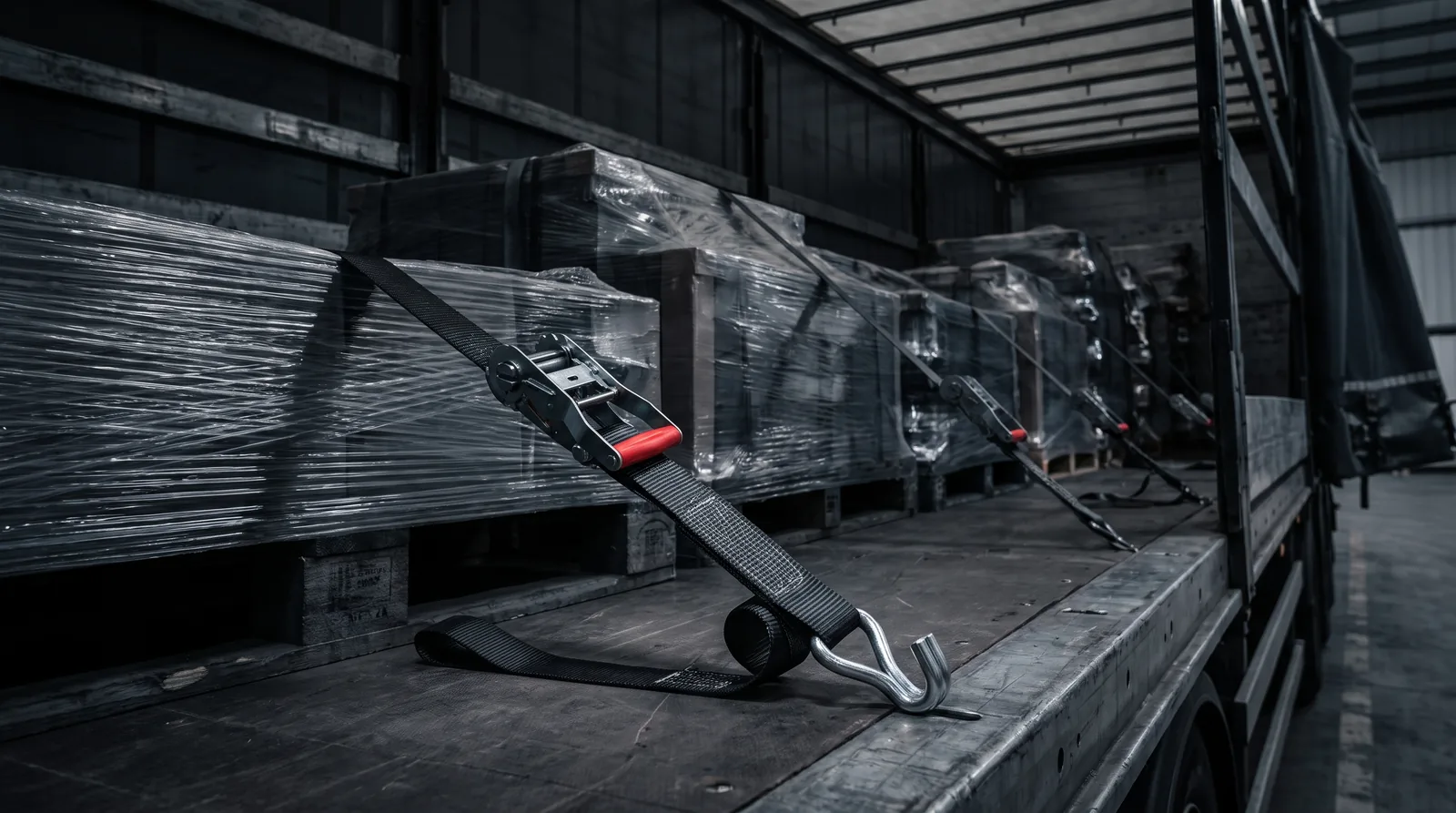
The officer checks whether the cargo can slide, tip or fall out under braking, cornering and road shocks. They assess the number and condition of lashing straps, tension force, anchor points, anti-slip mats, blocking bars and chocks, and whether the load rests against the headboard. They also look for frayed webbing and working ratchets. If the securing is inadequate, the driver usually cannot continue until the load is re-secured on the spot, which can mean several hours of standstill.
Consequences: fine, standstill, liability
Penalties differ by country of inspection and by severity, so we do not quote specific amounts here, they depend on the jurisdiction and the case. As a rule, the possible outcomes are a fine, immobilisation until the load is corrected, and liability for damage when a shifted load harms the goods or the trailer. Quality claims are settled under the transport terms, and in international carriage cargo insurance and the carrier liability limits under the CMR Convention apply, calculated in SDR per kilogram. The key question in any dispute is whether loading and securing were done according to the rules.
Securing rules: EN 12195 and a plan for the load shape
Standard EN 12195 describes how to calculate the forces acting on cargo and how to choose the securing method. It distinguishes tie-down securing (tensioned straps pressing the load onto the floor) from blocking (resting against the headboard, chocks, bars, locking). Every shape needs a different plan: pallets strapped and pushed to the headboard, tall narrow loads secured against tipping, reels and coils chocked, smooth goods placed on anti-slip mats that genuinely increase friction. This is not a matter of instinct but of calculating the number of straps and support points. Packaging and stacking matter as early as route planning, which is why we address them across our transport services.
How does OTSL prevent this?
We plan securing before the truck is dispatched, we do not improvise at the ramp. For the shape and weight of the load we select an EN 12195 compliant method, the equipment (straps of the right rating, mats, bars, chocks) and the placement on the trailer, and the driver carries the gear and knows how to use it. We document how the load was secured, which helps at an inspection and in any damage dispute. We run transport, customs and warehousing under one responsibility, so securing is nobody's blind spot but our standard. See our full transport to the United Kingdom, where crossing checks are especially thorough.
Step by step
- Assess the load. Identify the weight, dimensions, and centre of gravity of the goods.
- Select securing equipment. Prepare functional lashing straps, friction mats, and blocking elements.
- Position the cargo. Place the load against the vehicle headboard or use blocking devices.
- Tension the straps. Apply sufficient tension using operational ratchets and anchor points.
- Perform final checks. Inspect webbing for fraying and confirm all lashings remain tight.
Definitions
- ITD: Inspekcja Transportu Drogowego, the Polish Road Transport Inspection authority responsible for enforcement and vehicle checks.
- Standard EN 12195: The European technical standard specifying calculation requirements for lashing forces and cargo restraint methods.
- Anti-slip mats: High-friction pads placed beneath cargo to prevent sliding during transport.
- Blocking bars: Structural restraint elements used to physically secure loads against movement inside the trailer.
When does this rule not apply?
This rule does not apply to bulk or liquid cargo transported in dedicated tankers and silos, where vehicle design and containment rules are governed by separate technical specifications.
The OTSL role
When organising cross-border haulage, OTSL supports proper transport preparation to keep your supply chain moving smoothly. Explore our road transport options and read our article covering pallets and cargo securing in transport to prevent roadside delays. See also: Securing cargo in practice: straps, anti-slip mats, blocking bars and corner protectors.