 AI image
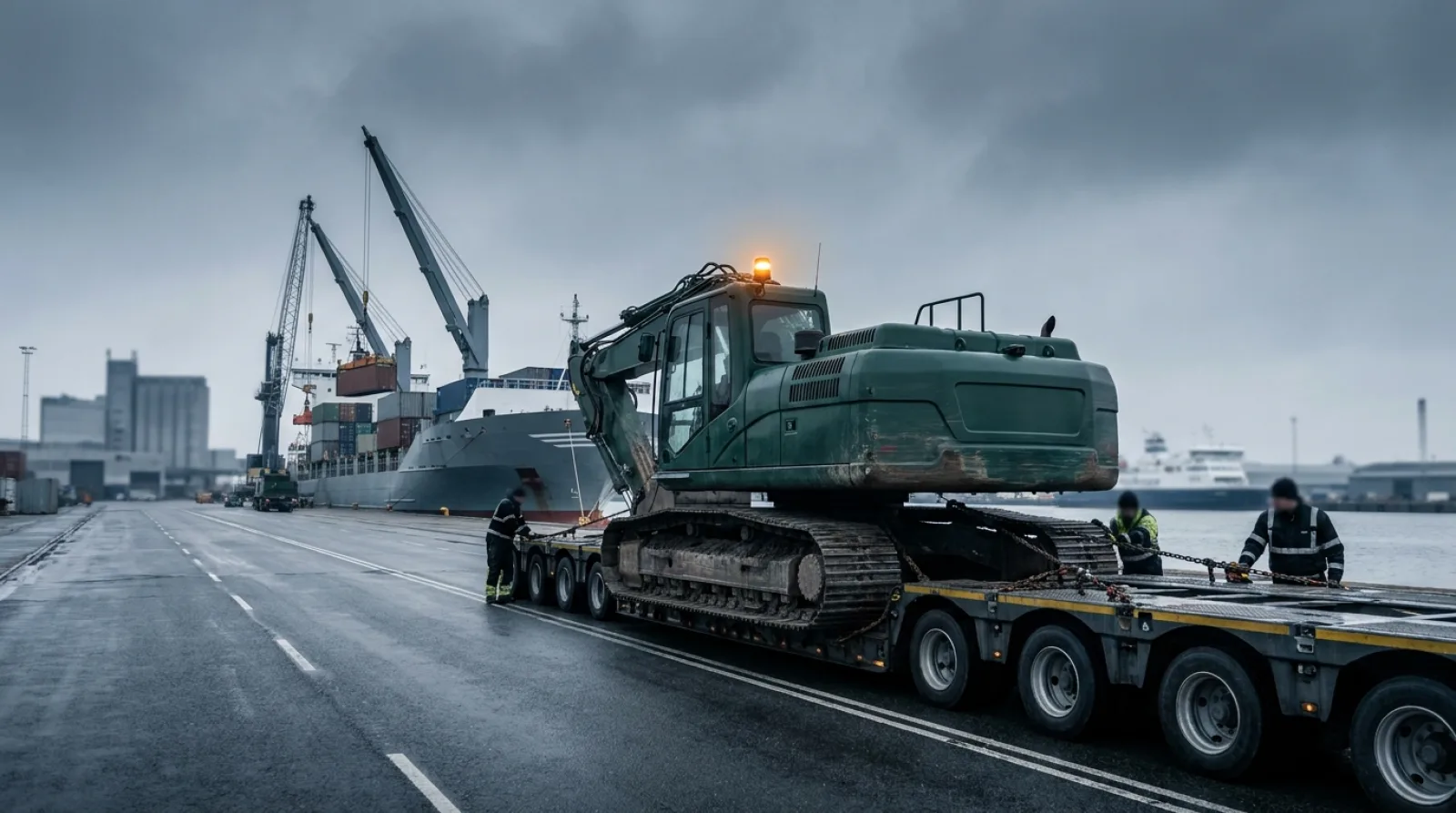
Transporting and importing a crawler excavator from the United Kingdom requires low-loader transport, disassembly of attachments, and customs clearance. Machines weighing between 1.5 and 50 tonnes fall under CN tariff heading 8429 52. Transporting units over 20 tonnes typically involves an out-of-gauge permit and proper deck protection for steel tracks.
What technical requirements apply to crawler excavator transport?
Organising the haulage of construction equipment such as a crawler excavator depends heavily on its weight and physical dimensions. The typical weight range for these machines extends from 1.5 to 50 tonnes. In most instances, partial disassembly is required prior to transport. This process involves detaching the boom, stick, or bucket to ensure the load remains within permitted road gauge limits and height restrictions.
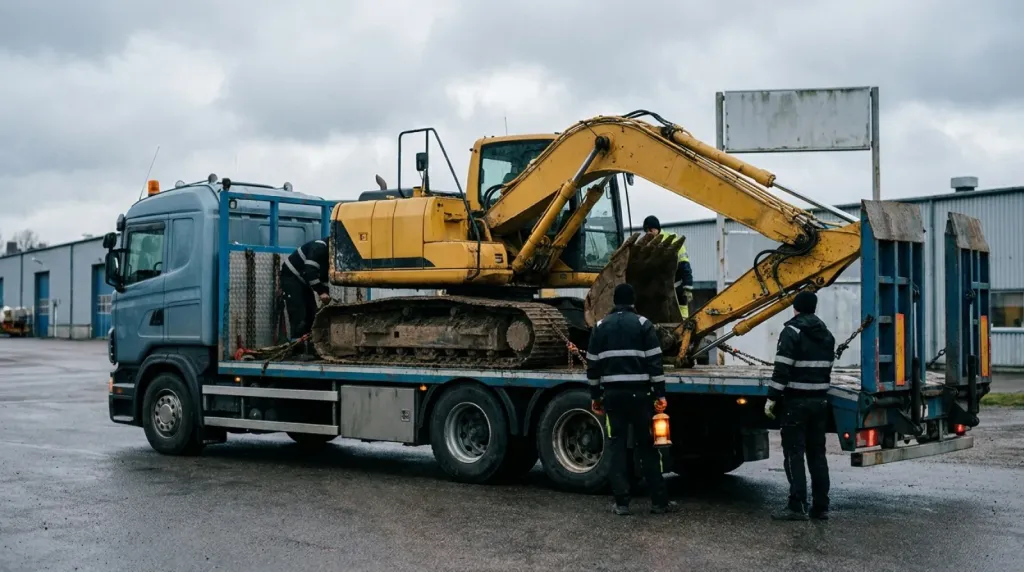
When the total weight exceeds approximately 20 tonnes, a low-loader trailer is almost always required. Furthermore, moving units of this scale necessitates obtaining an out-of-gauge transport permit from relevant road authorities. Another critical factor involves steel tracks, which require specialised deck protection, such as timber planks or rubber mats, during loading and transit to prevent slippage and deck damage.
How does customs clearance work for UK auction machinery?
Machines purchased at auctions across the United Kingdom enter the European Union through formal customs entry procedures. A crawler excavator is classified under CN tariff code 8429 52, which covers self-propelled mechanical shovels, excavators, and shovel loaders with a 360-degree revolving superstructure. Correct CN classification ensures accurate tariff calculation and smooth processing.
Crossing the customs border requires presenting the auction purchase invoice, transport documentation, and detailed equipment specifications. Customs declarations can be lodged at the EU border or processed at an inland destination office under the NCTS transit system. Thorough documentation prevents unnecessary delays at port terminals and border crossings.
Crawler excavator transport and import step by step
- Verify technical specifications and auction documents. Check the exact weight and dimensions of the machine and validate the auction sales invoice to select suitable transport capacity.
- Determine disassembly requirements. Assess whether the boom, arm, or bucket must be detached to meet maximum transport height and width limits.
- Select transport vehicle and apply for permits. Arrange a low-loader trailer and submit applications for out-of-gauge transport permits if the machine exceeds weight thresholds.
- Protect the trailer deck and secure steel tracks. Lay timber or rubber mats on the trailer bed to support steel tracks and secure the machine using heavy-duty lashing chains.
- Issue customs transit and entry paperwork. Prepare transit declarations under the NCTS system using CN code 8429 52 upon departing the United Kingdom.
- Complete final clearance and deliver to destination. Discharge the transit movement at the destination customs office in the EU and complete final unloading.
Definitions
- CN: Combined Nomenclature – the European Union's eight-digit coding system used for classifying goods in international trade and customs tariffs.
- EORI: Economic Operators Registration and Identification – a unique identifier required by businesses undertaking customs activities in the UK and EU.
- NCTS: New Computerised Transit System – a European electronic system used to control and manage goods moving under transit procedures.
- MRN: Master Reference Number – a unique registration number assigned to customs declarations and transit movements by customs authorities.
Checklist for preparing a crawler excavator for transit
- Verify whether the machine weight falls within the 1.5–50 tonne range to determine trailer selection.
- Confirm if an out-of-gauge transport permit is required for units exceeding 20 tonnes.
- Provide deck protection materials when loading machinery fitted with steel tracks.
- Plan attachment disassembly if required by transport dimensions or carrier guidelines.
- Ensure tariff heading CN 8429 52 is accurately declared on customs documentation.
- Check that the auction invoice and technical specification sheets match the cargo details.
When does this transport and import procedure not apply?
The outlined transportation and customs entry procedures do not apply to equipment moved strictly within a single customs territory without crossing the United Kingdom border. Rules regarding low-loader trailers do not apply to lightweight mini excavators that fit onto standard platform trailers. Furthermore, whether oversize permits are necessary depends on total combination dimensions and transit country laws, unless the shipment remains strictly within standard legal limits. See also: Mini Excavator Transport from the UK: Import and Customs and Transport and Import of Crawler Dozers from the UK.
The OTSL role
OTSL Sp. z o.o., based in Kielce with operational support facilities in Milton Keynes, organises international freight and customs clearance for heavy machinery between the United Kingdom and Europe. We provide professional assistance through our machinery transport and out-of-gauge transport services. Additional details on heavy haulage procedures can be found in our guide on Regime 42 EU import deferred VAT.