 AI image
A dedicated transport is a vehicle working for one client only, driving straight from loading to unloading. A part load is cheaper because several shipments share the truck, but the route grows with every consignor and the goods may be transhipped. Paying extra makes sense with fixed slots, sensitive cargo and wherever a delay costs more than the difference in rate.
How does a part load really travel?
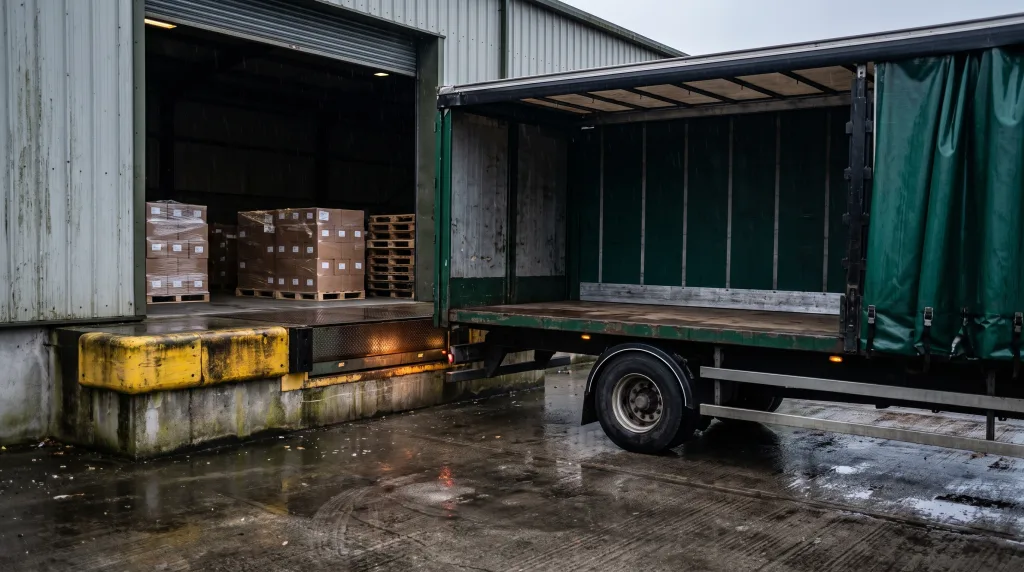
Your batch shares the space with other senders' cargo, and the route is built to suit everyone at once. Often the goods also pass through a consolidation terminal, where they change vehicle. That is how groupage works: an excellent tool for batches that do not fill a trailer, provided you understand what you are buying.
Transhipment risk grows with every terminal
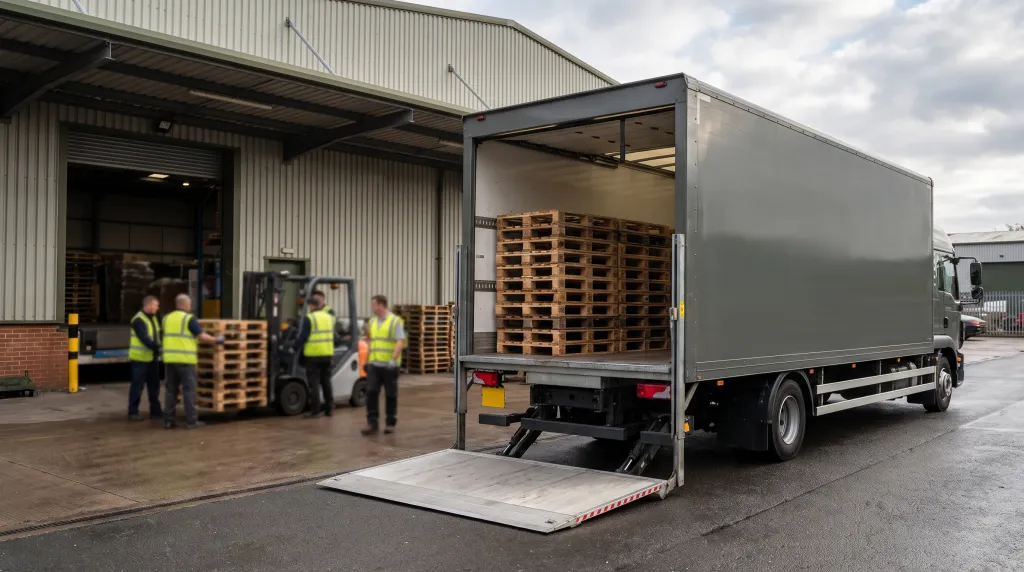
Every transhipment means a forklift, new neighbours on the trailer and another chance to damage an edge, dent a carton or mix up pallets. For robust, well-packed goods that risk is acceptable. For lacquered fronts, electronics or premium goods, every extra touch reduces the chance they arrive in the condition they left in.
Deadlines: an indicative window vs a booked hour
A part load moves to the rhythm of the line: delivery fits a window but can rarely be pinned to an hour. A dedicated truck drives direct, so the delivery can be booked for a specific time and held to it. With rigid warehouse slots, exhibition deliveries and production lines this is not a luxury but a condition of doing the job at all.
Season changes the whole equation
In the peak, space on groupage lines runs out first: transit times stretch and the price gap between part load and dedicated truck melts away. In high season a small batch will sometimes travel faster and safer by dedicated van before any line picks it up: compare express vans.
When does the premium repay itself?
- A fixed slot at the receiver, where missing it means days of waiting for the next one.
- Goods sensitive to transhipment or of high value.
- A date tied to an event: a trade fair, an opening, a line stoppage.
- Peak season, when groupage lines clog up.
The maths is always the same: compare the premium for a dedicated vehicle with the cost of delay or damage, not with the rate alone. We quote exclusive full loads under road transport, and the break-even line between a full truck and groupage is covered in FTL or LTL.
At what weight and volume does a part-load stop making financial sense?
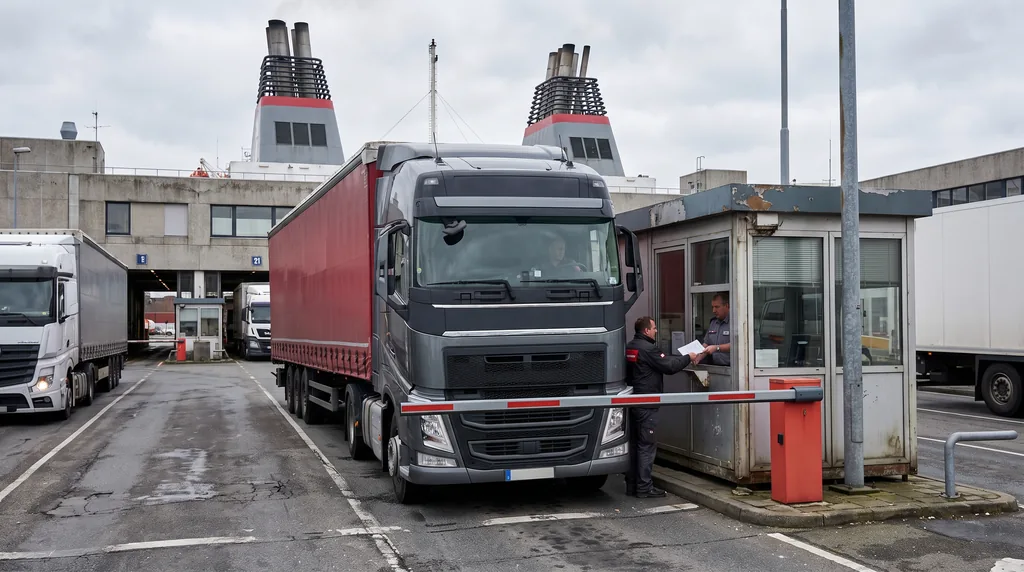
The operational threshold is clear: when your freight exceeds 4 industrial pallets (approx. 2.0 LDM) or 2500 kg in weight, the cost gap between groupage and direct haulage shrinks significantly. At this volume, a carrier must block nearly 40% of the trailer capacity. Direct haulage from Poland to the UK takes between 36 to 48 hours, whereas part-load with customs processing and multiple drops takes 4 to 6 days.
This pricing mechanics relies on lost trailer flexibility. When planning cross-border transport, you must consider the following spatial dependencies:
- Shipments exceeding 6 pallets or 5000 kg drastically increase the risk of axle weight violations during partial offloading.
- Direct transport cuts transit time by at least 50% compared to consolidated groupage.
This rule does not apply if you are shipping long-length goods exceeding 3 metres or non-stackable freight. For such cargo, spatial surcharges apply from the very first pallet slot, regardless of whether you book direct haulage or shared trailer space.
Step by step
- Cargo sensitivity assessment. You evaluate whether your goods require exclusive vehicle use and how they withstand potential transhipment.
- Delivery schedule verification. You determine if the recipient requires a fixed unloading slot or accepts delivery flexibility.
- Transport option selection. You decide between paying extra for exclusive vehicle space or saving costs via a part load.
- Dispatch preparation. You secure the goods on pallets and prepare the necessary transport documentation.
- Transit monitoring. You track the progress of the shipment until it is safely delivered to the consignee.
Definitions
- Dedicated transport: A transport arrangement where a vehicle works exclusively for one client, driving directly from loading to unloading.
- Part load: A shipping method where your cargo shares trailer space with shipments from other senders along a joint route.
- Groupage: A logistics model for smaller batches of goods that combines shipments from multiple senders into a single vehicle run.
- Consolidation terminal: A facility where cargo from various senders is collected, unloaded and reloaded onto target vehicles.
The OTSL role
When organising shipments between the UK, Poland and Europe, OTSL assists you in choosing the right transit model for your cargo requirements. We provide full Road transport (FTL) for direct deliveries, and we explain timing factors in our guide on Express vans and time-critical transport in Europe | OTSL.