 AI image
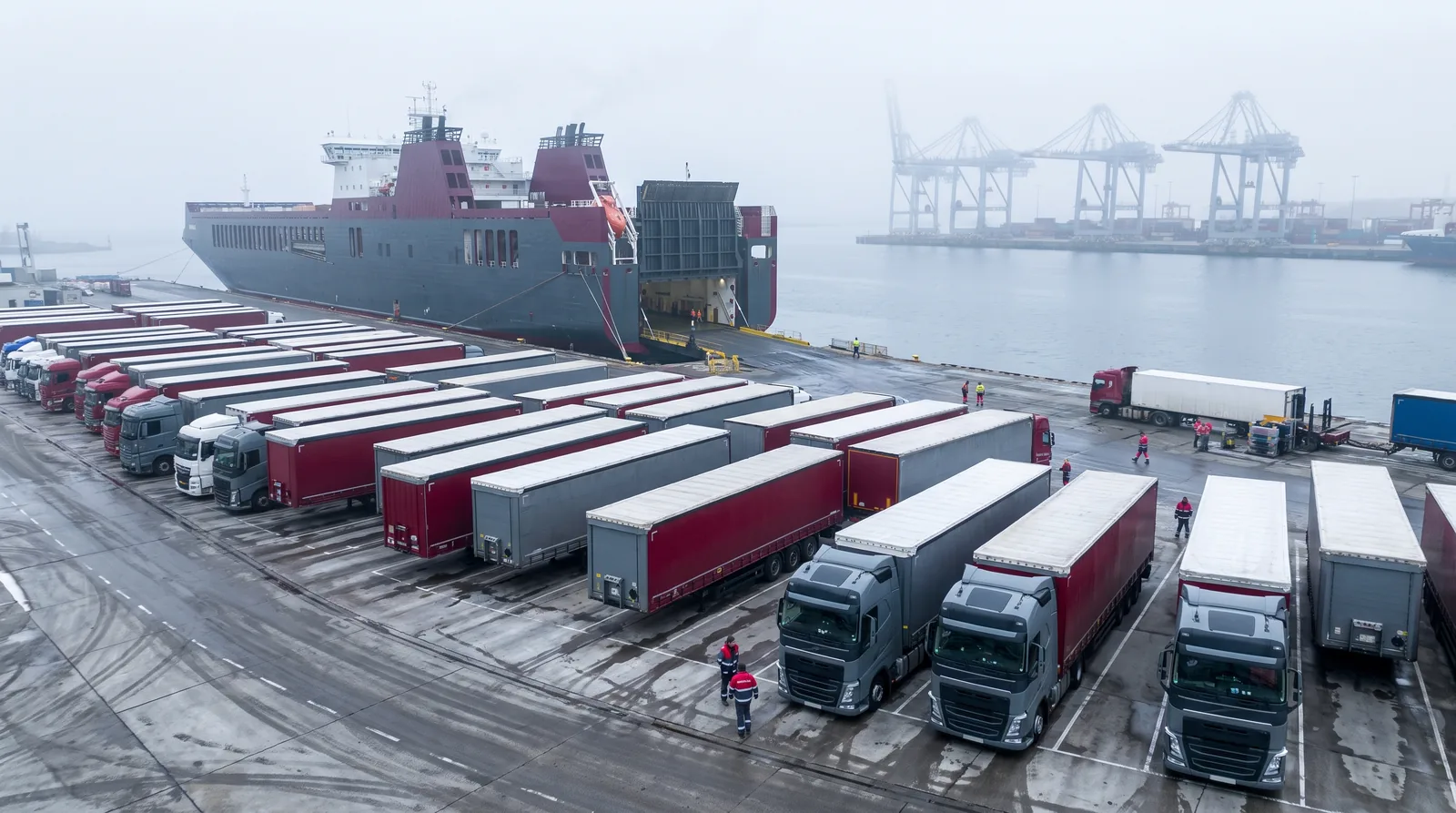
The crossing corridor is matched to the position of the receiver in Great Britain, not to the habits of the driver. The short strait Dover-Calais and the Eurotunnel win on frequency and flexibility, so they serve London and the south. Sailings from Rotterdam, Zeebrugge and Hoek van Holland to Hull, Immingham and Harwich put the truck closer to the Midlands, the north and Scotland, with a night sailing instead of hundreds of kilometres on English roads.
The short strait: frequency and flexibility
On the short strait departures follow one another, so a delayed truck catches the next sailing instead of waiting until tomorrow. That makes it the natural pick for deliveries to London and the south and for cargo where every hour counts. The weakness shows on days of checks and peaks: queues in Kent can eat the whole frequency advantage, and a Channel storm stops the ferries, as covered in our piece on cancelled crossings.
East coast ports: closer to the north
North Sea sailings take longer, usually overnight, but they drop the truck in Hull, Immingham or Harwich, a stone's throw from the Midlands, Yorkshire and the road to Scotland. The overnight P&O sailing between Rotterdam and Hull takes about 11 hours: on board in the evening, off the ramp on the other side in the morning. The driver sleeps on board instead of resting in a lay-by, and starts the working day at the port in the morning. Unaccompanied trailers also work well on these lanes, collected on the other side by a local unit. Ramp to ramp, the eastern corridor can be faster and more predictable than Dover, despite the longer sailing.
What does decides: three question?
- Where is the unloading point? London and the south point to the short strait, the Midlands and the north to Hull, Immingham or Harwich.
- How rigid is the slot at the receiver? With booking-in at a fixed hour, a night sailing into the delivery region removes the Kent congestion risk.
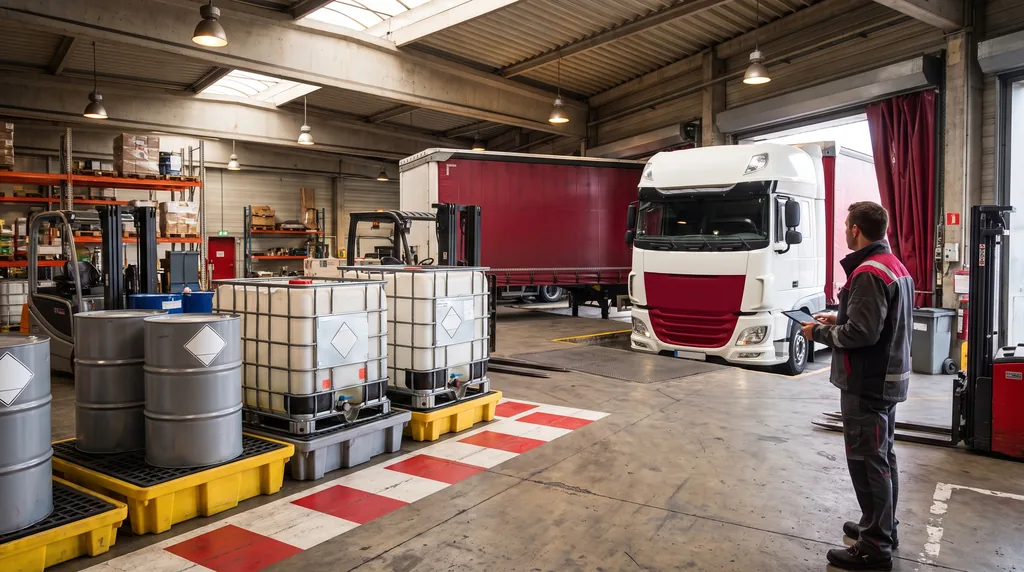
- What is the truck carrying? Cargo excluded from the Eurotunnel and goods with an ADR (dangerous goods transport) declaration narrow the choice of sailings, as described in ferry or Eurotunnel.
How do we run it?
We work both corridors within the ferry booking service: freight account, cargo declarations, a GMR (Goods Movement Reference, required at the UK border) for entry and a plan B when a port stalls. For companies shipping regularly to Britain the corridor choice is part of a standing lane, described on the UK destination page and under UK export support. The rule never changes: the crossing is chosen by the receiver's position and the ramp-to-ramp arithmetic, not by attachment to one route.
How do driver rest rules and cargo weight dictate corridor selection?
When moving a standard 13.6-metre trailer carrying up to 24 tonnes, driver hours regulations directly dictate corridor efficiency. Under international driver rest rules, an 11-hour daily rest period interrupted by ferry boarding allows a maximum of 2 interruptions totalling no more than 60 minutes. On the Dover–Calais crossing, which takes roughly 90 minutes, a driver cannot complete a full rest period on board, forcing a compulsory rest stop at congested Kent lorry parks or French terminals.
Choosing North Sea routes (such as Rotterdam to Hull) provides an 11-hour overnight sailing where the driver completes a compliant rest in a cabin. Upon disembarking, you get a full 9-hour driving window, saving roughly 12 operational hours for a 33-pallet load destined for Yorkshire or the Midlands compared to the southern route. Additionally, unaccompanied trailer shipping eliminates driver rest bottlenecks entirely, allowing UK hauliers to pick up the unit directly from the port under GVMS clearance.
This operational logic does not apply, however, under the following conditions:
- Transport of dangerous goods (ADR classes 1 and 7), where North Sea vessel operators limit hazardous cargo space to under 10% of total deck capacity.
- Multi-drop temperature-controlled cargo that requires continuous physical monitoring of the reefer unit by the driver throughout the journey.
Step by step
- Locate the consignee. Check the delivery postcode in Great Britain to identify the appropriate crossing corridor.
- Assess transit priorities. Determine whether high departure frequency or saving road miles in England takes precedence.
- Select the port route. Choose the Dover short strait for London or North Sea ferries for the Midlands and the north.
- Book crossing capacity. Secure space on the selected ferry or rail shuttle according to driver rest schedules.
- Generate the GMR. Submit reference numbers into GVMS to ensure smooth check-in at the terminal.
Definitions
- Short Strait: The narrowest maritime corridor across the English Channel, linking Dover with Calais and Dunkirk.
- North Sea Routes: Ferry connections linking Dutch and Belgian ports with eastern English ports such as Hull or Harwich.
- Eurotunnel: The undersea rail shuttle service carrying heavy goods vehicles between France and the UK.
- GVMS (Goods Vehicle Movement Service): The UK IT system used to pre-lodge customs declarations before boarding.
The OTSL role
Selecting the correct maritime corridor is essential for efficient UK distribution. OTSL arranges full ferry booking options across all key routes and provides operational support as detailed in our analysis of GVMS in practice. See also: Tilt, mega or curtainsider: which trailer type for which cargo.