 AI image
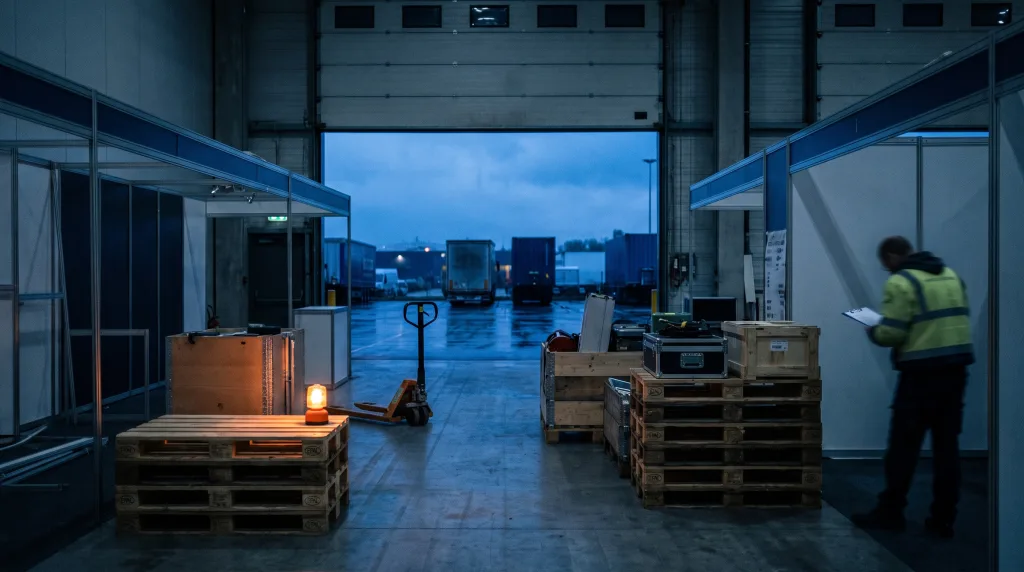
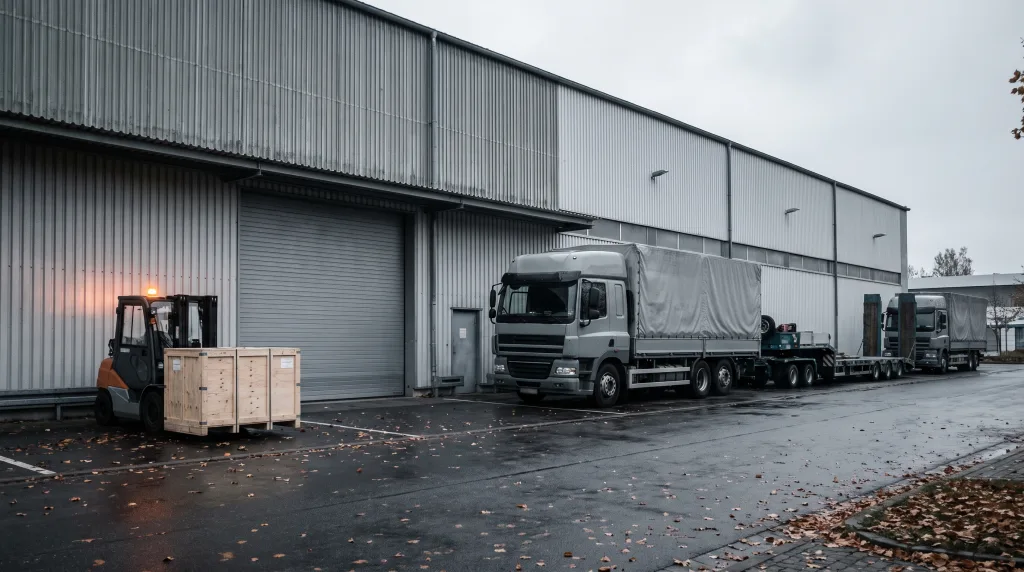
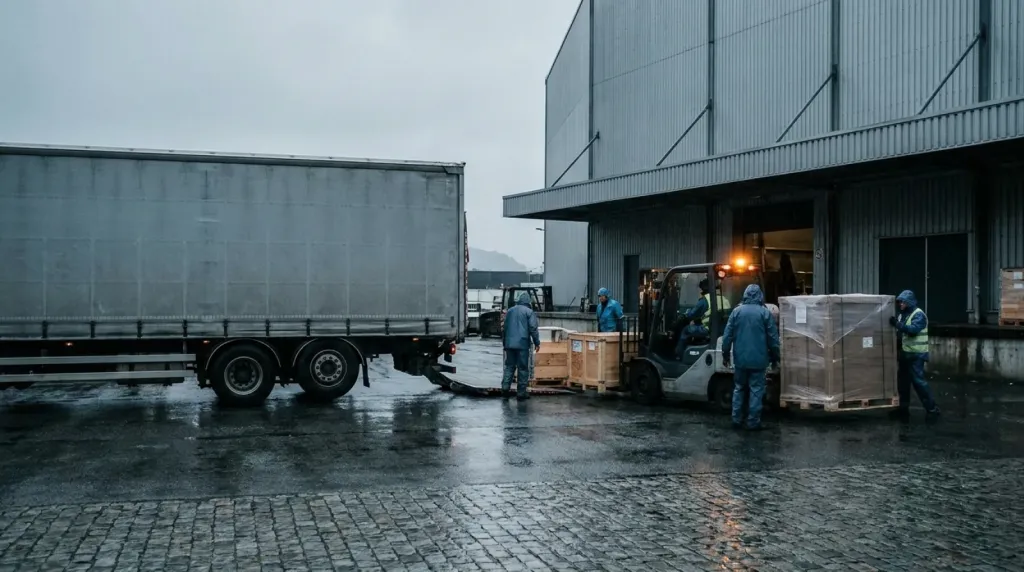
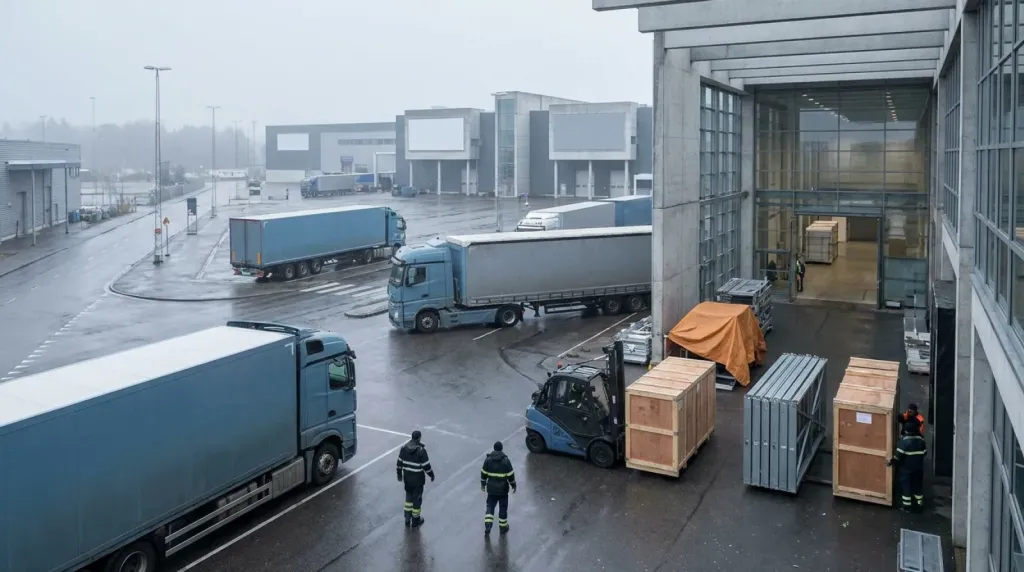
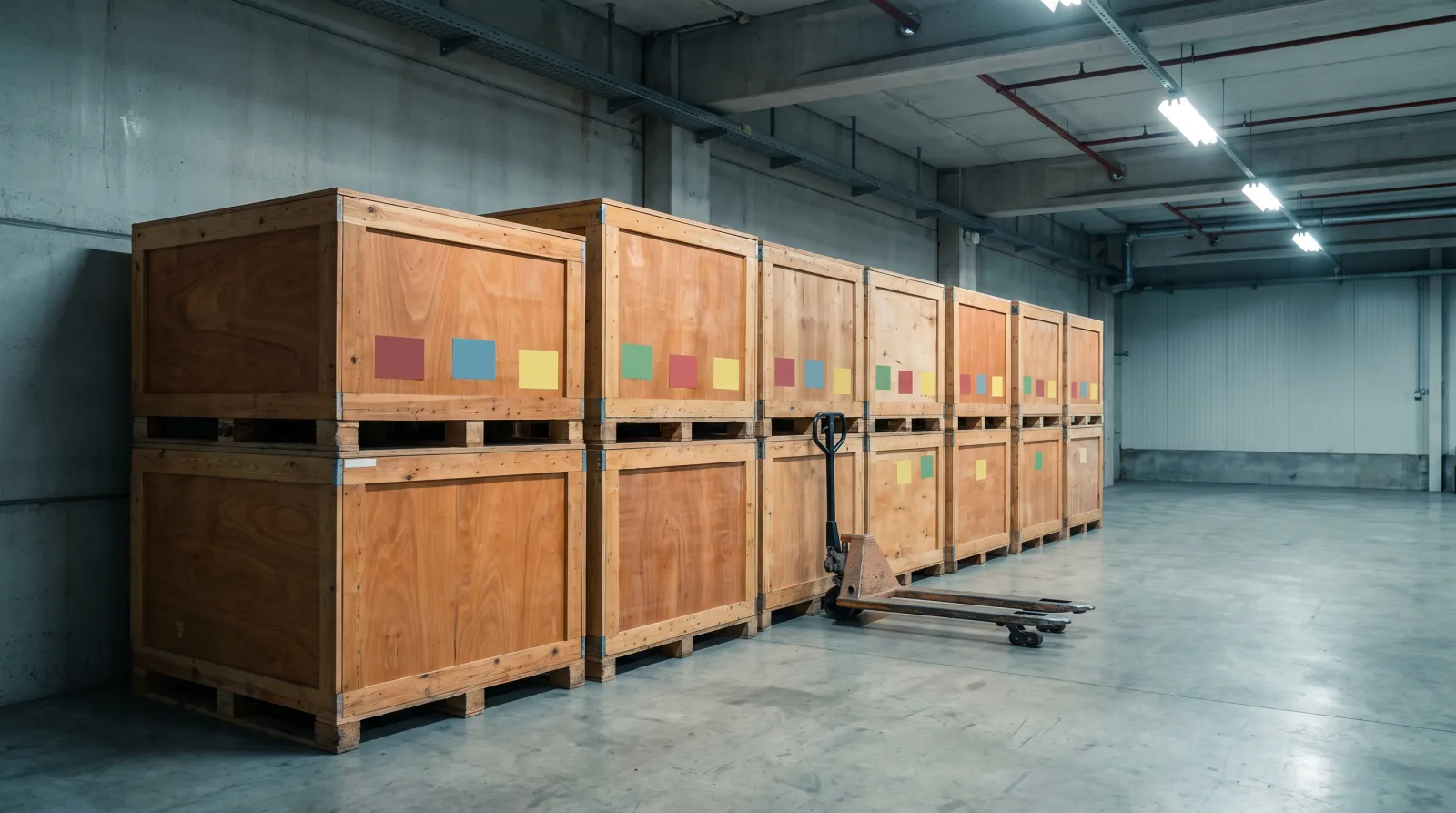
Fire regulations at exhibition venues prohibit keeping empty crates and packaging at the stand during the show — after build-up they must leave the hall. The exhibitor has two routes: on-site storage by the contractor appointed by the organiser, at the rates for that edition, or taking the packaging away in the exhibitor's own forwarder's vehicle and returning it for dismantling. OTSL has warehouse space next to Targi Kielce, open 24/7: after build-up the crates go to the warehouse, receive a label with hall and stand number and come back to the hall at the dismantling hour.
Why can empty crates not stay at the stand?
A wooden crate, cardboard and film are combustible material occupying the escape routes between stands. That is why venue regulations, including those of Targi Kielce, require empty packaging to be removed from the hall once build-up is complete. The rule applies to every exhibitor regardless of stand size, and its enforcement lies with the organiser and the venue services.
An exhibitor who leaves unlabelled crates behind the stand wall risks two things: being told to remove them during opening hours, and losing the packaging if it is treated as waste. Original crates made for a specific exhibit are hard to replace on dismantling night, so losing them means packing "in whatever is to hand" and a higher risk of damage on the way home.
On-site storage or your own forwarder — what is the difference?
Empty case storage on the venue is performed by the contractor appointed by the organiser, with rates published in the price list for that edition. It is convenient for a few crates: the crew hands them over on the spot and collects them on the spot. The alternative is to take the packaging away in the exhibitor's forwarder's vehicle to a warehouse outside the venue and bring it back at the appointed hour.
The second option pays off when there are many crates, when they are bulky, or when the exhibitor wants control over them — with a count on entry and exit and short-term storage under their own stand number. The cost of storage at OTSL is quoted individually; the on-site charges are in the organiser's price list.
Empty packaging in the OTSL buffer step by step
- Label the packaging before departure. Every crate and box gets a sticker with the exhibitor's name, hall and stand number; without it there is no error-free return.
- Report the number and dimensions. Tell the forwarder how many crates of what size will remain after build-up — that decides the vehicle and the warehouse space.
- Collection after build-up. Once the exhibits are unpacked, the packaging is gathered at the agreed spot; the OTSL vehicle takes it away in line with the venue's entry regulations.
- Receipt at the warehouse. At the OTSL depot in Kielce the crates are counted, labelled with the stand number and set aside for the duration of the show.
- Return for dismantling. At the dismantling hour from the organiser's materials the packaging comes back to the hall, so the crew packs exhibits straight into their original crates.
- Check on exit. The number of items released is compared with the number received; discrepancies are resolved on the spot, not after returning home.
Definitions
- Empty case storage: the service of keeping crates and packaging for the duration of a show, offered on-site by the appointed contractor or off-site by the exhibitor's forwarder.
- Buffer warehouse: a warehouse near the venue where goods and packaging wait between build-up and dismantling; in Kielce OTSL runs it at ul. Batalionów Chłopskich 71, 24/7.
- Build-up and dismantling windows: the hours in which the exhibitor and forwarder may enter the venue; set by the organiser in the exhibitor materials for each edition.
- Stand label: a sticker with hall and stand number on every package; the basis for identification on receipt and release.
- Count on entry and exit: counting and recording the packaging on receipt at the warehouse and on release; proof that everything came back.
- Waste: what unlabelled packaging left in the hall after build-up may become — venue services have no way of identifying the owner.
Checklist for packaging before a Kielce show
- Every crate and box labelled with the exhibitor's name, hall and stand number — at the company, not in the hall.
- Packaging list with dimensions handed to the forwarder together with the transport order.
- Decision made: on-site storage at the organiser's rates or the OTSL buffer outside the venue.
- Collection time after build-up and return time for dismantling in line with the organiser's materials.
- A crew member responsible for handing over and receiving the crates, available on both days.
- Damaged crates noted on hand-over, so there is no dispute after the show about when the damage occurred.
Does every exhibitor have to move packaging off the venue?
No. The duty to clear packaging from the hall applies to everyone, but how it is met depends on the exhibitor. A few boxes can be handed to the on-site storage run by the contractor appointed by the organiser. Moving them to the OTSL buffer makes sense with a large number of crates, sizes that are awkward to store in the hall, or when the exhibitor wants a count and their own storage space. The rules for a vehicle entering and leaving with packaging are set by the organiser — OTSL is not the official forwarder of Targi Kielce and works within the regulations of each edition. See also: Dismantling at Targi Kielce: closing night and collection to buffer.
The OTSL role
OTSL serves exhibitors at Targi Kielce and runs a warehouse depot at ul. Batalionów Chłopskich 71, open 24/7, with a ramp, forklifts and side-loading capability. Empty packaging after build-up goes to this warehouse, is counted, labelled with the stand number and returns to the hall at the dismantling hour. Handling work on the venue grounds is done by the contractor appointed by the organiser — OTSL is responsible up to the side of the truck. The general rules for empty case storage at various venues are described in the article on empty case storage, and the depot itself in the warehouse next to the Kielce fairground. The storage and transloading service: secure transloading; the venue: Targi Kielce at OTSL.