 AI image
A complete customs declaration lodged before the truck arrives is released, in practice, within minutes of presentation. Time is lost only on selection for control: documentary checks take hours, an X-ray scan adds a queue and image analysis, and a physical examination with unloading can hold the truck for a day. Selection follows risk analysis (Article 46 UCC).
Pre-lodged or lodged at the border: where the time difference comes from
The law sets no fixed clearance deadline. Article 194 UCC simply requires customs to release the goods as soon as the particulars of the declaration have been verified or accepted without verification. The whole question of how long clearance takes therefore collapses into one point: does the system select the declaration for control or not.
The biggest lever is when the declaration is lodged. Article 171 UCC allows a customs declaration to be lodged before the goods are presented, so risk analysis runs while the truck is still on the road and the driver arrives with the system's decision already made. For traffic into Great Britain, pre-lodgement is compulsory at ports using the Goods Vehicle Movement Service: declarations must be grouped into a single goods movement reference (GMR) before boarding the ferry or shuttle, and gov.uk describes the current requirements. What happens when that data is missing and the vehicle is held, we cover in why your truck gets stuck at the UK border.
A declaration prepared only once the truck is standing at the terminal reverses the order: the driver waits for the paperwork, then for acceptance, and only then does risk analysis begin. Every missing attachment and every question from the office extends the stop, because corrections are made live, with the vehicle blocking a bay and the consignee moving the delivery slot.
Selection: how the system picks your truck
Risk profiles are not public, but their logic is plain to anyone clearing goods daily. The system looks, among other things, at the commodity and its tariff code, the country of origin and the route, whether the description matches the code, the declared value against comparable declarations, and the declarant's history. On top of that sits a pool of random checks: a single selection can never be ruled out, even with perfect documents, but its probability and its duration can both be cut.
For regular traders the Authorised Economic Operator status matters: Article 38(6) UCC grants AEO holders fewer physical and document-based controls, and when a control does fall, AEO declarations are handled with priority.
Three levels of control and what each means for the vehicle
Article 188 UCC defines the toolbox: customs may examine the declaration and its supporting documents, require further documents, examine the goods and take samples for analysis.
| Level | What customs does | What happens to the truck | Basis |
|---|---|---|---|
| Documentary check | compares the declaration with the invoice, packing list and CMR (the Convention on the contract for international carriage of goods by road) note, may request further documents | the truck waits in the yard; the clock runs mostly on how fast missing papers are supplied | Article 188(a) and (b) UCC |
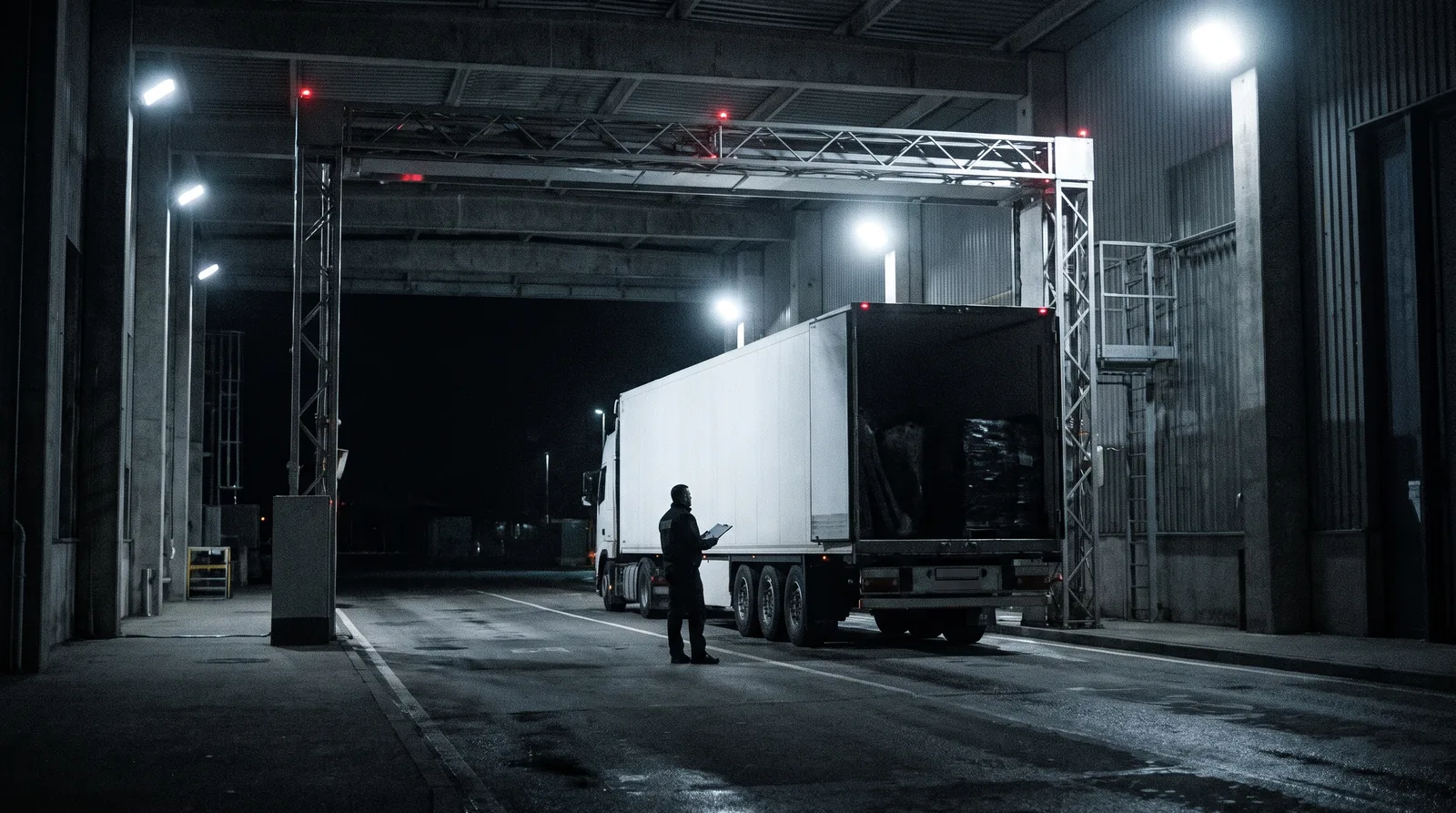
| X-ray scan (non-intrusive inspection) | scans the trailer and compares the image with the declared cargo | drive to the scanner, queue, image analysis; a clean image closes the case, an unclear one leads to a physical exam | practice within Article 46 UCC |
| Physical examination | opens the load compartment, counts and inspects the goods, in a full examination unloads the trailer and takes samples | the longest option: a bay, staff, reloading; the result of a partial examination is taken to apply to the whole declaration | Articles 188(c) and (d), 189 and 190 UCC |
In hours? The honest answer: it depends on the office, the queue and what is found in the trailer, so we quote no timetable. A documentary check with complete papers can close the same day, a scan within a shift, and a full examination with unloading can hold the vehicle into the next working day. In the United Kingdom a selected vehicle may also be directed to an inland border facility such as Sevington for the check, which adds mileage on top of waiting; gov.uk explains the procedure. If samples go to a laboratory, the goods wait for the result and the truck usually has to be released and brought back. The stake is measurable: every day means demurrage, missed delivery slots and a consignee rearranging production or a stand build.
Who pays for the standstill during an examination
Customs law settles only part of the bill directly. Article 189 UCC makes the declarant responsible for transporting the goods to the place of examination and for all handling necessary to carry it out, at the declarant's cost. Unloading for inspection, warehouse labour, reloading: that invoice belongs to the declarant, not to the carrier and not to the customs office.
The vehicle's waiting time itself is not priced by customs law; the transport order decides. A control selected by the system is not the carrier's fault, so once the free loading and unloading windows in the contract are used up, demurrage falls on the ordering party, and ultimately on whoever is responsible for arranging clearance. The bill flips when the control was triggered by the carrier's own failings, for example documents it was supposed to carry and did not. Before signing an order, check the demurrage rate and the length of the free windows. How these positions add up to the final invoice, we show in what customs clearance really costs.
How to cut the risk of selection
- Consistent documents. The invoice, the packing list, the CMR note and the declaration must tell the same story: the same quantities, the same weights, the same shipper and consignee. A gap between the CMR weight and the declared weight is a classic trigger for questions.
- A correct tariff code. A code that does not match the goods, or one picked for a lower duty rate, is a short road to a control and to a demand for back duty. How to classify goods and where to check a code, we cover in HS/CN codes and tariff tools.
- Full goods descriptions. Spare parts or general cargo tells neither the system nor the officer what is on the trailer. A commercial description should say what the goods are and what they are for, without anyone opening the doors.
- A realistic value and documented origin. A value clearly below what is typical for the code attracts a valuation check, and the declared origin must be backed by documents.
- Pre-lodgement. It does not lower the selection risk itself, but it moves risk analysis into driving time: the decision waits for the truck, not the truck for the decision.
- AEO status for regular flows. Fewer controls under Article 38(6) UCC, across dozens of clearances a month, is a difference measured in days of standstill.
The OTSL role
As an international freight forwarder we arrange export and import clearances on routes between Poland, the United Kingdom, Switzerland and the rest of Europe, with warehouses in Kielce, Legnica and Milton Keynes. We complete the paperwork before the truck leaves, keep the declaration consistent with the invoice and the CMR note, and when a shipment is selected we handle the case with the office instead of leaving the driver alone at the terminal. What a botched export clearance does to a crew waiting on the other side, we show in botched customs and a crew that waits. The full scope sits in our customs clearance section, route-by-route procedures in border procedures, and you can discuss a specific transport through the contact form.
What determines how long customs clearance takes?
Clearance duration depends on whether the system releases the pre-lodged declaration immediately or selects it for documentary, X-ray, or physical inspection through automated risk analysis.
Step by step
- Declaration submission. Details of the cargo are lodged into the customs system prior to arrival.
- Automated risk check. The customs database processes the entry against established risk parameters.
- Presentation of goods. The driver reports arrival at the designated customs area or border point.
- Control assignment. The system grants immediate release or routes the vehicle to inspection.
- Goods release. The shipment is cleared for onward transport following successful checks or auto-clearance.
Definitions
- Customs declaration: An official electronic submission containing required details about transported goods.
- Selection for control: The process of targeting a specific consignment for inspection based on risk analysis.
- Risk analysis: Automated system evaluation comparing declaration data against security profiles.
- X-ray scan: Non-intrusive radiographical inspection of a transport vehicle and its cargo.
- Physical examination: Manual verification of goods by customs officers involving partial or full unloading.