 AI image
A trade fair exhibit is exposed through the whole cycle: transport to the show, unloading and build-up, the open days, breakdown and the journey home. Cargo insurance as a rule protects goods in carriage, so the middle of the cycle, the work on the hall floor and the days the stand is up, needs its own look at the scope of cover. Before a prototype leaves, walk the risks stage by stage and check where one protection ends and the next begins.
The exhibit life cycle and its flashpoints
- Transport to the show: like any carriage, except the load is often unusual: fragile and one of a kind.
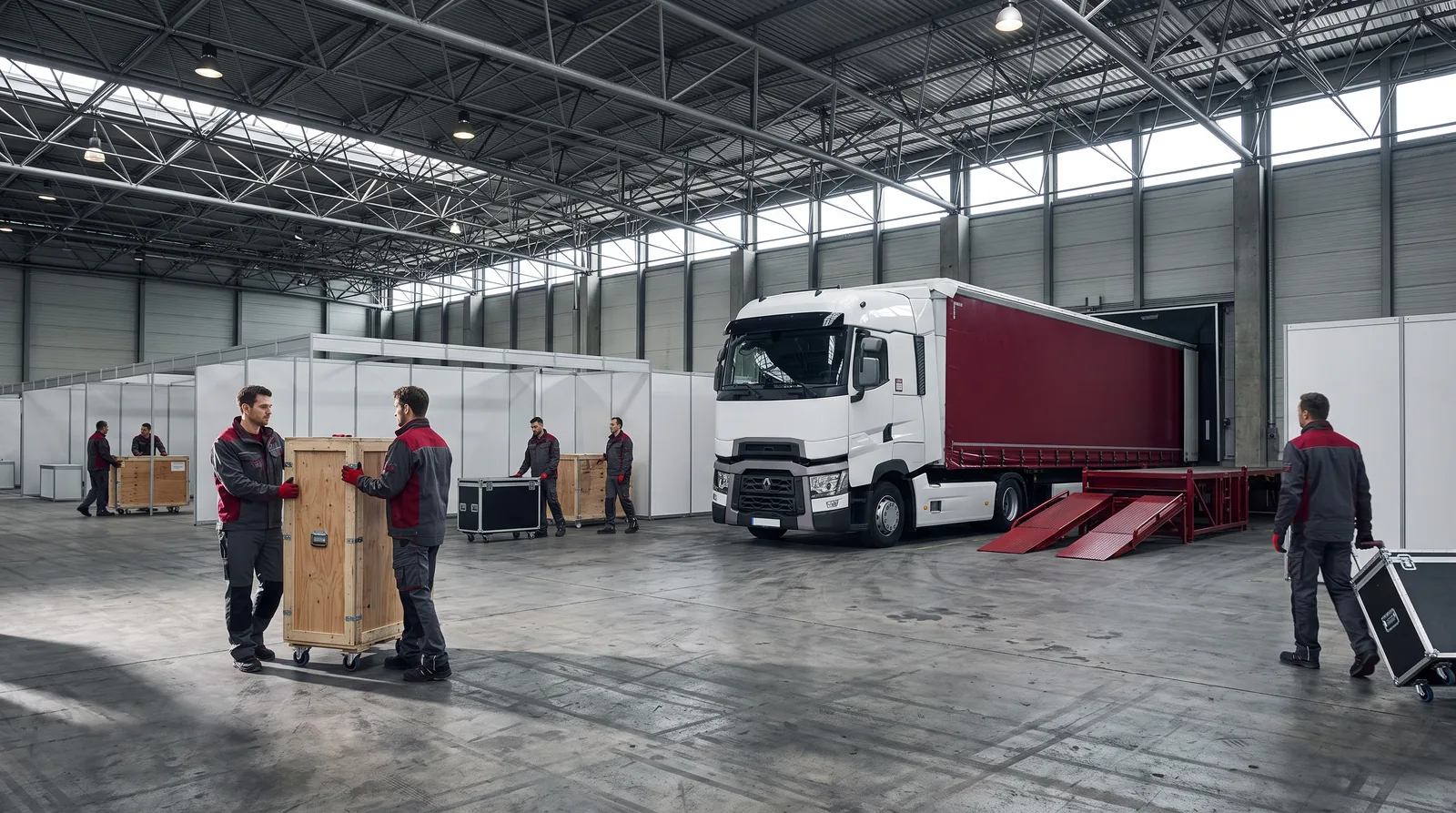
- Unloading and build-up: cranes, forklifts and many crews at once in a tight hall; statistically this is where most things happen.
- The open days: visitors touching, accidental knocks, theft of small components.
- Breakdown: the last-day rush, when everyone leaves at the same time.
- The return: carriage of an exhibit that is now dismantled and packed in a hurry.
Why cargo cover alone does not close the loop
The principle is simple: cargo cover accompanies the carriage. The stages in between, build-up, show days and breakdown, are different risks and usually different cover: exhibitors use exhibition insurance, organiser arrangements or extensions of their own policies. Scopes and exclusions differ between contracts, so the only honest advice is: agree with your insurer which stages of the cycle your cover includes before the exhibit travels. As the forwarder we say plainly where carriage begins and ends, because that decides who is responsible at each moment.
Replacement value, not list price
A prototype or a one-off exhibit has no catalogue price. Its real value is the cost of recreating it: materials, the team labour, the design and the time you may not have before the next show. Set the insured sum from that figure, not from book value, because after a loss rebuilding an exhibit for the next event tends to cost more than building it the first time.
What we do as an exhibition forwarder
We handle the full cycle: transport to the show and back, unloading slots at the halls, ATA (Admission Temporaire, the temporary admission document) carnets for events outside the EU and coordination with stand crews, described in our exhibition logistics hub. For the carriage stage we arrange cargo insurance matching the real value of the exhibit, and if damage occurs we document the state immediately, following the guide on reporting damage in transit.
How should you structure your timeline and packaging to prevent claim rejections?
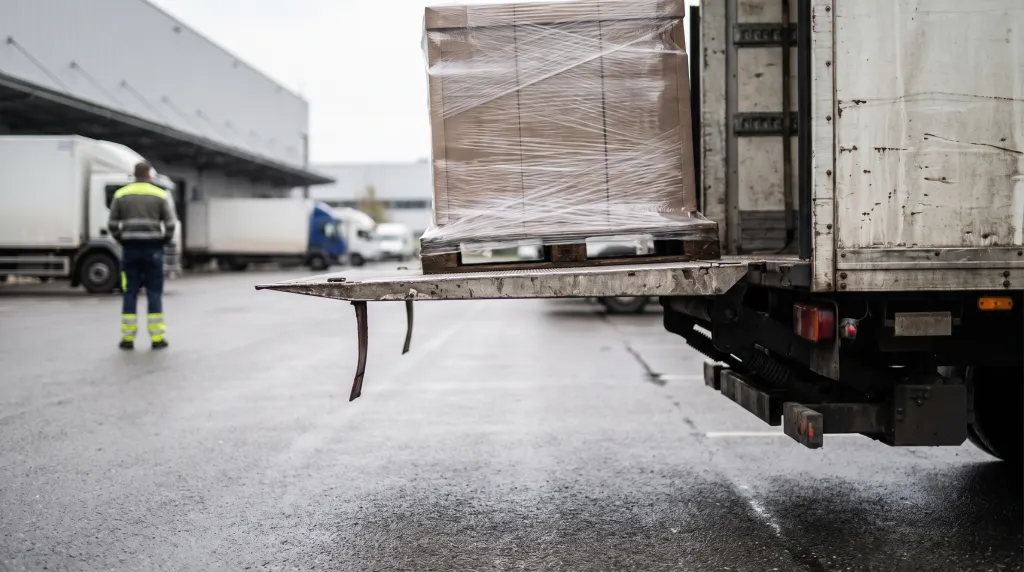
Transporting exhibition goods requires a strict time buffer and specific structural packaging standards. When scheduling a delivery to the UK or Western Europe, set your arrival notification at least 48 hours before the official assembly cutoff. Mechanical damage during unloading usually stems from time pressure and congested access routes. If your consignment weighs over 300 kg or occupies more than 2 pallets, the hall forklift operator requires specific clearance: the wooden crate must feature integrated skids at least 10 cm high to allow fork entry without crushing the base.
On international transit routes lasting more than 3 days, underwriters closely examine cargo securing and moisture protection. Standard stretch wrap is insufficient for sensitive electrical equipment. Failing to use internal blocking straps when lateral forces exceed 15% of standard road tolerance is classified as improper packing, leading directly to claim repudiation by the insurer.
Please note: These packaging protocols and timing rules do not apply if your exhibit weighs under 15 kg and is transported personally as hand luggage in a passenger car, nor do they apply to movements restricted entirely within a single exhibition hall without the use of heavy lifting equipment.
Step by step
- Equipment inventory. Prepare a detailed list of all stand components and exhibit items.
- Verification of cover. Check the terms of transit insurance and coverage rules inside the hall.
- Packing cargo. Use suitable protective packaging adapted to fragile freight.
- On-site supervision. Monitor the unloading and assembly process at the venue.
- Post-event securing. Pack the items immediately after the show closes to prepare for return transit.
Definitions
- Trade fair exhibit: A unique or prototype item displayed to visitors at an exhibition event.
- Cargo insurance: Insurance coverage protecting goods while they are being transported.
- Unloading and build-up: The operational phase inside the hall involving technical work and stand assembly.
- Exposition period: The open days of the show while the item remains on the stand.
When does this rule not apply?
Standard transport coverage does not apply while items are stationary inside the exhibition hall, unless specific exhibition risk extensions are included in the policy.
The OTSL role
OTSL manages the transit of exhibition goods across European destinations. Use our road transport services for stand freight and read about cargo insurance versus carrier liability when setting up protection for your event shipment.