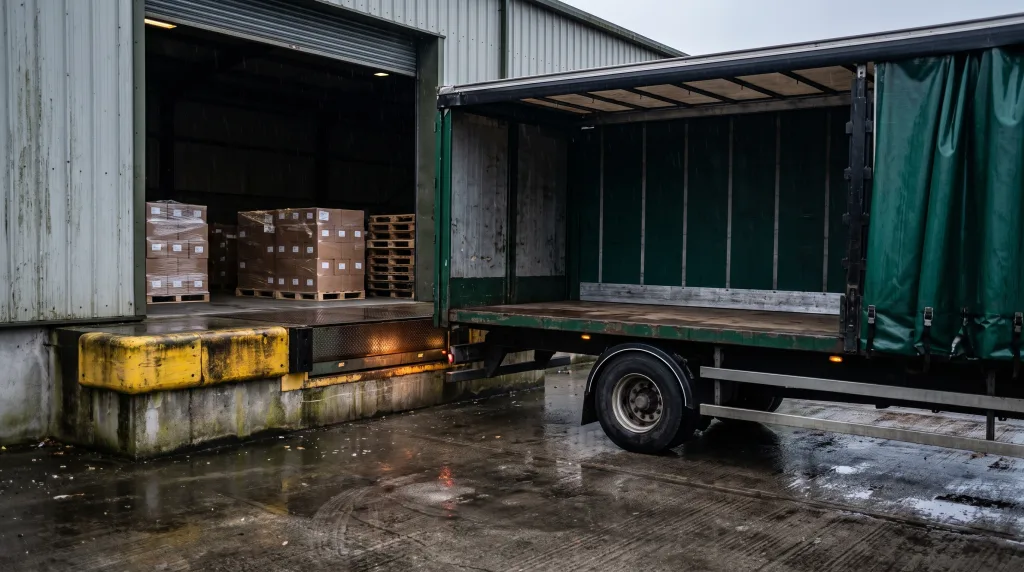
 AI image
With transit damage the order of actions matters more than emotions: first a reservation on the CMR note before you sign for receipt, then photos of goods and packaging exactly as found, then a damage report and a written notification to the carrier. Apparent damage must be flagged at delivery at the latest; hidden damage within 7 days (Article 30 of the CMR Convention).
Step 1: before you sign the CMR
A clean signature triggers the presumption that the goods arrived in good condition. So if you can see damage, you enter a reservation on the CMR note immediately, with the driver present: what is damaged, how many packages, what kind of damage. How to word such entries is covered separately in our piece on reservations on the CMR note.
Step 2: document the goods as found
- Photos of the pallet still on the trailer or right after offloading, before anyone starts repacking.
- Photos of the packaging from every side, including labels and seals; keep the damaged packaging, it is evidence.
- A damage report drawn up with the driver: date, place, description, both signatures.
- Weight and count of damaged units, because compensation is later calculated from weight.
Step 3: notification and deadlines
You notify the carrier in writing, with a copy of the CMR note, the report and the photos. For hidden damage, visible only after unpacking, you have 7 days from delivery for the written notice, Sundays and public holidays not counted. (source: unece.org) Remember also that claims from international carriage become time-barred as a rule after one year (Article 32 CMR), so a case parked for later can be lost to nothing but the passage of time.
The role of a cargo inspection
For larger or disputed damage, an independent survey works better than arguing over photos: physical inspection, unit counts, a documented report. We run this as our cargo inspection service, including at the Milton Keynes warehouse for goods on the UK side.
And the money
Documenting the damage does not by itself guarantee full compensation: carrier liability is capped by weight, which we explain in the article on the 8.33 SDR per kilogram limit. The full value of the goods is protected only by cargo insurance.
How do you calculate compensation and when does the CMR limit not apply?
You calculate compensation for damaged cargo based on the actual gross weight of the lost goods, rather than their market price on the commercial invoice. The haulier's liability is capped at 8.33 SDR per kilogram of gross weight. For example, if 3 pallets with a total weight of 500 kg are damaged, the upper limit of compensation will equal 4165 SDR. If the actual value of the consignment was higher, you must cover the difference through your own cargo insurance or seek recovery through legal proceedings.
You have a legal duty to mitigate the extent of the loss. You must not immediately discard or dispose of damaged goods. You are required to hold the damaged freight for at least 48 hours following formal notification, allowing the insurer time to arrange an inspection. If the defect reduces the value of the goods by less than 15%, the carrier may require you to discount or repair the items rather than paying full compensation for the entire load unit.
- The 8.33 SDR limit does NOT apply if you prove that the damage resulted from the carrier's wilful misconduct or gross negligence.
- The weight restriction also does not apply when a declared value of goods has been entered into box 21 of the CMR consignment note and an agreed surcharge was paid.
- These rules do not cover purely domestic transport, which falls under local national transport laws rather than the international CMR convention.
Step by step
- Inspect the cargo at delivery. Check the packaging and pallets thoroughly before signing for receipt.
- Enter a reservation on the CMR note. State the exact damage directly on the consignment note with the driver present.
- Take photographs of the goods. Capture the goods as found, including packaging, labels, seals, and the trailer background.
- Draft a formal damage report. Complete a detailed damage form and request the driver to sign it.
- Submit a written claim. Send a formal notification of claim along with photos and documents to the carrier.
Definitions
- CMR Convention (Convention on the Contract for the International Carriage of Goods by Road): An international treaty regulating carrier liability and documentation principles in road freight transport.
- CMR consignment note: The primary transport document confirming the contract of carriage and the condition of goods upon collection.
- Apparent damage: Visible damage to the goods or packaging that can be identified immediately upon delivery.
- Hidden damage: Damage to the consignment contents that is not visible from the outside at the time of receipt.
- Damage report: An official document drawn up in the presence of the driver detailing the nature and extent of damaged goods.
The OTSL role
We assist in managing claims procedures and verifying documentation when cargo is damaged during transit. We coordinate these processes across our road transport services and apply standards detailed in our guide on the cargo inspection process.