 AI image
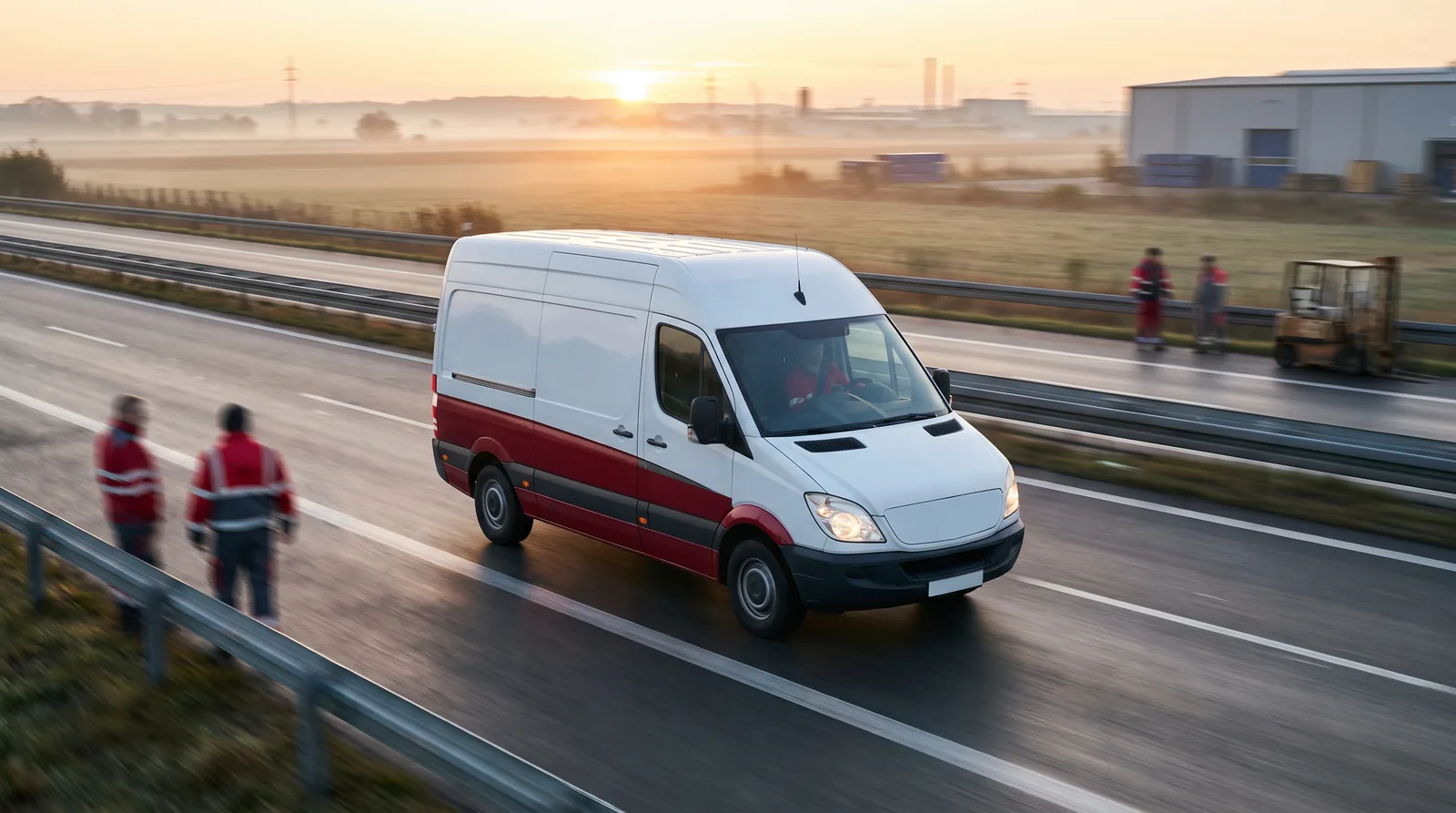
The choice comes down to the weight and volume of the batch, the distance and what exactly is at stake. An express van takes a few pallets and leaves immediately; a dedicated truck comes into play for bigger batches or when parts must be collected from several points. One thing stays constant: an express runs with no co-loads, straight to the line.
When a van is enough
- The batch fits on a few pallets and within the van payload, and every hour counts.
- The route is long, but a two-driver crew keeps the vehicle moving almost without stops.
- Door-to-door collection and delivery, with no terminals or cross-docking on the way.
- Parts are light relative to volume: the typical case of small components in KLT containers.
When you need a dedicated truck
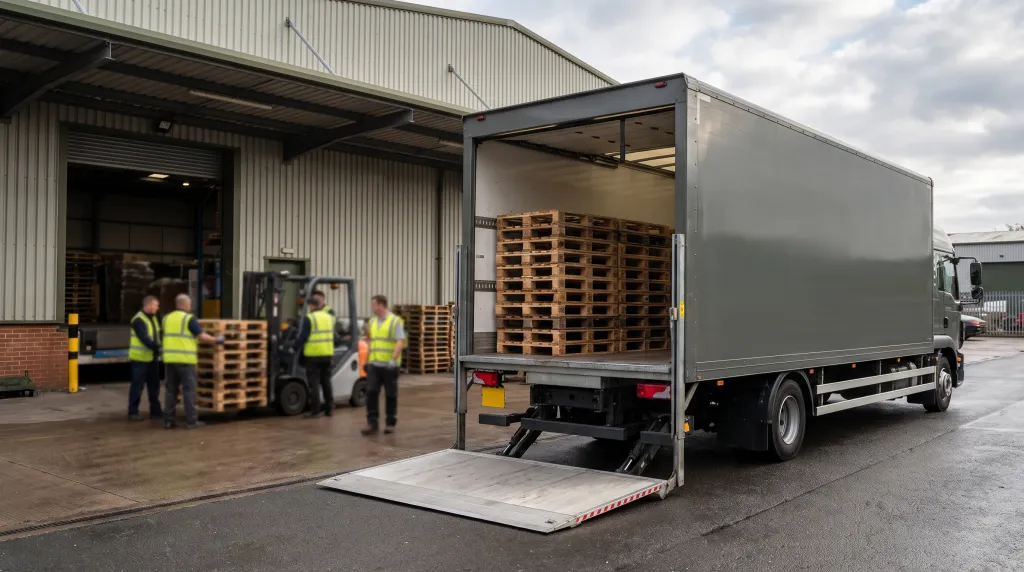
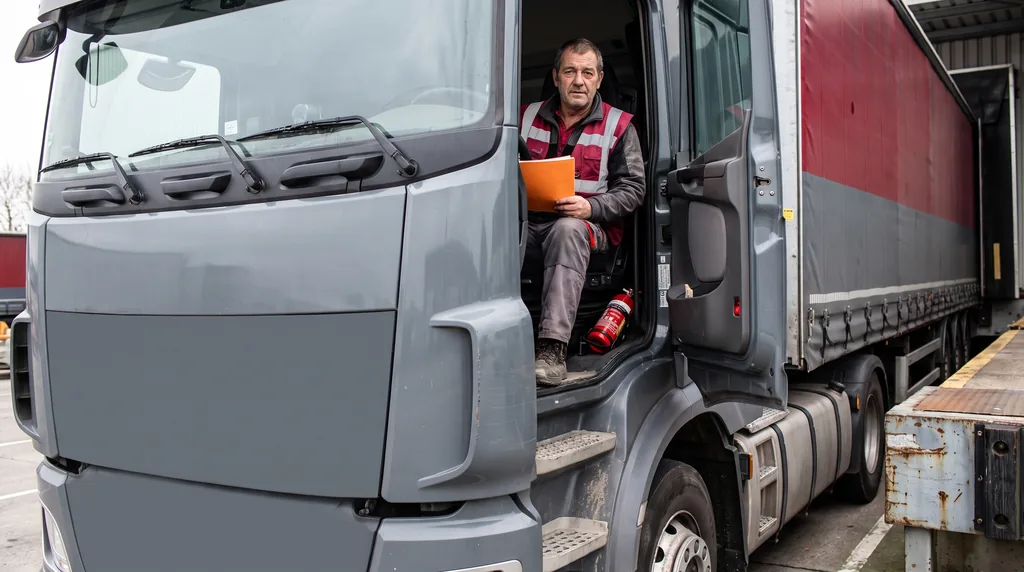
When weight or volume exceeds what a van can take, for example heavy Gitterboxes with metal parts, a rigid or an artic runs in express mode: the same priority, bigger scale. A dedicated truck also makes sense when components must be collected from several suppliers in one run and delivered to the line as a complete set, instead of hoping that three separate transports meet in one window.
Co-loading is out
An express to the line carries your load only, by definition. Every co-load is an extra point on the route, extra delay risk and someone else's problems becoming yours. So an express vehicle runs directly from loading to unloading, and the saving from a co-load is left to those who do not have a stopped line behind them. What downtime really costs is broken down in our piece on a production line stoppage.
Small chemicals: ADR without improvisation
Adhesives, hardeners, paints and aerosols used in production often fall under ADR (dangerous goods transport) rules. Some such shipments can travel under quantity exemptions, but that must follow from the documents and from UN numbers and quantities declared before departure, not discovered at loading. Not every van and not every driver may take such cargo, so flagging the chemicals upfront saves everyone stress and empty kilometres.
The choice in practice
You give us dimensions, weight, loading points and the hour the parts must be at the line, and we match the vehicle: the express fleet and its working mode are described under express vans, the full industry setup under automotive logistics. And if the problem is not a missing vehicle but a carrier who stopped answering, the right mode is emergency transport takeover.
How do you calculate the time buffer for express routes exceeding 1000 km?
When you organise a transport run directly to a production line, transit time is not just about average speed. With a double-manned crew, an express van can operate for up to 21 hours within a 30-hour shift limit, covering up to 1600 km in a single day. A standard Luton or curtainside van carries 8 pallets, but its real payload limit is around 1200 kg. If your consignment weighs 1400 kg across just 4 pallets, the van will exceed its gross weight limit. You must then switch to a 12-tonne rigid lorry, where a single driver is restricted to 9 hours of daily driving, covering around 700 km per day.
For UK-bound express freight, your operational schedule must account for additional delays:
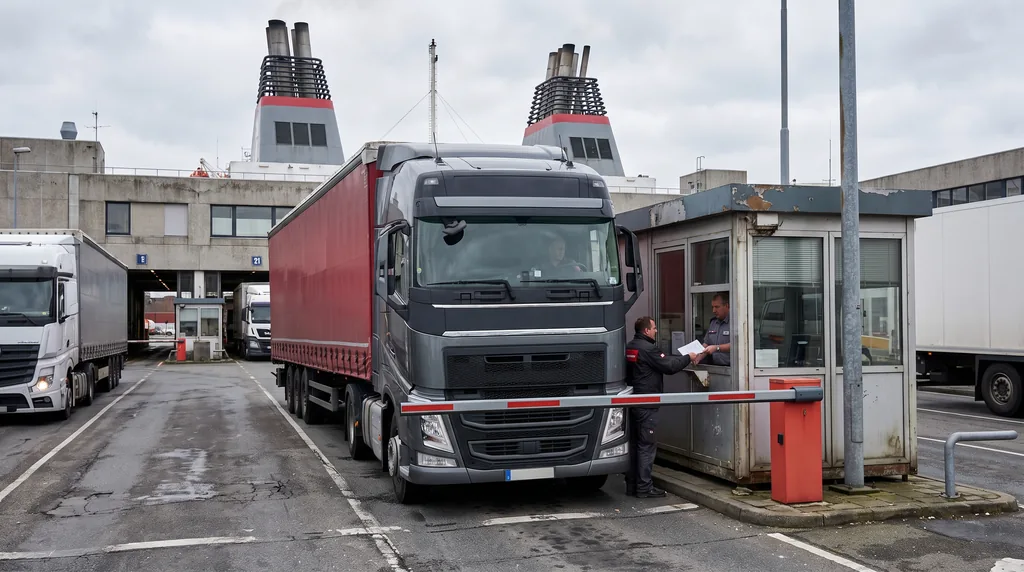
- Customs processing and GVMS checks: allow a buffer of 2 to 4 hours at Dover or Folkestone.
- Tail-lift capacity: standard limits are restricted to 750 kg per lift cycle.
- Maximum pallet load in a van: maintain a safe limit of 300 kg per pallet position.
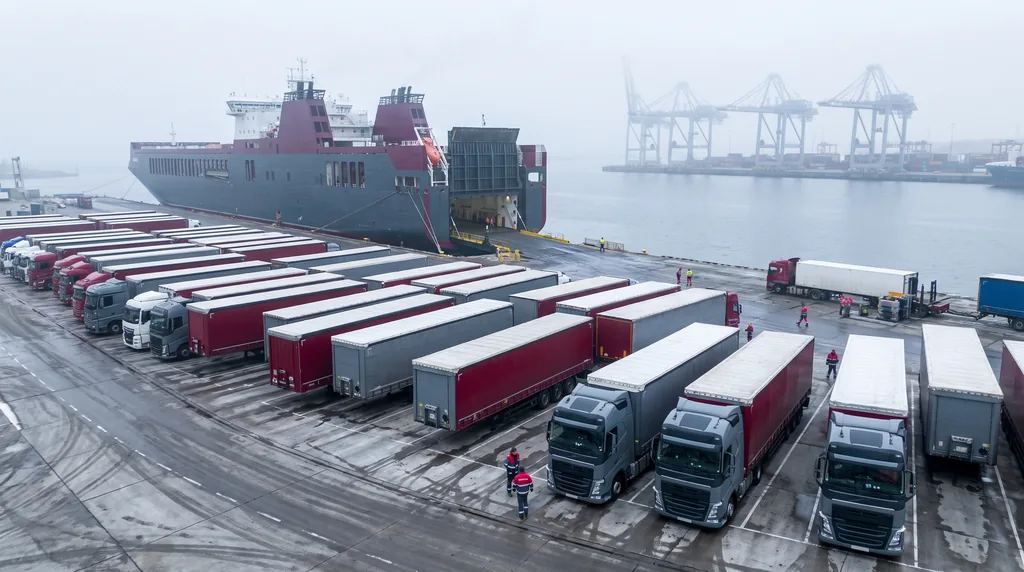
This time-saving calculation for vans does not apply when severe weather halts Channel ferry sailings for more than 6 hours or during major port congestion. Under those conditions, the speed advantage of a light commercial vehicle disappears, making a 12-tonne truck carrying 18 pallets in one trip a more reliable choice than dispatching two separate vans.
Step by step
- Determine cargo parameters. Measure the total weight and volume of the parts and verify packaging dimensions.
- Assess shipment urgency. Establish the precise time required for collection and direct delivery to the assembly line.
- Select the appropriate vehicle. Decide whether the cargo fits inside a van or requires a larger rigid truck.
- Plan the route and crew. Set a direct route with no co-loading and assign two drivers for long distances.
- Track transport progress. Monitor the shipment status continuously until unloading directly at the production facility.
Definitions
- Express van: A light commercial vehicle designed for rapid transport of smaller shipments directly from sender to recipient.
- KLT container (Kleinladungsträger): A standardised plastic container used in manufacturing for transporting small industrial components.
- Gitterbox: A metal mesh box pallet intended for the safe transport of heavy or irregular industrial parts.
- Rigid truck: A single-unit heavy goods vehicle offering higher payload capacity than a van for larger part batches.
The OTSL role
OTSL organises express freight movements directly to production plants across Europe. We select the suitable vehicle using express vans or heavy vehicles based on dimensions and weight. For larger consignments requiring full vehicle capacity, we arrange road transport directly to destination.