 AI image
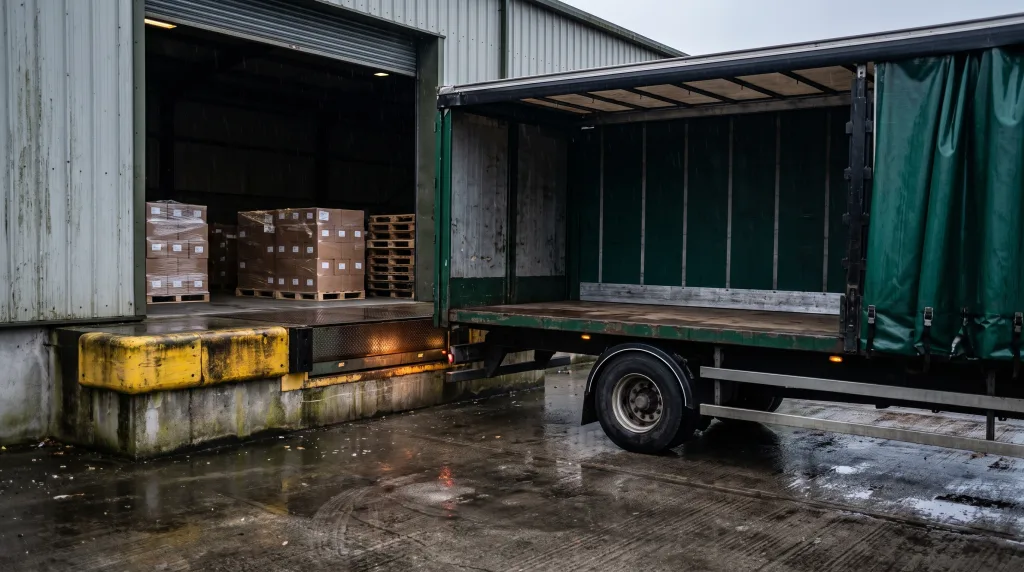
A trailer with 26 pallets of bottled juice reached a distribution centre in the Midlands with leaning pallets, torn wrap and displaced trays after a hard braking event. Juice travels ambient, so unlike chilled loads there was no temperature clock, but the structural damage still made the trailer unsafe to unload. We rebuilt 18 pallets fully and 6 partially, and all 26 returned to the supply chain.
Situation
Bottled juice moves in shrink-wrapped trays, and a tray-based pallet holds its shape only as long as every layer sits square. Once braking forces push the trays out of line, the stack has no internal strength left and the wrap tears under the load. Several pallets ended up leaning on their neighbours, and the receiving warehouse stopped the unload rather than send forklifts into an unstable trailer. The operator faced the usual fork in the road: reject a full trailer, or get it reworked fast.
What did we do?
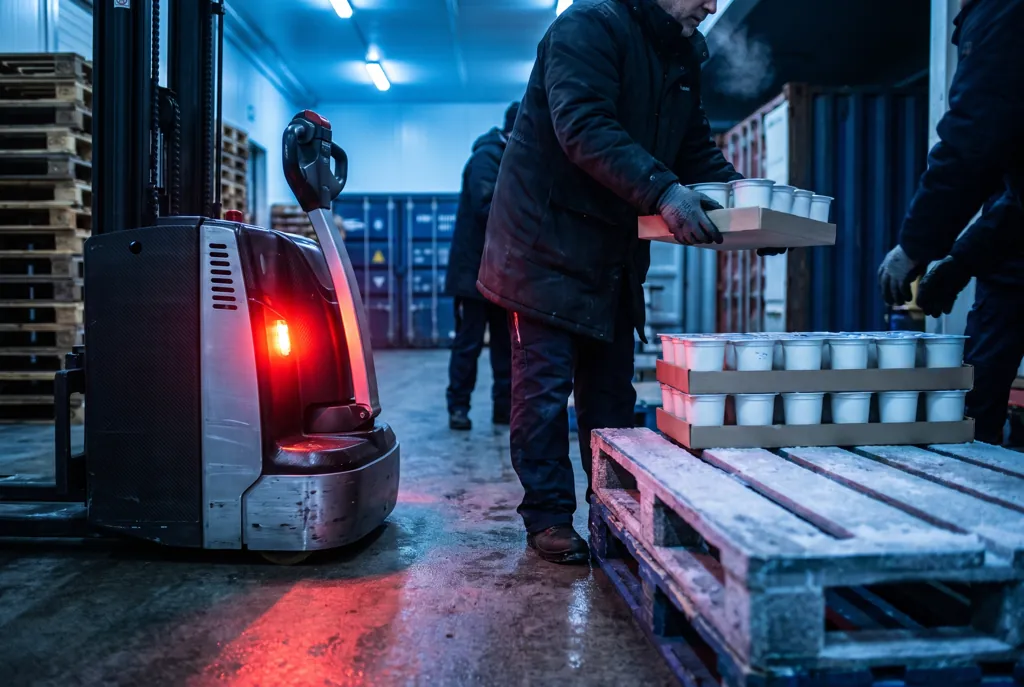
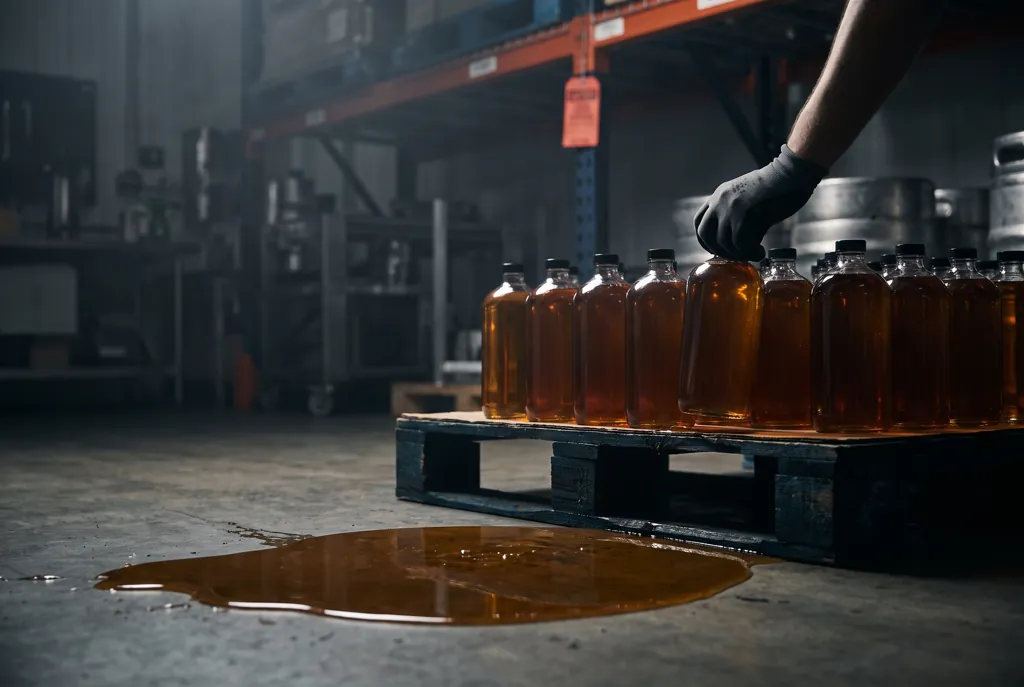
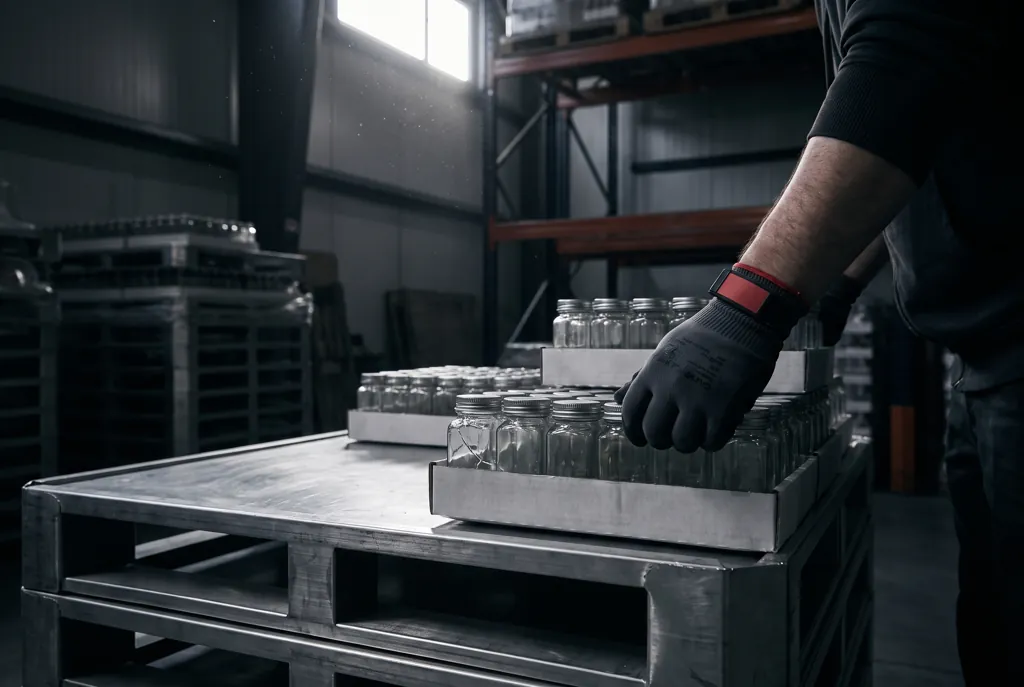
The rework ran in an ambient handling area, which is the right environment for this product, no cold chamber needed, just a controlled space where pallets can be dismantled safely. Fallen and shifted trays were separated and assessed first. Then the unstable pallets were taken down, trays checked for leaking or burst bottles, and rebuilt into correct stacking patterns on sound bases with new industrial wrap.
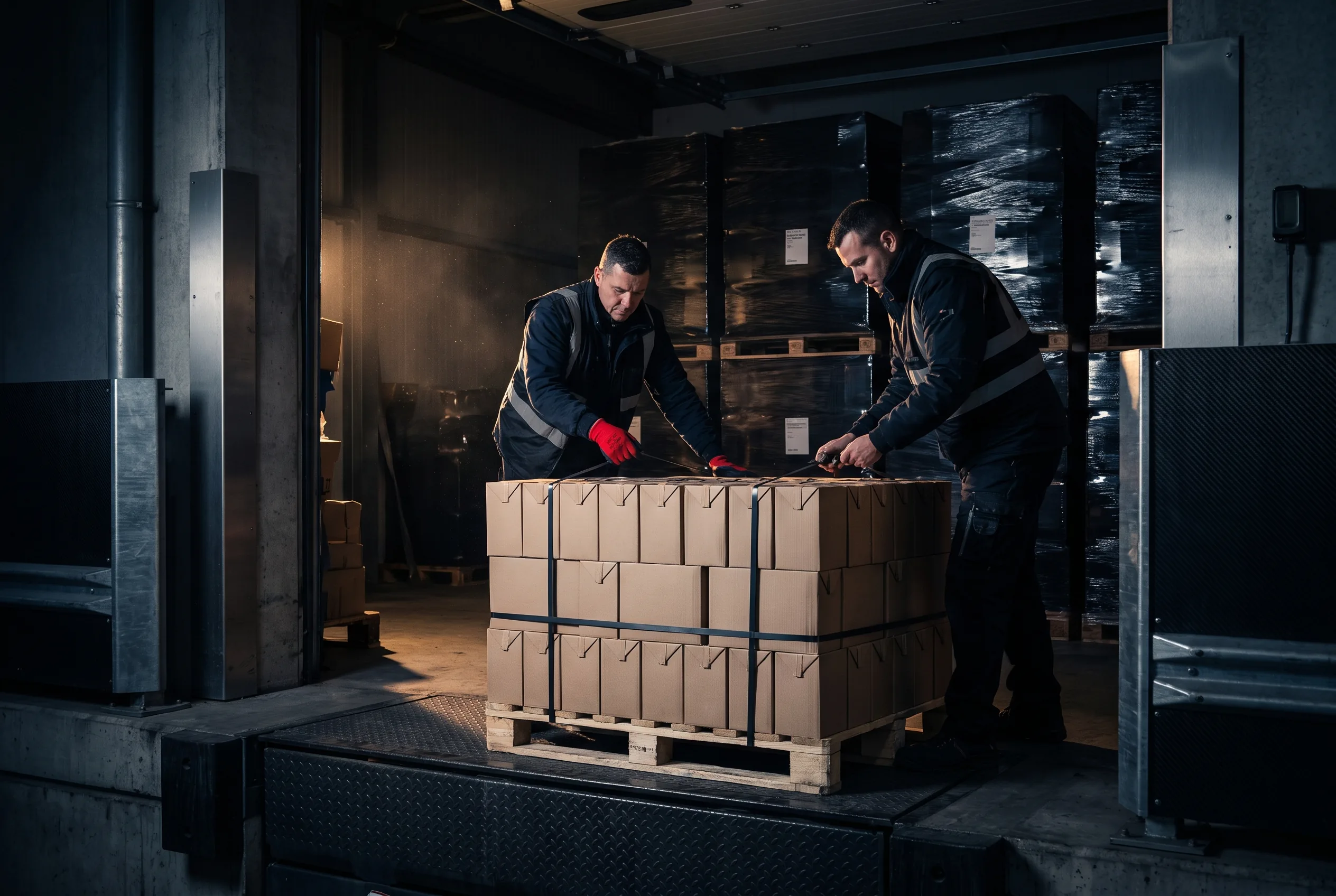
The load went back into the trailer with even spacing and stable alignment, and the operation was documented with photographs, inspection notes and restack records for the insurer.
Outcome
All 26 pallets were recovered and delivered. Packaging losses were minimal, no contamination was found, and a delivery that was minutes from rejection completed instead.
What does this mean for shippers?
Not every rework needs a freezer or a chilled chamber, but every rework needs method: honest sorting, correct patterns, documentation. Matching the environment to the product is the point of our multi-temperature setup, and the mechanics are covered in pallet re-stow and load rearrangement. Shifted beverage load? Describe it in the contact form.
How do you calculate wrap tension and floor friction to prevent secondary cargo movement?
When securing a restored beverage load, trailer floor friction is your primary mechanical defense. A standard wooden trailer floor provides a friction coefficient of roughly 0.3, which requires up to 4 lashing straps per pallet pair under heavy braking. Placing rubber anti-slip mats beneath the pallets increases this coefficient to at least 0.6 μ, cutting the required downward lashing force by over 50%. However, cardboard dust on the floor will immediately reduce this friction value.
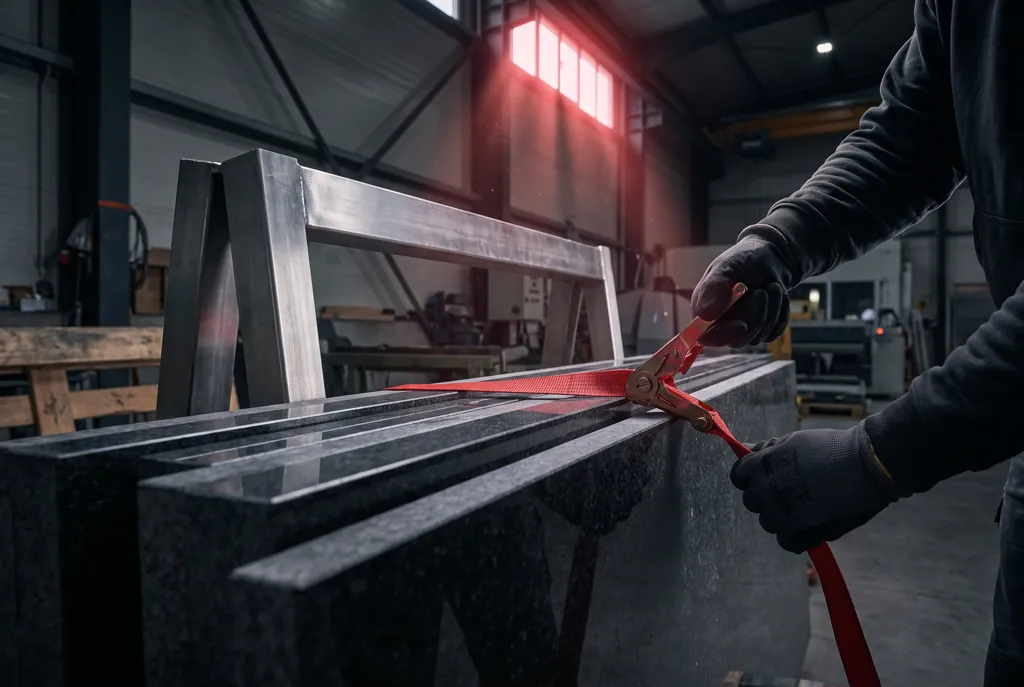
For stabilizing drink trays, use stretch film with a minimum thickness of 23 microns and a pre-stretch ratio of 150%. A standard unit weighing 750 kg requires at least 6 base wraps and 3 top wraps to resist lateral acceleration during a 90-degree turn. Restacking and securing a full consignment of 26 pallets typically takes between 3 to 4 hours for a two-person warehouse team.
Note the operational limit: this securing method DOES NOT apply if more than 5 litres of liquid have spilled onto the trailer floor or if the transit is moving under a customs seal (such as a T1 transit document via GVMS (Goods Vehicle Movement Service) or CDS). Liquid contamination negates mat friction completely, while broken customs seals require formal UK Border Force or customs authority clearance before any physical intervention can take place.
Step by step
- Halt unloading. The receiving warehouse stops operations to secure the trailer with unstable cargo.
- Assess structural damage. Specialists evaluate the condition of shrink wrap and count affected units.
- Transfer to rework area. Freight is moved to a nearby warehouse to eliminate safety hazards.
- Rebuild and re-wrap stacks. Workers align displaced trays, restack pallets and apply fresh film.
- Return to supply chain. Restored pallets are handed back for final intake and delivery.
Definitions
- Ambient transport: The carriage of goods that do not require temperature-controlled refrigeration.
- Shrink-wrapped tray: Secondary packaging for bottled drinks that holds individual units together in a layer.
- Pallet rework: The process of restacking and securing displaced or leaning goods back onto standard pallets.
- Distribution centre: A logistics facility that receives, handles and dispatches freight to retail networks.
The OTSL role
When your cargo suffers structural displacement on UK routes, we coordinate swift emergency handling. Our cross-dock warehouse in Milton Keynes provides space for restacking shifted goods, while our reliable road transport ensures seamless delivery back to the receiving facility.