 AI image
A refused delivery at a retailer's RDC leaves the carrier with a loaded trailer, a driver whose hours are running and a next job that is waiting. The following 48 hours are your decision window: either the goods come off the trailer into a warehouse or the truck stands still. The OTSL warehouse in Milton Keynes works 24/7 and takes a refused load for unloading without waiting for the morning. From there five routes are possible: rework and re-booking, hold, return to sender, redirection or disposal. The owner of the goods decides; we supply the report and the count.
Why does an RDC refuse a delivery, and what does it mean for the carrier?
The most common reasons for refusal at retail sites are a missed slot, a non-compliant pallet (too high, badly wrapped, damaged), wrong labels or paperwork, a quantity mismatch against the booking and a broken cold chain. The reason written on the delivery documents matters beyond the claim: it decides who pays in the end. Carrier liability under the CMR Convention covers damage to the goods and delay within set limits, so a refusal for lateness lands on you differently from a refusal for labels applied by the shipper.
For the carrier a refusal starts two clocks: the driver's working time and the next job. A truck carrying a rejected load cannot take its next collection, and a driver who runs out of hours ends up parked with the goods. Diverting to a warehouse solves both: the trailer is empty, the driver moves on, and the decision about the goods passes to their owner, who has time to make it.
What are the five routes after arrival in Milton Keynes?
First: pallet rebuild or label correction and re-booking into the same RDC. This needs a new slot in the retailer's booking system; the forwarder books the window while the goods wait in short-term storage. Second: hold pending the owner's decision, for instance while the cause of refusal is disputed or the insurer wants to see the goods. Third: return to the sender when rework on site makes no sense.
Fourth: redirection to another consignee named by the owner, such as another RDC of the same retailer or a wholesaler who will accept the goods at a shorter shelf life. Fifth: certified disposal when the goods are no longer saleable, with a waste transfer note and a certificate for the insurer. Which route to take is decided by the owner of the goods (shipper or consignee) and, where relevant, the insurer. OTSL gives them the photo report and the count; it does not decide for them.
Refused delivery step by step for the carrier
- Secure the refusal document. The reason must be written by the RDC on the delivery paperwork; photograph the pallets on the consignee's bay before you leave.
- Notify the principal and the warehouse. Tell OTSL the vehicle, number of pallets, type of goods, temperature regime and reason for refusal; the warehouse runs 24/7, but the ramp needs to know you are coming.
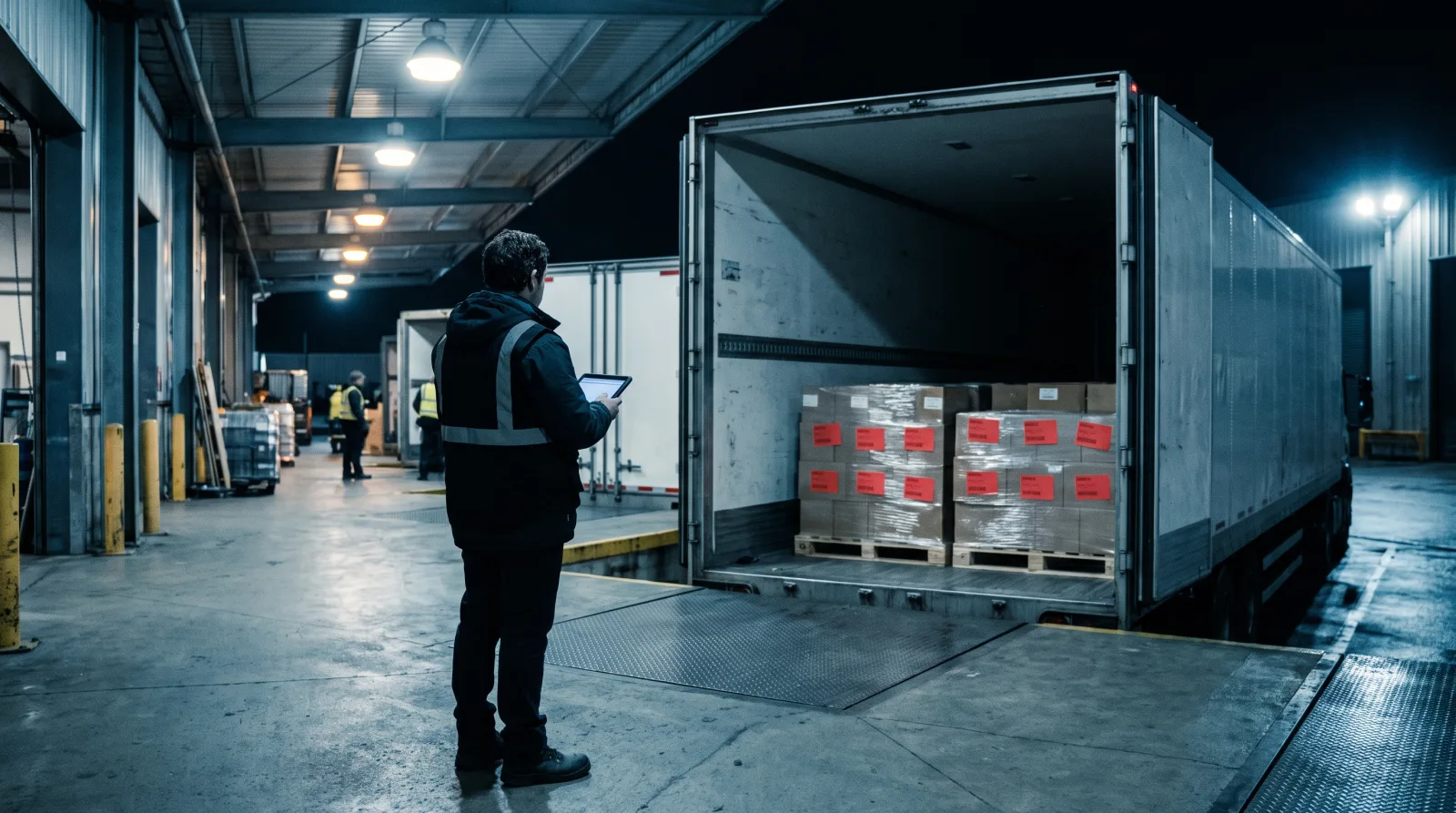
- Unloading with a count. Pallets are counted and photographed on arrival and the condition of each is recorded in the receiving report; from this point the driver and truck are free.
- Report to the owner of the goods. Count, photographs and the reason for refusal go to the shipper or consignee and, where needed, to the insurer.
- Owner's decision. The owner picks one of the five routes and issues an instruction; until then the goods wait in short-term storage, temperature-controlled where required.
- Execution and close-out. Rebuild and re-booking, return, redirection or disposal; each step ends with a document that closes the matter with the retailer and the insurer.
Definitions
- RDC (Regional Distribution Centre): a retailer's regional warehouse that receives supplier deliveries on booked slots and distributes goods to stores.
- Refused delivery: rejection of all or part of a delivery at the consignee's gate, with the reason recorded on the documents.
- Booking slot: a reserved delivery window in the retailer's booking system; lateness is a ground for refusal in its own right.
- Hold: keeping goods in the warehouse pending the owner's decision, without releasing them to anyone.
- CMR Convention: the international convention on the contract for the carriage of goods by road, which sets out carrier liability for damage and delay.
- Photo report: documentation of the condition of pallets and goods with photographs tied to unit numbers, prepared on receipt.
Carrier checklist after a refused delivery
- Refusal document with the reason written by the RDC and the time of departure from the bay.
- Photographs of the pallets on the consignee's bay, including labels and wrapping.
- Notification to the warehouse: vehicle, pallet count, goods, temperature, reason.
- Contact for the person on the owner's side who will make the decision.
- Whether the goods are insured and whether the insurer needs to see the report.
- Shelf life of the goods if they are food or otherwise date-coded.
When is diverting to a warehouse not the right move?
Diverting to Milton Keynes does not apply when the refusal concerns a single pallet and the RDC will accept it after a simple fix the driver can do on site in minutes, unless the retailer does not allow rework on its bays. Nor does it apply when the shipper is closer than the warehouse and decides on a return straight away. Distance and driver hours depend on where the refusal happened; Milton Keynes sits on the M1 between London and Birmingham, so for RDCs in the Midlands and the south it is usually the nearest point, for Scotland it is not.
The OTSL role
The OTSL warehouse in Milton Keynes receives refused loads 24/7, counts and photographs them and runs one of the five routes on the instruction of the owner of the goods. When the problem is not only the goods but also a truck that has to move on, our emergency transport takeover service helps. Recovering loads rejected by retailers is covered in more depth in our article on distressed load management in the UK, retailer gate requirements in deliveries to UK retail RDCs, and the hold rules in quarantine, hold and release.