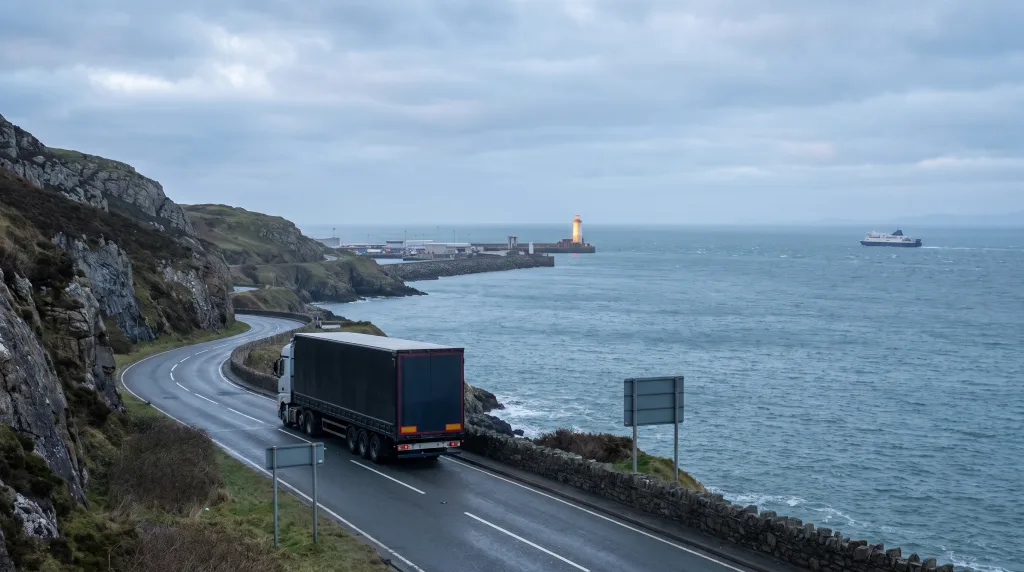
 AI image
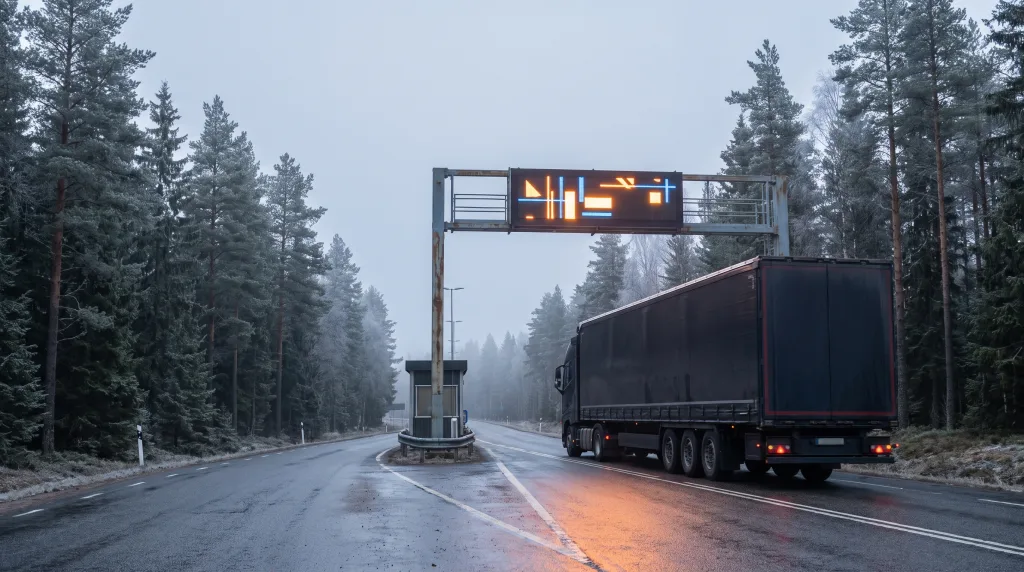
The most important road border crossing from Sweden into Norway is Svinesund on the E6, on the Gothenburg–Oslo axis. The alternative on the E18 is Ørje, and further north there are smaller crossings with limited customs service. Three things decide the choice: the delivery address (Oslo and the south versus eastern Norway), the customs opening hours at the crossing, and whether the Digitoll notification has been submitted. A vehicle with a complete notification may be let through without stopping; a vehicle without one waits, whichever crossing it picked.
Why does almost every truck from Poland enter Norway through Sweden?
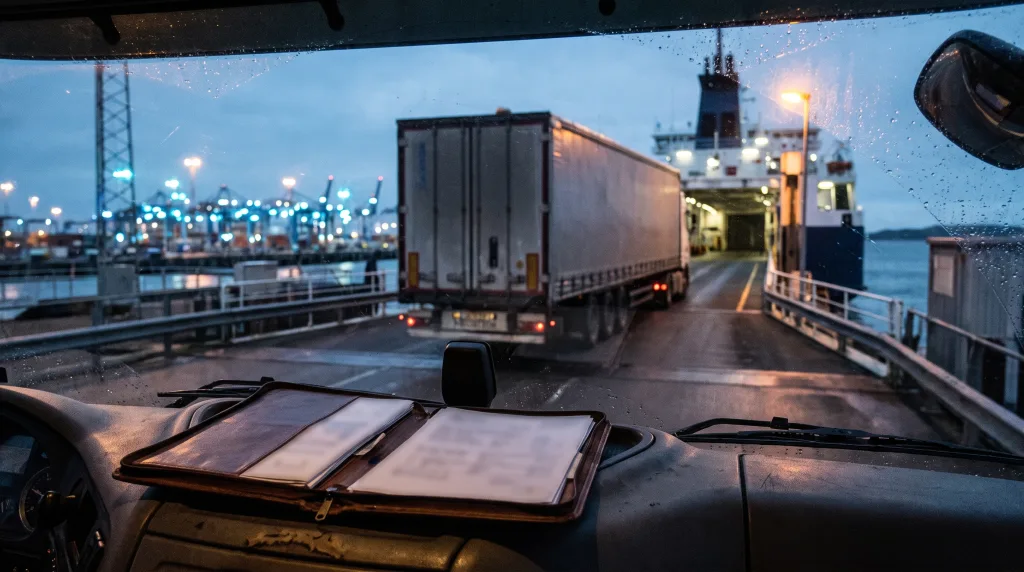
You cannot reach Norway on motorways alone. The land route from Poland runs through Sweden: by ferry from a Polish port to Sweden, or overland through Germany, Denmark and the Öresund bridge, then the E6 or E18 to the border. In practice OTSL uses the Świnoujście–Ystad or Trelleborg and Gdynia–Karlskrona crossings, then the E4 and E6 north. Journey times depend on the chosen ferry and on driver hours, so we do not quote them as fixed numbers.
The second option is a longer ferry crossing directly to Norway from Denmark. We choose it when it shortens the approach to the delivery point, for example in the western part of the country. Timetables and prices are set by the ferry operators, so they are not in this text; we book in advance, because a freight booking covers a specific vehicle, driver and load.
How do Svinesund, Ørje and the smaller crossings differ?
Svinesund lies on the E6, the main artery from Gothenburg to Oslo, and handles the largest volume of truck traffic between the two countries. If the delivery goes to Oslo, Drammen or the southern coast, it is the natural choice. Ørje on the E18 is the alternative when the route comes from the Stockholm and Karlstad side or the consignee is east of Oslo. Further north there are smaller crossings with limited customs service: check the opening hours and the range of procedures available there on toll.no before fixing the route, not after arriving.
Norway is a party to the Convention on a common transit procedure, so goods can travel from the EU to a Norwegian customs office under transit. On the Norwegian side the Digitoll notification and import clearance apply. The border crossing is where these three things meet: the transit must be properly ended or passed on there, and the Digitoll data linked to the vehicle.
Choosing the crossing step by step
- Fix the delivery address and unloading window. Oslo and the south point to the E6 and Svinesund; eastern Norway, depending on the route through Sweden, to the E18 and Ørje.
- Select the sea crossing. Ferry from Poland to Sweden, the Öresund bridge or a direct ferry from Denmark to Norway; total time and driver hours decide, not distance alone.
- Check customs service at the crossing. Opening hours and available procedures at the chosen crossing according to toll.no; at smaller crossings this is often decisive.
- Submit the Digitoll notification before arrival. Vehicle and goods data must be in the system before the driver leaves the E6 for the truck lane.
- Give the driver the notification details. Reference numbers, the customs agent's details and a contact phone in case the vehicle is sent for inspection.
- Close the transit and the import clearance. After the border the goods are released for delivery once cleared in TVINN.
Definitions
- Svinesund – the main road border crossing between Sweden and Norway on the E6, on the Gothenburg–Oslo axis.
- Ørje – the border crossing on the E18, the alternative for traffic from central Sweden.
- Digitoll – the Norwegian Customs (Tolletaten) system in which vehicle and goods data are submitted digitally before the border is crossed.
- Common transit procedure – the procedure under the Convention to which Norway is a party; it allows goods to move from the EU to a Norwegian customs office without clearance at the border itself.
- EEA (European Economic Area) – the agreement linking the EU with Norway, Iceland and Liechtenstein; it does not remove the customs border.
Checklist before reaching the border
- The chosen crossing confirmed with the customs agent and written into the driver's instructions.
- Customs opening hours at that crossing checked on toll.no on the day of departure.
- Digitoll notification submitted and linked to the registration numbers of tractor and trailer.
- Transit document (MRN) and the full set of commercial documents in the cab.
- Ferry booking for the right vehicle and time, consistent with the driver-hours plan.
- In winter: road conditions on the E6/E18 and winter equipment checked before leaving Sweden.
When is Svinesund not the right choice?
Svinesund is not automatically the right crossing unless the delivery goes to Oslo or the south of the country. When the consignee is east of Oslo and the route through Sweden comes from the Karlstad side, Ørje on the E18 shortens the run. Smaller crossings in the north make sense only when their customs service matches the arrival time and the procedures required; otherwise the saved kilometres turn into a standstill. The choice also depends on whether the movement travels under transit and where it is to be ended; that is decided by the customs agent at the planning stage, not by the driver on the spot. See also: Excise goods to Norway: særavgift, who pays and which registrations.
The OTSL role
OTSL fixes the border crossing when planning the order, together with the sea crossing and the unloading window, and gives the driver the notification details before the border. Crossings from Polish ports are described in ferries to Scandinavia: routes from Polish ports, and reservations are handled by ferry booking. Why the customs border exists despite the EEA is explained in deliveries to Norway from outside the EU. The lanes are described on transport to Norway and transport to Sweden, through which every land route passes.