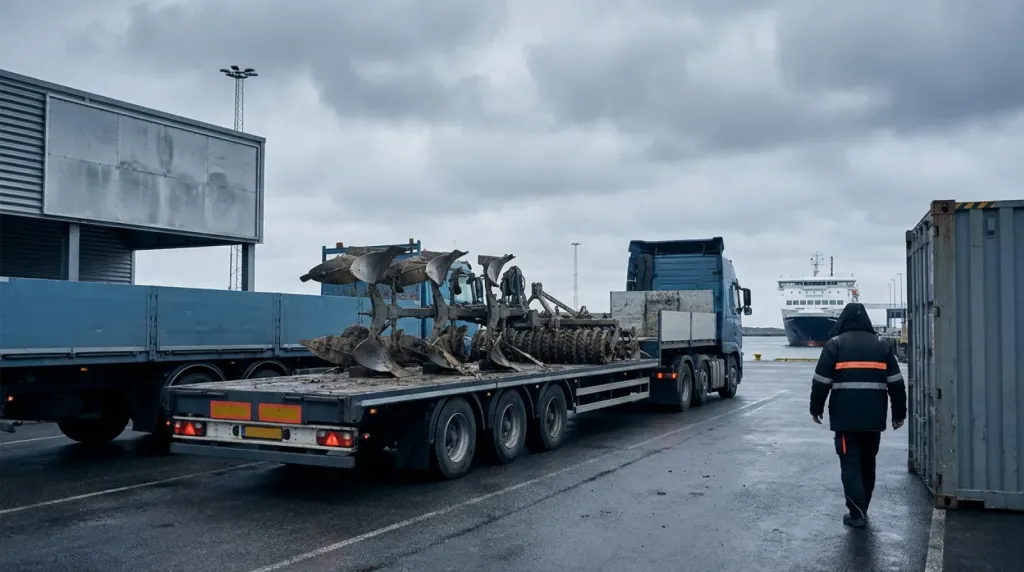
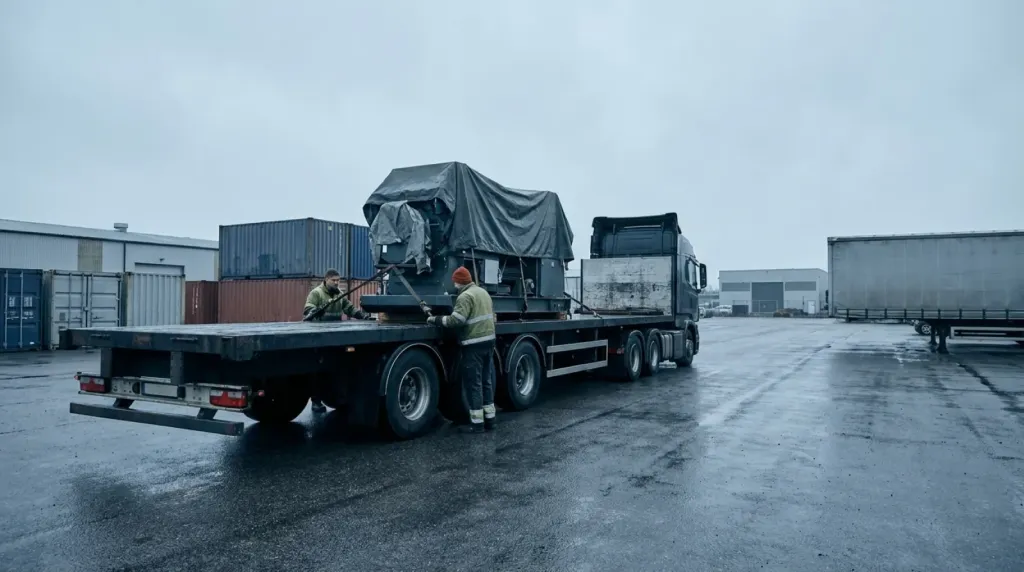
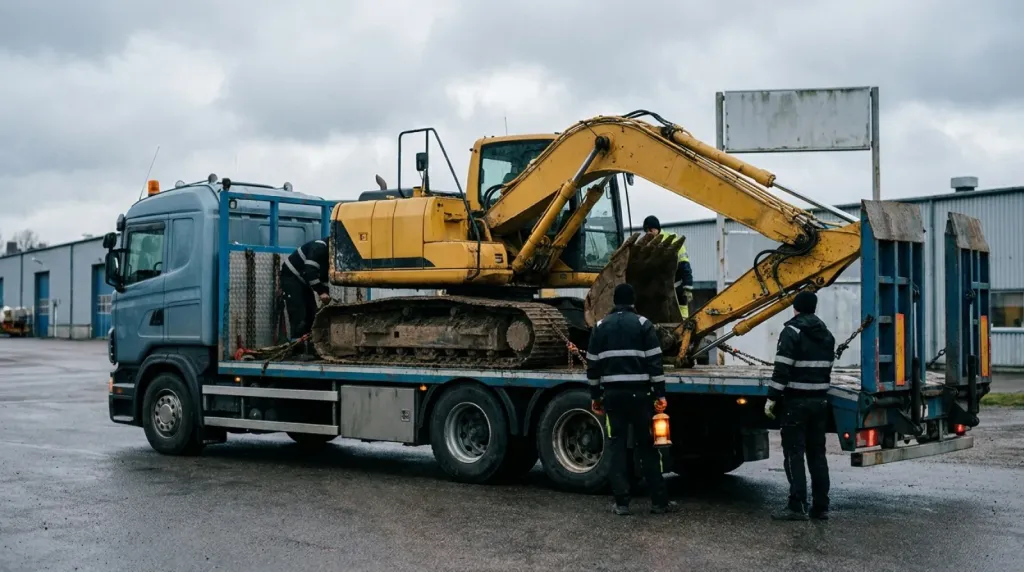
 AI image
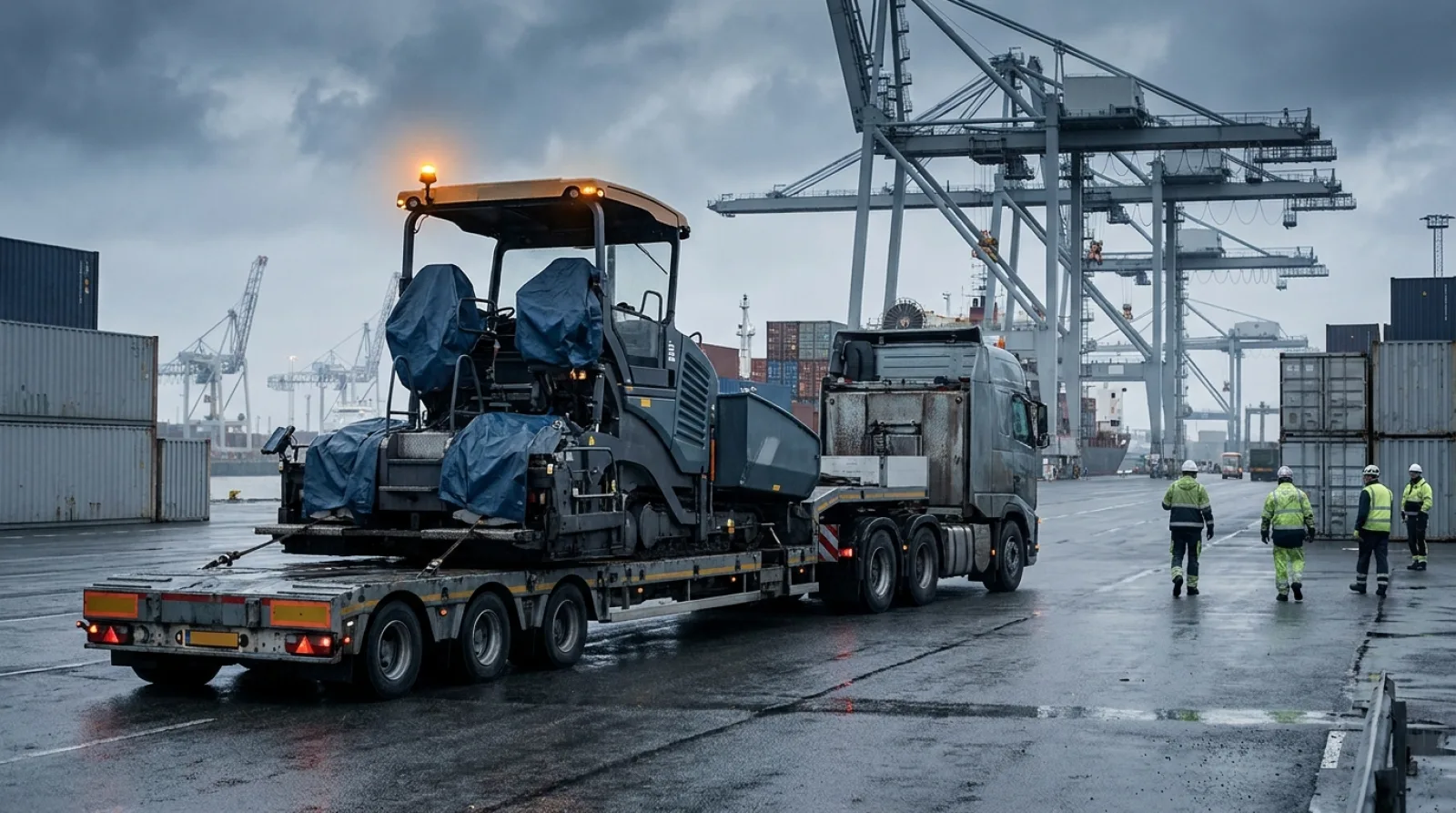
Transporting and importing an asphalt paver (rozściełacz mas bitumicznych / Asphaltfertiger) from UK auctions into the EU involves transport logistics and customs clearance. These machines typically weigh between 4 and 20 t. Because the screed extends beyond the machine outline, it must be folded and secured prior to road haulage, with disassembly usually required. The tariff code is checked in the tariff schedule.
How to prepare an asphalt paver for transport from the UK?
Purchasing road construction equipment at auction in the UK requires careful transport arrangements. An asphalt paver (rozściełacz mas bitumicznych / Asphaltfertiger) in the typical mass range of 4–20 t presents specific dimensional features. A key element when preparing the machine for carriage is the screed. Because the screed extends beyond the machine outline — it must be folded and properly secured for transport so that it does not exceed standard width limits unnecessarily or create safety hazards on public roads.
In most cases, an asphalt paver requires partial disassembly for road transport. The exact scope of disassembly and securing depends on the auction site guidelines and the specific model. You must verify the exact pickup deadlines and site access conditions in the auction organiser's documentation, such as the buyer's manual or auction conditions.
What does the customs clearance process involve for auction-bought pavers?
Machinery acquired at UK auctions enters the EU through import customs clearance procedures. To complete the customs entry, you must compile commercial documents including the auction invoice or bill of sale with the itemised list. The commodity code is not given in advance; it is checked directly in the official tariff schedule based on the machine's precise technical specifications.
When leaving Great Britain, an export declaration must be lodged with UK customs, followed by a transit document if the machine travels under customs control to an inland customs office in the EU. Border validation takes place at the port of departure and entry. Note that export release conditions depend on the specific terms agreed with the auction house and the organiser's rules.
Step-by-step process for transporting an asphalt paver
- Verification of auction terms. Review the buyer's manual and auction conditions to confirm pickup timeframes and loading requirements at the UK site.
- Folding and securing components. The screed extends beyond the machine outline — it must be folded and secured. Perform necessary disassembly as usually required for haulage.
- Customs documentation assembly. Gather purchase proof and determine classification using the tariff schedule. The tariff position is checked in the tariff schedule.
- Transport arrangement and UK export. Book a suitable trailer capable of handling equipment within the 4–20 t range and lodge the UK export declaration.
- EU import customs clearance. Complete the final import customs clearance upon arrival at the EU border or destination customs office with all required documents.
Definitions
- Asphalt paver: Road construction machinery used to lay asphalt on roads, referred to in Polish as rozściełacz mas bitumicznych and in German as Asphaltfertiger.
- Asphaltfertiger: German term for an asphalt paver, widely used in European technical and transport documentation.
- Screed: The working component of an asphalt paver that extends beyond the machine outline — it must be folded and secured for haulage.
- EORI (Economic Operators Registration and Identification): A unique identification number used by businesses when submitting customs declarations in the UK and EU.
- GVMS (Goods Vehicle Movement Service): The UK IT system used to link customs declaration references for freight vehicles crossing the border.
Checklist for transporting an asphalt paver
- Review the auction house buyer's manual for specific collection deadlines and vehicle requirements.
- Fold the screed extending beyond the machine outline and lock it securely in position.
- Determine whether the specific 4–20 t model requires additional disassembly of extenders or hoppers.
- Check the tariff schedule to verify the correct tariff position based on technical documentation.
- Prepare the commercial invoice, UK export declaration, and EU customs documentation.
- Ensure the transport operator uses appropriate lashing chains and straps suited for 4–20 t machinery.
When do these transport and clearance rules not apply?
The outlined procedure does not apply if the machinery is moved entirely within a single customs territory without crossing the border between Great Britain and the European Union, unless moving under internal transit procedures. Furthermore, standard dimensional rules depend on whether the screed is merely folded or completely detached from the main body. Specific collection obligations depend on the auction conditions and the organiser's manual.
The OTSL role
At OTSL Sp. z o.o., with our operational base in Kielce and warehouse facilities in Milton Keynes, England, we organise cross-border transport and customs procedures for machinery purchased at UK auctions. Our team arranges machinery transport for units in various weight categories, ensuring compliant border crossings. We provide assistance with customs clearance for machinery entering the EU market and handle specialized heavy haulage requirements described in our article on farm machinery transport.