 AI image
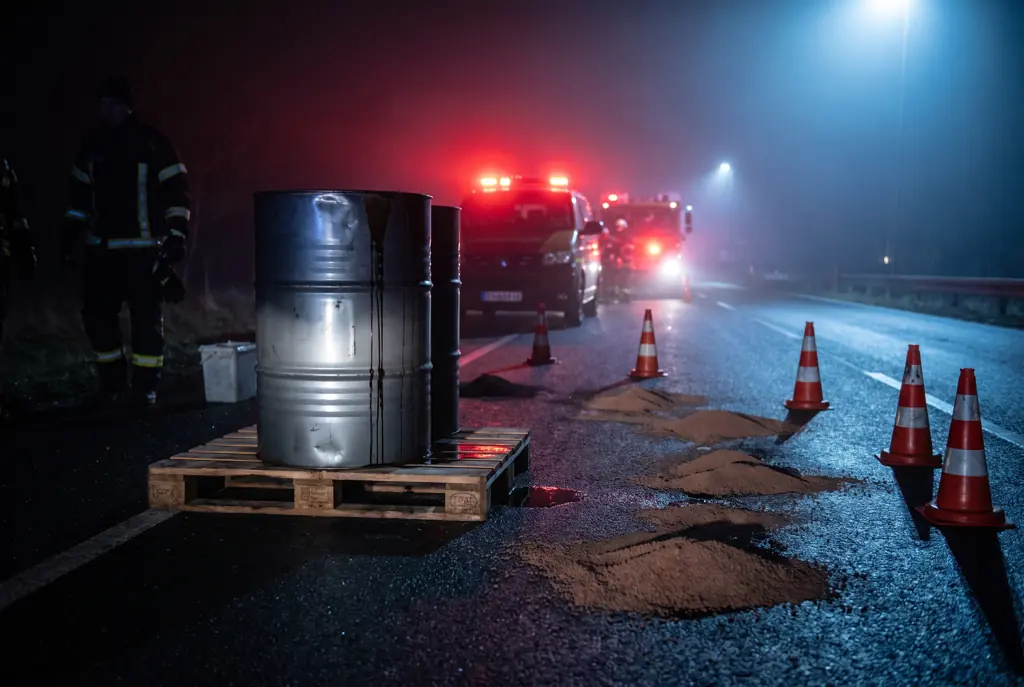
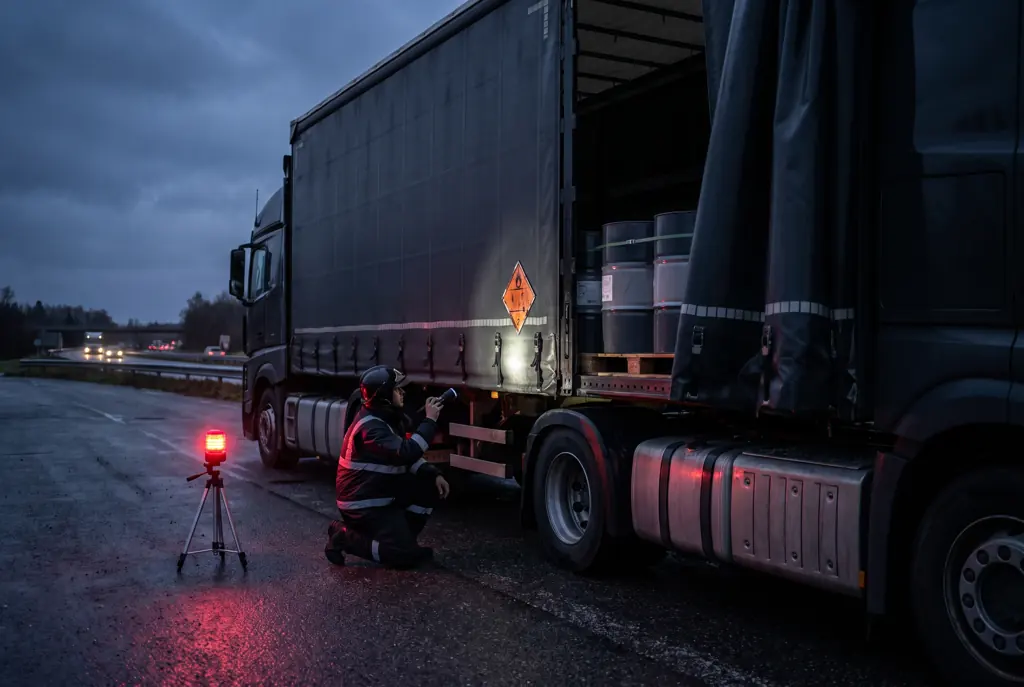
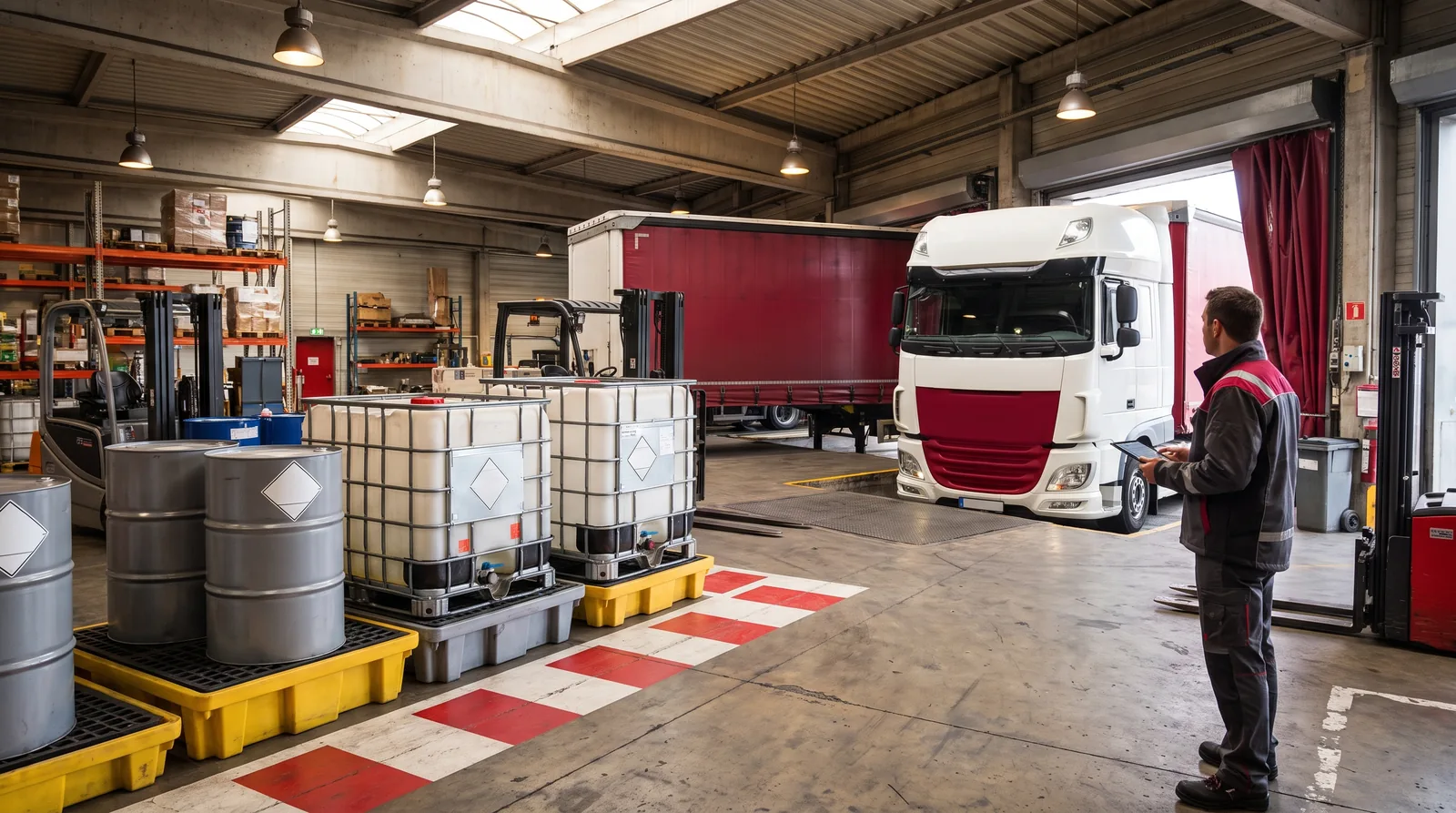
The ADR agreement divides dangerous goods into classes 1 to 9, from explosives to lithium batteries. (source: unece.org) In groupage that has hard consequences: some classes require a certified driver and an equipped vehicle, some must not travel next to each other, and classes 1 and 7 will usually not get onto an ordinary groupage truck at all. That is why ADR goods are declared before route planning.
The ADR classes in practice
- Class 1: explosive substances and articles, including pyrotechnics. A separate world of permits and routes.
- Class 2: gases, from industrial cylinders to aerosols.
- Class 3: flammable liquids, which includes paints, solvents and adhesives.
- Classes 4.1, 4.2, 4.3: flammable solids, substances liable to spontaneous combustion and substances reacting dangerously with water.
- Classes 5.1 and 5.2: oxidising substances and organic peroxides, some requiring temperature control.
- Classes 6.1 and 6.2: toxic and infectious substances.
- Class 7: radioactive material.
- Class 8: corrosive substances, for example acids, alkalis and batteries with electrolyte.
- Class 9: miscellaneous hazards, including lithium batteries and dry ice.
What an ordinary carrier will not take
A groupage truck without ADR preparation will not take dangerous goods outside exemption regimes such as limited quantities (LQ). The full regime requires a certified driver, equipment and documents, and none of that gets improvised on loading day. Classes 1 and 7 and temperature-controlled goods are work for specialised carriers with separate permits. An honest forwarder says so at the enquiry stage, not at the ramp.
Mixed loading prohibitions
ADR contains segregation rules: the strictest concern explosives, which as a rule do not travel together with other dangerous goods. A separate rule of both regulation and common sense: toxic substances must not be loaded together with foodstuffs and animal feed. On a groupage truck collecting cargo from several consignors, that puzzle has to be solved during route planning, because at the ramp it is too late to rearrange half a trailer.
Why ADR groupage needs planning
On a transport unit the quantities of dangerous goods from different consignors add up according to the mechanics described in ADR: transport categories and a points system decide whether the truck runs under an exemption or under the full regime. One extra pallet can change the requirements for the whole truck, driver and equipment included. That is why ADR goods are declared at the enquiry, with UN number and quantity, not added on loading day.
How do we run it?
We plan groupage with dangerous goods within the ADR transport service, on the lines of our road transport. Classes, segregation and the totals per truck are checked before we confirm the order. So your pallet of paint does not get stuck because someone else added goods that cannot travel with paint.
See also
- ADR transport to the UK after Brexit: documents on both sides of the border
- Shipping lithium batteries: UN 3480 and UN 3481 in practice
- Limited quantities (LQ): when dangerous goods travel without full ADR
- ADR transport documents: transport document, instructions in writing, certificates
- Service: ADR transport
Step by step
- Check the safety data sheet. You review the transport section of the SDS document for your product.
- Declare the ADR class. You provide the class and UN number to the freight forwarder prior to routing.
- Verify mixed loading rules. The forwarder confirms whether your shipment can travel alongside other cargo.
- Prepare packaging and vehicle. A certified driver collects properly labelled packages in an equipped truck.
- Execute transit. The dangerous cargo moves safely to its destination following transport guidelines.
Definitions
- ADR (European Agreement concerning the International Carriage of Dangerous Goods by Road): An international treaty setting standards for safe road transport of hazardous materials.
- Groupage (LTL): Transport of smaller shipments from multiple senders combined in one vehicle.
- ADR Class: A category defining the primary hazard represented by a specific dangerous material or article.
- Explosives (Class 1): Goods carrying an explosion hazard or pyrotechnic properties, generally excluded from standard groupage networks.
When does this rule not apply?
This rule does not apply when transporting hazardous goods packed in limited quantities or under statutory threshold exemptions.
The OTSL role
We review cargo requirements and organise efficient ADR transport between the UK and mainland Europe. Our team matches your consignment with safe routes, combining expertise in groupage (LTL) to keep your supply chain running smoothly.