 AI image
The ADR (the Accord governing international carriage of dangerous goods by road) agreement also applies in the United Kingdom, which remains a contracting party after Brexit. What changed is something else: customs clearance was added. Dangerous goods now travel with two sets of documents, the ADR transport document and the customs declarations, and an error in either of them stops the truck at the border. Here is who prepares what on each side.
ADR did not disappear with Brexit
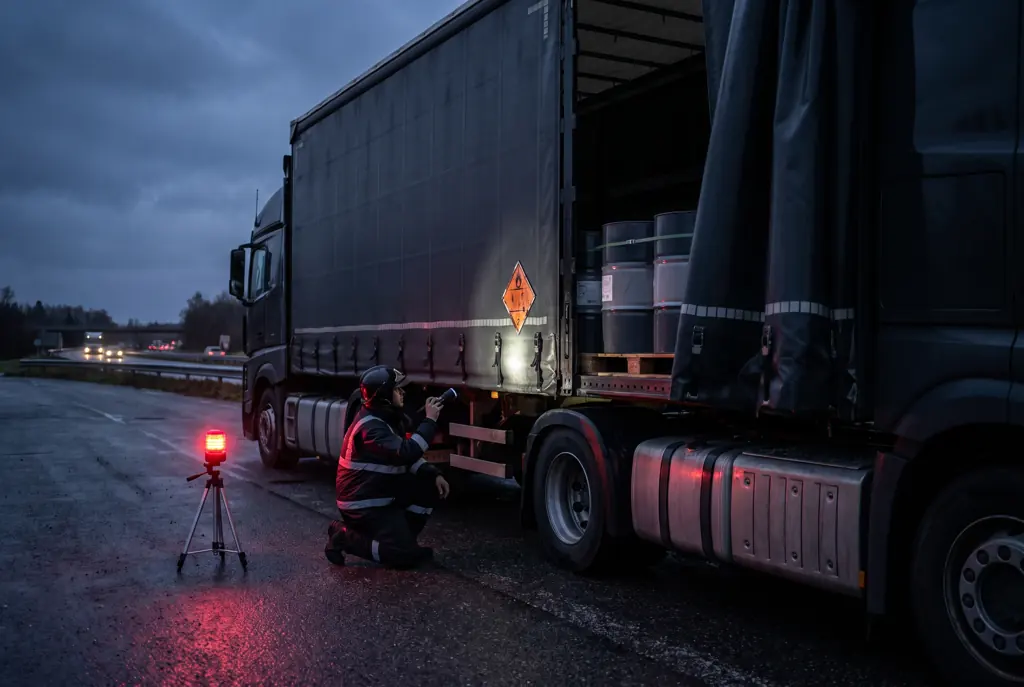
The United Kingdom was and remains a party to the ADR agreement, and domestic carriage on the island runs under regulations implementing its requirements. (source: unece.org) In practice: a driver with an ADR certificate, vehicle equipment, marking and the transport document apply along the whole route, from loading in Poland to unloading in England. Anyone counting on nobody checking on the island will be disappointed at the first inspection.
What really changed: the border
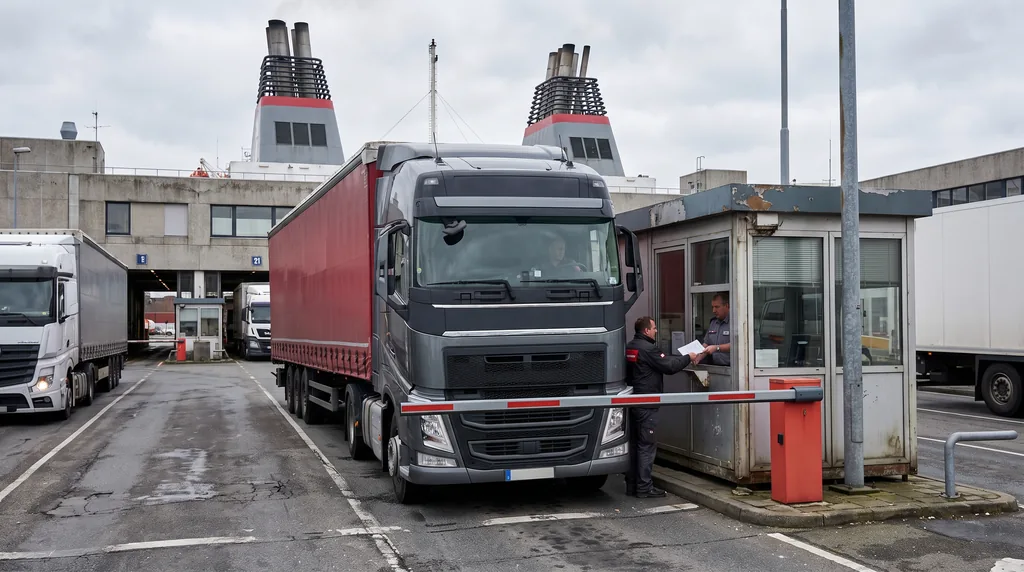
The new part is customs. Export clearance on the Polish side, import clearance on the British side, plus the movement record in GVMS (the UK border clearance system), without which the truck does not board the ferry or the shuttle train. On top of that, crossing operators have their own rules for accepting dangerous goods: an ADR load must be declared to them in advance, and some goods face crossing restrictions. One more reason to plan ADR transport to the UK earlier than an ordinary pallet.
Two document sets, one consistent story
The ADR transport document and the customs declarations describe the same goods, so they must match: name, quantities, consignor, consignee. A mismatch between papers is an invitation to an inspection, and inspecting a truck with dangerous goods takes longer and costs more, because such a truck cannot simply wait anywhere. That is why we collect customs data and ADR data in one place before the truck departs. We run the clearances in our own agencies on both sides, within the customs clearance service.
Who prepares what?
- Consignor: classification of the goods (UN number, packing group), certified packaging, data for the ADR transport document and the safety data sheet.
- Carrier: driver with an ADR certificate, equipment and marking of the transport unit, instructions in writing in the cab.
- Customs agency: export declaration, UK import declaration and the GVMS movement record.
With us all three roles play in one team: ADR transport and clearances run under one coordinator, so data does not get lost between companies. How the border procedure itself works is described on our customs clearance hub.
Where do you start?
With the goods data: UN number, proper shipping name, quantity and type of packages. With that set we can confirm the crossing is feasible, book the passage and prepare the clearances before the goods leave the warehouse. Without it every quote is guesswork, and at the border guesswork costs the most.
See also
- Shipping lithium batteries: UN 3480 and UN 3481 in practice
- Limited quantities (LQ): when dangerous goods travel without full ADR
- ADR classes in groupage: what an ordinary carrier will not take
- ADR transport documents: transport document, instructions in writing, certificates
- Service: ADR transport
Step by step
- Goods classification. The consignor determines the UN number and danger class of the transported materials.
- ADR documentation preparation. The shipper issues a valid ADR transport document and written instructions for the driver.
- Export customs clearance. Declaration of the goods to the EU customs authority to obtain a Movement Reference Number.
- GMR generation. Linking the customs declarations in the GVMS system prior to boarding the ferry or shuttle.
- Import clearance in the UK. Completing customs formalities and final release upon arrival in Great Britain.
Definitions
- ADR (Agreement concerning the International Carriage of Dangerous Goods by Road): An international treaty governing the safe road transport of hazardous materials across borders.
- GVMS (Goods Vehicle Movement Service): A UK government IT system used to link customs declaration references together before border crossing.
- MRN (Movement Reference Number): A unique registration number assigned to customs declarations during import or export clearance.
- ADR transport document: A mandatory paper form detailing the classification, official name, and quantity of dangerous goods being transported.
When does this rule not apply?
Full ADR documentation and border customs requirements do not apply to domestic transport operations within a single customs territory, unless specified threshold limits or exempted quantities under specific ADR provisions alter the packaging rules.
The OTSL role
When organising shipments of dangerous goods to Great Britain, OTSL manages the logistics process in compliance with current standards. Check our ADR transport services and learn more about documentation requirements from our guide on ADR transport, moving dangerous goods step by step | OTSL to keep your supply chain moving smoothly.