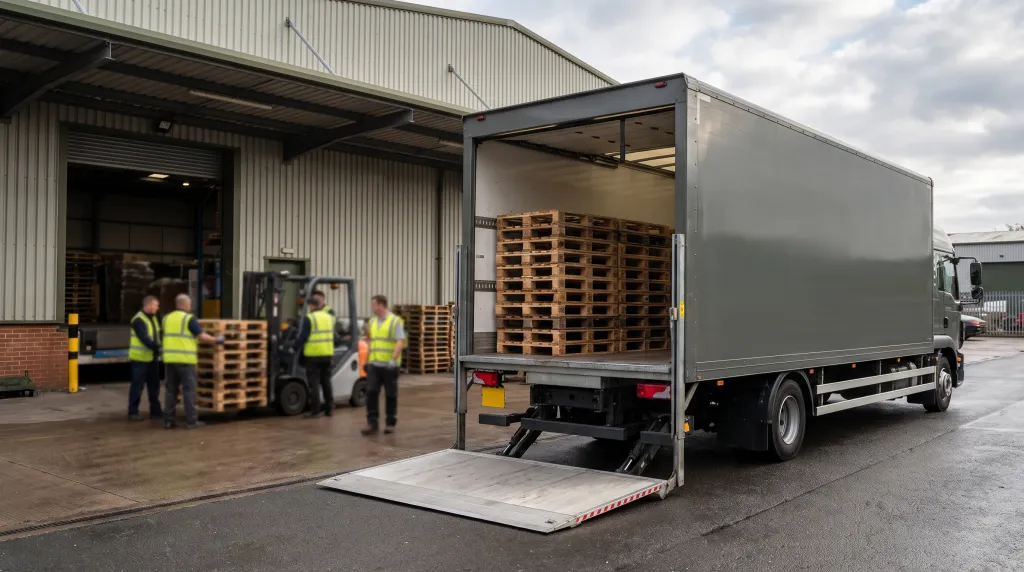
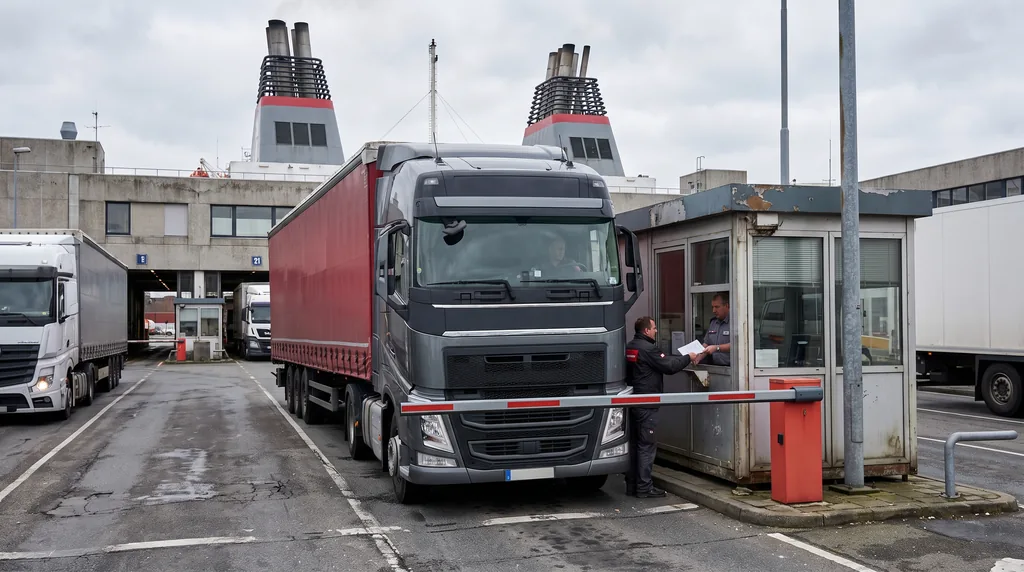
 AI image
LQ, limited quantities, is the regime described in chapter 3.4 of the ADR agreement: dangerous goods in small inner packagings, assembled into a combination packaging, travel exempt from most requirements of full ADR. (source: unece.org) The conditions are the inner packaging limit from Table A, correct packing and the LQ diamond on every package. Meeting those conditions is the responsibility of the consignor.
How does the LQ mechanic work?
Every dangerous good has a limited quantity value assigned in Table A of ADR. If that value is zero, the LQ regime does not exist for that good. If it is higher, the good may be packed in inner packagings up to the stated size, and those into an outer packaging with a capped gross mass. That is how aerosols, paints, alcohol-based cosmetics and household chemicals travel every day. The key point: the limits apply to the packaging, not to the whole shipment, so a pallet of LQ goods is legal as long as every package meets the conditions.
The LQ diamond: a small mark with a big meaning
An LQ package carries no class labels. Instead it gets the LQ diamond, a black-and-white mark with blackened top and bottom, and for liquids additionally orientation arrows. The mark tells the carrier, the warehouse and the authorities: inside are dangerous goods in limited quantities. A missing diamond on goods that require it is not a detail, it is carriage in breach of ADR.
What does drops away and what remain?
- Drops away: class labels on packages, the ADR transport document, the ADR certificate for the driver.
- Remains: packing and marking requirements, general load securing rules and common sense with sensitive goods.
- Comes on top: above a certain total mass of LQ goods on a transport unit the vehicle itself must carry LQ marking.
Thresholds and detailed values depend on the current legal text, so confirm specifics in the current edition of ADR or with a DGSA adviser.
The responsibility sits with the consignor
The carrier does not x-ray cartons. It is the consignor who classifies the goods, selects packagings, keeps the limits and applies the diamond. If something leaks en route or an inspection opens the pallet, the questions go to whoever packed and declared. So before the first LQ shipment it pays to spend an hour on the limits rather than pay for the lesson at the border or when a claim lands.
LQ in forwarding practice
For us LQ goods are information, not a problem: they affect the choice of truck and what else can be co-loaded. Declare LQ at the enquiry stage and the goods travel on a regular road transport line. If the limits are exceeded or the classification is in doubt, we switch to full ADR transport and the problem disappears before it exists.
See also
- ADR transport to the UK after Brexit: documents on both sides of the border
- Shipping lithium batteries: UN 3480 and UN 3481 in practice
- ADR classes in groupage: what an ordinary carrier will not take
- ADR transport documents: transport document, instructions in writing, certificates
- Service: ADR transport
Step by step
- Check Table A. Identify the limited quantity limit specified for the product in the ADR manual.
- Fill inner containers. Pack the substance into inner containers that do not exceed the individual volume cap.
- Assemble outer box. Place the inner packagings into an outer box while staying under the total gross mass limit.
- Apply the LQ mark. Display the LQ diamond mark clearly on the outer surface of the package.
- Dispatch the cargo. Hand over the properly marked and packed consignment to your transport provider.
Definitions
- LQ (Limited Quantities): A transport regime for dangerous goods in small inner packagings exempting the shipment from most ADR requirements.
- ADR (Agreement concerning the International Carriage of Dangerous Goods by Road): The international treaty regulating the safe road transport of hazardous goods.
- Combination packaging: A package unit consisting of inner packagings contained within a outer packaging.
- Table A: The central table in the ADR agreement detailing limits and transport rules for each material.
- LQ diamond: The specific diamond-shaped mark required on outer packages carrying goods under limited quantities.
When does this rule not apply?
This simplified regime does not apply if the specified limit in Table A is zero or if the gross mass threshold of the combination package is exceeded.
The OTSL role
Before dispatching hazardous materials, confirm if your shipment meets exemption rules. Read our guide ADR transport, moving dangerous goods step by step | OTSL for guidance on standard procedures. OTSL provides reliable ADR transport services and helps you manage compliance between the UK, Poland, and mainland Europe.