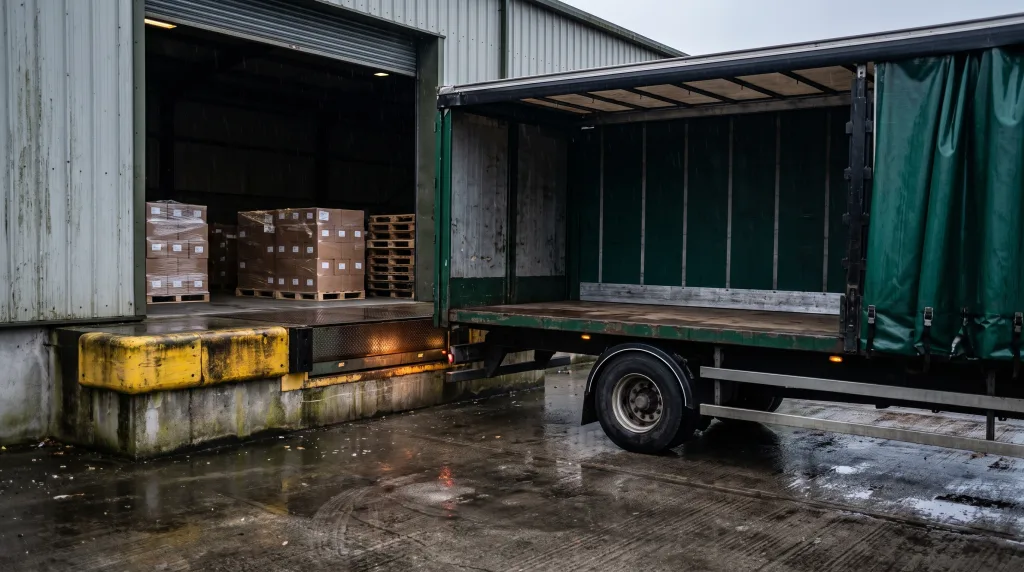
 AI image
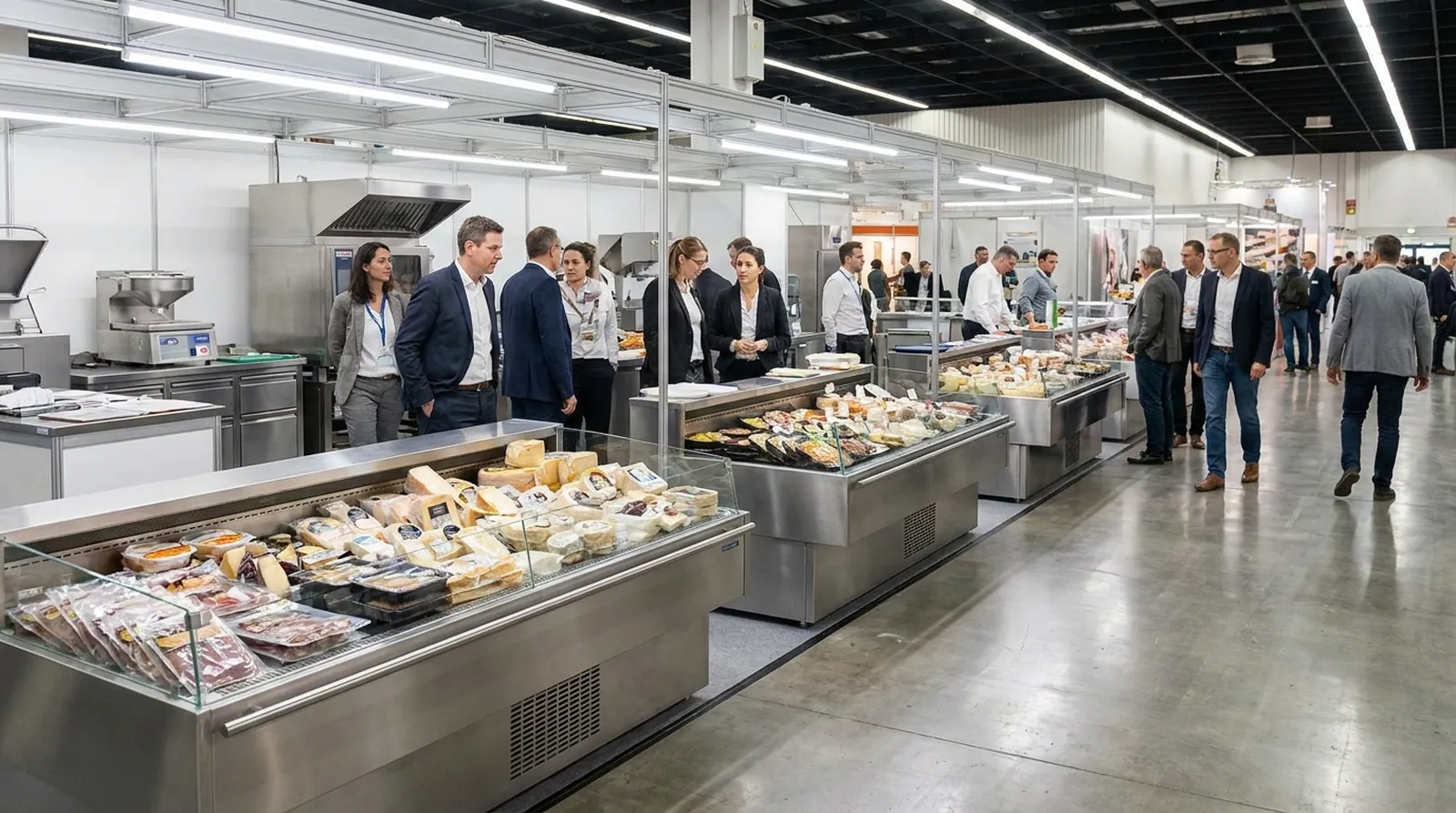
Anuga at the Koelnmesse grounds in Cologne is one of the most important food fairs in Europe, held every two years. The exhibitor brings products that will be served, tasted and judged, so logistics covers not only the stand build but also goods at controlled temperature. A fair reefer run is a different regime from a standard trailer: the setpoint, its recording and the unloading time all matter for whether the samples arrive fresh.
What sets a food fair apart from an ordinary show
At most fairs the biggest risk is a late stand build. At a food fair a second, more expensive risk appears: goods that lost quality on the way. Cheese that spent a few hours too warm, cured meat without an unbroken cold chain, or frozen stock that thawed and was refrozen is not fit to hand to buyers. The stand is up, the staff are waiting, and the very product visitors came for is missing.
- An unbroken cold chain: fresh and frozen products travel by temperature-controlled transport with a setpoint matched to the specific range, not one average value for the whole trailer.
- Shelf life: arriving too early can be as bad as arriving late, because the samples must survive every day of the fair, not just the first.
- Hygiene and paperwork: outer packaging and the way of carriage must be food-suitable, and some categories add commercial and customs requirements when goods come from outside the EU.
A reefer for food samples
Samples for Anuga are often small, high-value quantities with a short life. We treat them differently from a pallet of dry goods. Before departure we agree a product-specific setpoint, we make sure the recorder log is available, and we plan the unloading so the goods do not stand for hours in the delivery window. We move the stand build by standard trailer and the products by reefer, in coordinated windows, so neither blocks the other.
Timing, bookings and back-of-house
Koelnmesse works on time windows and booking rules set by the organiser for each edition. We do not guess them: we confirm the current guidance when we take the order and prepare a full set of documents before departure, so the driver does not get stuck at the gate. Always check entry rules, slots and site fees in the venue regulations for the given edition. When tastings eat the stock faster than planned, we arrange top-ups during the fair by express van, and we can hold part of the stock in cold storage as a buffer and deliver it in batches.
Our Anuga service
- Stand build and products in separate, coordinated windows.
- A reefer with a product setpoint and an available temperature log.
- Bookings per the organiser current rules, documents ready before departure.
- Top-ups and a warehouse buffer during the fair.
- Return of unsold samples and equipment afterwards, keeping cooling where required.
More on the stand itself: trade-fair stand logistics from A to Z and post-show logistics and the return of goods. Why it pays to plan ahead is set out in bad fair logistics costs more than transport.
The German direction and beyond
Anuga is one of many dates in Germany. We describe the whole direction in transport to trade fairs in Germany, and the German market as a destination in the landing page destination Germany. The full list of shows in the region is in the European trade-fair guide. Dates can overlap, so the earlier we fix windows and temperatures, the less risk on the road. Write to us through the contact form with your direction, the edition date and the type of products, and we will send back a delivery plan that accounts for the reefer and the bookings.
Why is temperature continuity critical at food fairs like Anuga?
Food samples must reach buyers in pristine condition for tasting, meaning any drop in cooling quality ruins the presentation regardless of stand construction.
Step by step
- Determine thermal requirements. You specify the precise temperature profile required for your food samples prior to collection.
- Inspect the reefer unit. The refrigerated vehicle undergoes check of its cooling aggregate and recorder.
- Load the cargo. Samples enter the refrigerated space swiftly to protect the cold chain.
- Monitor the journey. Temperature records are tracked during transit from origin to the venue in Cologne.
- Unload at the hall. Goods transfer directly into venue cold storage or stand refrigeration units.
Definitions
- Anuga: One of the most important food trade fairs in Europe, held biennially in Cologne.
- Koelnmesse: The exhibition centre in Cologne that hosts the Anuga trade fair.
- Temperature-controlled transport: Carriage of food goods under strict refrigerated or frozen conditions.
- Cold chain continuity: Unbroken maintenance of required cooling parameters from loading through transport to final delivery.
- Temperature setpoint: The target thermal value programmed into the cooling unit for specific samples.
When does this rule not apply?
Strict temperature management does not apply to ambient shelf-stable goods, packaging material, or non-perishable display stand elements.
The OTSL role
OTSL organises trade fair transport with precise delivery schedules and temperature monitoring. Explore our temperature-controlled transport service and learn more in the guide transport na targi do Niemiec.