 AI image
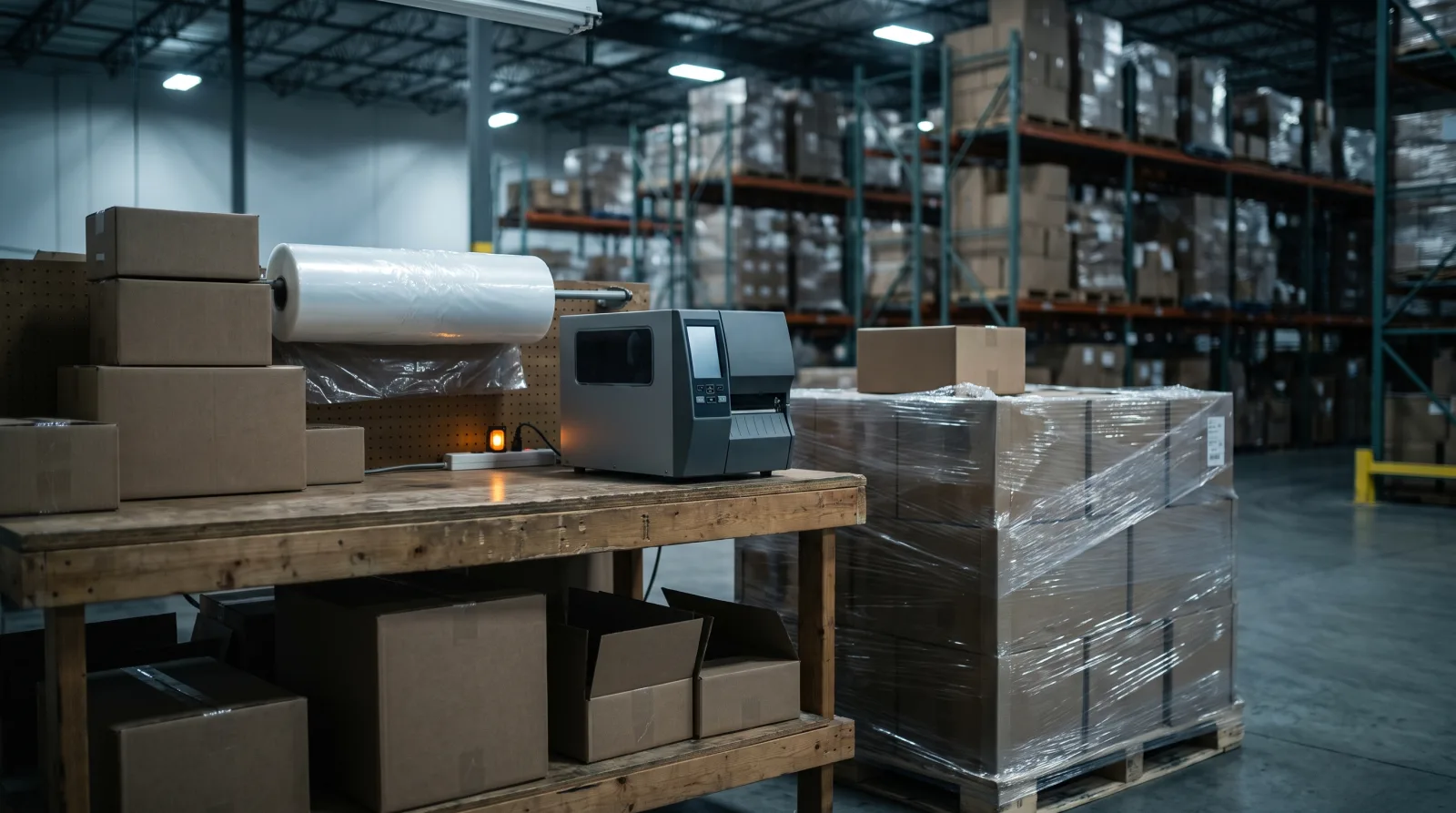
Amazon requires FBA goods to be labelled (FNSKU or a catalogue-matching manufacturer barcode), packaged as specified (bags, protection, bundles) and delivered on compliant pallets in a Carrier Central window. A forwarder or aggregator serving many sellers needs a point where goods from a container or from Poland receive labels and pallets before being booked in. The OTSL warehouse in Milton Keynes carries out labelling, repacking, palletisation and counts and delivers to Amazon UK with slot booking, reporting to the partner, who stays the only contact for its customer.
Why does a forwarder need an FBA prep point in England?
Because goods that have arrived from Asia in a container or from Poland on pallets are almost never ready to enter an Amazon fulfilment centre. FNSKU labels are missing, bags do not meet the requirements, bundles are not packed, pallets are too high or badly wrapped. A seller who has handed the whole logistics chain to a forwarder expects someone to sort this out on the way. If you serve many sellers, you need one place where each of those loads gets labels and pallets to Amazon's current requirements and is then booked in Carrier Central.
Amazon's requirements change and are announced in Seller Central; we do not quote limits as figures because last quarter's data may be out of date. Before every batch we check the current requirements and need the data from your customer's Seller Central: FNSKU identifiers, shipment plan and fulfilment centre assignment.
How does the partner model work?
The partner remains the only contact for its customer: OTSL reports to you, prints labels from the data you supply from the seller's Seller Central, and books the Carrier Central window as part of the delivery, or you book it yourself, as agreed. Once prepared, the goods travel to the assigned Amazon centre on OTSL transport, with the booking and delivery documents.
A rejected delivery (wrong labels, non-compliant pallet, missed window) comes back to Milton Keynes for rework and re-booking. The cost of the new window and transport falls on the party that caused the rejection: labels printed from wrong data fall on the data source, a pallet that failed despite a correct specification falls on the warehouse. That is why we check input data and requirements before the work, not after it.
FBA prep in Milton Keynes step by step
- Data from Seller Central. You provide FNSKU identifiers, the shipment plan, the assigned fulfilment centre and packaging requirements for each SKU.
- Receipt and count. Goods from the container or from Poland are counted against the packing list; discrepancies are photographed before further work.
- Packaging and labelling. Bags, protection, bundles and FNSKU labels to Amazon's current requirements; labels are test-scanned after application.
- Palletisation for Amazon. Pallets built to the centre's requirements, with pallet labels in the specified positions; finished pallets are photographed.
- Window booking. Reservation in Carrier Central for the agreed date, by OTSL or by you; delivery documents prepared for that booking.
- Delivery and report. OTSL transport to the Amazon centre, confirmation of receipt and a report to the partner; if rejected, the goods return to MK for rework.
Definitions
- FBA (Fulfilment by Amazon): the model in which Amazon stores, packs and ships a seller's goods from its fulfilment centres.
- FNSKU (Fulfilment Network Stock Keeping Unit): Amazon's identifier for a specific seller's product, printed on the unit label.
- FBA prep: preparing goods for acceptance at an Amazon centre: labels, bags, protection, bundles, pallets.
- Carrier Central: Amazon's portal in which a carrier books a delivery window at a fulfilment centre.
- Seller Central: the Amazon seller dashboard where shipment plans are created and from which label data comes.
- Aggregator: a company serving many Amazon sellers that commissions logistics and preparation on their behalf.
Checklist before an FBA batch
- FNSKU identifiers and shipment plan from the customer's Seller Central for each SKU.
- Assigned Amazon fulfilment centre and the date by which the goods must arrive there.
- Packaging requirements per SKU: bags, protection, bundles, warnings.
- Packing list of the inbound goods from the container or from Poland.
- Agreement on who books the Carrier Central window and who bears the cost of re-booking.
- Contact on the partner's side for decisions on damaged or non-compliant goods.
When is a stop in Milton Keynes not needed?
The stop does not apply when goods left the manufacturer already with FNSKU labels, in the required bags and on pallets compliant with Amazon's requirements; a delivery with a booked window is then enough. It will not work either for goods that Amazon does not accept on pallets at the given centre or that require a different channel, unless the centre indicates an alternative. The scope of work depends on the condition of the goods on arrival and on the current requirements in Seller Central, so the quote follows the data rather than preceding it.
The OTSL role
The OTSL warehouse in Milton Keynes carries out labelling, packaging, palletisation and counts, and deliveries with slot booking under our Amazon UK delivery service, including groupage from a single pallet. Packaging requirements are described in our article on preparing goods for Amazon FBA, the portal in how Carrier Central slot booking works, and what to do after a refusal in rejected Amazon FBA delivery: plan B. See also: How a forwarder or 3PL starts with the OTSL warehouse in Milton Keynes.