 AI image
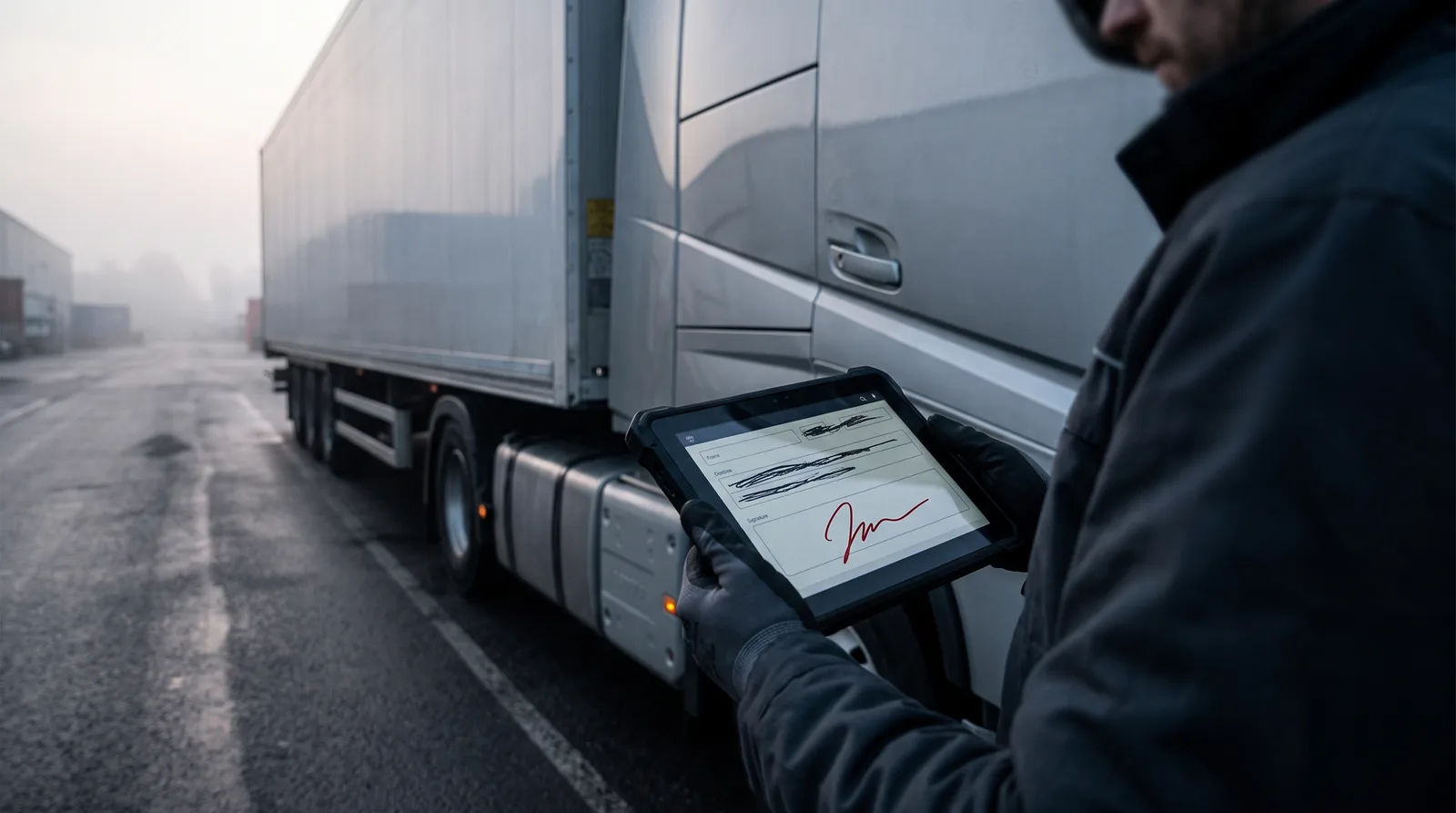
e-CMR is the electronic consignment note based on the Additional Protocol to the CMR Convention, adopted in 2008 under UNECE. Between countries that are parties to the protocol, it has the same legal force as the paper document. For the shipper it means electronic signatures, reservations and photos added in real time, and instant access to the proof of delivery.
Where does e-CMR comes from and what legal force it have?
The Additional Protocol to the CMR Convention concerning the electronic consignment note was adopted in 2008 within the United Nations Economic Commission for Europe. Poland acceded to the protocol in 2019. The legal construction is simple: between states that are parties to the protocol, the electronic consignment note produces the same effects as the paper one. The same presumptions on taking over the goods, the same evidential role in a dispute, the same mechanism of reservations.
This matters more than any software feature: the legal force of an e-CMR comes from ratification by specific states, not from the convenience of an IT platform. So the first question before going electronic is not "which system should we pick" but "are all the countries on my route parties to the protocol".
What e-CMR changes for the shipper in practice
Proof of delivery at once, not weeks later
With a paper note, the shipper waits for their copy with the consignee signature: the document travels back with the truck, circulates between departments and gets scanned late. With e-CMR, the proof of delivery appears in the system the moment the goods are unloaded, and the shipper sees it immediately. For companies that invoice on delivery or settle with their end customer against the POD, this shortens the cash cycle by real days.
Reservations and photos in real time
The biggest operational difference concerns delivery. In the electronic form, the consignee enters reservations in the system, and photos with a timestamp and location can be attached on the spot. The shipper sees the problem the moment it arises, not a week later on an unreadable copy. Why a proper reservation decides the fate of a claim is covered in our article on reservations on the CMR note at delivery, and the full damage documentation procedure in the guide on the damage report and CMR reservations.
No more disputes over illegible notes
A large share of disputes in international haulage is not about what happened but about what somebody scribbled in the remarks box. A handwritten entry on the third carbon copy can be impossible to read, and every party interprets it their own way. An electronic record has an author, a timestamp and unambiguous wording. Less room for interpretation, shorter disputes.
Paper versus e-CMR: a comparison
| Aspect | Paper CMR note | e-CMR |
|---|---|---|
| Signatures | Handwritten on printed copies | Electronic, authenticated in the system |
| Shipper access to the POD | After the copy returns, often days or weeks | Immediately after unloading |
| Reservations at delivery | Handwritten, often hard to read | System entry plus real-time photos |
| Risk of losing the document | Real, several copies in circulation | System record, copies do not go missing |
| Archiving | Binders and scanning | Automatic, available to the parties |
| Disputes over remarks | Frequent, word against word | Rarer, record with author and timestamp |
The condition you cannot work around: the whole route plus consent
For a movement to run on an electronic note alone, two conditions must be met at the same time. First, all states on the route must be parties to the protocol, transit countries included. Second, the parties to the carriage must agree to the electronic form; the protocol imposes nothing, it creates an option.
Most EU countries have acceded to the protocol, but implementation practice varies between them: national systems, technical requirements and the approach of enforcement authorities are at different stages. Before your first movement on e-CMR, check the specific route rather than assuming that because one country accepts the electronic form, every country along the way will.
The transitional practice: paper and system side by side
Today the standard at many carriers is a hybrid: the driver carries a paper note while the movement is also recorded in an electronic system. The paper covers roadside checks in countries where implementation lags, and the system gives the shipper live status, photos and a fast POD. It is not elegant, but it works and it does not derail a delivery when an inspector along the route insists on the sheet of paper.
Whatever the medium, the content of the note stays the same and the same mistakes cost the most: wrong party details, missing reference numbers, empty boxes. How to complete the document box by box is covered in our guide on how to fill in a CMR consignment note step by step. The electronic form will not fix wrong content, it will only distribute it faster.
What does this mean for you as a shipper?
If your routes run through states that are parties to the protocol and your partners accept the electronic form, e-CMR shortens the document cycle, speeds up invoicing and gives you harder evidence in disputes. If the route crosses a country outside the protocol, or a partner refuses the electronic form, you are left with paper or the hybrid. In both cases it is worth asking your carrier and forwarder which system they work in and what you will actually see as the shipper.
How does OTSL handle it?
We run transports both on paper documents and in the hybrid model, and we advise clients on which routes the electronic form already makes sense. We watch the content of the note, the reservations and the full set of confirmations regardless of the medium, because it is the content that wins disputes, not the format. Get in touch if you want to put your transport document flow in order.
Step by step
- Document creation. Enter the shipment details into the digital operator platform.
- Shipper confirmation. Apply an electronic signature when handing over the cargo.
- Driver acceptance. The carrier confirms receipt of the goods via a mobile application.
- Real-time updates. Upload notes or photos directly into the system during transit.
- Delivery sign-off. The consignee signs digitally upon receiving the goods at the destination.
Definitions
- e-CMR (Electronic consignment note): A digital version of the international road transport document.
- CMR Convention: An international agreement governing the carriage of goods by road.
- UNECE (United Nations Economic Commission for Europe): The international body overseeing the additional protocol to the convention.
- Electronic signature: An authenticated digital method used to confirm transport stages in an operator system.
When does this rule not apply?
This rule does not apply when transporting goods between countries that have not ratified the additional protocol or when national legislation requires traditional paper documentation.
The OTSL role
OTSL manages international transport operations and integrates digital transport documentation into daily logistics workflow. When planning Road transport (FTL) or checking requirement rules described in Dokumenty w transporcie ADR, OTSL provides support in handling digitised consignment workflows.
Sources
UNECE, the CMR Convention and the Additional Protocol on the electronic consignment note (unece.org)