 AI image
A reservation on the CMR note is the consignee's entry about the condition of the consignment, made at the moment of delivery, before signing for receipt. This article takes the view from the dock: under Article 30 of the CMR Convention, apparent damage must be flagged at the time of delivery at the latest, and damage not apparent from outside in writing within 7 days, Sundays and public holidays excluded. No entry creates the presumption that the goods arrived as described in the note, and it is then the consignee who has to rebut it.
What Article 30 says and why it punishes the slow
The Convention rewards those who react at once. Accepting without remarks does not close the road to claims, but it flips the burden of proof: you must show the damage arose in carriage even though you receipted the goods clean. In practice that is hard and expensive. An entry on the note at delivery costs two minutes and a pen.
How to enter a reservation properly
- Where: the remarks field next to the receipt of goods (field 24 on the common note layout), on every copy within reach.
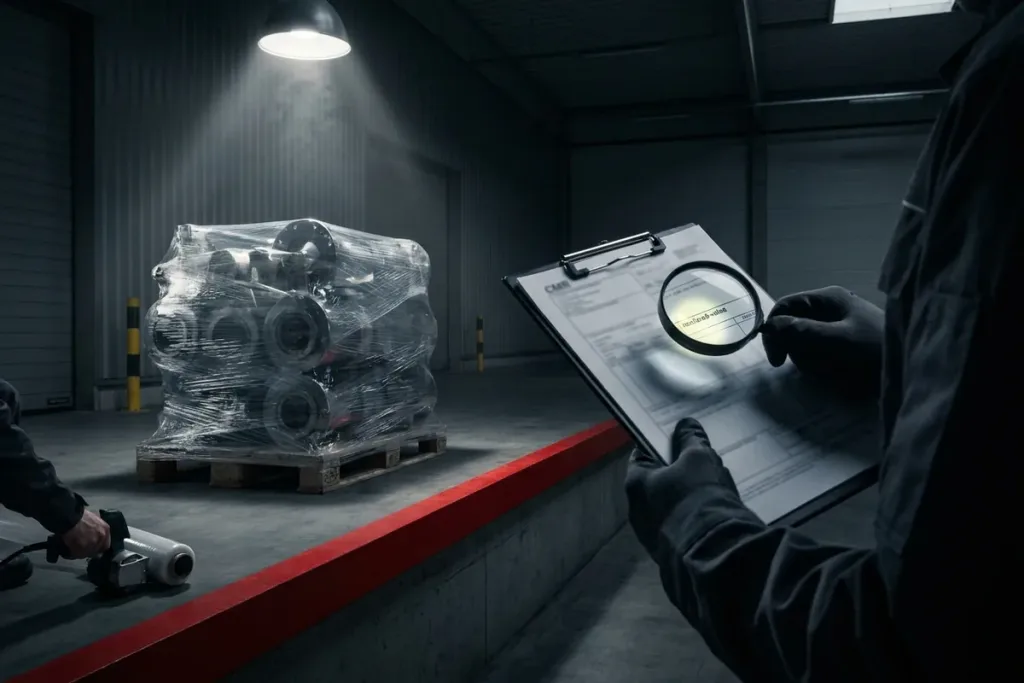
- What: specific, not general. Instead of just damage, state the number of packages and the nature: three cartons crushed, film torn on one pallet, traces of wetting.
- Signature and date, driver present: you make the entry with the driver there; his signature under a joint statement strengthens the evidence, but his refusal does not strip the entry of meaning; you simply document the condition all the more carefully.
- Photos: photograph the note with the entry and the goods as found, before anything is moved.
Hidden damage: 7 days and written form
A crushed carton is visible from the dock; cracked electronics often only after unpacking. For such damage Article 30 gives 7 days from delivery, Sundays and holidays excluded, and requires written form. (source: unece.org) What counts is proof the notice reached the carrier, so send it in a way that shows the date. A clean POD (proof of delivery) does not kill this path, but without a written notice in time the presumption of the Convention stays with the carrier.
The reservation is the start, not the end
The entry opens the road; the case is won by documentation: the report, photos, kept packaging and counted units, ideally confirmed by an independent cargo inspection. How to draw up a full damage report and preserve the evidence is shown in our guide to the damage report and CMR reservations, and the full order of actions in the text on reporting damage in transit. One last thing: even a perfect claim ends at the carrier's weight limit, so high-value goods should travel with cargo insurance.
What should you do if the cargo weight or temperature differs from box 11?
When the gross weight of the goods differs by more than 100 kg or 2% from the value declared in box 11 of the consignment note, do not limit yourself to a generic comment. For temperature-controlled transport, a data log download is critical: record the exact reefer display reading in box 24 and request a printout covering the last 24 hours of transit. If you receive partially damaged cargo, for instance 3 pallets out of 26 damaged mechanically, measure the height of the deformation immediately – damage exceeding 0.5 metres from the floor indicates improper lashing by the carrier.
Enter the exact mass difference and seal condition including seal numbers into box 24. Remember the legal correlation: a note regarding short weight without verified trailer seals can easily be challenged during a claim. A correct entry halts automatic invoice clearance until discrepancies are resolved.
Note that this box 24 reservation procedure does not apply to FTL consignments moved under customs seal under the T1 transit procedure, where the consignee cannot lawfully break the bolt seal prior to a customs officer inspection. In such cases, weight discrepancies must be entered into the official customs examination report rather than box 24 in the driver presence.
Step by step
- Inspect on the dock. Check the condition of packaging and cargo immediately during unloading.
- Make the entry. Enter clear remarks regarding damage in the designated box of the note.
- Take photographs. Photograph damaged goods and their placement inside the vehicle.
- Sign the document. Apply your signature to the consignment note only after adding all reservations.
- Submit written notice. Send written notification within seven days in case of non-apparent damage.
Definitions
- CMR: International convention governing rights and duties of parties in road freight carriage.
- Consignee reservation: Entry regarding consignment condition made on consignment note prior to signing receipt.
- Apparent damage: Damage to consignment or packaging noticeable immediately during unloading.
- Non-apparent damage: Damage to goods impossible to detect from outside at moment of delivery.
- Burden of proof: Obligation to demonstrate in court that damage occurred during transit.
The OTSL role
OTSL, based in Kielce with warehouse facilities in Milton Keynes, assists in managing smooth delivery processes across international routes. Learn more about our road transport services and read our analysis on interrupted cold chains and unsellable goods to protect your cargo during transit.