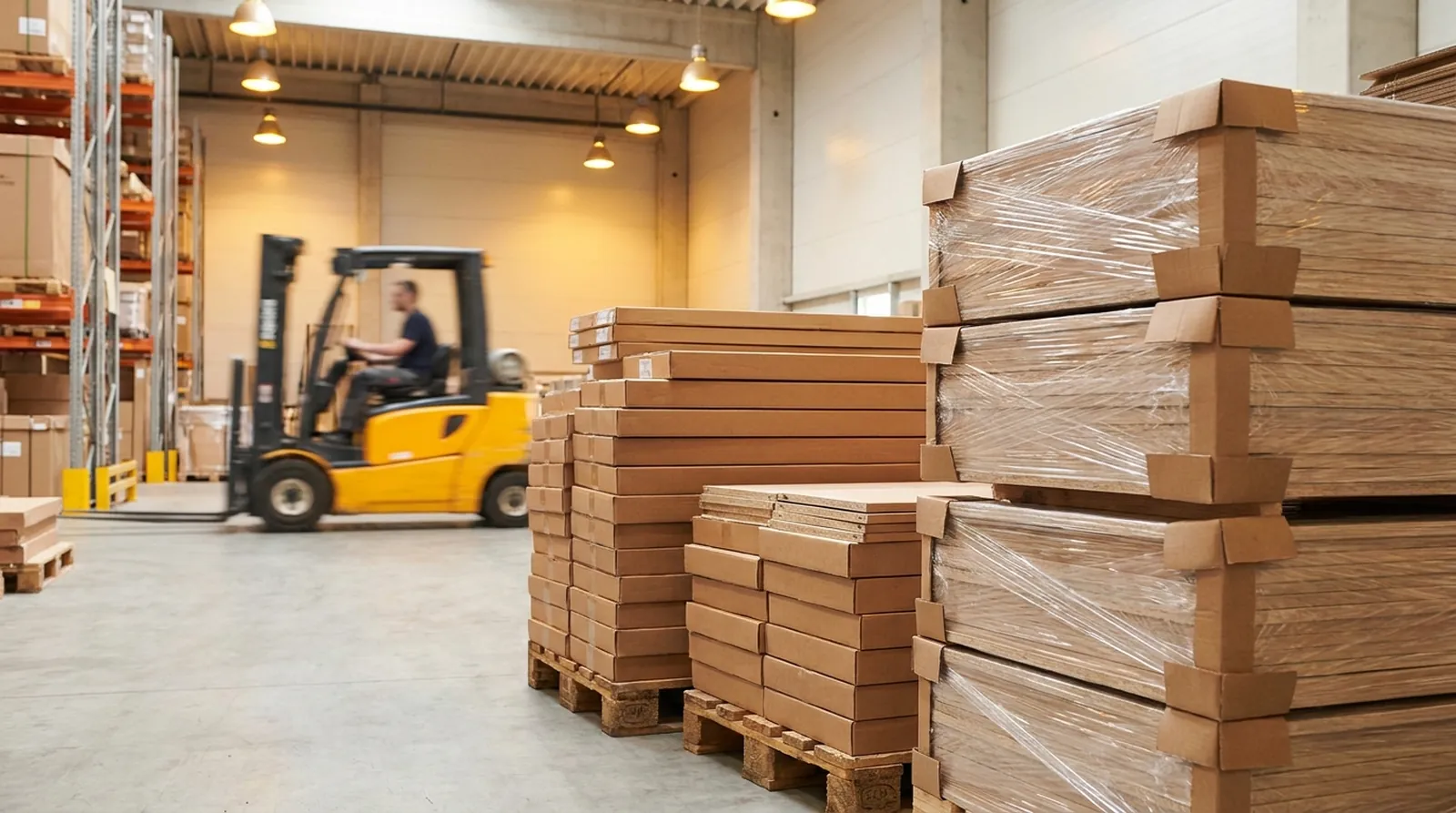
 AI image
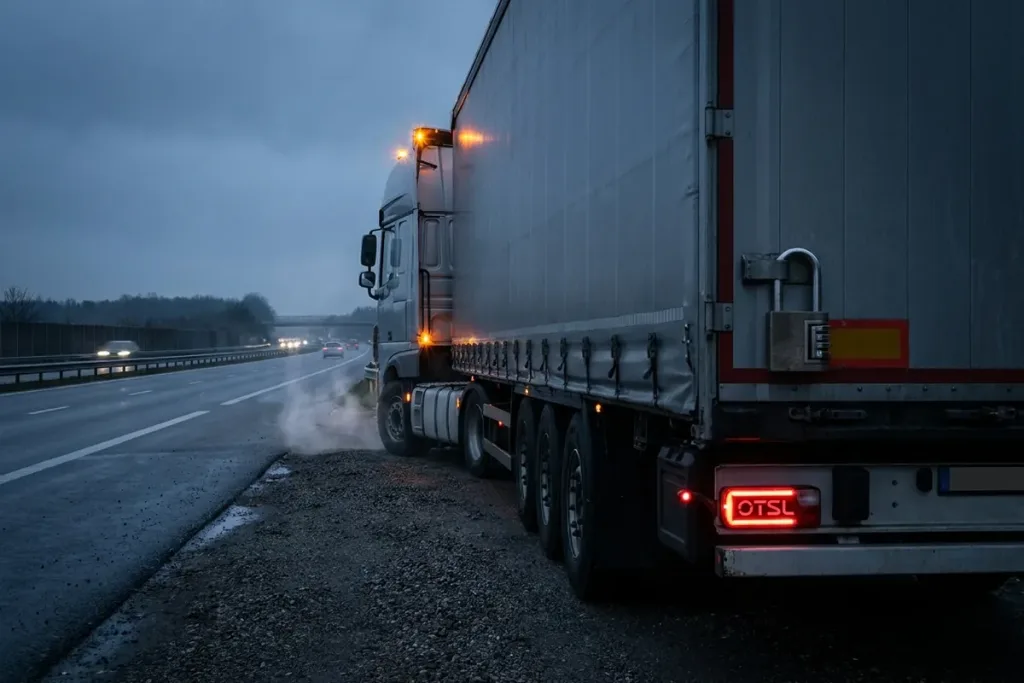
Furniture transport to the UK requires three things at once: loading space priced by volume rather than weight, surface protection against cargo shifting, and a booked delivery slot, because retail chains and marketplaces work on booking-in. Add post-Brexit customs clearance. A mistake at any point ends in a claim, and a wardrobe with a dented front cannot be sold twice at full price.
Why does furniture travels differently from industrial pallet?
A wardrobe weighs little but takes up half a trailer. Furniture transport is therefore quoted on loading metres and a stowage plan, not on tonnes. The second problem is surfaces: lacquer, veneer and upholstery fabric do not forgive friction in transit. If the producer excludes stacking, a second layer must never appear, even if it would fit perfectly.
Where does damage happen?
- At loading: no edge or corner protection when the first strap goes on.
- In transit: cargo without anti-slip mats works loose with every braking.
- At cross-docking: in groupage each extra terminal is extra risk, so we plan furniture batches with the shortest possible path through warehouses.
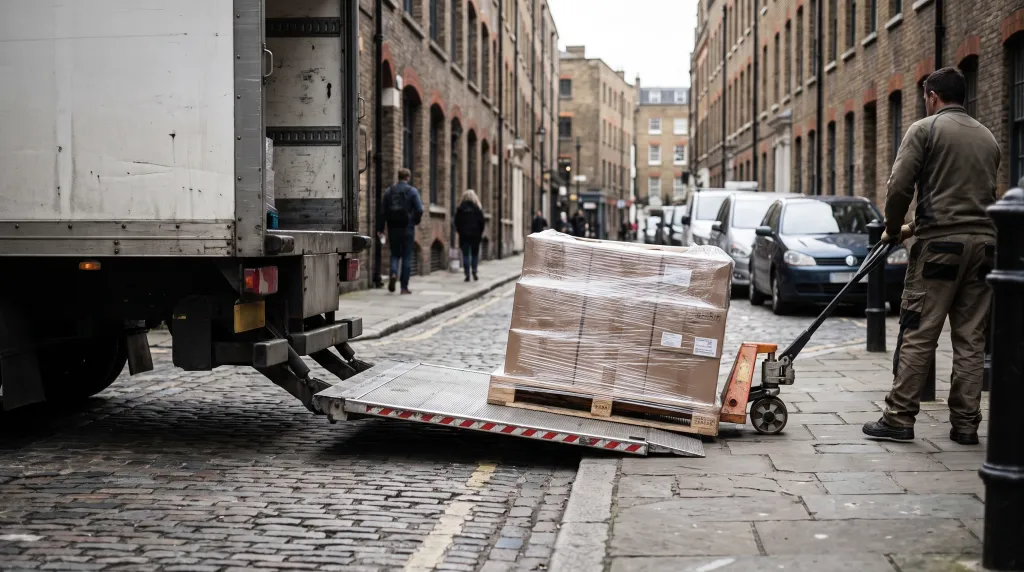
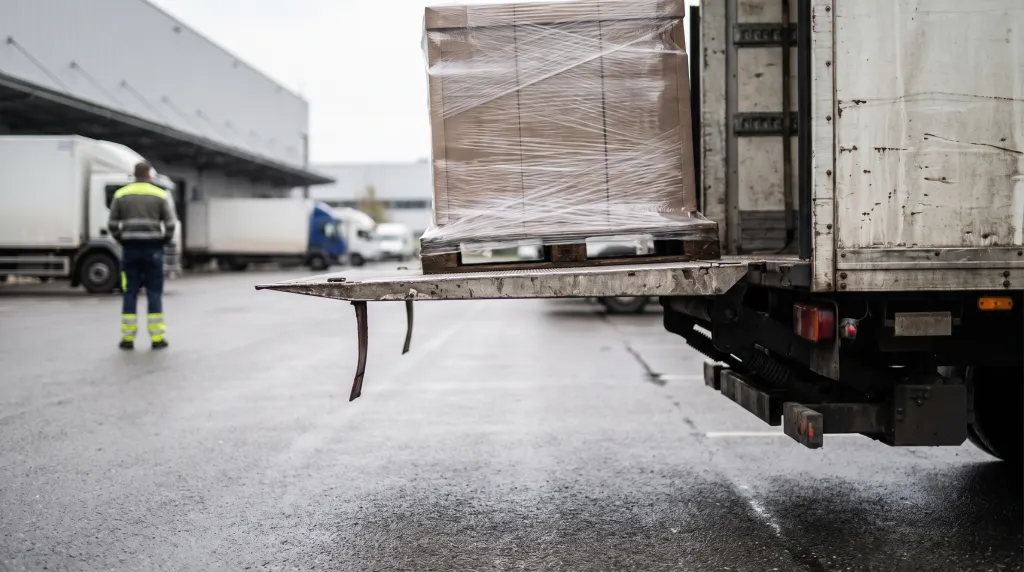
- At unloading: haste at a time window nobody booked.
Booking-in: chains do not accept trucks off the street
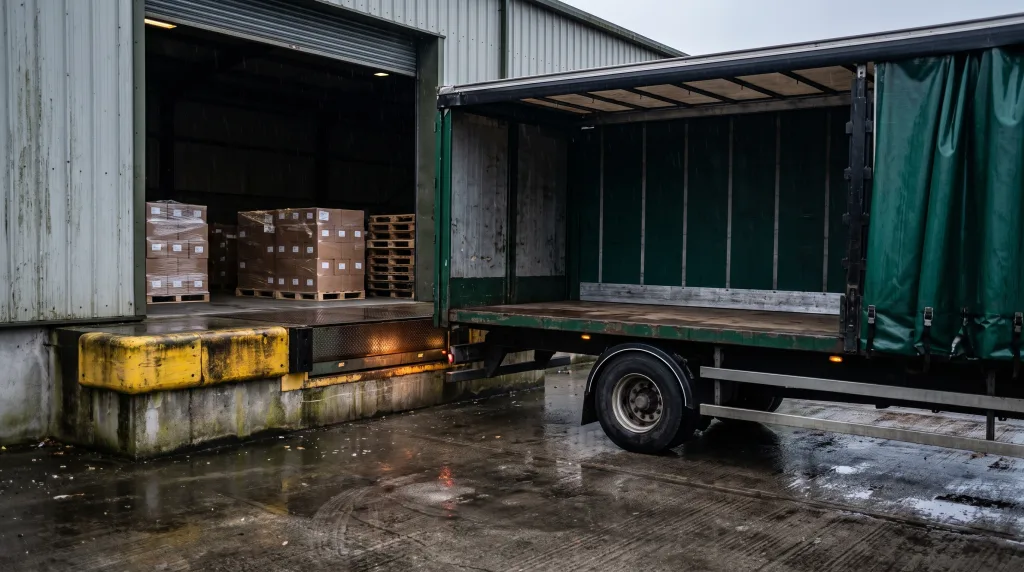
UK retail warehouses and distribution centres accept deliveries only in agreed windows. A truck without a slot goes back or waits, and waiting costs. How slot booking works is described in our article on booking-in for UK deliveries, and the specifics of retail DCs in the piece on deliveries to RDCs.
The border and returns
Since Brexit every furniture delivery from Poland to England goes through export and import clearance. We handle both in our own customs agencies, so documents are ready before the truck departs. And when an end customer sends back a damaged or unwanted piece, the return goes to our Milton Keynes warehouse: inspection, photo report and your decision on what happens next. Details on the furniture industry logistics service page.
From one pallet to a regular line
Smaller batches travel as groupage; regular production lines run on a schedule. If you are only planning UK furniture sales, start with the guide on how Polish manufacturers find UK buyers.
How do you protect furniture from moisture and movement during a 3-day transit to the UK?
Transporting wooden and upholstered furniture from Poland to the UK typically takes between 3 to 4 days. During the English Channel ferry crossing, the trailer is exposed to vibrations at different frequencies than on the road. If the floor friction coefficient drops below 0.3 µ, standard lashing straps with an STF of 350 daN will not prevent movement on their own. You must use anti-slip mats with a minimum thickness of 3 mm under all cabinet items and secure the load with at least 8 straps in a standard 13.6 m curtain-sider.
Temperature fluctuations during a 12-hour ferry wait and crossing cause moisture condensation beneath stretch film. When relative humidity inside the trailer exceeds 80%, varnished wooden parts can swell. Therefore, you need to use vapor-permeable foil and place desiccant bags weighing at least 250 g per every 5 m3 of cargo volume.
- Place anti-slip mats under every furniture edge contacting the trailer floor.
- Use protective plastic corners at least 1.2 meters long to prevent strap pressure from crushing cardboard edges.
- Fill void spaces with dunnage bags whenever the gap between cargo sections exceeds 15 cm.
This lashing and moisture control requirement does not apply when transporting outdoor aluminium furniture or goods packed in fully enclosed rigid wooden crates integrated with pallets.
Step by step
- Calculating required loading metres. Convert the volume and dimensions of the furniture into trailer floor length, taking any stacking bans into account.
- Protecting edges and surfaces. Apply protective corners and interlayers to prevent friction on lacquer or fabrics during transit.
- Preparing customs documentation. Gather commercial invoices and packing lists required for UK clearance.
- Booking the delivery slot. Register the delivery time window in the recipient's system to avoid delays and rejected consignments.
- Coordinating transport and clearance. Monitor the route and customs procedures until the goods are delivered at the final warehouse.
Definitions
- Loading metres (LDM): a unit of measurement for trailer space based on the length of floor occupied by cargo.
- Booking-in (delivery slot booking): the process of reserving a specific time window for unloading at the recipient's warehouse.
- Stowage plan: a diagram showing cargo arrangement in the trailer to prevent movement and damage to furniture.
- Unloading slot: an allocated time window during which the carrier must arrive at the delivery point.
The OTSL role
OTSL manages furniture transport with careful space planning and customs clearance, ensuring safe delivery to the UK market. Depending on your shipment volume, you can use our groupage (LTL) solutions or read more about risk management in poor exhibition logistics costs more than the transport. See also: Upholstered furniture into the UK: fire safety rules, permanent labels, rejected deliveries.