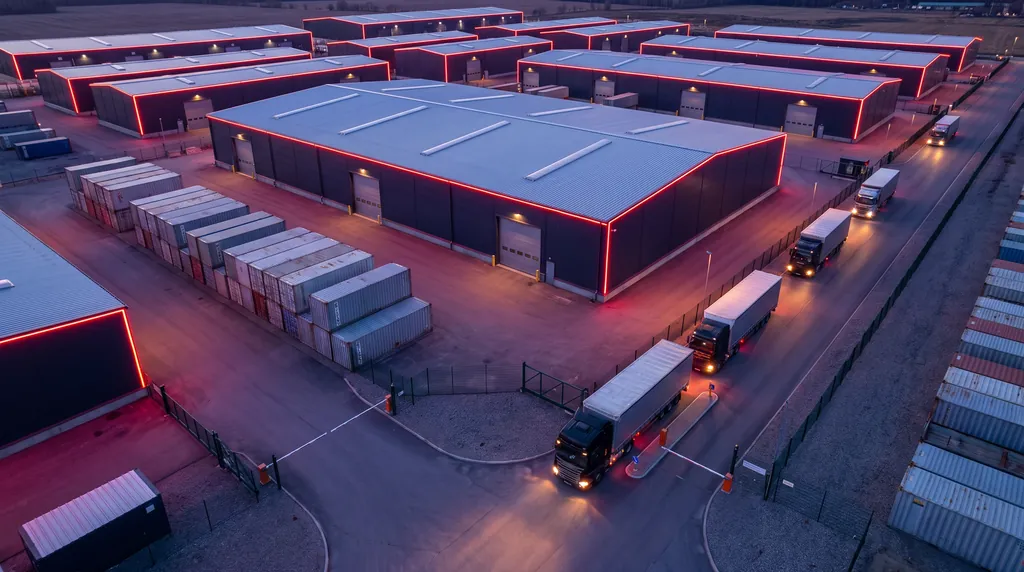
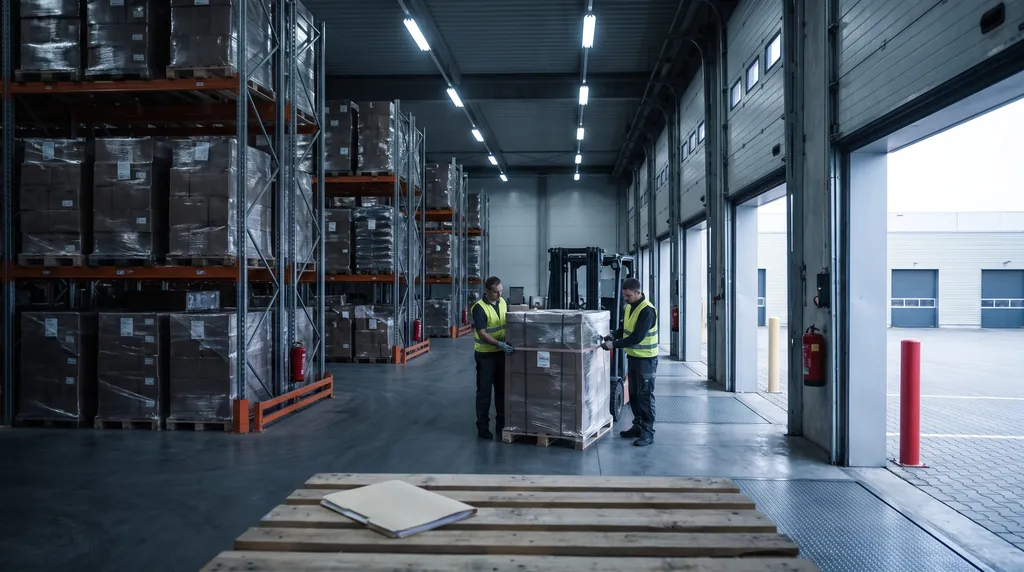
 AI image
Yes. A sole trader or a small online shop can move a pallet from Poland to England without any prior experience: you need an EORI number, a commercial invoice, a plain description of the goods, and weight and dimensions. A private individual sending a single parcel should use an international courier instead. OTSL works with businesses, including the smallest ones.
Who can ship: private individual, sole trader, small shop
Since 1 January 2021 the United Kingdom has been outside the EU customs union and single market, so every load travelling from Poland to England is cleared through customs twice: once on leaving the EU, once on entering the UK. Customs clearance simply means telling the authorities what is moving, what it is worth and who is shipping it. You do not have to know how to do this yourself, but somebody has to do it for you. The only question is who.
If you are a private individual with a single parcel, a gift or personal effects, freight forwarding is the wrong channel. OTSL works B2B: a business instructs a business. For a one-off private shipment an international courier is the better and cheaper option: couriers run a ready-made parcel process, file the customs entries themselves and price per piece, not per pallet.
If you run a small business in England and want to bring in stock from a Polish supplier, or you are a Polish sole trader selling to a UK customer, you can absolutely ship a pallet, even if this is the first export or import in the history of the company. You do not need an import department or an in-house lawyer. You need the four items listed below; everything else is done by a freight forwarder, the company that organises the transport, checks the paperwork and instructs the customs agents. We describe that job in detail in how freight forwarding works from A to Z.
| Who is shipping | The right channel | Why |
|---|---|---|
| Private individual, single parcel | International courier | Ready-made parcel process, customs handled by the courier |
| Sole trader or small shop, a pallet of goods | Freight forwarding | Transport and clearances tailored to the shipment, guidance through the first export |
| Business with regular shipments | Ongoing forwarding partnership | Repeatable process, one contact person, predictable lead times |
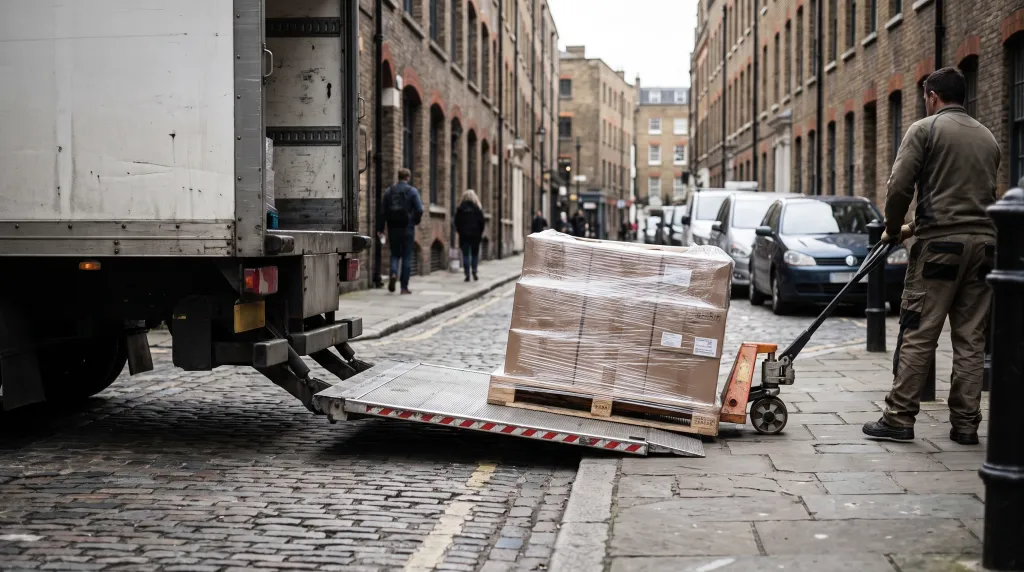
One pallet does not mean paying for a whole truck. Smaller consignments travel as groupage, which means they share trailer space with goods from other shippers, and you pay for the space you occupy. We cover this in single pallet transport to the UK.
The four things you need
- An EORI number. Free, issued once, applied for online. The UK importer needs a GB EORI from gov.uk; the Polish shipper needs an EU EORI from PUESC. Without these numbers no customs agent can declare the goods. The full process is described in EORI number: what it is and how to get one.
- A commercial invoice. An ordinary sales invoice issued to the British buyer. It must show the seller, the buyer, the goods description, quantity, value and currency. Customs reads from this document what is moving and what it is worth, which is why invoice errors are the most common reason a shipment gets held.
- A plain description of the goods. In everyday words: what it is, what it is made of, what it is used for. This is what the tariff code is chosen from, the official catalogue number of the goods that decides the duty and tax rates on the UK side. “Parts” is a bad description, “steel furniture hinges” is a good one.
- Weight and dimensions. How many pallets, how tall, how heavy. This decides the price and whether the goods travel as groupage or need a dedicated vehicle.
The complete document list for trade with the UK, including less typical goods, is in our guide export to the UK: required documents.
Step by step: from the first message to delivery
- Write to the forwarder. Through the contact form, in your own words: what is being shipped, from where, to where, how much of it and by when. You do not need any terminology; that is what the other side is for.
- You receive a quote and a list of gaps. The forwarder replies with the transport price and with what is still missing: usually the EORI number, the invoice and the consignee details.
- Apply for the EORI if you do not have one. Online, free of charge, on gov.uk for the UK side and on PUESC for the Polish side. Do it straight away so the number is ready before loading.
- Prepare the documents. The commercial invoice and the packing list, which is simply an itemised list of what sits on the pallet. The forwarder checks them before loading, not after, because at that point corrections still cost nothing.
- Export clearance in Poland. A customs agency declares the goods for export based on the invoice and the EORI of the shipper. Nobody has to visit any office in person.
- The driver collects the pallet. The goods should be stacked on the pallet and secured with film or straps. The driver confirms collection on the CMR (the Convention on the contract for international carriage of goods by road) consignment note, the document that accompanies the shipment for the whole journey.
- Border and import clearance in England. The UK consignee, if it acts as the importer (the typical arrangement in a sale), must hold its own GB EORI number; the forwarder arranges the import declaration with a local customs agent.
- Delivery. The consignee signs the CMR on receipt. That signature is your proof the shipment arrived complete.
What do you lose when something is missing?
No EORI number on loading day means the truck leaves without your pallet, or waits while the shipper pays for the standstill. A vague goods description risks the wrong tariff code, wrongly calculated duty and questions from customs that take days to answer while the goods sit still. Undervaluing the invoice “to make it cheaper” is not a saving, it is a problem between your consignee and the UK tax authority. Every one of these scenarios costs more than the hour it takes to prepare the paperwork before shipping.
The OTSL role
OTSL is an international road freight forwarder: we move pallets and larger consignments between Poland, the United Kingdom, Switzerland and the rest of Europe, together with customs clearance on both sides of the Channel. We walk first-time shippers through the process: we say plainly which documents to prepare, we check them before loading, and we make sure the consignee holds a GB EORI. We operate warehouses in Kielce, Legnica and Milton Keynes in England, so goods can also wait for collection on the British side. Describe your shipment through the contact form and we will run the process for you. More guides are in our knowledge base.
Definitions
- EORI (Economic Operators Registration and Identification): A unique identification number used by customs authorities to track and process commercial shipments between countries.
- HMRC (Her Majesty's Revenue and Customs): The United Kingdom tax and customs authority responsible for issuing GB EORI numbers and managing customs control.
- PUESC (Platforma Usług Elektronicznych Skarbowo-Celnych): The Polish government online platform used by businesses to obtain an EU EORI number free of charge.
- Commercial invoice: A key trade document detailing the description of goods, transaction value, sender, and recipient required for customs clearance.
When does this rule not apply?
This process does not apply to private individuals shipping individual parcels, who should use an international courier service instead.