 AI image
Importing and transporting a generator set from the United Kingdom into the European Union requires completing customs formalities under CN code 8502 and preparing the cargo correctly. These machines, with a typical weight range between 0.1 and 30 tonnes, usually do not require disassembly for transport. A vital technical and safety requirement is that the fuel tank must be completely emptied before loading.
What should you know about shipping a generator set bought at a UK auction?
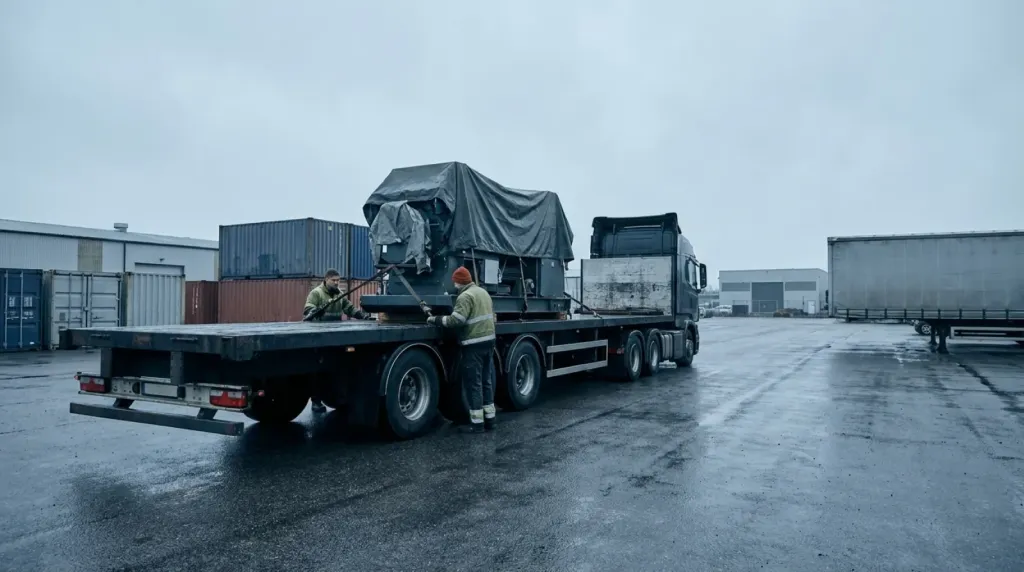
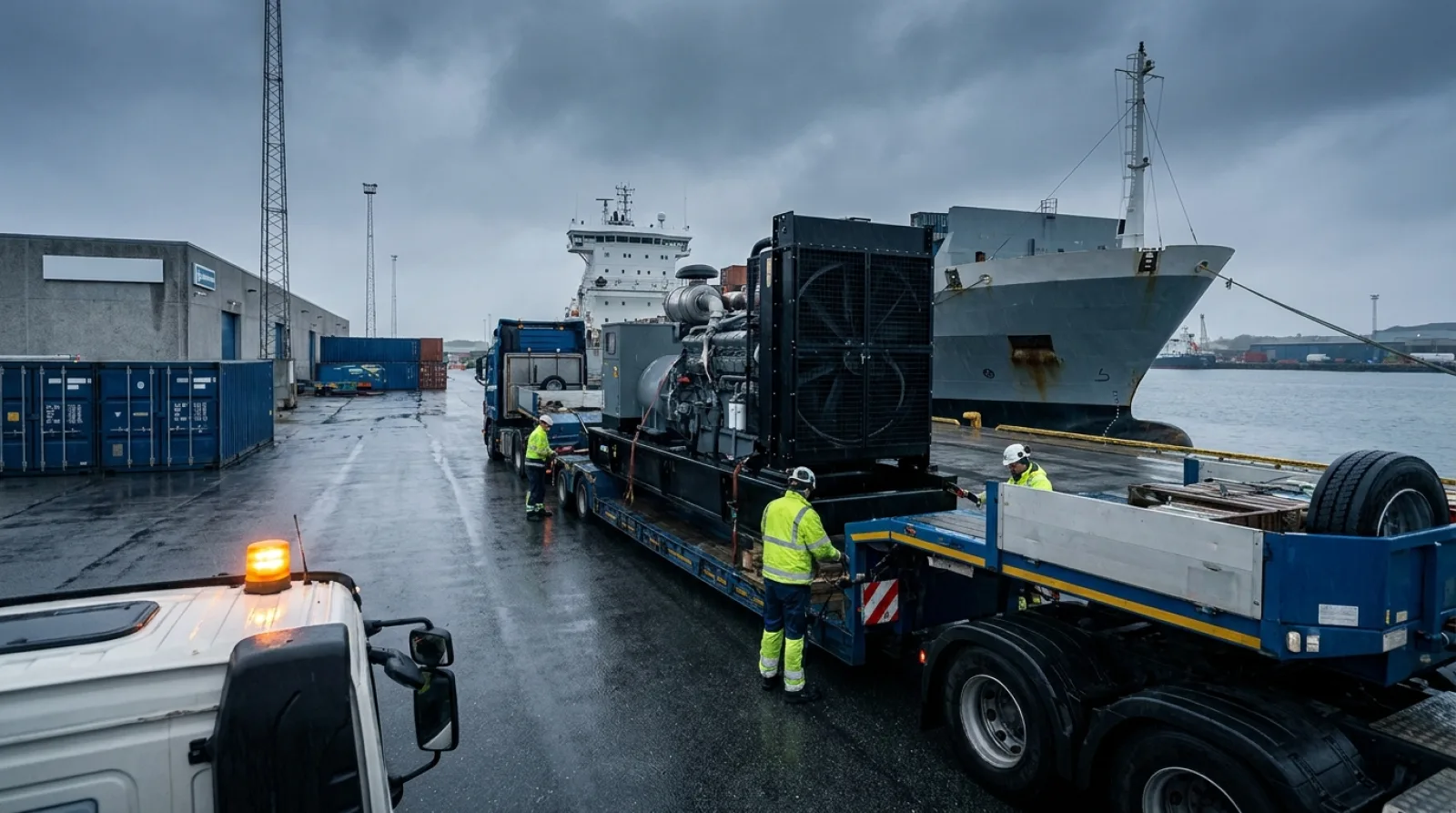
A generator set (German: Stromerzeuger) is a very frequent lot at UK auctions following the liquidation of plant hire and rental companies. Before planning the transport, you need to verify the exact dimensions and weight of the equipment. The typical weight range for these units is between 0.1 and 30 tonnes. Smaller units can be carried on standard trailers or light commercial vehicles, whereas heavy containerised or stationary units may require specialised low-loader trailers.
When arranging collection from an auction site, you must strictly comply with the requirements set by the auctioneer. Collection conditions depend on the rules stated in the specific auction terms or instructions provided in the exhibitor manual. Auction houses enforce strict time windows for collection, and loading may require hiring a mobile crane or heavy forklift if the auction site does not provide loading machinery within the purchase conditions.
Why is draining the fuel tank essential before transport?
The fuel tank integrated into the generator set must be fully drained prior to road transport. This obligation stems directly from dangerous goods transport rules, road transport safety regulations, and ferry operator requirements. Leaving diesel or petrol inside the tank creates a hazard of fuel leaks during cornering, braking, and maritime transit between the United Kingdom and continental Europe.
Failure to drain the tank can result in the driver refusing to load the machine, boarding denial at the ferry terminal, or vehicle detention during roadside inspections. The carrier has the right to inspect the fuel tank before securing the load with lashing straps. Furthermore, generator sets generally do not require structural disassembly, meaning that once the fuel system is drained and the unit is secured to the trailer, it is ready for movement as a complete item.
Importing a generator set from the UK step by step
- Verification of auction documentation. Obtain the commercial purchase invoice from the auction house, check the machinery serial number, and confirm collection conditions with the seller.
- Draining the fuel tank. Ensure and verify the total removal of fuel from the generator tank before the transport vehicle arrives at the UK collection site.
- Customs classification and entry. Assign commodity code CN 8502 to the machinery and prepare the necessary documents for UK export and EU import customs clearances.
- Transport arrangement and securing. Dispatch an appropriate vehicle suited to the unit weight (within 0.1–30 t) and secure the generator with lashing straps and wheel chocks.
- Haulage and clearance execution. Transport the cargo across the UK-EU border, complete import clearance, and deliver the generator set to its final destination.
Definitions
- Generator set: A combination of an internal combustion engine and an electrical generator used to produce electrical energy.
- CN: Combined Nomenclature, the European Union eight-digit coding system used for classifying goods in international trade and customs tariffs.
- EORI: Economic Operators Registration and Identification number, mandatory for businesses undertaking customs procedures in the UK and EU.
- CMR: The international consignment note used to confirm the contract of carriage for goods transported by road.
Checklist for generator set transport preparation
- Has the fuel tank been completely drained and dried?
- Is the exact weight of the machine verified within the 0.1–30 t range?
- Do you hold a commercial invoice confirming the tariff heading CN 8502?
- Are active EORI numbers issued for both the United Kingdom and the European Union?
- Are the designated lashing points on the generator frame exposed and undamaged?
When do these rules not apply?
The import and transport procedures described here do not apply if the movement takes place entirely within the customs territory of the European Union or inside a single country. These rules also do not apply to equipment moved under military or diplomatic status, which are governed by separate international conventions. Furthermore, exact collection arrangements depends on the specific auction conditions or requirements set out in the exhibitor manual.
The OTSL role
OTSL Sp. z o.o., based in Kielce, Poland, with operational facilities in Milton Keynes, UK, organises international road freight and customs procedures between Great Britain and the European Union. We provide services such as machinery transport as well as comprehensive import and export customs clearance. If you source machinery from the UK market, you can also read our guide on Regime 42, EU import clearance with deferred VAT. See also: Site Dumper Transport and Import from the UK and Transport and Import of Mobile Cranes from the UK to the EU and Transport and Import from the UK: Road Milling Machine. See also: Transport and Import from UK: Plough and Cultivator.