 AI image
A freight forwarder at OTSL runs the whole shipment: quoting it, booking the vehicle, chasing the customs paperwork and closing the delivery with a signed proof. The client has one phone number and one e-mail address, and the driver, the customs team and the warehouse all take instructions from the same person. There is no separate quoting desk, dispatch desk or claims desk. There is a forwarder who knows the job because they built it. If you are looking for a freight forwarder job in Poland, remote or on site, and want to own the result rather than a slice of it, this is how we work.
Why does one person run one shipment?
Because on UK-bound traffic most problems appear at the hand-offs: between quoting and dispatch, between dispatch and the customs agent, between the agent and the driver at the port. Every hand-off is a place where a detail gets lost, such as the shipper still not having sent the GB import documents, or the consignee only accepting deliveries until two in the afternoon. At OTSL those hand-offs disappear, because the forwarder who spoke to the client at quoting stage is the one who briefs the driver before departure and talks to the customs agent before the port.
For you this means full responsibility for the job, but also full knowledge of it. You do not reconstruct what a colleague agreed from a sticky note. You know what you promised the client, what you received from the shipper and where the truck is. When the client calls, you answer straight away, not after two internal phone calls.
What does an OTSL forwarder have in-house?
Three areas that many companies split between subcontractors. First, road transport: groupage LTL from a single pallet, full loads FTL, express, ADR and out-of-gauge. Second, our own customs agencies in Poland and in the United Kingdom, so export and import declarations are lodged by colleagues, not bought from a third party. Third, warehouses: Milton Keynes in England, plus Kielce and Legnica in Poland, where cargo can be transloaded, held or inspected.
In one shipment you use all three at once. A pallet from Kielce to a consignee in Birmingham travels in a consolidated load, the OTSL customs agency prepares the paperwork, and on the British side the Milton Keynes warehouse splits the consignments for final delivery. You do not hunt for a partner at every stage; you set the sequence and keep the deadlines.
Where do the jobs come from, if not from a freight exchange?
OTSL does not trade loads on freight exchanges. Work comes from direct clients the company serves regularly, and every job is handled individually. In practice you are not bidding against ten other firms at seven in the morning. You are talking to a client who knows what they need and expects you to deliver. The operations team is available 24/7, but as a team, so your shipment has someone to wake at night and you are not alone with a phone.
The main markets are the European Union, the United Kingdom and Switzerland. Ireland and Norway are being developed, which means their customs and border procedures are still being refined in daily practice. If you enjoy learning new procedures, that is where you will be useful. An international freight forwarder career in Kielce, or from your own desk at home, starts with that kind of curiosity.
A shipment to the United Kingdom step by step
- Enquiry and quote. You take the enquiry, ask about dimensions, weight, dates and unloading conditions. You price it yourself, because you know the cost of the crossing, the clearance and the vehicle. The client gets one price and one name.
- Confirmation and vehicle. Once accepted, you pick a carrier from the vetted pool or an OTSL vehicle. You check that the vehicle and driver match the order and agree the loading slot.
- GB import documents from the shipper. You make sure the shipper delivers the full set of documents for the UK import declaration before the truck leaves. Without them OTSL, as the carrier, cannot create a GMR in GVMS and the truck will not be admitted to the port.
- Ferry booking and GMR. You book the crossing and ask the customs agency to prepare the GMR. The driver receives reference numbers; the driver does not fill in declarations.
- Transit and crossing. You track the vehicle, collect loading photos and the trailer security checklist completed before the port. You react to delays before the consignee notices them.
- Delivery and closing. You collect the proof of delivery, check any remarks on the CMR (the Convention on the contract for international carriage of goods by road) and pass the documents on for invoicing. You close the job you opened.
Definitions
- Freight forwarder: the person who organises carriage on the client's behalf and is responsible for carrier selection, documents and the running of the job.
- FTL (Full Truck Load): a full vehicle for one client.
- LTL (Less than Truck Load): groupage, several clients' consignments in one vehicle, at OTSL from a single pallet.
- GVMS (Goods Vehicle Movement Service): the UK system linking customs declarations to the vehicle movement through a port.
- GMR (Goods Movement Reference): the reference generated in GVMS without which a truck is not admitted to a UK-bound ferry.
- ADR: the international agreement governing the carriage of dangerous goods by road.
Checklist before you get in touch with OTSL
- You have experience in international freight forwarding and can describe shipments you ran from start to finish.
- You work independently: you quote, you decide on the vehicle, you speak to the client when something goes wrong.
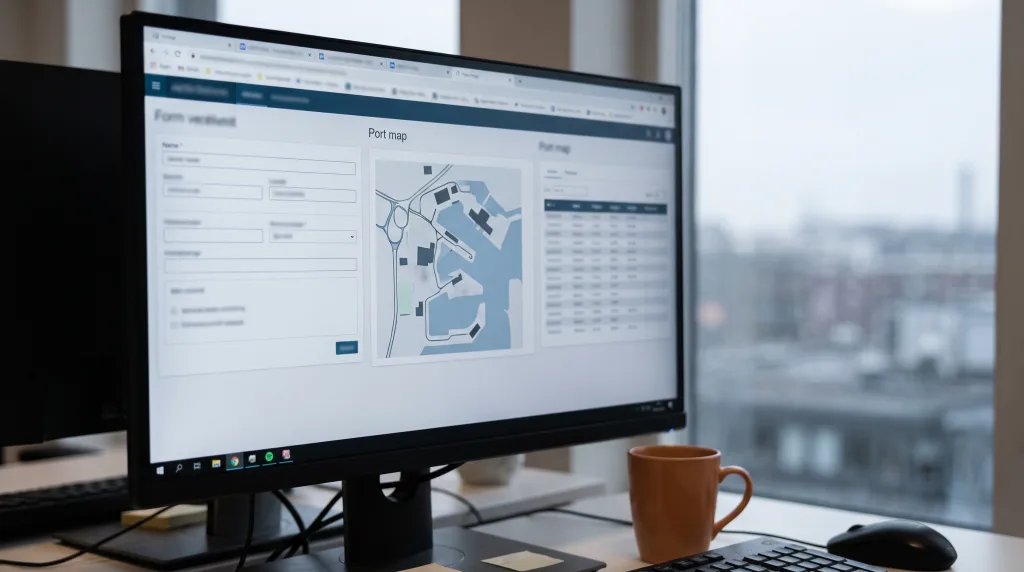
- You know the logistics platforms a forwarder works on: customs systems, delivery booking portals, carrier selection tools.
- If you bring your own client base, it is welcome. Your clients keep one forwarder: you.
- You know which mode suits you: remote, or on site in Kielce.
- You write through the contact form with the subject "Careers", or to the e-mail address shown on the contact page.
When does the one-contact rule work differently?
One contact does not mean the forwarder does everything with their own hands. The rule does not apply to physical tasks: quantity checks at loading, photos, sealing and transloading are done by the warehouse teams in Kielce, Legnica and Milton Keynes. It does not cover the lodging of declarations either: the customs agency files them, the forwarder makes sure the agency has what it needs. Outside the hours in which you run your shipments, the 24/7 duty team takes over, unless you have agreed something else with the client. Terms of engagement, working hours and pay are not published; the owner discusses them individually with each candidate in the first conversation.
The OTSL role
OTSL is an international freight forwarder based in Kielce, with its own customs agencies in Poland and the United Kingdom and a warehouse in Milton Keynes. We run shipments on the one-contact model and lodge declarations ourselves as part of our customs clearance service. Why we stay away from freight exchanges is explained in our article on not buying loads on exchanges, and the differences in liability between forwarder, carrier and broker are set out in who is liable for what. If you would like to talk about working with us, use the contact form with the subject "Careers". See also: Platforms an OTSL forwarder works on: booking portals, GVMS and CDS.