 AI image
OTSL employs drivers on the Poland–United Kingdom route. The equipment is curtainsider trailers; the base is in Kielce. The one firm requirement is experience driving to England: knowing the ports, the GVMS procedures from the driver's seat and the rules for checking the trailer before entering the port. The crossing is Dunkirk–Dover. Ferry booking, GMR in GVMS and ELO/ENS declarations are prepared by the office; you receive the references and a complete document set and fill in no declarations. You are responsible for the trailer, the seal and the pre-port checklist. Dispatch works 24/7.
Why do we require experience driving to England?
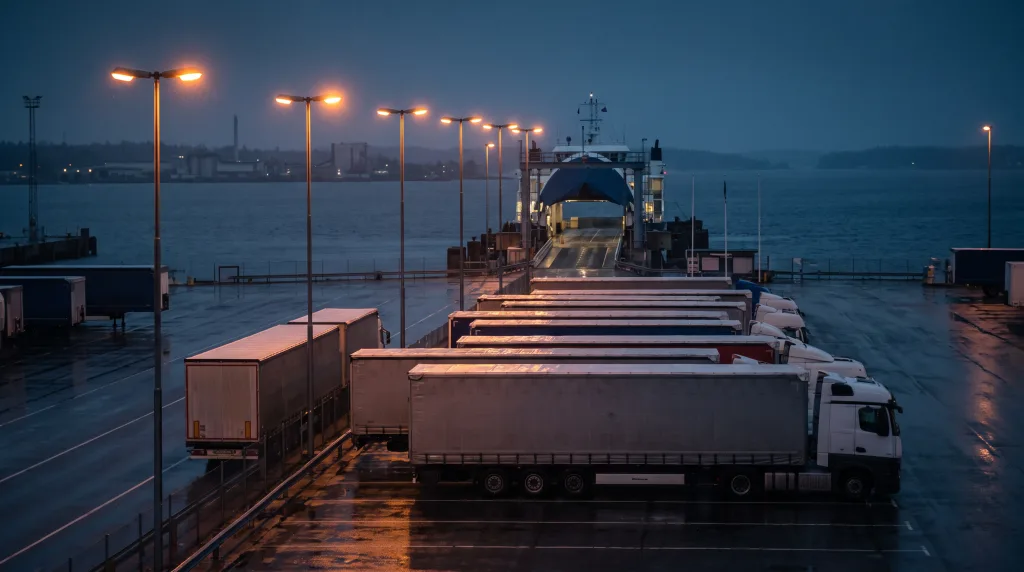
Because the post-Brexit route to the United Kingdom differs from a run to Germany in places that do not show on a map. In Dunkirk you cannot buy a ticket at the gate; you enter the terminal with a GMR and a booking the office prepared earlier, and if the trailer details do not match what is behind your cab the system will not let you in. Before the port there is a mandatory trailer check for clandestine entrants, with a checklist, and on the British side you drive on the left on roads that were not always built with a European-length curtainsider in mind.
A driver who knows this knows when to call dispatch and what to ask. A driver going to England for the first time learns it through mistakes, and in this job mistakes cost time at the ferry and sometimes an administrative penalty. That is why experience on this route is a condition, not a nice-to-have, for a curtainsider driver Poland to England job with us.
What does the office do, and what stays with you?
The OTSL office prepares the crossing in full: it books the Dunkirk–Dover ferry, creates the GMR in GVMS from the customs declarations and lodges the ELO/ENS safety declarations. No GMR can exist without the shipper's GB import documents, but chasing those is the forwarder's job, not yours. Your task is to carry the complete set handed over by the office and show it on request at the port or on the road. Add 24/7 dispatch: when something will not scan at three in the morning, you call the duty desk rather than waiting for the morning.
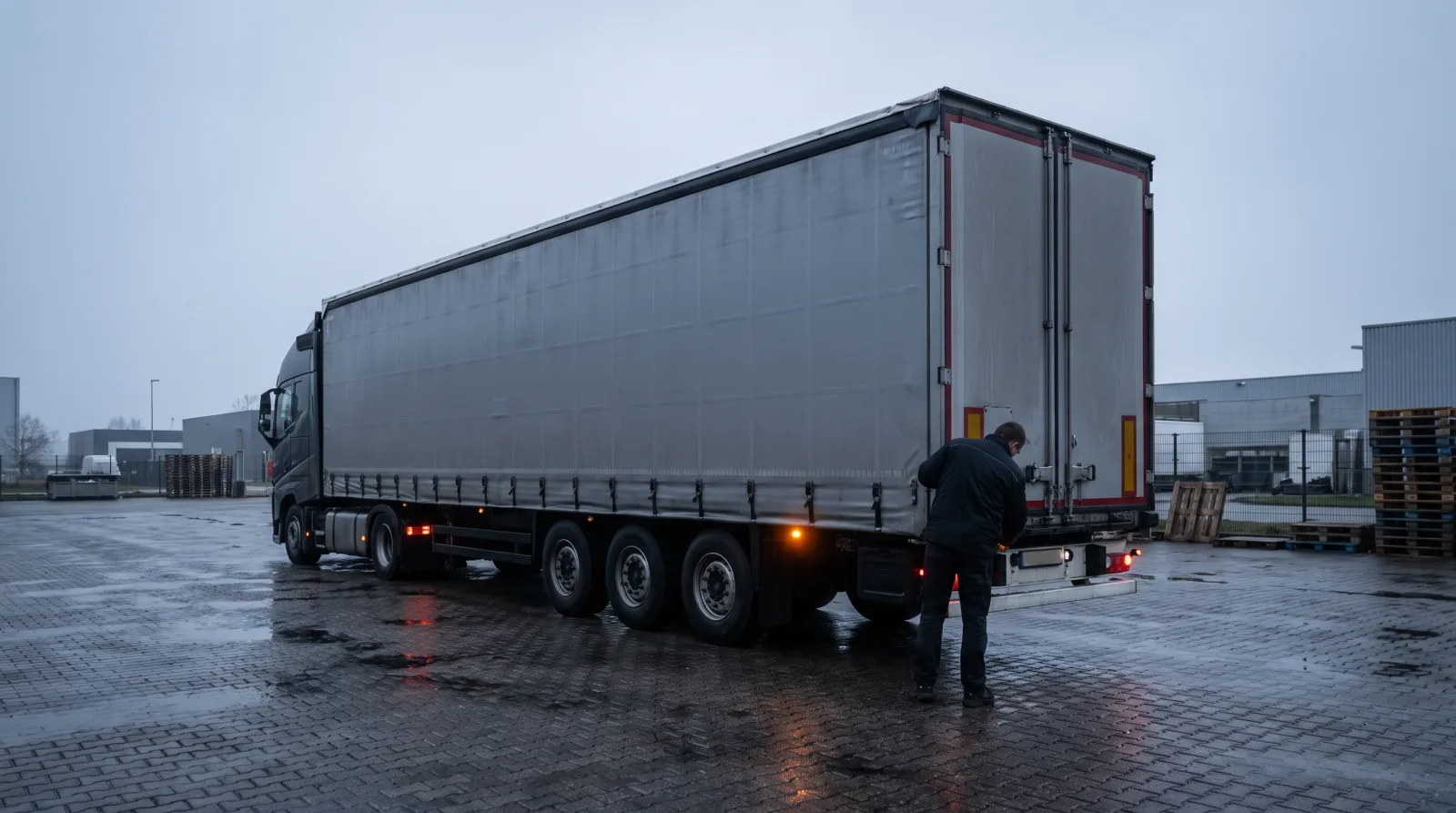
What stays with you is the trailer. You check the curtain, the TIR cord and the seal before departure and before the port, carry out the check for clandestine entrants and fill in the checklist. The seal number must match the entry on the CMR (the Convention on the contract for international carriage of goods by road). This is not a formality: the UK civil penalty scheme for clandestine entrants holds the carrier and the driver liable, and a documented check is what protects you and the company. Penalty levels are set by the Home Office; we do not quote figures.
What does a week on the Kielce–England route look like?
We do not publish the rhythm of trips, because the owner agrees it in conversation together with the form of employment and pay. What we can describe is what such a week is made of. Loading at the Kielce base or at the shipper, the drive through Germany, Belgium and France to Dunkirk, the ferry to Dover, delivery in England, often against a slot the forwarder booked in advance, and the return: with a backload or via the OTSL warehouse in Milton Keynes. Working time and rest follow the tachograph, not the client's deadline, and dispatch plans the ferry around your hours, not the other way round.
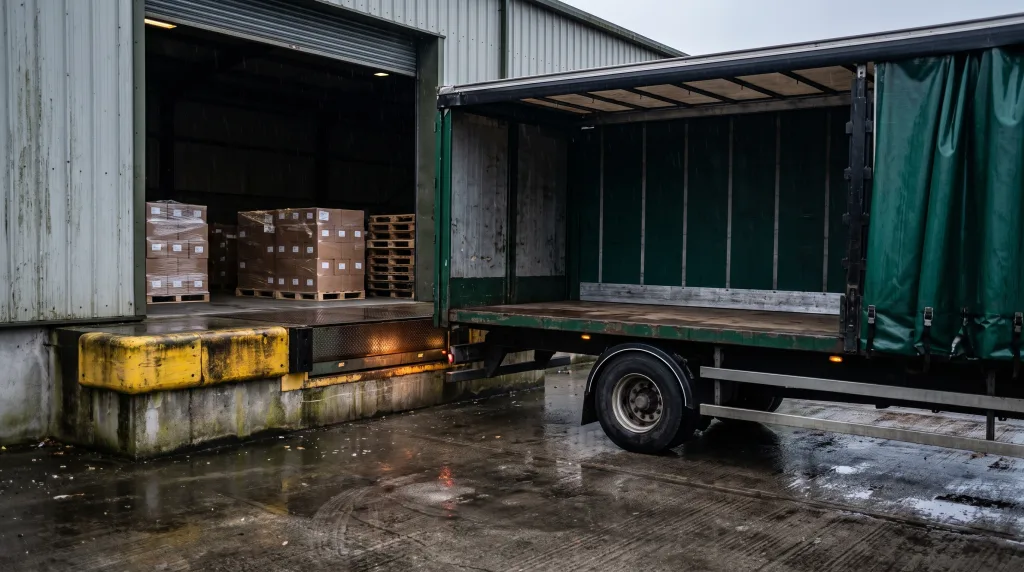
On a curtainsider you carry what can be loaded from the side: pallets, industrial packaging, structural components, exhibition stands. The curtainsider gives flexibility at the ramp and in halls, but it demands attention to load securing and to curtain checks, because a slit curtain is the most common sign of an attempt to get into the trailer.
A trip to England step by step
- Briefing at the base. You collect the set from dispatch: ferry booking, GMR, cargo documents, contacts. You check that the tractor and trailer registrations in the GMR match your unit.
- Loading and sealing. You check load securing, close the curtains, fit the seal and write its number on the CMR. You take photos for the forwarder.
- Drive to Dunkirk. You drive to the tachograph. If you can see you will miss the booked sailing, you call dispatch in good time, not from the car park outside the port.
- Pre-port check. In a secure parking area you check the curtain, the cord, the seal, the underside and the roof of the trailer for clandestine entrants. You complete the checklist and keep it.
- Port check-in and ferry. You present the GMR and the booking and go through the checks. If something fails, you call the duty desk, which can see the status in GVMS and knows what is missing.
- Delivery and return. In England you deliver against the booked slot, get the CMR signed and photograph the unloading. You return with a load or via the Milton Keynes warehouse, as dispatched.
Definitions
- Curtainsider: a trailer with sliding curtain sides, loaded from the side and the rear; standard OTSL equipment on the England route.
- GVMS (Goods Vehicle Movement Service): the UK system linking customs declarations to a vehicle's passage through a port; the source of the GMR.
- GMR (Goods Movement Reference): the reference a unit presents when boarding a UK-bound ferry; prepared by the office.
- ELO/ENS (Entry Summary Declaration): the safety and security declaration lodged by the office before goods enter the United Kingdom.
- Civil penalty: the UK administrative penalty for clandestine entrants found in a vehicle, imposed on the carrier and the driver; levels are set by the Home Office.
- TIR cord: the cord threaded through the curtain eyelets and closed with a seal, whose continuity you check at every trailer inspection.
Checklist for the driver before entering the port
- Tractor and trailer registrations match the details in the GMR and the ferry booking.
- Curtain without slits, TIR cord continuous, seal intact and its number matching the CMR.
- Trailer check for clandestine entrants carried out in a secure parking area and documented in the checklist.
- Complete set of documents from the office with you: CMR, invoices, booking, GMR, dispatch contacts.
- Your working time allows you to reach the port and the consignee without breaking the tachograph rules.
- Dispatch knows where you are and when you plan to enter the terminal.
When does this description not fit your situation?
This description applies to drivers on the Poland–United Kingdom route on curtainsider trailers based in Kielce. It does not cover runs purely within the European Union, where there is no GMR and no pre-port check, nor carriage on other trailer types, which OTSL assigns to partner carriers. If you have no experience driving to England, the essential requirement is not met, unless you and the owner agree otherwise in conversation; this article makes no such promise. The rhythm of trips, the form of employment and pay depend on what you agree with the owner and are not published. Applications go through the contact form with the subject "Careers"; if you prefer e-mail, the address is on the contact page.
The OTSL role
OTSL is an international freight forwarder based in Kielce that carries goods to the United Kingdom on its own units as part of its road transport service and books crossings itself through ferry booking. How the GMR works from the driver's seat in Calais, Dunkirk and Folkestone is described in GVMS in practice; the trailer check procedure and checklist are in our article on trailer inspection, and the differences between tilt, mega and curtainsider in which trailer type for which load. If you drive to England and want to talk about an HGV driver job from Poland to the UK, use the contact form with the subject "Careers".