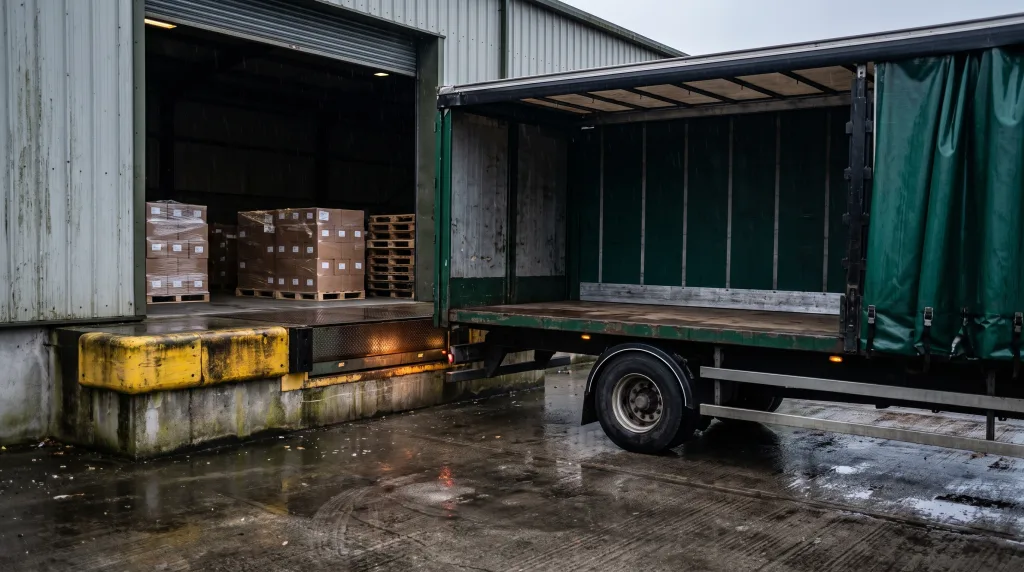
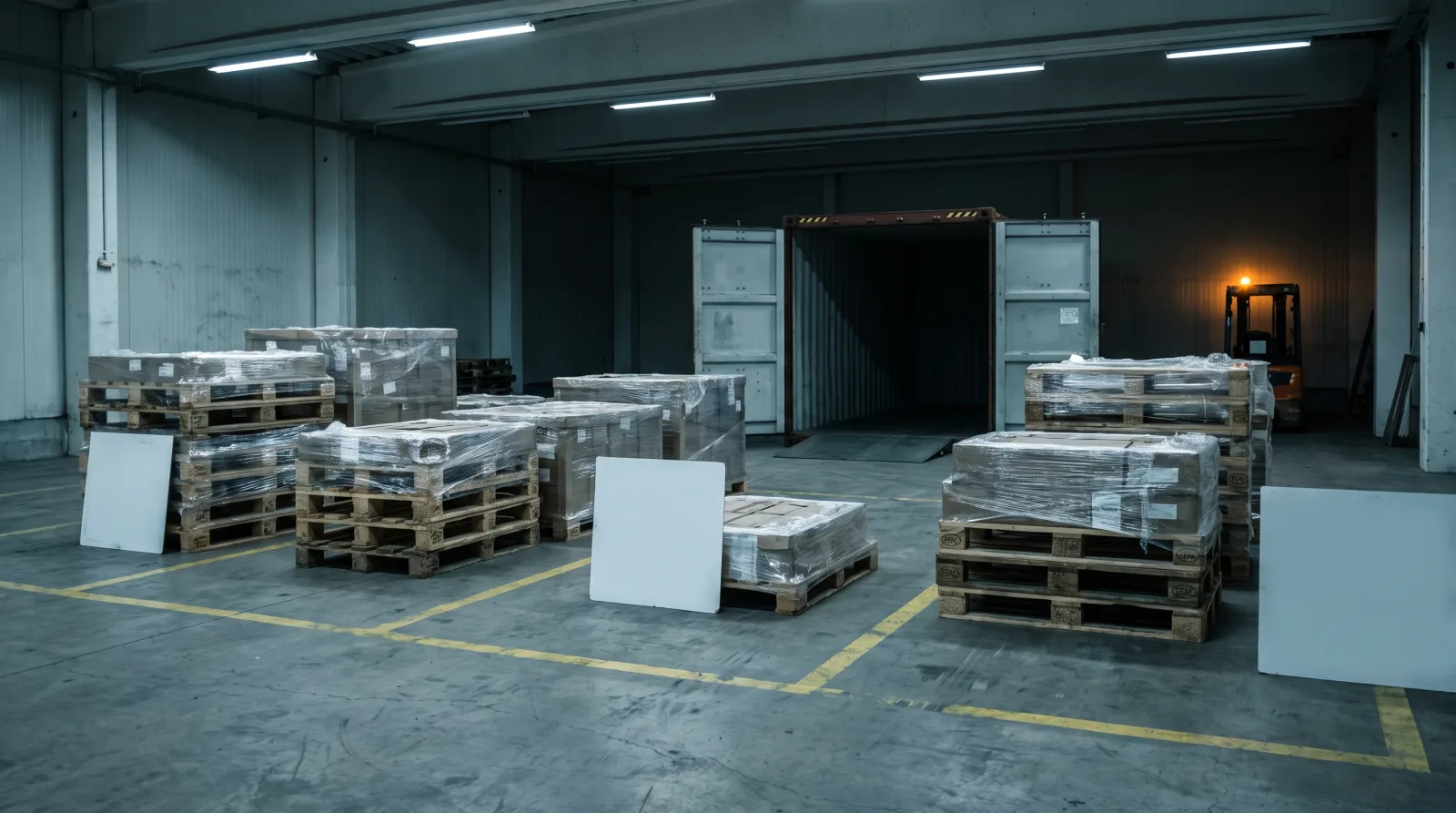
 AI image
An LCL (less than container load) container is a groupage box carrying consignments from several shippers to several consignees. On arrival it has to be split: each consignment identified from its markings and transport documents, counted and set aside for release to its own consignee. The OTSL warehouse in Milton Keynes handles the transloading, inbound and outbound counts, short-term storage and labelling, and each consignment waits for customs release or for the consignee's slot. Goods leave only on the instruction of their owner or the owner's forwarder.
How does LCL deconsolidation differ from FCL devanning?
With an FCL container the whole load belongs to one shipper, so after unloading there is one owner, one consignee and one instruction. With LCL the same box holds consignments from several or a dozen shippers, each with its own document, its own customs status and its own consignee. Deconsolidation is as much documentary work as physical work: before a pallet leaves the ramp you need to know which consignment it belongs to, whose it is and whether customs have released it.
In practice this means goods are set down in separate, marked groups, one per consignment. A mistake at this stage (one consignee's pallet in another consignee's group) only shows up at the receiving gate and costs a second transport. That is why counting and marking come before any release instruction.
When can a consignment from an LCL container be released?
When two conditions are met at the same time: customs release and an instruction from the owner of the goods or the owner's forwarder. GB import clearance can be lodged by the OTSL customs agency in the UK or by your partner's agent; this is agreed in the job. Without an instruction OTSL does not release goods, even if the consignee turns up to collect. The rule protects you as the forwarder: a consignment does not leave the warehouse on the strength of a phone call from someone we do not know.
Acceptance of a complete LCL container on the ramp in Milton Keynes is agreed individually within the job. The alternative is to receive consignments already devanned at the port: the warehouse then takes in pallets or cartons with the documents of each consignment, counts them and carries on exactly as before, only without the container unloading stage.
LCL container deconsolidation step by step
- Consignment manifest. Before arrival you send the list of consignments in the container: document numbers, markings, unit counts, consignees and customs status of each lot.
- Arrival and seal check. The container (or the port-devanned lots) arrives in the agreed window; the seal and the condition of the load on opening are photographed.
- Identification and separation. Every unit is assigned to a consignment from its markings and documents; consignments are set down in separate, signed zones.
- Count. The unit count of each consignment is compared with its document; shortages, overages and damage go into the photo report before anything else happens.
- Hold for release. Consignments wait in short-term storage for customs release and the consignee slot; labelling for the consignee can be done in the meantime.
- Dispatch on instruction. After release and a written instruction from the owner or forwarder, the consignment is loaded and counted out.
Definitions
- LCL (Less than Container Load): a groupage container with consignments from several shippers to several consignees; the opposite of FCL (Full Container Load), a single-shipper container.
- Deconsolidation: splitting a groupage load into individual consignments according to the documents, with a count of each.
- Customs release: the customs authority's decision allowing the goods to be disposed of once the import declaration has been cleared.
- Release instruction: a written order from the owner of the goods or the owner's forwarder stating to whom and when the warehouse is to release a consignment.
- Hold-and-release: keeping goods in the warehouse until a condition is met (customs release, owner decision) and releasing them once it is.
- Manifest: the list of all consignments in a container with their documents, markings and consignees.
Checklist before an LCL container arrives
- Consignment manifest with document numbers, markings and unit count for each lot.
- Customs status of each consignment and who lodges the import declaration.
- List of people authorised to give a release instruction for each consignment.
- Consignee requirements: labels, pallet standard, booking slots.
- Agreed window for receiving the container or the port-devanned lots.
- Instructions for handling count discrepancies or damage.
When will a consignment not be released even though the consignee is ready?
Consignee readiness is not enough. Release does not happen until the consignment has customs clearance, and it does not happen without an instruction from the owner or the owner's forwarder, unless you named the consignee in the job as a person authorised to instruct. The hold applies only to the consignment concerned: other lots from the same container that have release and an instruction leave as normal. How long the wait lasts depends on the pace of clearance and on when the consignee has a slot, not on the warehouse.
The OTSL role
OTSL receives LCL containers or devanned lots at the Milton Keynes warehouse, deconsolidates them with a count and releases consignments after clearance on your instruction. GB import clearance can be lodged by our customs agency, and container haulage from the port is covered by our container transport service. How handling without storage works is explained in our article on the cross-dock warehouse in Milton Keynes, and the hold and release rules in quarantine, hold and release in the UK.