 AI image
In groupage (LTL) your pallet shares the trailer with goods from other shippers and passes through several terminal handlings. That is where the hidden risks live: odour transfer, dust, chemical leaks next to food, crushing, misplaced pallets and longer transit. Your carrier is liable under the CMR Convention, and sensible load compatibility decides whether damage happens at all.
What does the salesperson leave out of a cheap groupage quote?
A groupage quote looks simple: pallet count, weight, rate, transit estimate. It says nothing about what your pallet will travel with or how many times it will change vehicles. We have already done the FTL versus LTL cost arithmetic in FTL or LTL: when a full load pays off and FTL or LTL for smaller consignments, and the mechanics of consolidated deliveries are covered in our guide to groupage across Europe. This article puts rates aside and answers one question: what rides next to your pallet, and what that means for your goods, your consignee and your claim. For a British importer buying from Poland, the answer decides whether the delivery clears goods-in or comes straight back.
Cargo neighbourhood: five ways damage happens
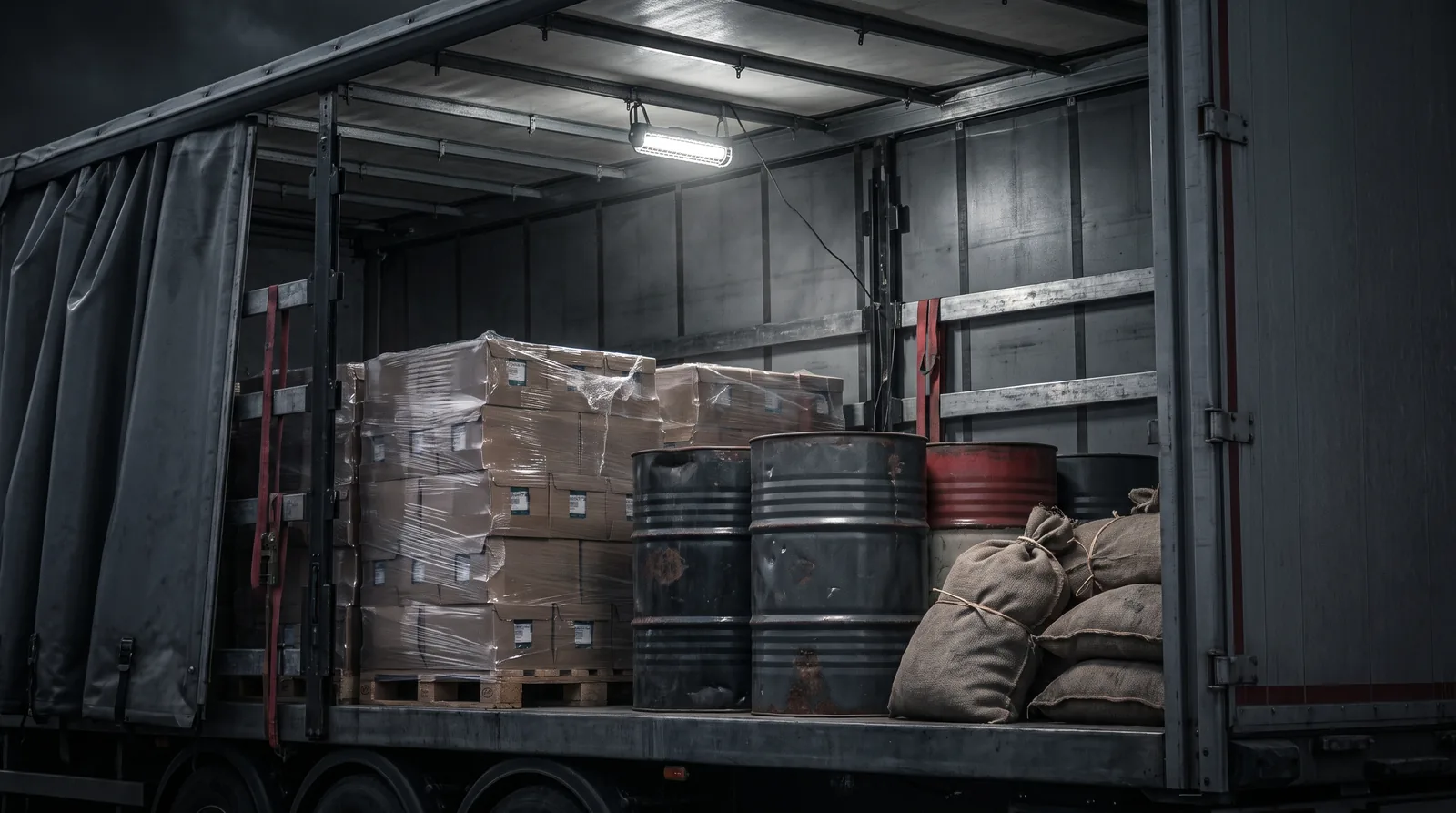
A groupage trailer is a closed space with shared air, a shared floor and shared braking physics. Someone else's cargo does not have to fall onto yours to ruin it. The usual mechanisms look like this:
- Odour transfer. Coffee, tea, chocolate, pet food and plain cardboard absorb smells from their surroundings. A pallet of detergent or cleaning products sharing the same air for two days can make your consignee reject the delivery after opening the first carton, even though the goods look untouched.
- Dust. Bags of cement, fertiliser, granulate or pigment shed dust with every braking and every handling. Settled dust soils shrink wrap and cartons, and for food or pharmaceutical goods the mere trace of a foreign powder on the packaging can be grounds for refusal at goods-in.
- Chemicals next to food. Regulation (EC) No 852/2004 on the hygiene of foodstuffs, which continues to apply in Great Britain as assimilated law, requires in Annex II Chapter IV that transport equipment be kept clean and that food be placed and protected so as to minimise the risk of contamination, including effective separation from other loads. A groupage trailer with a drum of solvent beside pallets of biscuits is the opposite of that rule, and it is the food shipper who answers to the consignee, not the drum's owner.
- Moisture and leaks. A damaged IBC, a weeping drum or a rain-soaked pallet on the tier above mean stained cartons below. Wet corrugated board loses its strength, and stains from someone else's liquid disqualify retail packaging outright.
- Crushing and pressure. Groupage puts pallets of very different weight and rigidity side by side. A heavy pallet pushed up against light cartons, stacking without checking what the bottom layer can bear, or a poorly secured pallet shifting under braking: these are the classic sources of crushed corners and split packs.
Hubs and handling: every touch is a risk
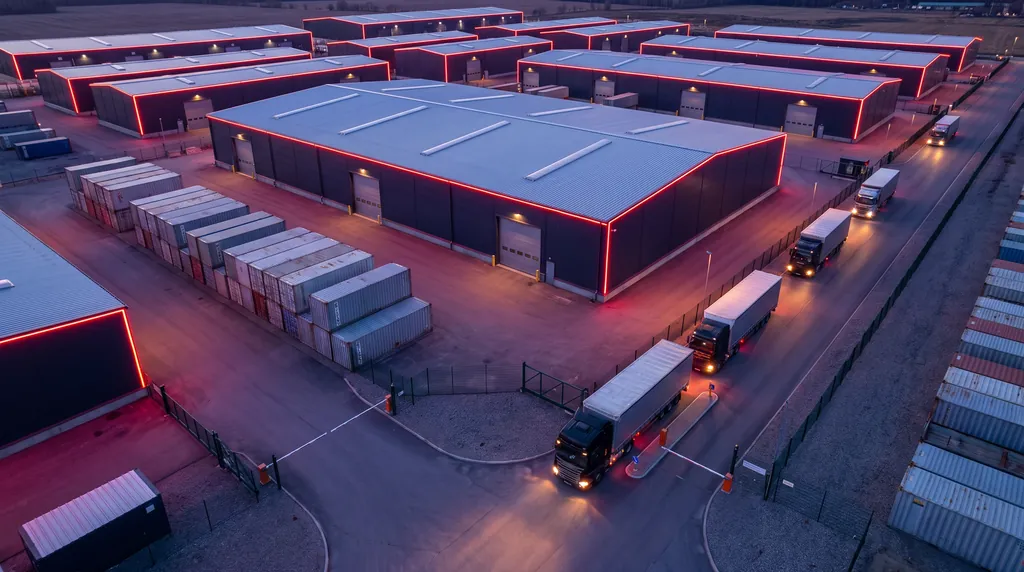
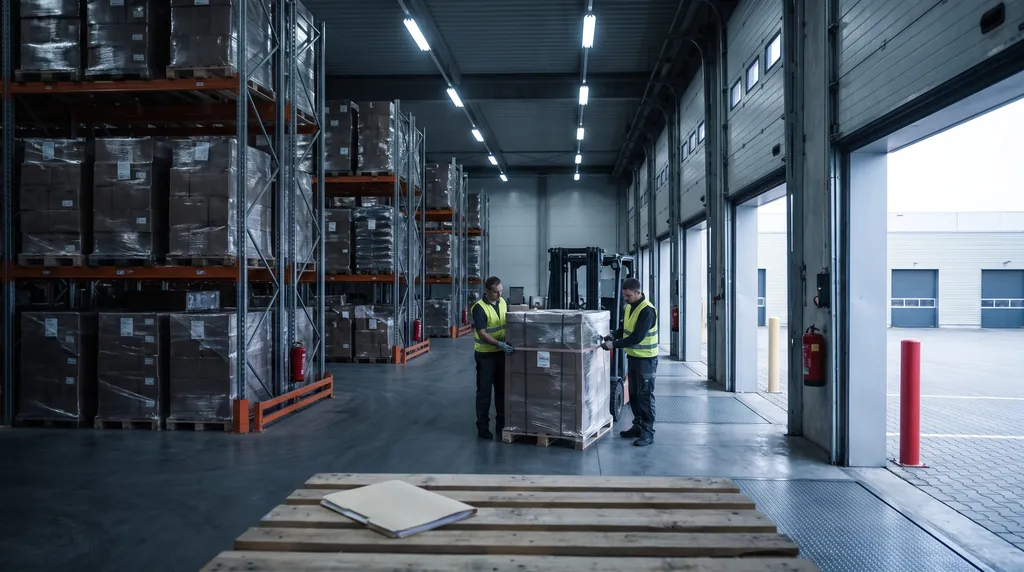
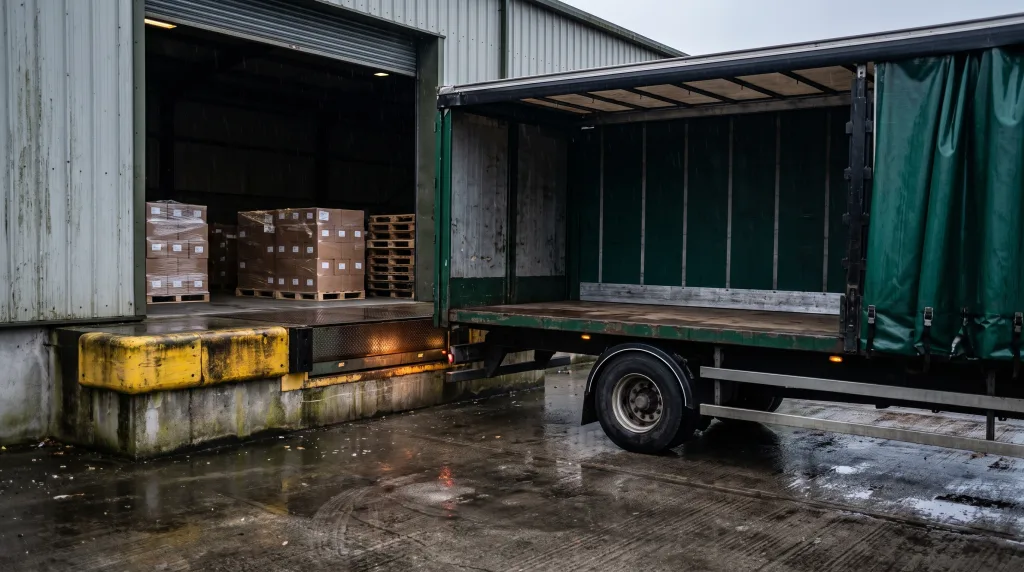
A full load runs from the shipper's ramp to the consignee's ramp. Groupage runs differently: a collection vehicle brings consignments to a local terminal, forklifts sort them by direction, a linehaul takes them to the destination hub, and a delivery vehicle finishes the job. In a typical groupage network we route consignments through, that usually means two to four extra handling operations, none of which you see. Every forklift approach risks a hit to a corner; every time a pallet is set down in a sorting area there is a chance it leaves in the wrong direction. Losses in groupage are rarely theft; far more often it is a pallet parked in the wrong lane that resurfaces a week later. Then there is time: consolidation waits for the vehicle to fill, and a route through terminals takes longer than a direct run by definition. If a delivery date is written into your contract with your customer, that difference has a price.
Full load versus groupage: where the risk comes from
| Criterion | Full load (FTL) | Groupage (LTL) |
|---|---|---|
| Handling en route | None, the goods travel untouched | Usually 2-4 terminal operations |
| Cargo neighbourhood | Only your goods | Goods of many shippers |
| Transit time | Direct run | Longer: consolidation plus hub routing |
| Evidence after damage | One loading, one unloading | Many links, harder to pin down the moment of damage |
Who is liable when someone else's cargo damages yours
The good news: you do not have to chase the owner of the drum that soaked your cartons. In international carriage, Article 17(1) of the CMR Convention makes the carrier liable for loss of and damage to the goods between taking over and delivery. You claim against your own carrier or forwarder, and the fact that another shipper's cargo caused the damage is the carrier's problem, not yours. The Convention even provides the recourse: under Article 10 CMR the sender is liable to the carrier for damage that defective packing of his goods causes to persons, equipment or other goods.
The bad news comes in two parts. First, compensation is capped by Article 23(3) CMR, applied to damage through Article 25, at 8.33 SDR per kilogram of gross weight of the goods lost or damaged, which for light, high-value goods covers only part of the loss. Second, evidence: apparent damage must be reserved at the latest on delivery, and non-apparent damage in writing within seven days of delivery, Sundays and public holidays excluded (Article 30 CMR). How to word reservations on the consignment note and the damage report is covered in damage reports and CMR reservations, and related scenarios are collected in our transport risks hub.
How loads should be matched: cargo compatibility
Cargo neighbourhood is not a matter of luck; it is a planner's decision. Sound load matching starts with hard prohibitions: food does not travel next to chemicals or waste, because the hygiene regulation quoted above demands separation, and dangerous goods follow the ADR (the Accord governing international carriage of dangerous goods by road) agreement, whose Chapter 7.5 sets out mixed loading prohibitions for certain classes. Then come rules of good practice: temperature-controlled goods belong in equipment conforming to the ATP agreement on the carriage of perishable foodstuffs, strongly scented goods are kept away from goods that absorb odours, heavy pallets are never placed on or against fragile ones, and every pallet needs load-bearing capacity and securing matched to its position on the vehicle. Before you book groupage, ask your forwarder one question: which goods do you exclude from travelling next to my cargo? A vague answer is an answer.
The OTSL role
OTSL arranges road transport across Europe, including groupage and part loads between Poland, the UK and Switzerland. We consolidate through our own warehouses in Kielce, Legnica and Milton Keynes, so we know what stands next to what: we match part loads for cargo compatibility, keep food away from chemicals, check stacking and securing, and on request inspect the cargo before the onward leg. If your groupage is sensitive to its neighbours, describe it in our contact form and we will propose a way of moving it that does not save money on risk.
Step by step
- Checking cargo specifications. You provide exact parameters, weight, and physical properties of your consignment.
- Verifying load compatibility. The carrier checks that neighbouring goods do not pose risks of damage or contamination to your shipment.
- Route planning and consolidation. The pallet arrives at the terminal where it is combined with compatible loads.
- Securing on the trailer. Goods are properly positioned and restrained to prevent shifting during transit.
- Monitoring and delivery. Cargo is continuously tracked until safe unloading at the final destination.
Definitions
- LTL (Less Than Truckload): Groupage transport where a consignment does not occupy the entire space of a trailer.
- CMR Convention (Convention relative au contrat de transport international de marchandises par route): An international treaty defining carrier liability for goods transported by road.
- Cross-docking: A terminal operation where cargo is transferred directly between vehicles with minimal storage time.
- Cargo consolidation: Combining smaller consignments from multiple shippers into a single trailer load.
When does this rule not apply?
The rule of sharing trailer space with other goods does not apply to full truckload transport, where you book the entire vehicle exclusively for your cargo. In this case, there is no risk of incompatible neighbouring goods or intermediate terminal handlings.
Sources
- UNECE, CMR Convention on the contract for the international carriage of goods by road (unece.org)
- Regulation (EC) No 852/2004 on the hygiene of foodstuffs, Annex II Chapter IV (eur-lex.europa.eu)
- UNECE, ADR agreement on the international carriage of dangerous goods by road (unece.org)
- UNECE, ATP agreement on the international carriage of perishable foodstuffs (unece.org)