 AI image
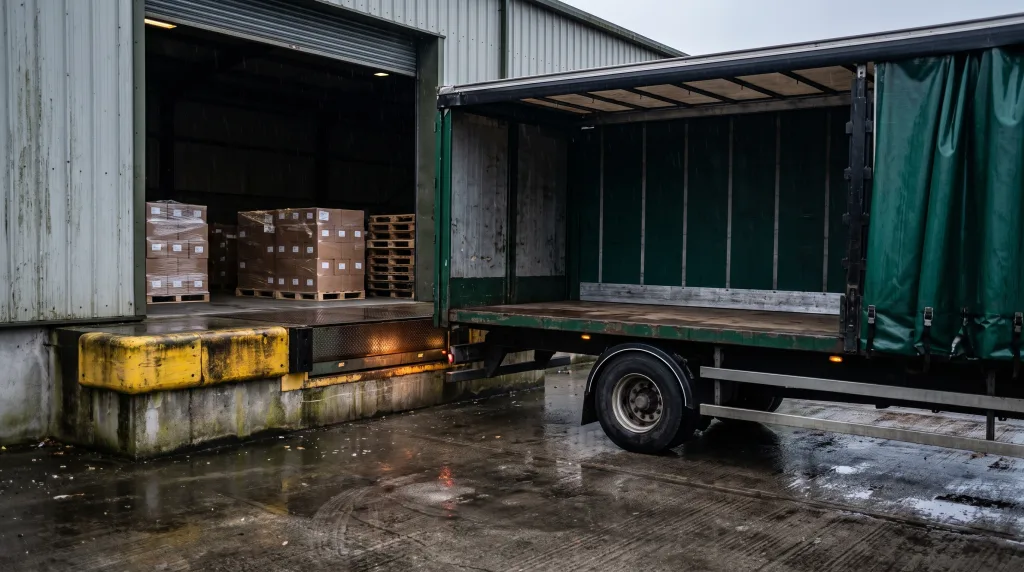
A curtain-side trailer carrying 26 UK pallets of beer in glass bottles arrived at a distribution centre with several stacks leaning after hard braking on the motorway. Goods-in halted the delivery, because a collapsing pallet of glass is dangerous to unload. Our recovery team rebuilt the unstable pallets, screened the stock for broken glass and returned 23 pallets to the delivery.
Situation
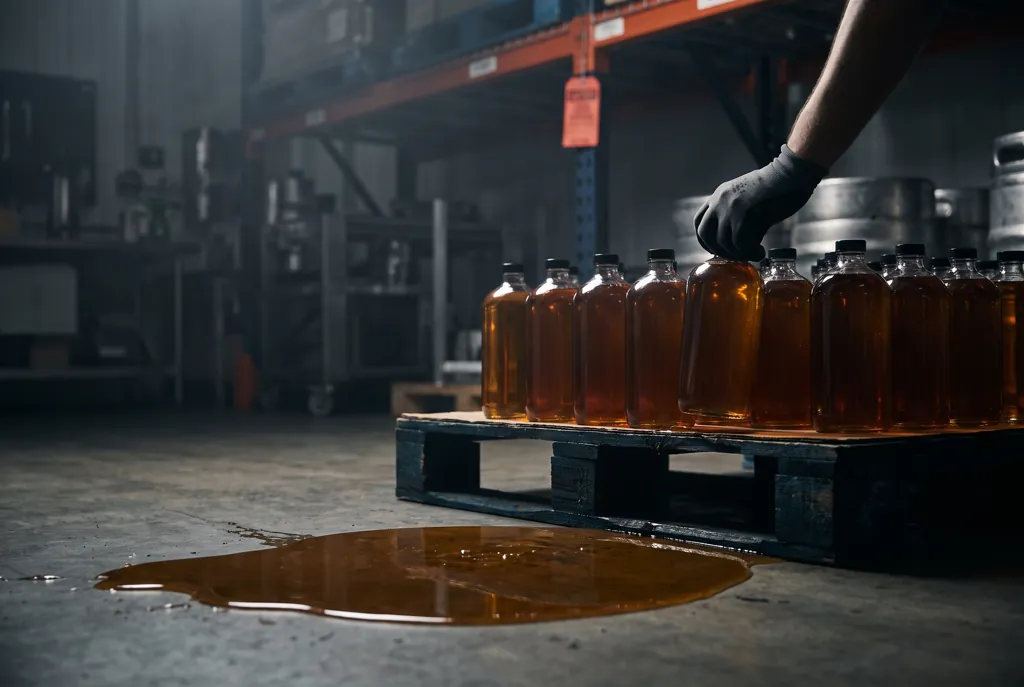
The load was travelling from a brewery to a centre supplying retail and wholesale customers. One emergency stop was enough: four pallets were leaning against their neighbours, stretch wrap had torn and cartons had slid out of position. Glass raises the stakes. A stack that falls during unloading does not just dent boxes, it fills the trailer with broken bottles and spilt beer, and the whole delivery risks rejection as contaminated. The receiving team refused to unload and the trailer was classed as a distressed load.
What did we do?
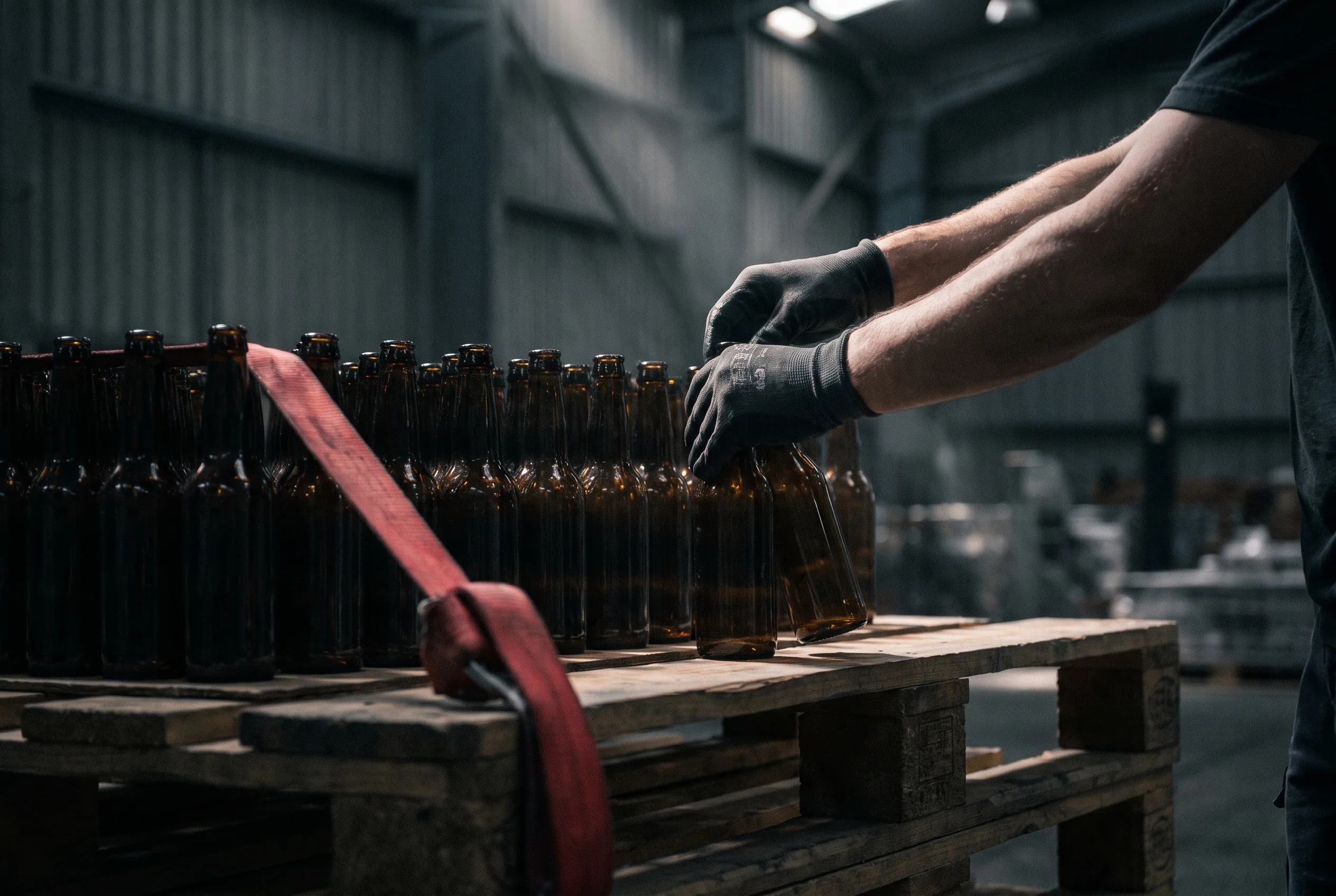
We inspected the trailer pallet by pallet: stack stability, carton alignment, wrap condition and any sign of leaking cartons. The verdict was 18 pallets needing a full rebuild, 5 a partial one, and 3 sound. The damaged wrap came off, cartons went back into the correct stacking pattern layer by layer, and every rebuilt pallet was wrapped again.
Because the product sits in glass, restacking alone was not enough. After the rebuild we checked cartons for cracked or leaking bottles and pulled anything compromised, so no broken glass travelled on into the supply chain. Finally the pallets were re-spaced inside the trailer to give forklifts a safe line to every stack.
Outcome
23 of the 26 pallets went back into the delivery and the trailer was unloaded safely. The sender received photographic documentation and inspection reports for the insurance file. Without the rebuild, the likely outcome was a full rejection: a trailer of beer going back the way it came, with the costs following it.
What does this mean for shippers?
A load of drinks in glass is one hard braking event away from a refused delivery, and every hour a refused trailer stands still costs money. The economics of recovery are strong: across our recovery work, more than 92 percent of the loads we take in return to the supply chain. How the service works day to day is described in our article on pallet re-stow and load rearrangement. If your trailer has just been turned away, describe it in the contact form. We work 24/7 from Milton Keynes.
How do you secure glass cargo to prevent repeated load shifts?
When you restack freight containing glass bottles, controlling the friction coefficient and wrap containment force is critical. Standard 23-micron stretch film must exert a containment force of at least 150 daN at the pallet corners. When placing cartons weighing up to 800 kg on a single UK standard pallet (1200x1000 mm), the maximum allowable stack height is 1.6 metres. Exceeding this limit significantly raises the centre of gravity, which under emergency braking at 0.8 g deceleration will inevitably cause another load shift inside the curtain-sider.
To mitigate risks during onwards transit to the distribution centre, you must place anti-slip mats with a friction coefficient of at least 0.6 µ under the base layer of cartons and between the pallet timber and the trailer deck. Restacking and inspecting a single unit takes approximately 45 minutes. Furthermore, a curing period of 12 hours is mandatory before dispatch if layer-stabilising adhesive is applied during the rebuild.
This operational rule does not apply if liquid leakage has soaked more than 15% of the corrugated packaging on a pallet. Dampened cardboard completely loses its vertical stacking strength, requiring immediate rejection and disposal at an authorized site rather than re-wrapping inside the trailer.
Step by step
- Zone isolation. Park the trailer in a safe dedicated area to protect staff from potential falling glass debris.
- Stability check. Inspect the leaning stacks to identify which pallets require immediate manual intervention.
- Contamination screening. Check cartons thoroughly for broken bottles, liquid leaks and moisture damage.
- Restacking cargo. Rebuild stable pallet stacks using sound packaging, maintaining correct interlocking patterns.
- Securing the load. Wrap the rebuilt pallets tightly with fresh stretch wrap to prepare them for final unload.
Definitions
- Curtain-side trailer: A trailer with flexible fabric side curtains that enable side loading and unloading of freight.
- UK pallet: An industrial-sized pallet measuring 1200x1000 mm used widely across UK distribution networks.
- Recovery team: A specialist technical crew dispatched to secure, restack and rectify shifted or damaged cargo.
- Stretch wrap: A flexible plastic film wrapped around stacked goods to secure them firmly onto the pallet.
The OTSL role
When shifted goods threaten a delivery, we provide immediate operational support to resolve the issue safely. We handle international road transport and offer practical recovery assistance, as shown in our guide on rebuilding a collapsed double-stacked load. See also: Mineral water: when the heaviest grocery pallet meets torn wrap and Spices in glass jars: restacking where one break contaminates many and Sugar syrup in glass: heavy bottles, sticky failures.