 AI image
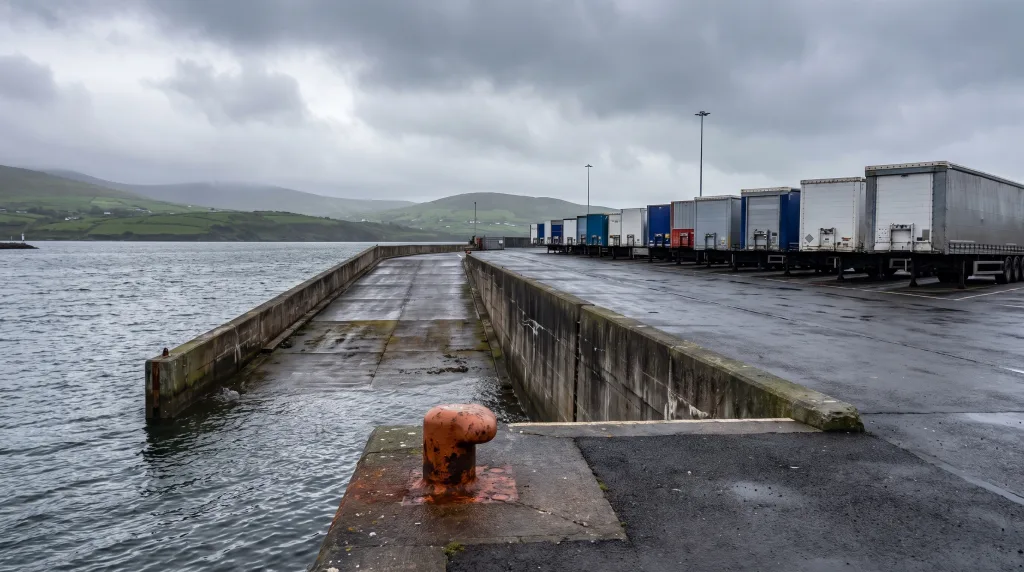
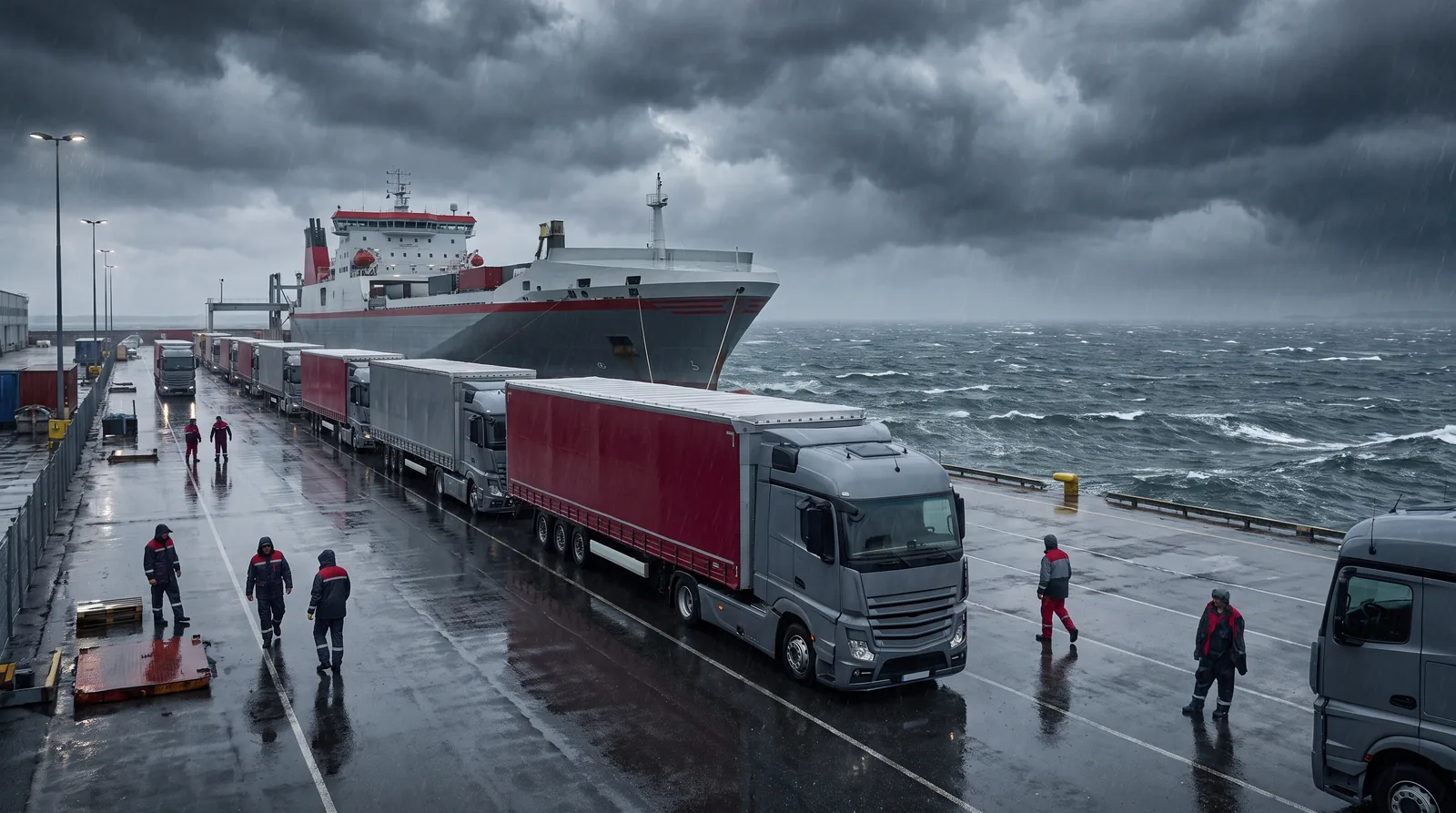
When a storm suspends sailings, the cargo is not lost, it waits: ferry operators roll trucks onto the next available departures and the queue clears over hours. The forwarder's job at that point is a re-booking onto the nearest realistic sailing or a switch of corridor, an immediate message to the receiver and a moved unloading window, before anyone starts counting losses.
What happens in the port
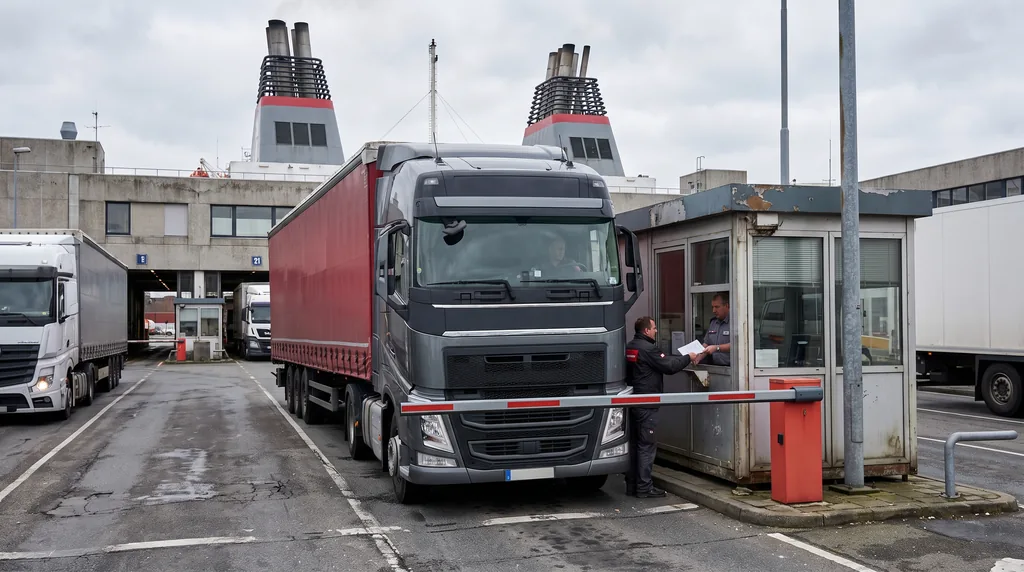
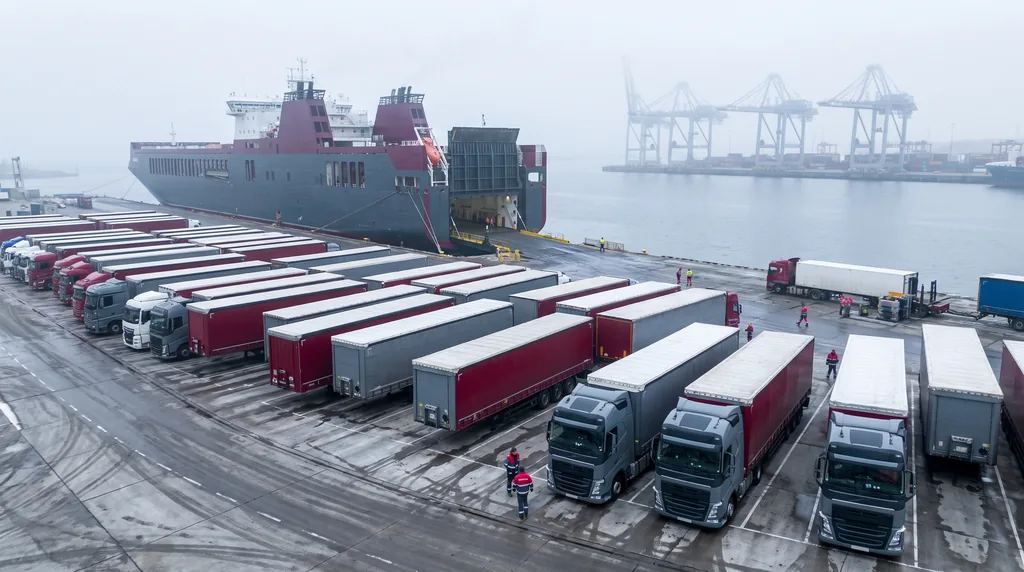
A cancelled sailing does not vanish from the plan, it pushes everything forward. Trucks with earlier bookings take the places on the following departures, so a single storm can stretch across a whole operating day. The scale of the corridor helps: DFDS alone advertises up to 30 sailings a day on Dover-Calais, so once the port reopens, the queue has somewhere to drain. A driver in the queue speeds up nothing, which is why the decisions are made at the forwarder's desk: keep the booking or move the truck to where traffic is already flowing.
The forwarder's plan B
On the short strait, plan B is often on the other side of the same motorway: the Eurotunnel shuttle does not depend on the state of the sea, so it is frequently the first choice when ferries are cancelled, as long as the cargo is not excluded from the tunnel. How that choice works is described in ferry or Eurotunnel. Next in line are sailings from other ports and a shift to the nearest free departure. How fast we get a new slot depends on the freight account and the working history with the operators, which is exactly what the ferry booking service is built on.
Talking to the receiver
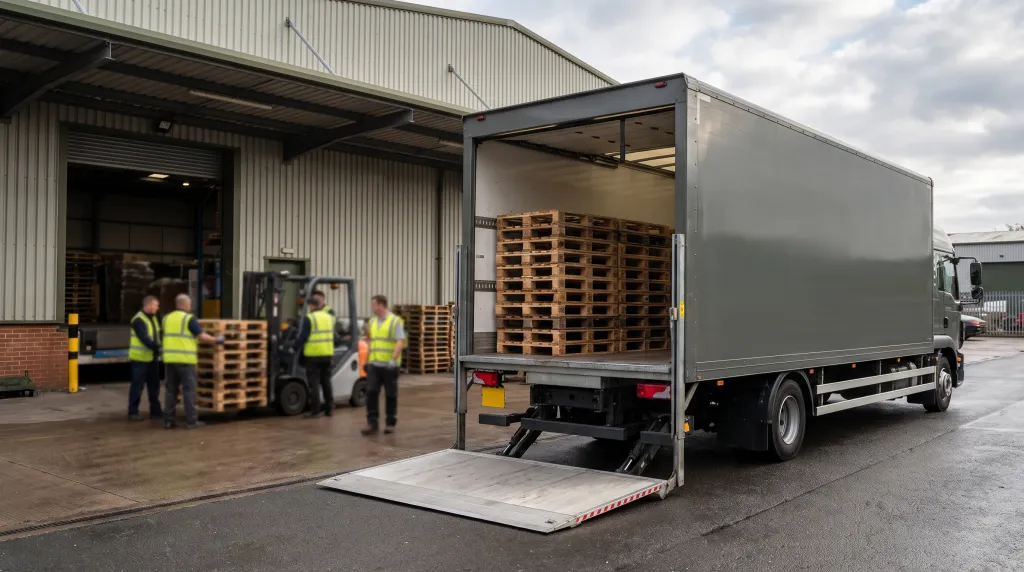
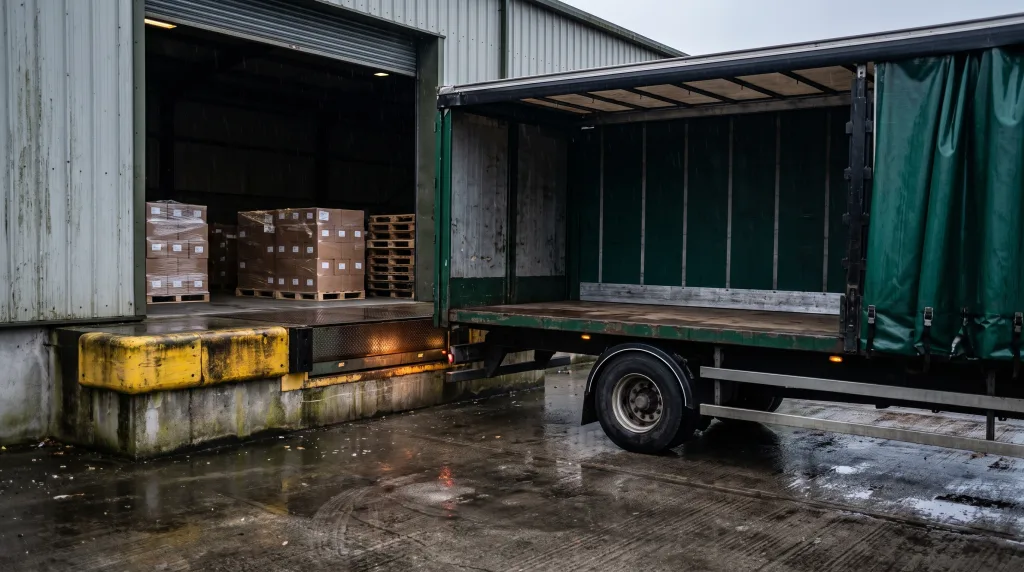
The most expensive consequence of a storm is usually not the crossing itself but the lost unloading window. UK warehouses run on booking-in, so a truck half a day late without warning can go to the back of the queue and lose a full day. That is why the receiver hears from us right after the sailing is cancelled, with a new time and a request to move the slot, instead of getting a call from the driver at the gate. On regular export lines, like those described on the UK export support page, this procedure is agreed in advance.
Who carries the weather risk
A storm is a circumstance the carrier cannot remove, but it does not excuse inaction: what counts is the documented cancellation, prompt notice and a sensible alternative. How a delay is settled depends on the contract and the law on carriage, so instead of promising that weather does not apply to us, we show how we limit its cost: bookings with margin on storm-prone days, an alternative crossing checked against the cargo, and a receiver who knows about the problem before their ramp does.
How do you manage driver hours and reefer temperature during port delays?
When an HGV is stranded in a port queue for more than 12 hours, managing driver hours and trailer power becomes critical. You must plan the mandatory 9 hours rest period before entering the tight port buffer area. If you move into the check-in lane without sufficient time allowance, line movements every 20 minutes force the driver to shunt the vehicle, which the digital tachograph logs as driving time, effectively interrupting the rest cycle. For temperature-controlled freight carrying 33 pallets, the reefer unit consumes roughly 2.5 litres of diesel per hour to maintain -18°C.
Before diverting a vehicle to the Channel Tunnel as a Plan B, check the reefer fuel tank; the minimum operational threshold is 85% capacity. Channel Tunnel operators enforce strict limits on fuel quantities and dangerous goods classes compared to maritime Ro-Ro ferries.
Note the operational boundary: this rerouting procedure does not apply if you are hauling hazardous cargo of ADR (the Accord governing international carriage of dangerous goods by road) Class 1 or 7, or if the total vehicle length exceeds 16.5 metres. In those scenarios, Channel Tunnel access is prohibited, and the driver must wait out the weather at an off-site Inland Border Facility or designated holding yard.
Step by step
- Check port notices. You check official notices regarding the suspension of maritime traffic due to weather conditions.
- Assess vehicle delay. You estimate the expected waiting time for the truck in the port access queue.
- Execute a re-booking. You rebook the ticket for the next available sailing or change the ferry corridor.
- Notify the consignee. You pass the updated cargo status and agree on a new delivery slot at the warehouse.
- Adjust the unloading window. You update the schedule in the booking system to avoid unnecessary downtime.
Definitions
- Re-booking: Re-assigning a ferry or train slot after an initial sailing has been cancelled.
- Transport corridor: A designated transport route connecting points of loading and unloading via specific ports.
- Unloading window: An agreed timeframe during which the recipient accepts the vehicle at the destination.
- Operating day: The entire schedule of completed sailings and clearances within a port daily cycle.
The OTSL role
When bad weather disrupts sea traffic, OTSL manages the situation efficiently by arranging flexible ferry booking solutions. We monitor the route status continuously and handle issues like reconsignment to keep your supply chain moving despite port delays.