 AI image
The Dover-Calais ferry and the Eurotunnel rail shuttle between Folkestone and Coquelles serve the same corridor between the continent and Great Britain, but the choice is not a matter of taste. Three things decide: the type of cargo, because the tunnel excludes some dangerous goods, how sensitive the deadline is to weather, and the slots available on the freight account that day.
One border, two very different crossings
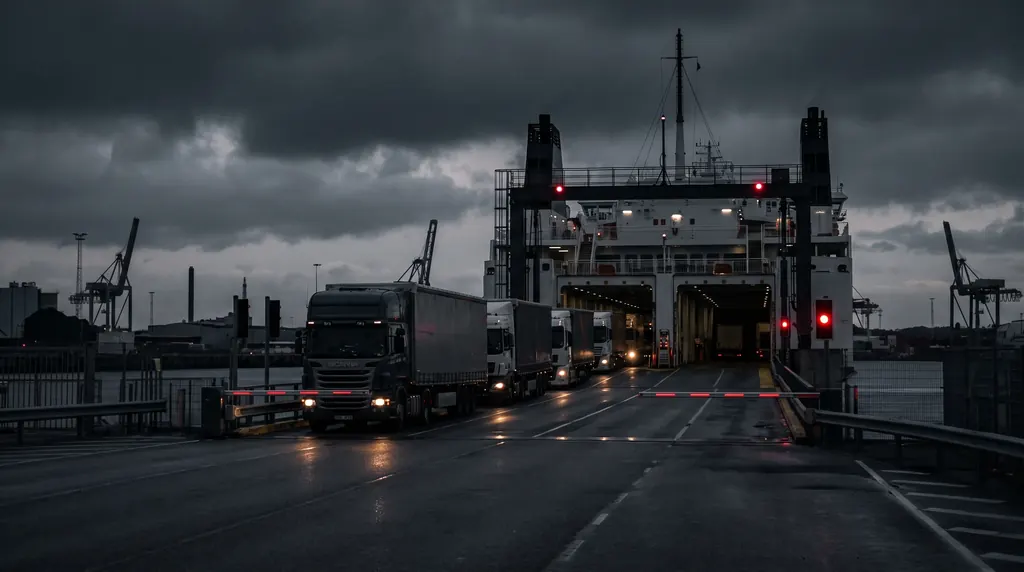
The tunnel crossing itself is shorter than the ferry passage, but the real delivery time is the whole chain: the approach, checks, the queue at the terminal, the next available departure. For scale: the shuttle covers Folkestone-Calais in 35 minutes and leaves up to 6 times an hour at peak, while the DFDS ferry sails Dover-Calais in about 90 minutes, with up to 30 sailings a day. Both options run many times a day, so on a calm day the difference is smaller than the map suggests. That is why we compare ramp-to-ramp time, not just the stretch across the Channel. What the full journey looks like is described under road transport and on the destination page for transport to the United Kingdom.
Excluded cargo: ADR in the tunnel
The hardest filter is dangerous goods. Carriage through the tunnel follows separate, stricter rules than carriage by ferry: some ADR classes and quantities are not allowed in the tunnel or are subject to conditions, and the operator of the crossing publishes the list of restrictions. Ferries have their own requirements too, including a dangerous goods declaration before the sailing, but the range of acceptable cargo is wider. So with ADR the decision is made before the truck departs: we declare the cargo at booking and pick the crossing that will take it. This is one reason why ferry booking is handled by our forwarders, not by the driver at the gate.
Wind and weather
A storm on the Channel can suspend sailings, and then the port queue grows by the hour. The tunnel shuttle does not depend on the state of the sea, so for sensitive winter deadlines it can be worth its price even when the ferry is cheaper. What exactly happens to the cargo when a crossing is cancelled is covered in our article on a storm and a cancelled crossing.
How does the decision work in practice?
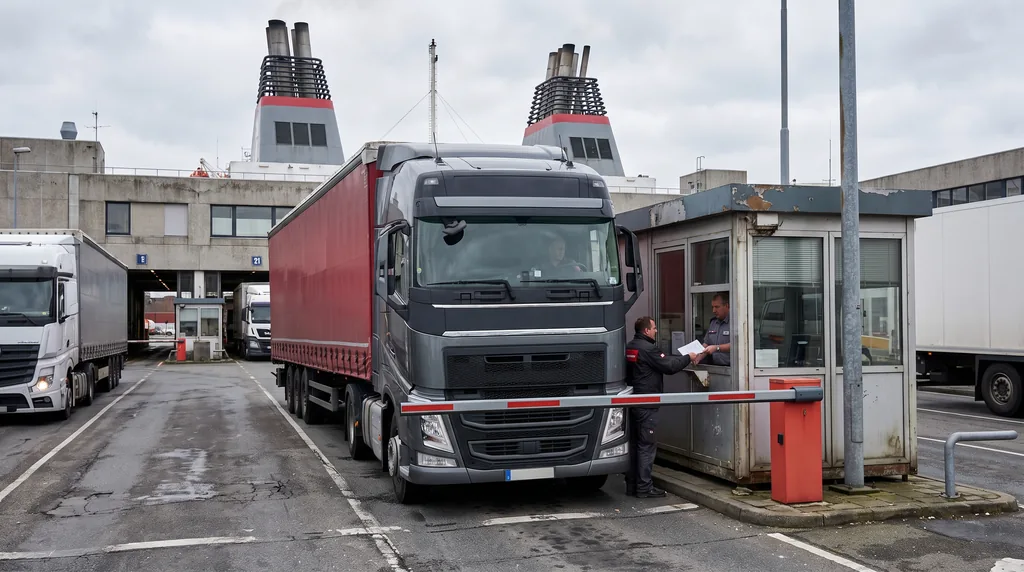
At booking we submit the vehicle and cargo data, and for entry into the UK we tie the customs declarations into a GMR (Goods Movement Reference, required at the UK border) number, without which the truck does not enter the port or the terminal. The system is explained in ELO, ENS, GMR: what they are and when they apply. The stakes are simple: a lost crossing slot means in practice a day of delay, because the unloading window at the receiver moves with it. So we book the crossing with a plan B and watch it as closely as the clearance.
How does driver working time dictate the choice between ferry and train?
Crossing the Channel requires strict alignment with driver working hours regulations. When using the tachograph ferry/train mode, you can interrupt a regular daily rest period of at least 11 hours a maximum of 2 times. The total duration of these interruptions, such as driving on and off the vessel or train platform, must not exceed 60 minutes. On a ferry crossing lasting 90 minutes, the driver can legally log part of their rest period, which is critical when you have less than 45 minutes of daily driving time remaining.
With the Eurotunnel Shuttle, the rail transit itself takes only 35 minutes, which is insufficient to cover even a mandatory 45-minute break while in motion. If traffic delays on the approach corridor increase driving time by 10%, you must schedule the mandatory rest stop before passing through customs clearance and finalizing the GMR record in GVMS. Otherwise, you risk a tachograph infringement immediately after exiting the train.
- Ferries allow logging valid rest during the 90-minute sea transit, easing tight driving schedules.
- Eurotunnel requires completing the mandatory 45-minute break at a truck stop prior to check-in if driving limits expire before boarding.
This rest-interruption rule does not apply when operating under double manning. For a two-driver crew, working time is calculated within a 30-hour cycle, where time spent in the passenger seat of a moving vehicle counts as a break, removing the operational need for the ferry/train tachograph mode.
Step by step
- Cargo specification check. You check whether the transported goods contain materials excluded from tunnel transport.
- Delivery deadline assessment. You determine how sensitive the schedule is to weather conditions and potential delays.
- Slot availability check. You verify available space on freight accounts for both crossing options.
- Selecting the optimal route. You choose between ferry sailing and train shuttle after considering total transit time.
- Booking and monitoring. You complete the booking and monitor queue times at the terminal.
Definitions
- Eurotunnel: A rail tunnel connecting Folkestone in Great Britain with Coquelles in France.
- DFDS (Det Forenede Dampskibs-Selskab): A Danish ferry operator running sailings between Dover and Calais.
- ADR (Accord Dangereux Routier): The international agreement concerning the carriage of dangerous goods by road.
- Shuttle: A freight train carrying commercial vehicles through the Channel Tunnel.
- Freight account: An account with a transport operator used to book and settle ferry and rail crossings.
The OTSL role
When arranging freight to the UK, OTSL helps select the right crossing for your cargo. Our Ferry booking service secures spaces on ferries and rail shuttles, while our ADR transport service ensures compliance with dangerous goods regulations.