 AI image
Transport to Scandinavia combines a road leg with a sea leg. To Sweden, cargo sails by ferry from Świnoujście to Ystad or from Gdynia to Karlskrona, or travels overland through Germany and Denmark across the Öresund bridge. Denmark is easiest to reach by road through Germany. Finland is served by ferry across the Baltic or via Sweden. The choice depends on deadline, cost and cargo type.
Sweden: two ferries from Poland or the bridge
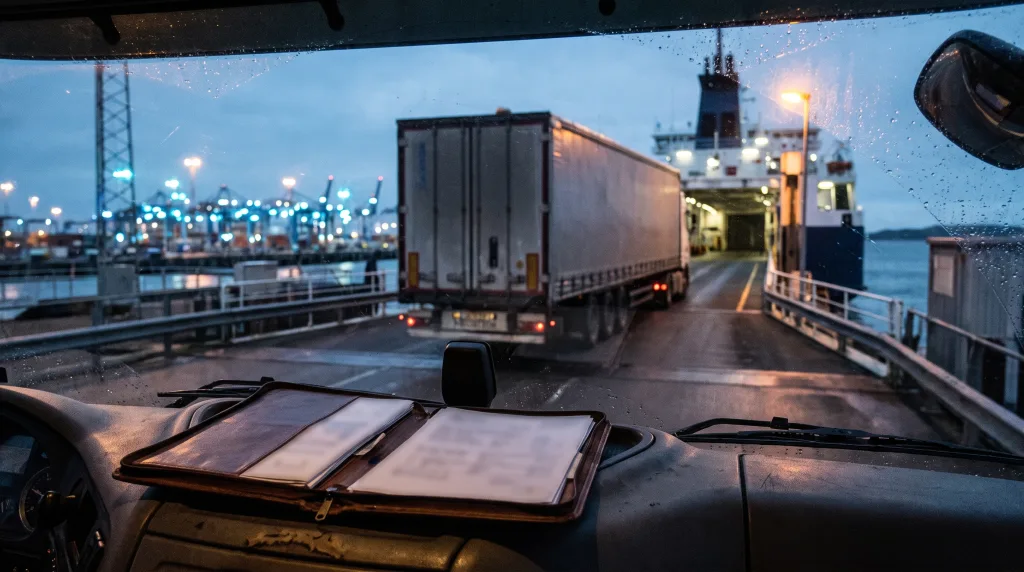
On the route to Sweden a forwarder has three realistic options. The ferry from Świnoujście to Ystad puts the truck straight into the south of the country. The ferry from Gdynia to Karlskrona suits loadings from northern and central Poland. The third option is fully overland: through Germany, Denmark and the Öresund bridge directly to Malmö. The ferry gives the driver rest during the crossing; the road gives flexibility when sailing schedules do not match the unloading window. Crossings are reserved by our ferry booking desk, so the truck does not sit in the port waiting for space.
Denmark: the nearest Scandinavian country
Transport to Denmark is in practice a land route through Germany onto the Jutland peninsula. Copenhagen and Zealand are connected by bridges, so the truck arrives without a ferry crossing. It is a short-transit destination with one trap: Danish receivers work on precise delivery windows, and a delay can push unloading to the next day. That is why we plan the run with a buffer for congestion around Hamburg.
Finland: across the Baltic or via Sweden
You cannot reach Finland from Poland by road alone in reasonable time, because the land route runs around the Gulf of Bothnia through northern Sweden. The standard is a ferry crossing over the Baltic: the trailer or the whole rig boards the ship, and road legs close the route on both sides. The variant via Sweden with a shorter crossing makes sense for loads combined with Swedish deliveries. Either way, the key is booking the sailing in advance, because space on popular departures runs out fast.
What to choose and what is at stake
- Ferry: predictable schedule, driver rest during the voyage, fewer kilometres on the road.
- Road: full control over departure time, no dependence on sailing schedules.
- The wrong choice has a real price: an uncancelled ferry is a lost fee, and missing a sailing can shift the delivery by a full day.
Sweden, Denmark and Finland are EU members, so intra-EU loads travel without customs clearance. The whole job, from loading to booking-in with the receiver, is run by our road transport team, whose dispatchers know these crossings from daily work.
See also
- Transport to Sweden: destination page
- Ferries to Scandinavia: routes from Polish ports
- Transport to the Baltic states via the Via Baltica
Which option is better for Sweden: ferry or bridge?
The choice depends on delivery deadlines, loading origin, and required driver rest periods, as ferries allow rest during the crossing while the bridge offers timing flexibility.
Step by step
- Analyze cargo parameters. Check the cargo dimensions and the required delivery window.
- Select the best route. Compare ferry sailings from Poland against the overland route via Denmark.
- Book the ferry crossing. Reserve a place on the ferry aligned with the planned arrival at the port.
- Dispatch the vehicle. Direct the truck to the designated port or via the Öresund bridge.
- Complete the delivery. Monitor transport progress until final discharge at the destination.
Definitions
- Sea leg: The ferry crossing section of a route connecting maritime ports across the Baltic Sea.
- Öresund bridge: A road link between Denmark and Sweden providing an overland option for trucks.
- Ferry booking: The reservation process for securing space on a ferry for a commercial vehicle.
- Road leg: The overland portion of a journey completed by heavy goods vehicles.
The OTSL role
OTSL coordinates freight operations to Scandinavian countries by selecting the most suitable route for your logistics schedule. The company handles professional ferry booking and integrates route choices with express vans and time-critical transport across Europe.