 AI image
Transport to Finland is a road move tied to a Baltic ferry crossing. Finland is in the European Union, so commercial cargo travels with no customs clearance, and the deadline is set not by the drive itself but by the booked ferry slot and the weather. OTSL runs the whole relation, from pickup in Poland to unloading in Finland, with one forwarder responsible for the route, the ferry and the delivery window. Below we explain how the corridors from Poland run, when to choose FTL over groupage, what winter does on this direction and what we take care of within the order.
Road corridors from Poland to Finland
Finland sits at the far end of a long Nordic corridor, so we treat the route as one whole rather than a sum of legs. Broadly, two approaches lead there:
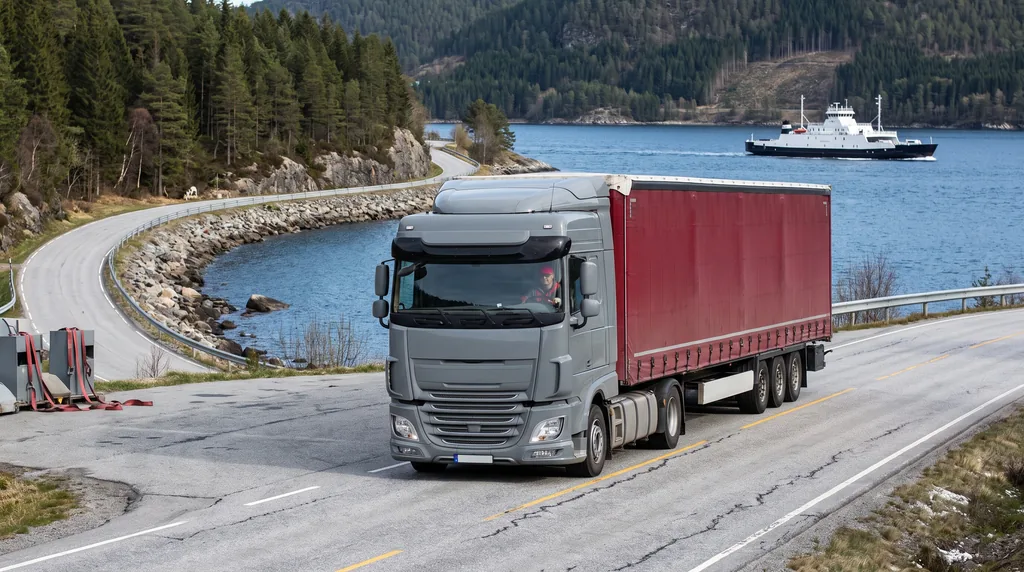
- Baltic ferry crossing. We tie the road leg in Poland to a ferry that shortens the drive and skips part of the land corridor. We reserve the ferry slot well ahead, because in peak season free windows are scarce.
- Land bridge via the Baltic states and Sweden. A longer land route around the Baltic, sensible for some cargo and deadlines. Here driving bans and winter conditions matter along the whole distance.
Which option works better depends on the loading point, the weight and dimensions of the cargo and the delivery window at the consignee. We do not quote fixed transit hours, because on this direction the real time is set by the ferry schedule and the weather; the forwarder confirms the date at quotation, after checking the available crossings.
FTL or groupage LTL to Finland
We match the mode to the freight, not the other way round:
- FTL, full truck load. Sensible when you fill the whole trailer or when you need one direct relation with no transshipment. On the long Nordic direction, FTL simplifies planning the ferry and the delivery window.
- LTL, groupage. You pay only for the space you use, from a single pallet upward. Shipments are consolidated on the same direction, which lowers the cost but needs earlier planning around the crossing schedule.
We also carry loads that need dedicated equipment to Finland: ADR with full documentation and trained drivers, reefer with temperature control, and oversized cargo with permits where required. With reefer and frozen goods, winter on the route helps on the temperature side but does not remove the need to protect the cold chain and confirm the unloading window.
Customs: when it applies and when it does not
Finland is in the European Union and its customs union, so carriage of EU goods between Poland and Finland runs with no customs clearance and no duty. Clearance comes into play in a few special cases worth flagging at quotation:
- Non-EU goods being released into circulation, for example re-export or non-Union cargo in transit.
- Loads subject to excise or special supervision, where extra documents and procedures apply.
- Exhibition cargo that returns to Poland; on non-EU relations an ATA carnet may be needed, but within the EU the display travels on ordinary documents.
If your load falls into one of these cases, we handle the formalities through our own customs agencies, so paperwork does not stop the truck at the ferry or at unloading.
Winter and driving bans on the Finnish direction
Winter is not an add-on to the Finnish direction, it is a fixed part of it for a large share of the year. Short daylight, snow and ice can stretch every leg, and conditions on the land bridge through Sweden and the Baltic states are often harder than Finland itself. That is why we plan the approach with a real buffer, not on the edge. On top of that come HGV driving bans on the through route, which must be written into the plan in advance: a badly timed arrival at the ferry or the ramp costs a full day, even though the truck stands a dozen kilometres from the target. Assembly windows at trade fairs and booking slots at industrial plants on this direction do not wait for a late truck.
What OTSL organises
- The whole route with one forwarder. Road leg, ferry and final delivery under one order number, with no handing off between subcontractors.
- Ferry booking with a buffer. We plan the crossing slot ahead, with slack for weather and a queue at the port.
- Equipment matched to the freight. FTL, groupage, ADR, reefer and oversized, each on the right kit.
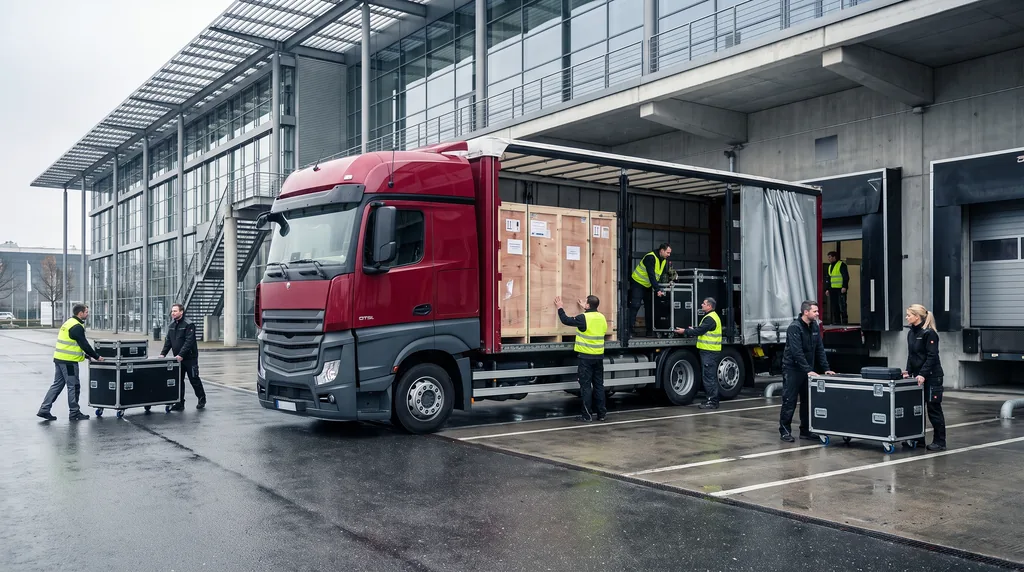
- Booking slots and time windows. We agree pickups at consignees and unloading requirements, so the truck does not return from the ramp with nothing.
- Contact through the form. An enquiry with the cargo description, dimensions, weight and loading and delivery points is enough for the forwarder to prepare a transport option and a real date.
How an order to Finland works step by step
We start from an enquiry with the cargo description, dimensions, weight and loading and delivery points. The forwarder chooses the transport option, FTL or groupage, checks the available crossings and confirms the quotation together with a real delivery date. Before loading we reserve the ferry slot and agree the unloading window. During carriage the client gets status updates without asking, and after delivery the confirmations for settlement. On a first shipment to Finland we walk the client through the whole process, including the ferry logic and the winter buffer.
What to watch on a shipment to Finland
- A last-minute ferry booking can shift the whole delivery when free windows run short in peak season.
- A plan with no winter buffer on the land bridge ends in delay, because weather stretches the legs outside Finland.
- Ignored driving bans on the through route take a full day right before the target.
- No unloading slot means an empty run to the ramp and another date.
See also
- Transport to Scandinavia: Sweden, Denmark, Finland
- Ferries to Scandinavia, routes from Polish ports
- Trade fair transport to Finland, Helsinki
- FTL or LTL, when to use full loads
- Groupage and part loads across Europe
- HGV driving bans in Europe
- ADR transport, dangerous goods
- Temperature-controlled cold chain
- Express vans when every hour counts
- Contact and quotation