 AI image
Importing a crusher from the United Kingdom into the European Union requires out-of-gauge transport arrangements due to a typical unit mass ranging between 10–60 t and significant structural height. Classified under CN tariff heading 8474 20, the machinery usually requires partial disassembly prior to movement. Transport following a UK auction purchase involves export filings and EU border customs clearance.
Why is a crusher classified as out-of-gauge transport?
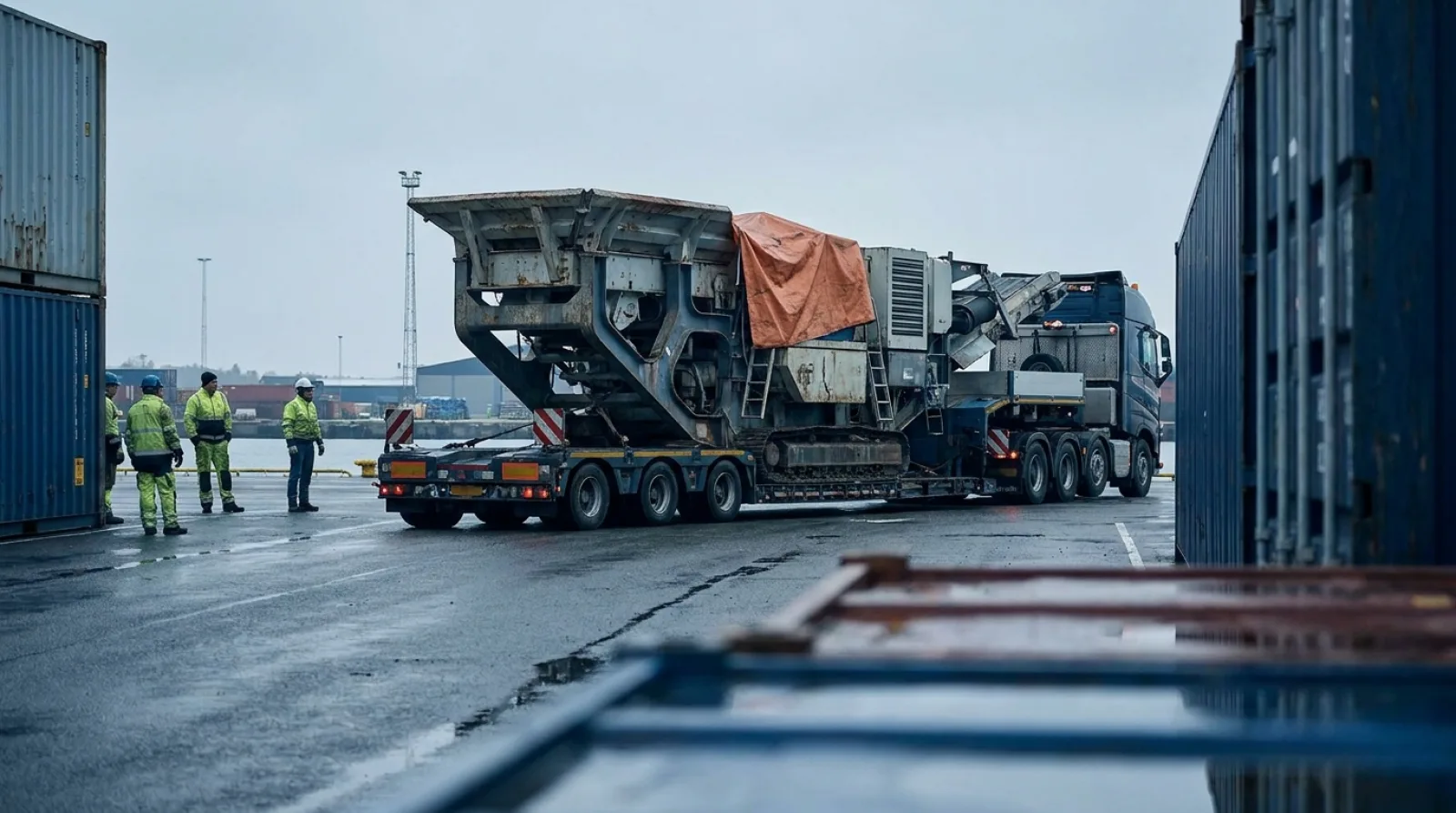
A crusher (English: crusher, German: Brecher) is a heavy piece of machinery used in construction and quarrying, with a standard mass ranging from 10 to 60 tonnes. Because of its structural dimensions, it inherently exceeds standard road loading gauge limits. For road transport, extended components such as conveyor belts are folded down or disassembled to reduce the overall width and length of the transport combination. However, even with the conveyors folded, the main body of the machinery leaves a substantial total height.
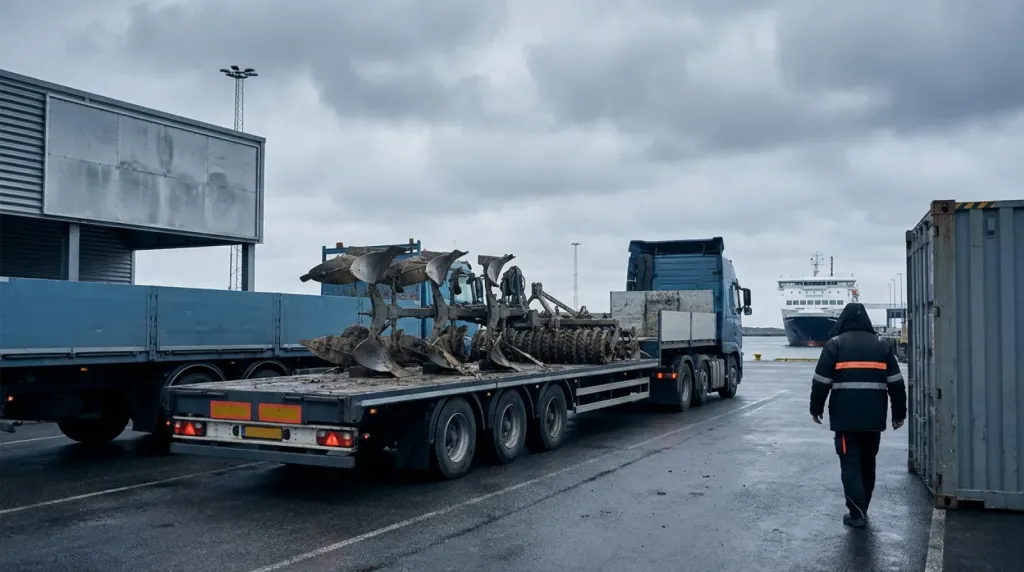
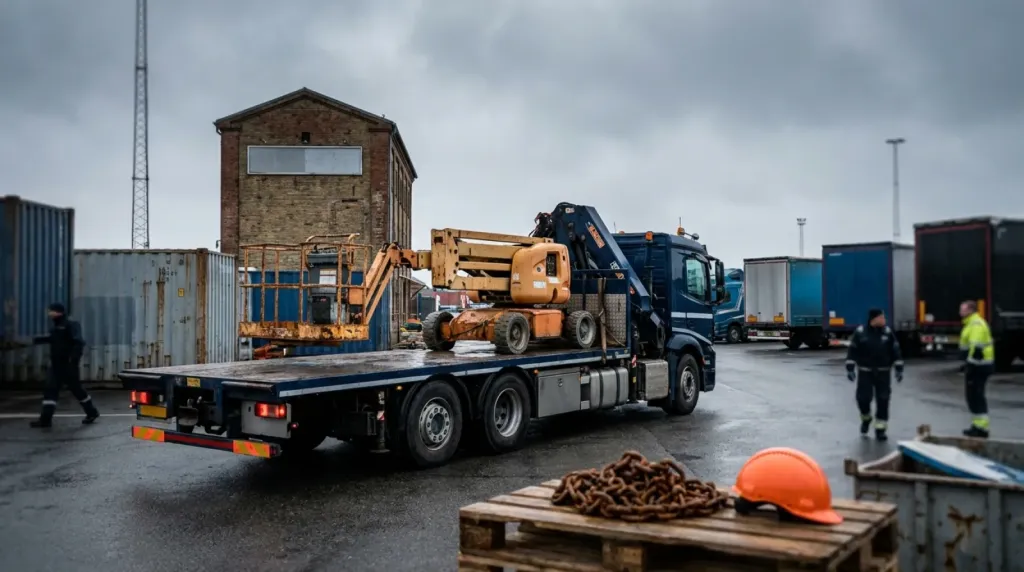
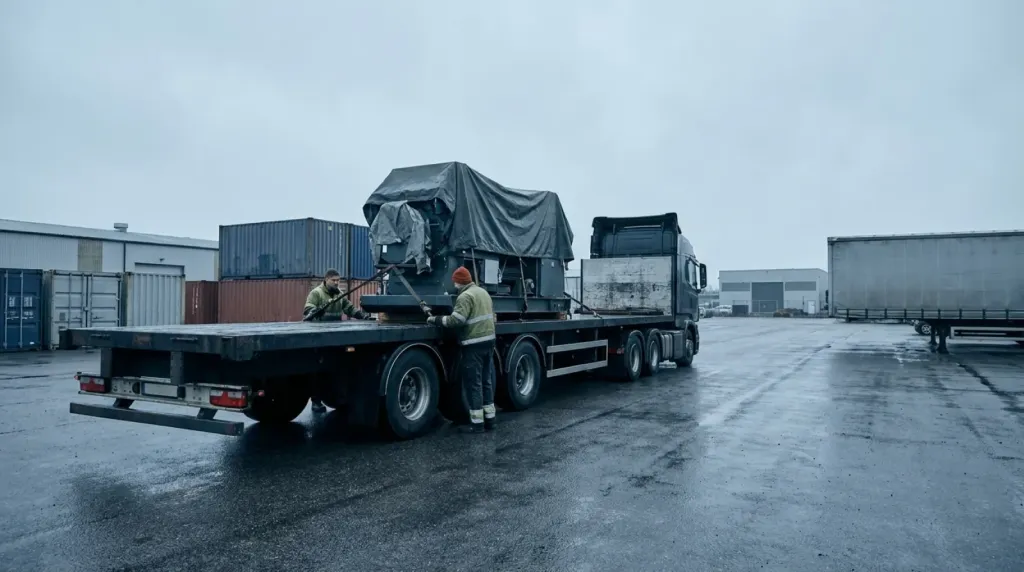
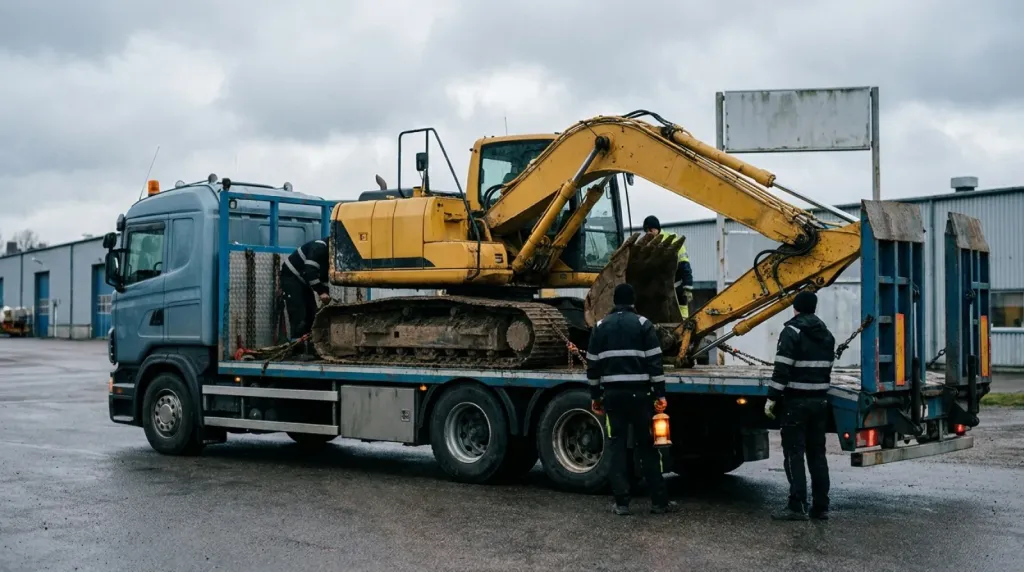
Exceeding permissible weight limits and dimensions requires the use of specialized low-loader semi-trailers. Organising the route necessitates obtaining abnormal load permits from highway authorities in every transit country as well as the destination country. Requirements for escort vehicles or police escorts depend on local regulations and the exact trailer dimensions stated within the issued permits.
How does customs clearance work for auction machinery from the UK?
Purchasing heavy equipment at UK industrial auctions means the goods must leave the UK customs territory and enter the European Union. Auction sales are documented with a commercial invoice or winning bid statement, which forms the basis for establishing the customs value of the crusher. The machine must be declared in the UK customs system to open an export clearance process before departure from the auction site.
Crossing the customs border requires valid transport paperwork along with transit or import declarations. The main Combined Nomenclature code for crushers and grinding machinery is CN 8474 20. Upon entry into the EU, the machine undergoes import clearance or deferred VAT procedures, where customs officials inspect the documentation and tariff classification.
Importing and moving a crusher step by step
- Auction document verification. Collection of the invoice and technical specifications stating the transport mass and overall dimensions of the crusher.
- Machinery preparation. Folding or disassembling conveyor belts and securing all movable components at the auction collection yard.
- Abnormal load permits. Applying for out-of-gauge transport permits along the planned route from the UK to the final EU destination.
- UK export declaration. Lodging the export entry in the UK customs database based on the purchase documentation.
- Transit and border crossing. Haulage on a low-loader trailer, ferry or tunnel crossing, and closing the UK export procedure at the EU frontier.
- EU import clearance. Declaring the machinery under CN code 8474 20 for import and settling applicable duties and taxes.
Definitions
- CN: Combined Nomenclature, an eight-digit goods classification system used by the European Union for customs and statistical purposes.
- EORI: Economic Operators Registration and Identification scheme, a unique identification number required to perform customs activities in the UK and EU.
- SAD: Single Administrative Document, the standard official form used for import and export customs declarations.
- MRN: Movement Reference Number, a unique registration number assigned by customs authorities upon accepting a transit or export declaration.
Checklist for crusher transport
- Verify auction invoice details and check the machine weight against specification (10–60 t range).
- Ensure that conveyor belts are fully folded and locked into their transport positions.
- Measure the total height and overall width once the machine is loaded onto the trailer.
- Secure all necessary out-of-gauge permits for every jurisdiction along the route.
- Confirm active EORI registration numbers for both exporter and importer.
- Apply the correct CN code 8474 20 across all customs paperwork.
When do these rules not apply?
The rules and procedures detailed above do not apply to machine movements that take place entirely within the internal market of the European Union, where customs declarations are not required. The exact customs process depends on the contract terms and conditions set out in the specific auction catalogue or buyer guide. Transport scheduling rules do not apply in this manner unless the goods originate in the UK; shipments moving under ATA (Admission Temporaire, the temporary admission document) Carnets for temporary admission follow separate regulatory frameworks.
The OTSL role
OTSL Sp. z o.o., headquartered in Kielce, Poland, with operational facility in Milton Keynes, England, coordinates international machinery movements. The company manages out-of-gauge transport across routes connecting the United Kingdom, Poland, Switzerland, Norway, and continental Europe. OTSL supports importers with formal border customs clearances, utilising mechanisms such as regime 42 to facilitate cross-border trade of auction-bought machinery. See also: Importing Hydraulic Breakers from UK: Customs and Freight and Transporting a Lighting Tower from the UK: Import and Customs.